Fitness can be depicted as a condition that helps us with looking, feel and set forth some courageous energy. Real Fitness incorporates the presentation of the heart and lungs, and the muscles of the body.
In our fast-paced world, stress and tension have become almost unavoidable. Many of us carry physical and mental burdens that manifest in our bodies as stiffness, pain, or discomfort. Somatic exercises offer a gentle and mindful approach to releasing this tension and improving overall body awareness. By incorporating a daily or as-needed somatic exercise routine into your life, you can promote relaxation, enhance mobility, and connect more deeply with your body.
What Exactly Are Somatic Exercises?
Somatic exercises are a form of movement therapy that focuses on internal physical perception and experience. Anyone who has tried guided meditation has most likely experienced some sort of somatic experience.
Unlike traditional exercise routines, which often emphasize external goals such as strength, speed, or endurance, somatic exercises prioritize how your body feels from within. They encourage you to move slowly, with intention, and to pay close attention to your body’s sensations. Still not getting it? Watch a few Tai Chi videos to help you understand what moving with intention is.
This mindful approach helps to release chronic tension, improve mobility, and enhance your overall sense of well-being.
A Simple Daily Somatic Exercise Routine
Ok, let’s move on to what you’re really here for. This daily somatic exercise routine can be done in just 15-20 minutes and is suitable for people of all fitness levels. It includes a series of gentle, mindful movements that target key areas of the body where tension often accumulates.
1. Centering Breath (2 minutes)
Purpose: Connect with your breath and center your body.
How to:
Sit or lie down comfortably.
Close your eyes and place one hand on your chest and the other on your abdomen.
Inhale deeply through your nose, feeling your abdomen rise.
Exhale slowly through your mouth, feeling your abdomen fall.
Continue this deep breathing for 2 minutes, focusing on the sensation of your breath.
2. Pelvic Tilt (3 minutes)
Purpose: Release tension in the lower back and improve pelvic mobility.
How to:
Lie on your back with your knees bent and feet flat on the floor.
Inhale and gently arch your lower back, tilting your pelvis forward.
Exhale and press your lower back into the floor, tilting your pelvis backward.
Repeat this motion slowly, coordinating it with your breath, for 3 minutes.
3. Cat-Cow Stretch (3 minutes)
Purpose: Increase flexibility and mobility in the spine.
How to:
Start on your hands and knees in a tabletop position.
Inhale as you arch your back, lifting your head and tailbone toward the ceiling (Cow Pose).
Exhale as you round your back, tucking your chin to your chest and tailbone under (Cat Pose).
Move slowly and mindfully between these two positions for 3 minutes.
4. Shoulder Rolls (2 minutes)
Purpose: Release tension in the shoulders and neck.
How to:
Sit or stand with your arms relaxed by your sides.
Inhale and lift your shoulders toward your ears.
Exhale as you roll your shoulders back and down.
Continue with slow, controlled shoulder rolls for 1 minute in one direction, then switch to the opposite direction for another minute.
5. Hip Circles (2 minutes)
Purpose: Increase mobility and release tension in the hips.
How to:
Stand with your feet hip-width apart.
Place your hands on your hips.
Begin making slow circles with your hips, moving clockwise for 1 minute.
Reverse the direction and move counterclockwise for another minute.
6. Somatic Stretch (4 minutes)
Purpose: Lengthen and relax the entire body.
How to:
Stand with your feet hip-width apart.
Inhale as you reach your arms overhead, stretching your body upward.
Exhale as you fold forward, keeping your knees soft and allowing your upper body to hang down.
Stay in this forward fold for a few deep breaths, then slowly roll back up to standing.
Repeat the stretch a few times, moving with your breath.
7. Body Scan Relaxation (5 minutes)
Purpose: Deepen relaxation and body awareness.
How to:
Lie down comfortably on your back with your arms by your sides.
Close your eyes and take a few deep breaths.
Starting at your toes, slowly bring your attention to each part of your body, noticing any tension or sensations.
Gradually move your focus up through your legs, hips, abdomen, chest, shoulders, arms, neck, and head.
As you scan each area, consciously release any tension and allow your body to relax fully.
Stay in this relaxed state for a few more minutes before gently bringing yourself back to the present.
The Benefits of a Somatic Exercise Routine
Incorporating somatic exercises into your daily routine offers numerous benefits, including:
Improved Body Awareness: By paying close attention to how your body moves and feels, you develop a deeper connection with your physical self. This heightened awareness can help you identify areas of tension or imbalance that you might not have noticed otherwise.
Reduced Stress and Tension: Somatic exercises are designed to help you release chronic tension that may be stored in your muscles and joints. This can lead to a sense of relaxation and stress relief.
Enhanced Mobility and Flexibility: The gentle, mindful movements of somatic exercises promote greater flexibility and ease of movement. Over time, this can lead to improved posture and a reduction in pain or discomfort.
Better Mind-Body Connection: Somatic exercises encourage you to move with intention and focus, strengthening the connection between your mind and body. This can lead to improved mental clarity and emotional balance.
Wrap Up
By dedicating just 15-20 minutes each day to this somatic exercise routine, you can experience a significant improvement in your physical and mental well-being. The mindful movements and deep relaxation techniques help you release tension, enhance body awareness, and foster a deeper connection with yourself.
Whether you’re new to somatic exercises or looking to incorporate more mindfulness into your daily routine, this practice offers a simple yet powerful way to nurture your body and mind. It’s time to improve your connection with yourself, and this is the perfect way to do that.
Leave a comment below with your thoughts on Somatics!
Blue Zones are regions around the world where people live significantly longer, healthier lives.
These areas were first identified by National Geographic researcher Dan Buettner, who studied communities with the highest concentrations of centenarians—a.k.a. people who live to be 100 or older.
The five Blue Zones are:
Okinawa in Japan
Sardinia in Italy
Nicoya in Costa Rica
Ikaria in Greece
The Seventh-day Adventist community in Loma Linda, California
People in these regions share common lifestyle characteristics, including regular physical activity, strong social connections, and a plant-based diet rich in whole foods.
Their eating habits, known as the Blue Zone Diet, emphasize simplicity, moderation, and natural, unprocessed foods. This week-long sample meal plan is designed to help you incorporate these longevity-boosting principles into your own life.
Sample Weekly Blue Zone Meal Plan
Day 1:
Breakfast: Oatmeal topped with fresh berries, walnuts, and a drizzle of honey.
Lunch: Mixed greens salad with chickpeas, tomatoes, cucumbers, olives, and a lemon-tahini dressing.
Dinner: Grilled eggplant and zucchini with a side of brown rice and a small portion of grilled fish (optional).
Snack: Sliced apple with almond butter.
Day 2:
Breakfast: Whole-grain toast with avocado, sprinkled with chia seeds and a side of fresh orange slices.
Lunch: Lentil soup with a slice of whole-grain bread.
Dinner: Stir-fried tofu with broccoli, bell peppers, and snap peas, served over quinoa.
Snack: Handful of mixed nuts.
Day 3:
Breakfast: Greek yogurt with honey, walnuts, and sliced banana.
Lunch: Mediterranean quinoa salad with chickpeas, cherry tomatoes, feta cheese, and olive oil.
Dinner: Baked sweet potato with black beans, corn, and a sprinkle of cilantro.
Snack: Carrot sticks with hummus.
Day 4:
Breakfast: Smoothie made with spinach, banana, almond milk, and a scoop of flaxseeds.
Lunch: Whole-grain pita stuffed with falafel, lettuce, tomato, and a drizzle of tzatziki.
Dinner: Minestrone soup with a side of crusty whole-grain bread.
Snack: Fresh berries.
Day 5:
Breakfast: Chia pudding made with coconut milk, topped with mango slices.
Lunch: Grilled vegetable wrap with hummus and a side of mixed greens.
Dinner: Spaghetti with a homemade tomato sauce, sprinkled with fresh basil and a side of steamed broccoli.
Snack: Handful of dried apricots.
Day 6:
Breakfast: Whole-grain cereal with almond milk, topped with sliced almonds and blueberries.
Lunch: Chickpea and vegetable stir-fry served over brown rice.
Dinner: Grilled portobello mushrooms with a side of roasted sweet potatoes and sautéed spinach.
Snack: Sliced cucumber with tzatziki.
Day 7:
Breakfast: Poached eggs on a bed of sautéed spinach and whole-grain toast.
Lunch: Black bean and avocado salad with a lime-cilantro dressing.
Dinner: Stuffed bell peppers with quinoa, black beans, corn, and a sprinkle of cheese (optional).
Snack: Fresh peach.
Tips for Sticking with a Blue Zone Diet
Staying with a diet can be extremely difficult, especially if it’s a drastic change from your regular eating habits. To help you out, we have seven tips to help you stay on track for hitting 100 years old.
Start Small: If you’re new to plant-based eating, begin by incorporating one or two Blue Zone-inspired meals into your week, then gradually increase from there.
Plan Ahead: Meal planning is key to staying on track. Spend some time each week planning your meals, making a shopping list, and preparing ingredients in advance.
Stay Hydrated: People in Blue Zones drink plenty of water throughout the day. Herbal teas and occasional red wine (in moderation) are also common.
Eat Mindfully: In Blue Zones, meals are often eaten slowly and in the company of others. Try to minimize distractions and savor each bite.
Focus on Whole Foods: Prioritize foods in their natural state. Fresh fruits, vegetables, whole grains, legumes, nuts, and seeds should make up the majority of your diet.
Limit Meat and Dairy: Meat is typically eaten only a few times a month in Blue Zones, and dairy is often replaced with plant-based alternatives.
Cultivate Community: Sharing meals with family and friends is a common practice in Blue Zones. It not only promotes better digestion but also strengthens social bonds.
Wrap-Up:
Adopting a Blue Zone-inspired meal plan is more than just a diet—it’s a lifestyle change emphasizing the importance of whole foods, moderation, and community. By following the principles of the people in Blue Zones, you can nourish your body, mind, and soul, all while working towards a longer, healthier life.
Whether you start with a few simple changes or fully embrace the Blue Zone diet, you’re taking a significant step toward enhancing your well-being and longevity.
Whether losing fat, gaining muscle mass, or even keeping the muscle you’ve already put on, achieving your fitness goals requires more than just a solid workout routine. What you put into your body, particularly protein intake, plays a pivotal role in muscle repair, recovery, and growth. This article provides a comprehensive 1400-calorie high-protein meal plan designed to support your workouts and help you achieve your fitness objectives.
Understanding Protein Needs
When you work out (specifically resistance training), you create micro-tears in your muscle fibers. Don’t worry, that’s not as bad as it sounds. In order to prevent you from staying impaired and wasting away, your body repairs these tears to be stronger and increase the size of the muscle fibers. This is where protein comes into play. Protein is the cornerstone of muscle repair and growth. Protein provides the building blocks, AKA amino acids, that your body needs to repair and build stronger muscle tissue.
So, How Much Protein Do You Need?
For active individuals, the general recommendation is to consume between 1.2 to 2.2 grams of protein per kilogram of body weight daily.¹ This is a critical detail because I’ve seen people quote this as 1.2-2.2g of protein per pound of body weight, which is a huge difference. For the proper recommendation (g/kg), someone weighing 70 kg (154 lbs) translates to 84-154 grams of protein per day versus the incorrect method (g/lb), which sits at 185-339g of protein. That’s a huge difference. And when we’re talking about calories, that’s 616 calories for 154 grams versus 1,356 calories for 339g. That’s almost the entire calorie allotment for the day!
This meal plan aims to provide sufficient protein within a 1400-calorie framework, making it ideal for those seeking to lose fat while preserving hard-earned lean muscle mass.
This 1400-calorie meal plan is structured to provide balanced meals throughout the day. It focuses on high protein intake to complement your workout routine. Each meal is carefully crafted to ensure you get the necessary macronutrients—protein, carbs, and fats—while keeping total calories in check.
MEAL
CALORIES(g)
PROTEIN(g)
CARBS(g)
FATS(g)
Breakfast
296
18
21
16
Snack 1
234
26
19
7
Lunch
353
40
25
10
Snack 2
247
27
28
3
Dinner
282
22
8
18
TOTAL
1,412
133
101
54
1,400 Calorie Meal Plan Recipes & Nutrition Facts
Breakfast: Scrambled Eggs with Spinach, Whole Wheat Toast and Raspberries
Use half of the lemon slices as a single-layer base
Put two sprigs of rosemary on the lemons
Put a filet over each rosemary sprig
Season salmon with salt
Place the remaining rosemary sprig on the salmon, then cover with the rest of the lemon slices
Drizzle with olive oil and bake at 400ºF for 20 minutes or until fish flakes easily with a fork
Toss mixed greens salad with lemon juice
Supplementing Your Diet
While whole foods should always be the foundation of your diet, supplements can be a convenient way to meet your protein needs, especially when you’re on the go or after a workout. That’s why we made sure to throw a shake in the meal plan above.
Whey Protein: An excellent source of high-quality protein, ideal for post-workout recovery. Remember to check the label for macronutrients! Not all whey proteins are created equal, and some have some unwanted extra ingredients that can add a lot of carbs into the mix. Check out theBest Protein Powderson the market.
BCAAs: Branched-chain amino acids can help reduce muscle soreness and promote muscle growth. We did the research to find theBest BCAA Supplementsavailable today.
Multivitamin: Although the plan above should cover you pretty well, a multivitamin can help fill any gaps in your nutrition. For those who looking for good options we covered both theBest Multivitamin For Men as well as the Best Multivitamins For Women.
Remember, supplements are optional and should never replace whole-food meals.
Adjustments for Different Workout Intensities
If you’re engaging in more intense training or find that 1,400 calories aren’t enough to sustain your energy levels, consider the following adjustments:
Increase Portion Sizes: Add an extra couple of ounces of protein or ¼ cup of grains to your meals.
Incorporate Healthy Fats: To boost calorie intake, add a tablespoon of olive oil or a handful of nuts to your meals. To be clear, a handful doesn’t mean absolutely overflowing; use discretion.
These adjustments should be made carefully to avoid compromising the nutritional balance of your meal plan.
Hydration and Its Importance
Staying hydrated is crucial when following a high-protein diet, especially if you’re working out regularly. Water helps transport nutrients to your muscles, aids in digestion, and keeps your energy levels up. Aim to drink at least 8-10 glasses of water daily, and more if you’re sweating heavily during workouts. Another benefit of drinking a lot of water is that you’ll feel fuller for longer, which will help reduce diet-breaking snacking.
Wrap-Up
A 1,400-calorie high-protein meal plan can be a powerful tool in your fitness arsenal, helping you lose fat while preserving and even building muscle. Consistency is key—stick to the plan, listen to your body, and make adjustments as needed to support your training intensity and overall goals. Remember, your diet should work for you, not the other way around!
Carbone, John W., and Stefan M. Pasiakos. “Dietary Protein and Muscle Mass: Translating Science to Application and Health Benefit.” Nutrients, vol. 11, no. 5, 22 May 2019, p. 1136, www.ncbi.nlm.nih.gov/pmc/articles/PMC6566799/, https://doi.org/10.3390/nu11051136.
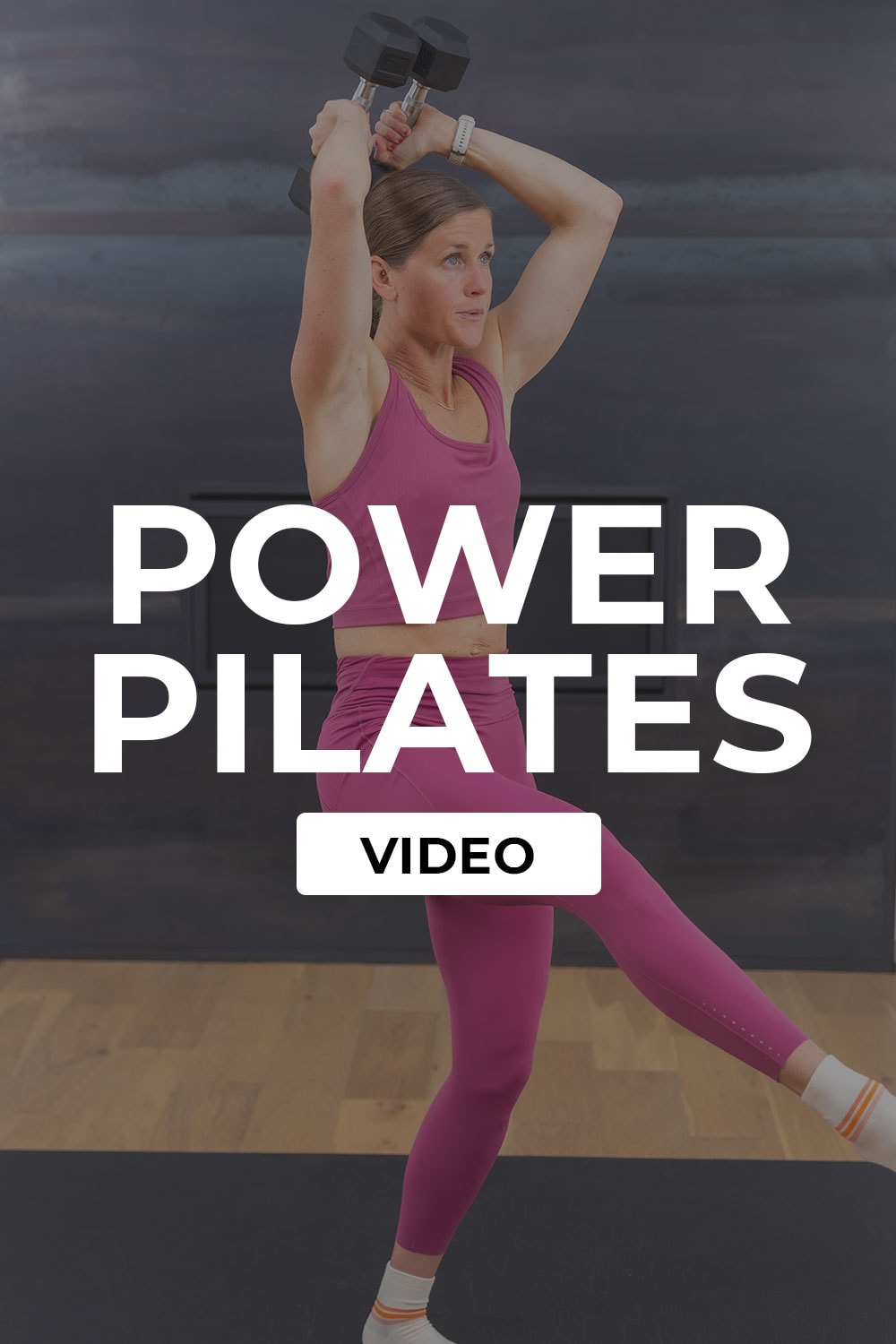
Challenge your total body strength, core stability and mobility with this full body pilates at home workout. You don’t need expensive pilates classes or specialized equipment to achieve your fitness goals. This fusion-style workout combines core-strengthening pilates sequences with high-rep strength training to target every muscle in the body in just 30 minutes.
There are a few things I wish someone had told me before I started pilates.
Slower is harder. Pilates is all about controlled movements, specifically those that target the stabilizing muscles surrounding the core and joints. This is a totally different type of challenge from traditional strength training exercises.
You can use heavy weights. Although traditional pilates classes are bodyweight only, incorporating dumbbells is a great way to encourage muscle growth.
You don’t need to spend money on expensive reformer pilates or mat pilates classes. You can reap all the benefits of pilates workouts at home, using limited or no equipment.
Featured Comment
“I admit that I’m not usually thrilled for pilates, but I LOVED this one! It’s definitely going to be one of my go-to work outs! Creative, fun, a good sweat, and feeling the burn!” — Shayna (YouTube Member)
Today’s at-home pilates workout combines elements of strength training, barre/pilates and cardio.
This fusion-style workout allows us to increase muscle mass, improve mobility/flexibility and posture, build deep core strength, and burn fat at home.
30-Minute Pilates At Home Workout
Strengthen and tone your entire body with this guided power pilates at home workout.
A full body workout targeting every muscle group in the body: the lower body (quads, hamstrings, glutes, calves, and thighs), upper body (biceps, triceps, back, shoulders, and chest) and core.
Sequenced Flow (moving naturally from one series to the next)
Workout Equipment:
Light to Medium Dumbbells. I recommend between 2-15 lbs depending on your fitness level. We used 10 lb dumbbells in today’s workout. Option to perform each exercise with no equipment, just your bodyweight.
Workout Outline
Warm Up
Plank and Glute Sequence
Arabesque and Chair Sequence
Lunge and Arms Sequence
Legs and Cardio Series
Mat Pilates Glutes and Core
Cool Down and Stretch
4 Full Body Pilates Exercises At Home
Chair Pose Squat
Targets: Glutes, quads, hamstrings, inner thighs (adductor muscles) and core.
How To Do Chair Pose Squat Pulses
Start standing in a narrow stance, feet together. Hold a dumbbell in each hand outside your thighs.
Bend your knees as you lower your hips down, as if sitting in a chair. Hold this position.
Press evenly through your heels to straighten your knees, standing 80% of the way up. Avoid standing all the way up to increase time under tension.
Modification: Keep your feet hip distance apart (standard squat) if chair pose isn’t comfortable for you.
Overhead Tricep Extension and Front Leg Lift
Targets: Glutes, quads, hip flexors, shoulders, triceps, erector spinae (back and spine), abs and core.
How To Do Overhead Tricep Extensions with Leg Lifts
Start standing on your right leg, keeping a soft bend in your right knee. Place your left toes on the mat in front of you, keeping your weight in your back left leg. Hold a dumbbell in each hand straight overhead, elbows stacked over shoulders, dumbbells pressed together.
Bend your elbows to a 90-degree angle, bringing the dumbbells behind your head. Think ‘hide the dumbbell, show the dumbbell’ if you were watching yourself in a mirror.
Squeeze through the back of your arms to straighten your elbows, pressing the dumbbells overhead. Hold this tricep extension.
Then, with control, lift your left toes out in front of your body, aiming to get your left thigh parallel to your left hip. Brace your core to prevent rib flare.
Slowly and with control, lower your toes to the mat, returning to the starting position.
Continue this pattern, alternating one overhead tricep extension with one front leg lift.
Reverse Nordic Curl (Thigh Dancing)
Targets: Quads, glutes, chest, shoulders, back and core.
How To Do Reverse Nordic Curls
Start in a kneeling position, knees under hips, tops of your feet pressed into your mat. Option to hold one dumbbell horizontally between your hands in front of your hips.
Squeeze your glutes and brace your core to protect your lower back.
Slowly lean backwards, bending your knees but keeping your torso upright. As you lean back, lift the dumbbell up in front of you, keeping both arms straight. Raise the dumbbell to shoulder height.
Slowly and with control, reverse the motion, lowering the dumbbell to your hips as you return to a kneeling position, shoulders stacked over knees.
Single Leg Glute Bridge with Leg Lower
Targets: Gluteus maximus, gluteus medius, calves, hips, hamstrings and abs.
How To Do Single Leg Glute Bridges with Leg Lowers
Start laying on your back, feet hip width apart and knees bent. Option to hold a dumbbell in each hand overhead, wrists stacked over shoulders.
Press through your heels to lift your glutes off the mat, squeezing your glutes as you lift. Think about keeping your core engaged and knees in line with your hips. Keep your right foot planted on the floor, and then extend your left toes straight overhead.
Inhale as you lower your right toes towards the ground, hovering them off the mat. Think about keeping your hips high and stable, pressing through your right foot for stability.
Exhale as you reverse the motion, lifting your left toes to stack over your left foot, returning to the starting position.
Modification: Bend the knee of your floating leg, reducing the range of motion.
LET’S GET STARTED
Download Your FREE Barre + Pilates Challenge
Join me for a FREE 2-Week Barre Pilates Challenge, with daily guided workout videos and modifications for all fitness levels!
You don’t need a pilates reformer machine or expensive mat pilates studios to see results at home. The key to making at-home pilates sessions effective is consistency, progressive overload (either by adding load or taking more advanced progressions) and following a workout plan.
What Kind Of Workout Is Pilates?
Pilates is a low-impact, full body workout that focuses on core strength, flexibility, and posture. This form ofstrength trainingtypically focuses on small, controlled movements.
Is Pilates A Good Way To Lose Weight?
Pilates exercises burn calories and build strength in a variety of different muscle groups, such as the legs, core and back.Mat pilatesor bodyweight pilates exercises are great for beginners, and you can add dumbbells to increase the intensity as your strength improves.
Pin This Workout: Pilates At Home Full Body Workout
This post includes affiliate links. I do earn a commission for products purchased using these links (at no additional cost to you). Thank you for supporting Nourish Move Love, making the content you see on this blog possible.
As the leaves change color and the weather cools down, it’s the perfect time to refresh your supplement stack with the latest and greatest pre-workouts hitting the market this fall. With new formulations designed to enhance energy, focus, and performance, these pre-workouts are tailored to meet the diverse needs of fitness enthusiasts, from hardcore bodybuilders to weekend warriors.
Below, in no particular order, we explore some of the best pre-workout supplements of Fall 2024 that are making waves in the fitness community.
Transparent Labs might not be a household name yet, but they damn well should be. TL has made significant efforts to ensure you know exactly what you’re getting when using their products.
No hiding behind proprietary blends or dodging third-party testing here. Each label has a clear amount of every single ingredient in the container. And when you look at the label of BULK Black, it’s jam-packed full of effective ingredients.
Formula Breakdown:
Citrulline Malate – 8,000 mg (breaking down to 6,000 mg of l-citrulline and 2,000 of malic acid)
Beta-Alanine – 4,000 mg (this is a little meh, but I’ll get to that a little lower)
Betaine Anhydrous – 2,500 mg
Taurine – 1,300 mg
L-Tyrosine – 1,000 mg
Alpha-GPC – 300 mg
Caffeine – 275 mg
L-Theanine – 200 mg
Theobromine – 100 mg
DiCaffeine Malate – 75 mg
SenActiv™ – 50 mg
Black Pepper Extract – 5 mg
Boron – 3 mg
There is also vitamin B6, vitamin B12, zinc, sodium, and potassium
So, some of these you might be aware of what they do and some you may have no clue. Luckily, on their product page, TL has a breakdown of what each ingredient does and studies to back up those claims.
Alright, now let’s move on to the minor gripe with this product. The inclusion of beta-alanine. Beta-alanine can work, but it needs to be taken every day. Now, can you take a pre-workout every single day? In theory, yes, but we only recommend taking it on days you train. Now, for something that isn’t an opinion, your body can acclimate to SenActiv™ somewhat quickly, and the makers recommend taking it, at most, 5 days a week. So you can see where the issue is. If you want to get more than just skin tingles from the beta-alanine in this product, you’ll need to buy a separate product to take on days you aren’t taking BULK Black.
That being said, as someone who has been taking pre-workouts without beta-alanine for years, this isn’t a huge issue. Everything else in this product works exactly as it should. The 375 total mg of caffeine isn’t a crazy amount, and the DiCaffeine malate does help prevent a post-workout crash.
They taste pretty good flavor-wise (the sour gummy is my favorite). However, they are sweetened with Stevia, which some people have an issue with, so that is also something to be aware of.
Price-wise, they run at a pretty standard $54.99 for a high-quality pre-workout powder. Unlike some other powders I’ve seen, all you need is one scoop, and that keeps the serving size at a respectable 30 servings. If you’re looking for something cheaper, they offer a subscribe-and-save option, which will save you $6 and get you free shipping.
Transparent Labs Bulk Black is the pinnacle of a clinically dosed pre-workout supplement for stim lovers…
This isn’t your typical pre-workout, and that’s not a BS sales pitch. Pump Serum is a stim-free pre-workout that actually does the trick. Every six months or so, I take a caffeine break, and this is my go-to pre-workout. As you would expect, without the caffeine, I’m not wired/jittery going into the gym, which is a pleasant change.
The pumps on it are fantastic, which one would expect, but what really surprised me was the improvement on my endurance and recovery during the workout. I’m able to scrape out an extra set or several more reps before I need to tap out. As you can tell, I’m a big fan.Let’s look into what makes this a great pre-workout choice.
Formula Breakdown:
Choline – 205.75 mg
Sodium – 97.5 mg
L-Citrulline – 4,000 mg
Betaine Anhydrous – 1,500 mg
GlycerPump™ – 1,500 mg
Beet Root Extract – 1,000 mg
L-Tyrosine – 750 mg
Nitrosigine® – 750 mg
Agmatine Sulfate – 625 mg
Pomegranate Extract – 500 mg
VasoDrive-AP® – 127 mg
Huperzine A 1% – 10 mg
Black Pepper Extract – 2.5 mg
*Note: All values are for a single scoop
So, full disclosure: I use two scoops. Some of the values are a little low for a single scoop, but even when assessing my tolerance to it, one scoop gave me workout benefits.
There are five flavors to choose from, and the taste is intense, to put it mildly. An 8-oz glass of water won’t cut it. I find myself needing close to double that, especially with two scoops. I’m not complaining, though; I’m just helping get some more hydration before hitting the gym.
Here is my biggest issue: cost. This is a premium product, with a premium price. At around $55, it’s not a bad value for 40 servings, but if you’re double-scooping, almost $3 per serving is what you might pay at your local gym. That said, I’ll continue to use Pump Serum during my caffeine breaks, and if you need a non-stim option, you should consider giving this a shot.
Pump Serum has one of the largest scoop sizes currently on the market. Every serving has a whopping 31 grams of active ingredients…
Kaged is the first offering on our list to include creatine in the actual formula. There are differing opinions on when you should take creatine, with some in the camp of before a workout and others swear post-workout is the way. Here’s a secret: As long as you’re getting it in your system, it really doesn’t matter that much. But this isn’t a creatine article, we’re here to talk pre-workouts. This is going to be our most expensive pick on this list, but once you see the dosages offered, you’ll see why they charge what they do.
Formula Breakdown:
L-Citrulline – 10,000 mg
Beta-Alanine (as Carnosyn®) – 3,200 mg
Creatine Monohydrate – 3,000 mg
L-Tyrosine – 2,500 mg
Creatine Nitrate – 2,000 mg
Taurine – 2,000 mg
Betaine Anhydrous (as BetaPower™) – 2,500 mg
Coconut Fruit Water Powder – 500 mg
Caffeine – 388 mg
Alpha-GPC – 300 mg
Sodium – 280 mg
Potassium – 250 mg
ElevATP® (Ancient Peat and Apple Extract) – 150 mg
AmaTea® (Guayusa Leaf Extract) – 100 mg
Magnesium – 65 mg
Vitamin B6 – 35 mg
Niacin – 30 mg
Huperzine A – 10 mg
MAX Catalyst™ (Piperine from Black Pepper Extract) – 4 mg
Vitamin B12 – 1000 mcg
As you can see, Kaged is not bashful about the amounts they put in. Beta-alanine is the only mildly underdosed ingredient, and we’ve covered my thoughts on that anyway. But you really have all you need here: ingredients for pump, focus, energy, and hydration.
The flavors are somewhat limited, with only fruit punch, strawberry lemonade, and cherry limeade as options. If you’re accustomed to pre-workout, you’ll find the flavors pretty good. Newbies, beware, there’s a bit of a bite, but it’s not overwhelming.
The biggest downside of this product is the price. $60 for 20 servings. Yeah, it’s not the best, but you can always do a bit less than a scoop and make it last a little longer.
Our most elite pre-workout ever formulated, with 21 premium ingredients for your most intense training sessions…
So, the ingredient lists have been pretty extensive compared to all the previous options. Pulse scales back quite a bit. That doesn’t make it a bad pre-workout; it just means it’s an excellent option for someone who doesn’t need all the bells and whistles that the others offer.
Formula Breakdown:
Citrulline Malate 2:1 – 8,000 mg
Beta-Alanine – 3,600 mg
Betaine Anhydrous – 2,500 mg
Potassium – 440 mg
Sodium – 400 mg
Caffeine Anhydrous – 350 mg
L-Theanine – 350 mg
Alpha-GPC – 300 mg
Calcium – 27 mg
That’s it. You’ve got your citrulline for getting the blood pumping, beta-alanine for muscle endurance (make sure you’re taking it every day), betaine for strength and endurance, caffeine for energy, theanine to avoid a crash, and Alpha-GPC for cognitive function. These straightforward ingredients help you make the most out of your gym session.
The taste? There are 11 flavors to choose from, so you can surely find something you would like (Arctic Blast is my personal favorite).
Another solid selling point is the price. $40 for 20 servings. I know the 20 servings is a little frustrating, but trying the subscribe-and-save option brings it down to $36, which is less than $2/serving.
Get the only 100% natural pre-workout drink with clinically effective doses of 6 scientifically proven ingredients for more energy, focus, and strength without the jitters…
Okay, okay. I know, old formula? Yeah, I have a good reason for it. This is a high-stim pre-workout, and I mean high-stim. The combined total for stimulants in this version is 502 mg per scoop, which in itself is pretty dang high. The new formula shoots up to 781 mg of stimulants. Now, that’s not all caffeine, but man, that’s more than I’m comfortable recommending to anyone.Getting back to this version, let’s take a look at what’s inside.
Formula Breakdown:
L-Citrulline – 6,000 mg
Beta-Alanine – 3,200 mg
Betaine Anhydrous – 2,500 mg
Malic Acid – 2,500 mg
nooLVL® – 1,600 mg
L-Tyrosine – 1,500 mg
Agmatine Sulfate – 1,000 mg
Alpha-GPC – 600 mg
Caffeine Anhydrous – 325 mg
L-Theanine – 200 mg
Di-Caffeine Malate – 100 mg
Theobromine – 100 mg
AstraGin® – 50 mg
Huperzine A 1% – 20 mg
Raulwolscine – 1 mg
Yohimbine HCl – 1mg
So, at a quick glance, most of the dosages look pretty good. The beta-alanine is technically a little bit low, but if you read the previous recommendation, you would know I’d be fine with it not being in there at all.
The other questionable ingredient is nooLVL®. Some studies on it have favorable results (some users had a great experience with it, while others didn’t see any difference at the same dosages), but research is pretty limited. The company that produces nooLVL® funded the other studies, which could be seen as an issue. I don’t think its inclusion is a real issue, but the benefits might not be there for some people.
When it comes to flavor, I really hope you like peach rings because that’s all there is. To me, the taste was pretty good, but there’s not a lot that turns my taste buds off.
At the time of this writing, Phasic is available for $35 per container, which is good. But you only get 20 servings per container, which is not so good. If you want to make it last a bit longer, you should follow Live Evolved’s suggestion and start with half a scoop (theirs is more to assess tolerance than save money, but you can make it work for your benefit too).
Live Evolved Phasic is a pre-workout only meant for the hrdcore…
What do the ingredients actually do?
You might’ve noticed that most of these pre-workouts have somewhat similar ingredients, but why are they in there? This section will give you a quick breakdown of each ingredient’s function.
Citrulline: Enhances blood flow and pumps by increasing nitric oxide production, leading to better oxygen and nutrient delivery to muscles.
Beta-Alanine: Buffers lactic acid buildup in muscles, reducing fatigue and allowing for longer, more intense workouts.
Betaine Anhydrous: Supports power output and muscle endurance by enhancing cellular hydration and promoting creatine synthesis.
Taurine: Helps with hydration and electrolyte balance, improving endurance and reducing cramping during exercise.
Tyrosine: Boosts focus and mental clarity under stress by supporting neurotransmitter production, particularly dopamine and norepinephrine.
Alpha-GPC: Enhances cognitive function and mind-muscle connection by increasing acetylcholine levels in the brain.
Huperzine A: Prolongs the effects of acetylcholine, further improving focus, memory, and overall cognitive function during workouts.
ElevATP: Increases ATP production, providing more cellular energy to improve strength, power, and exercise performance.
GlycerPump: Enhances muscle pumps and hydration by increasing water retention in muscle cells, leading to fuller, more vascular muscles.
Agmatine: Supports nitric oxide production and reduces pain perception, contributing to better pumps and endurance.
Theobromine: Provides a smooth, sustained energy boost and mild stimulation without the jitters commonly associated with caffeine.
Theanine: Promotes relaxation without drowsiness, balancing the stimulating effects of caffeine to prevent crashes.
Caffeine: Increases energy, focus, and fat oxidation by stimulating the central nervous system, making it a staple in most pre-workouts.
Di-caffeine malate combines caffeine with malic acid to offer a longer-lasting, smoother energy boost with less crash compared to regular caffeine.
For a more in-depth look at some of these ingredients, check out our article on key preworkout ingredients.
Wrap Up
Instead of bombarding you with 20 different pre-workouts, we wanted to give you five top-quality products that are worth every penny. Most of these pre-workouts are pretty intense, so we suggest starting with a half dose first to see how you tolerate them. No matter which one you decide to go with, one thing is for sure: You’re about to have a helluva workout.
The critically acclaimed Pumping Iron (1977) still holds up as one of the greatest ever films to cover the bodybuilding genre. And, almost 50 years on, the docudrama still holds up as a masterpiece for anyone who wants to make gym gains. One of the many moves that The Terminator star broke out while filming the passion project was the elevated bent over row. Here’s why you should be more like the Austrian Oak and incorporate Arnold Schwarzenegger’s elevated bent over rows in your routine.
The traditional bent over row is executed with a barbell, or dumbbells, and strengthens numerous areas of the back including the upper and lower back, lats, shoulders, biceps, and also adds grip strength. To execute, the individual will stand over the barbell (or dumbbells) with both feet under the weight. They will then bend over at the hip to grip the weight, lifting it up to around knee height. From there, the pull action requires moving the weight from the knee upwards towards the sternum before lowering the weight back to the knee and repeating.
Benefits of the Bent Over Barbell Row
This exercise is perfect for sculpting a V-shaped back because it gives you wings by building the latissimus dorsi, rhomboids, trapezius and erector spinae, and when practiced with proper form, you will also improve posture and overall endurance in the back. Having a stronger back will also help you to make better progress by maintaining control of other lifts such as squats and deadlifts. Of course, a stronger back also reduces your risk of injury meaning that you can hang in the gym for hours, just like Arnold himself.
Arnold Schwarzenegger’s Elevated Bent Over Barbell Rows
There are many variations to bent over rows including the addition of horizontal resistance, using bands, or T-Bar rows where the barbell is placed and then lifted from between the legs. Arnold’s variation, posted to the Arnold Sports Instagram account, utilized an elevated position by standing on a wooden plank and unlike with the tradition row, the Commando star lifted the barbell from a starting position where the bottom of the weight plates were just underneath his feet. Schwarzenegger then raised the bar from that base, all the way towards his naval, and repeated. Doing it this way will require a greater stretch, and will put more load of the lats. Just remember to contract your muscles and the top of the lift.
Bent Over Barbell Row Guide and Tips
As with any back exercise, it is a good idea to warm-up before going into working sets. As seen in the video, Arnold is not working with a weight that could be considered heavy for him. After warming up, the working weight that you choose will depend on whether you want to build muscle or strength as a primary goal. For hypertrophy and muscle mass, go with 3-5 sets of 12 reps, building up the weight as you feel comfortable and working towards failure. You can also add time under tension by pausing for three seconds at the top of the lift. For strength, stay heavy, but reduce the reps and increase the sets. Make
sure that you are always maintaining proper form. Got it? Good! Now come with Arnold, if you want to lift!
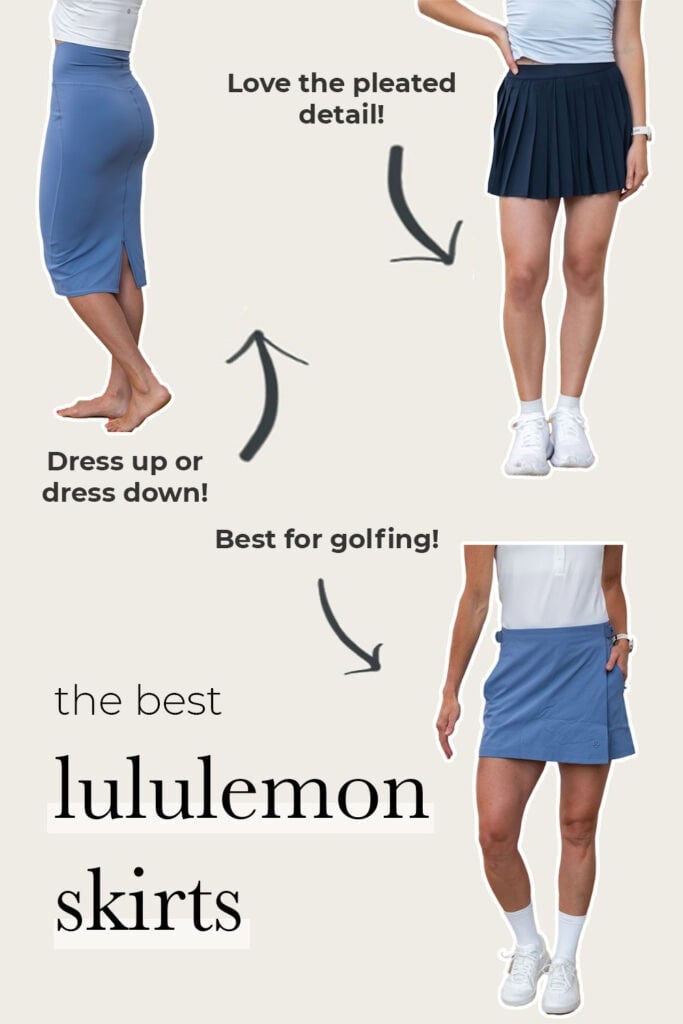
The best lululemon skirts for women in 2024. Our team tested and compared the five most popular skirts from lululemon, including a functional tennis skirt and a cute skirt for date night. We also included a size and fit guide to help you determine which lululemon skirt is right for you.
Trying to decide which lululemon skirts is right for you?Our team tried some of lululemon’s most popular skirts to compare different fabrics, fits, length and comfort.
A few reasons why we love shopping lululemon include:
Free shipping and returns on every order (no minimum purchase)
High quality products (everything I’ve purchased from lululemon has lasted me years)
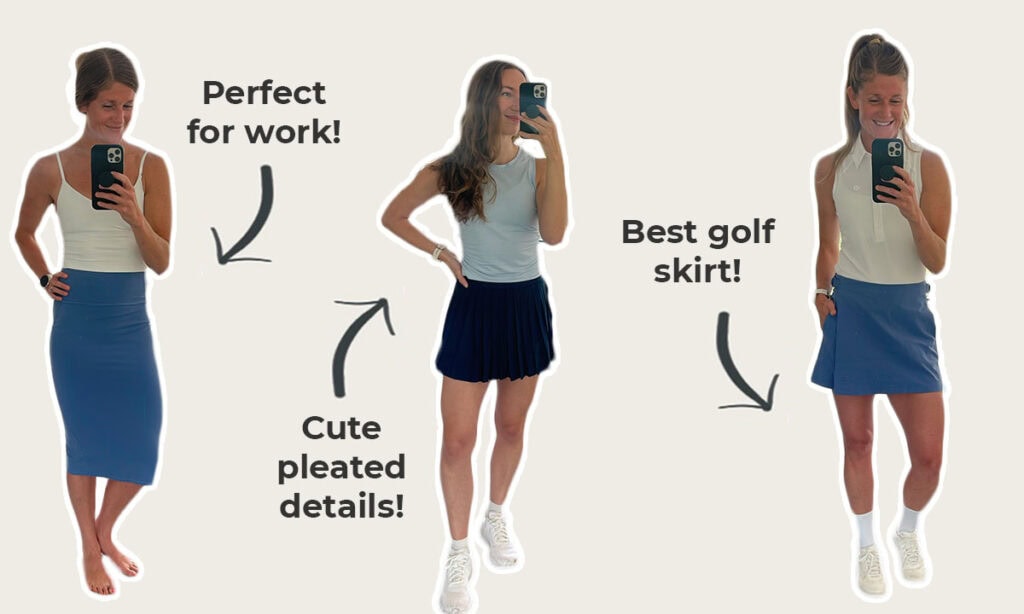
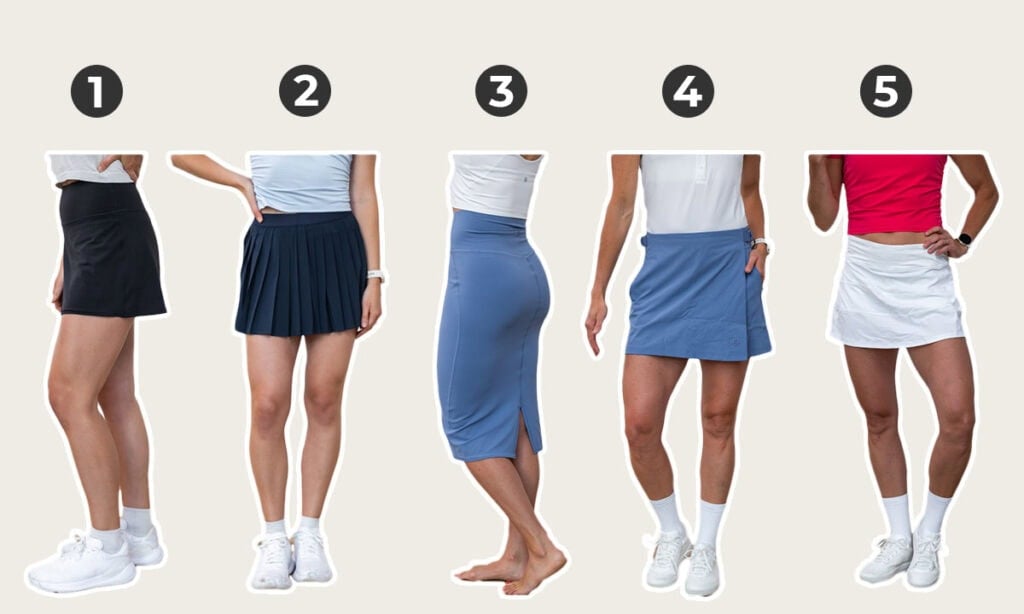
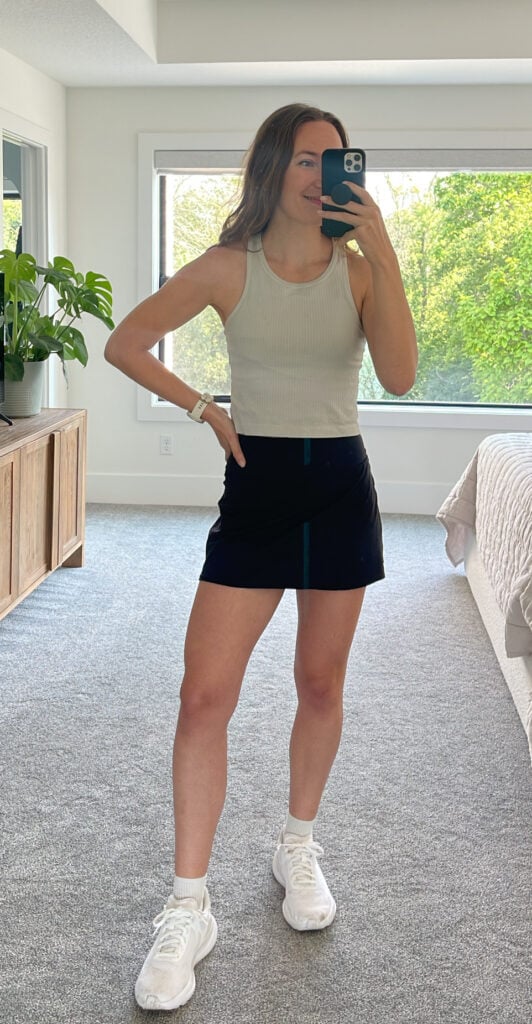
Nulu Slim-Fit High-Rise Skirt. Extremely soft, so flattering and perfect for dressing up for date night. 💜 NML Team Favorite
Wrap-Front Mid-Rise Golf Skirt. Most functional skirt for golf that includes specially designed features and pockets for your golf gear.
Pace Rival Mid-Rise Skirt. A casual skirt for everyday wear, walking and tennis. But if we’re honest this is our least favorite skirt and one we returned because of the gapping in the waistband.
Best For: ultimate comfort. Our favorite for everyday wear.
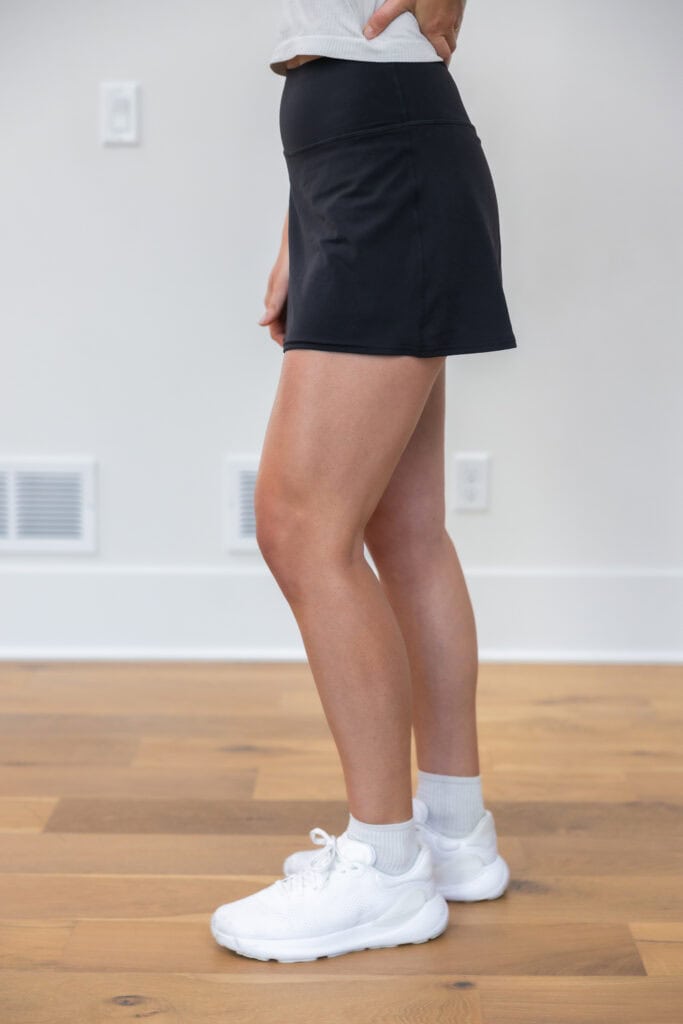
When it comes to comfort, the Align fabric can’t be beat. Made out of the same signature Nulu fabric as the iconic Align Leggings, this buttery soft skirt is perfect for daily wear.
The high-rise waistband offers a flattering fit and added coverage, while the built-in shorts provide support and freedom of movement.
Bonus: The Align Dress is a great option as well. It has built-in shorts that are only connected at the front – so you don’t have to take the entire dress off when going to the bathroom.
Sizing Notes: this skirt runs true to size. Rachel is 5’8″ and typically wears a size 6 in bottoms. She is pictured wearing her typical size in theAlign High-Rise Skirt.
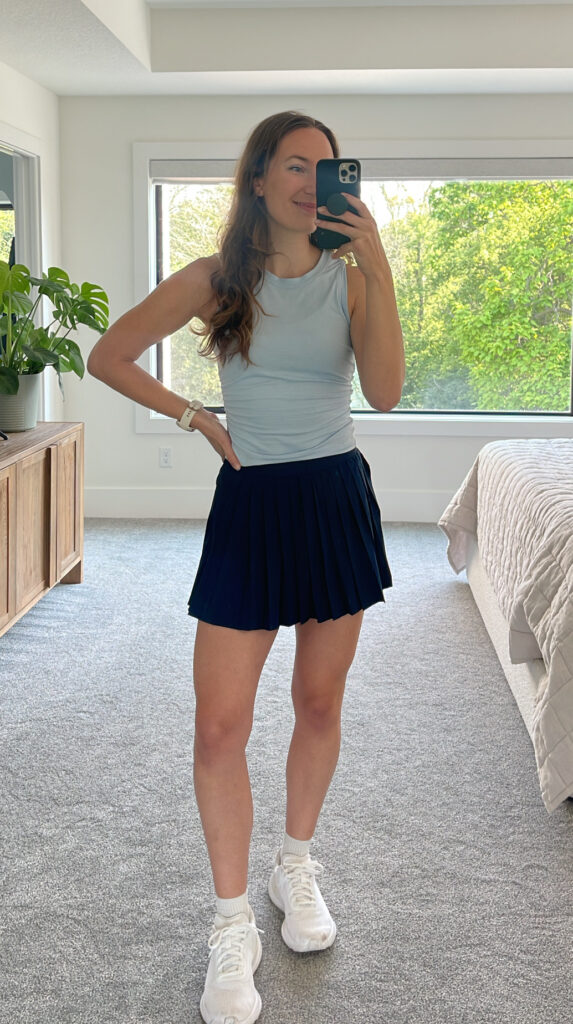
Best For: tennis, pickleball and everyday wear.
This skirt combines performance and elegance, making it a standout choice for tennis players, pickleball players and active individuals.
With the lightweight, sweat-wicking fabric, this skirt ensures you stay cool and comfortable on and off the court.
Built-in shorts offer additional support and coverage, complete with a hidden pocket for essentials.
Sizing Notes: this skirt runs true to size. Rachel is 5’8″ and typically wears a size 6 in bottoms. She is pictured wearing her typical size in theHigh-Rise Pleated Tennis Skirt.
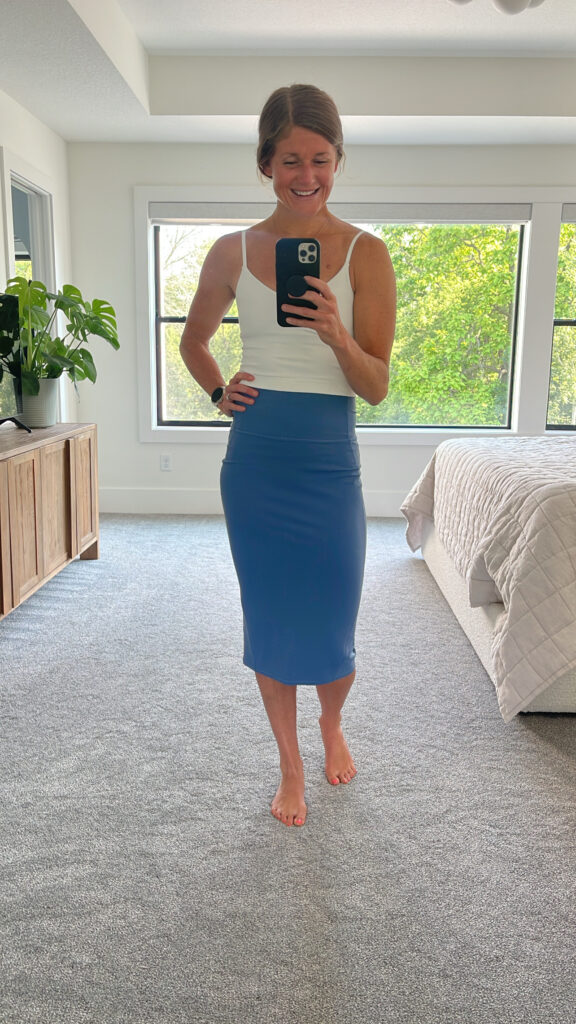
Best For: workwear and dressing up.
This is my go-to skirt when I need to dress up for work events, date night, dinner with the girls or celebrations.
The fabric is ultra soft and smooth, with just enough structure to perfectly skim the body without being restrictive.
Honestly, I wish I had this skirt during pregnancy too. It’s stretchy and smooth waistband would be great for accommodating a baby bump too.
Sizing Notes:this skirt runs true to size. Lindsey is 5’8″ and typically wears a size 6 in bottoms. She is pictured wearing her typical size in the Nulu Slim-Fit High-Rise Skirt.
Best For: a flattering high-rise skirt for golf.
The wrap-front design adds a sophisticated touch, while the high-rise waistband ensures a secure and flattering fit.
This lululemon skirt features both interior and back pockets for your score card, as well as an adjustable belt to customize your fit and stash your golf glove.
Sizing Notes:this skirt runs a little big but has a cinch-able waistband. Lindsey is 5’8″ and typically wears a size 6 in bottoms. She is pictured wearing her typical size in the Wrap-Front Mid-Rise Golf Skirt.
Best For: on-the-go casual wear, walking and tennis.
The Pace Rival Skirt has built-in shorts for extra coverage and support. This skirt is all about keeping you comfortable on walks, and playing pickleball or tennis.
This is personally my least favorite lululemon skirt as it is not high waisted and I experience a ‘gap’ in the back of the waistband.
So total transparency, I returned this skirt because I didn’t love how it fit.
Sizing Notes:this skirt runs true to size. Lindsey is 5’8″ and typically wears a size 6 in bottoms. She is pictured wearing her typical size in the Pace Rival Mid-Rise Skirt.
lululemon Skirts FAQs
What Are The Best lululemon Skirts?
The Align Skirt is a lululemon classic, and one of the most popular skirts purchased online. This skirt is loved by reviewers and described as the comfiest, softest skirt for casual wear. Our team also loves the buttery soft Nulu Slim-Fit Skirt for work wear and date night.
What Is The Best lululemon Tennis Skirt?
Skirts from lululemon are popular for all activities, especially tennis and pickleball. lululemon has a variety of styles, lengths and features for their tennis skirts. Our favorite is the High-Rise Pleated Tennis Skirt for its quick-drying fabric and pleated look.
Pin This Post: The Best lululemon Skirts
This post includes affiliate links. I do earn a commission for products purchased using these links (at no additional cost to you). Thank you for supporting Nourish Move Love, making the content you see on this blog possible.
2024 Update: Added Giant Lifting BD3X rack, a comparison chart, and various updates throughout.
Very few things are as important for strength training as a power rack.
While you can get a budget power rack at around $300, spend more and it’s a whole different world. A better rack feels as solid and safe as one at a commercial gym and has several features you might have taken for granted until you notice the cheaper racks are lacking them.
You Don’t Have to Bolt Down Your Rack
A “freestanding” power rack is one you can use without worrying about bolting anything to the floor. This is the easiest to deal with.
I should present a little bit of context so that other people don’t get in your ear and make you feel like you need a bolt-down rack.
This pic is from the era where the “a real power rack is bolted to the floor” assertion is rooted. The originals were very shallow from front to back and had to be bolted down to the floor or wall.
In commercial settings, having a bolt-down rack still makes sense so that it doesn’t shift around from people using it all day and is impossible to tip over even if someone is monkeying around on it.
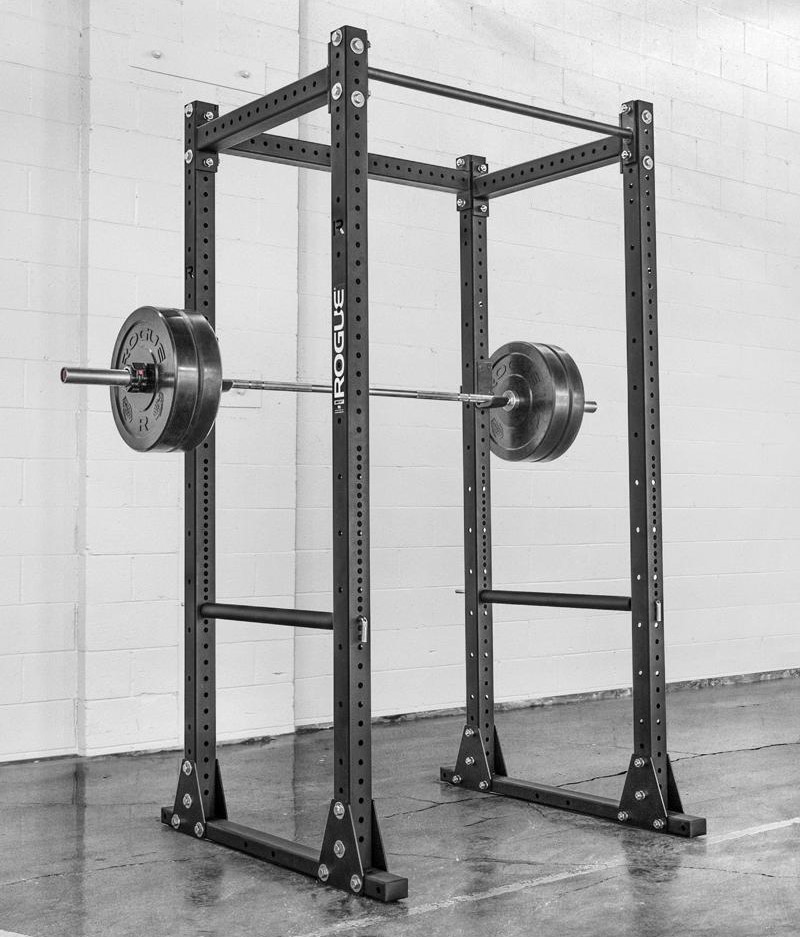
There has been a resurgence in bolt-down racks for home use, chief among them Rogue and their R-3 rack. At home these are more essential for Crossfitters for exercises like kipping pull ups. For other people, eh, not so much. Do you bolt down all your furniture? Or do you shove it back into place after a while when you notice it’s moved? Yeah, not a big deal.
Important Guidelines for Picking a Home Power Rack
Some of this comes down to what kind of gravy you like best. I recommend you look at the product page of a couple choices I go over further below and see if anything jumps out at you. Don’t worry about most of the features, or you’ll make yourself crazy and never make a decision.
The point of this guide isn’t to sort out every feature but to steer you towards a few solid choices that have most or all of these most important features.
Open-Ended Design
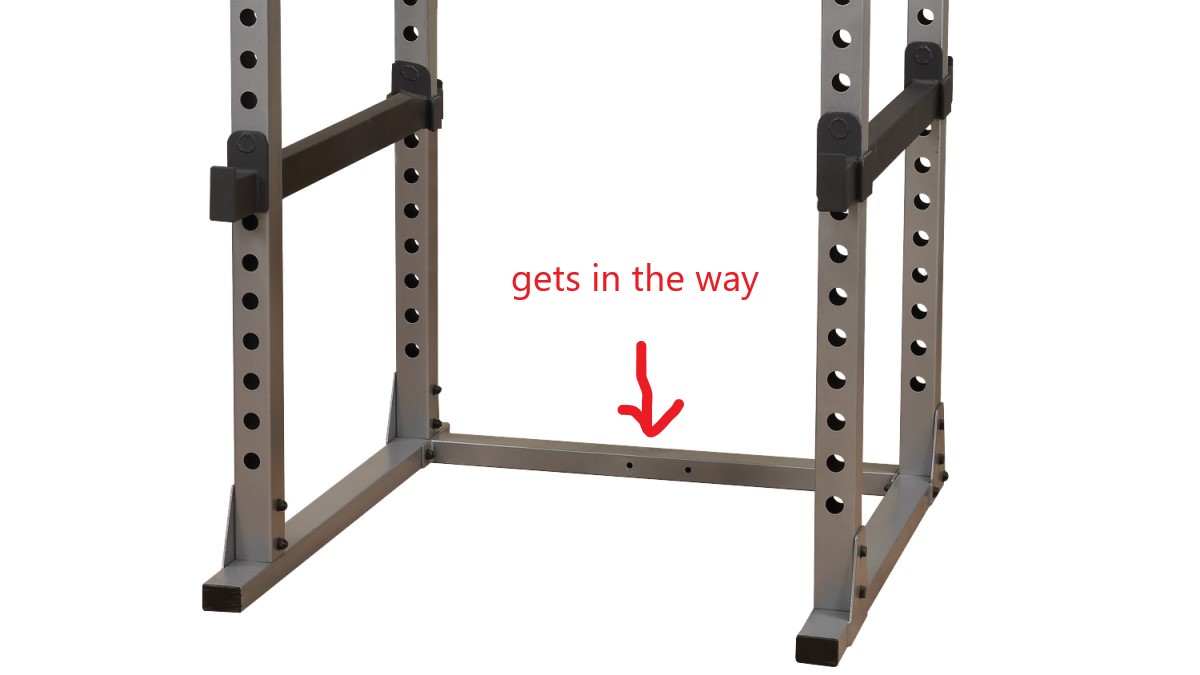
Some nice freestanding power racks have adopted the open-ended design of bolt-down racks, where you have complete freedom to slide your bench back without any lower horizontal brace getting in the way.
The old Body Solid GPR378, on which the lower cross brace gets in the way.
In particular this often becomes a problem when you set your adjustable bench to incline position and need to slide it back a little more to get your body under the bar. It runs up against the rack’s cross-brace, as you can see above. That brace will also will get in the way of your feet when unracking for squats.
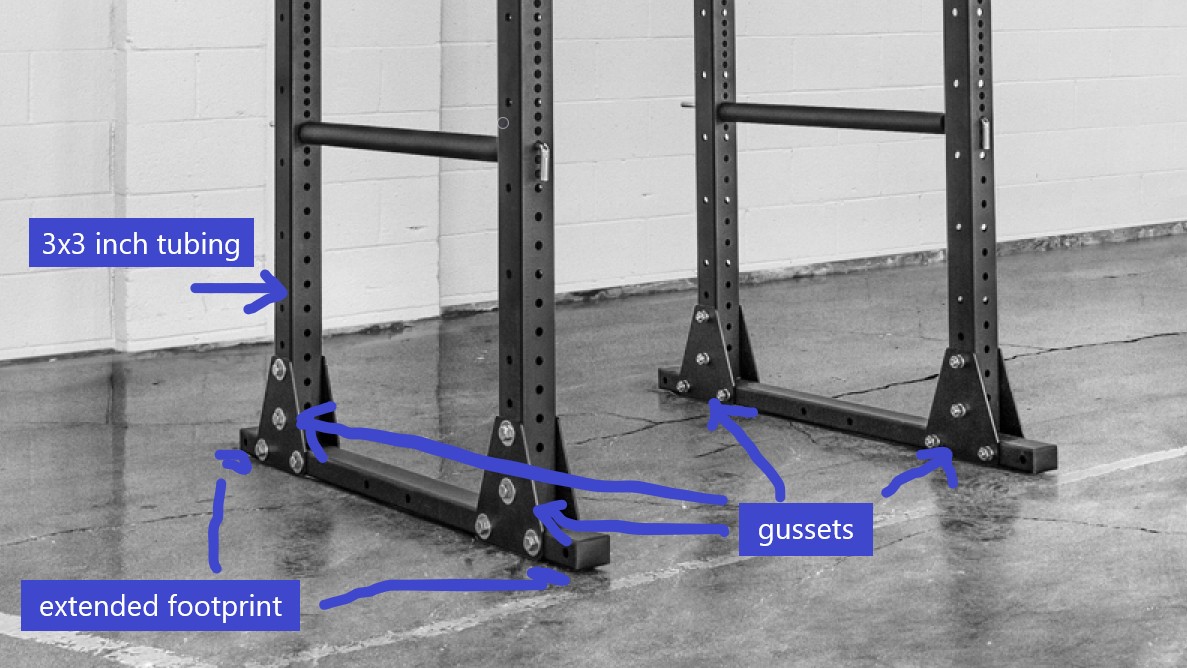
Freestanding open-ended racks have to designed heavy-duty enough that they remain stable without needing the lower cross-brace so much.
The racks will need these features for stabilization:
3×3 inch tubing
Gusseting on the bottom corners
A deeper footprint
Very heavy weight (300+ lbs)
This increases the price significantly in the interest of omitting that lower cross brace that gets in the way.
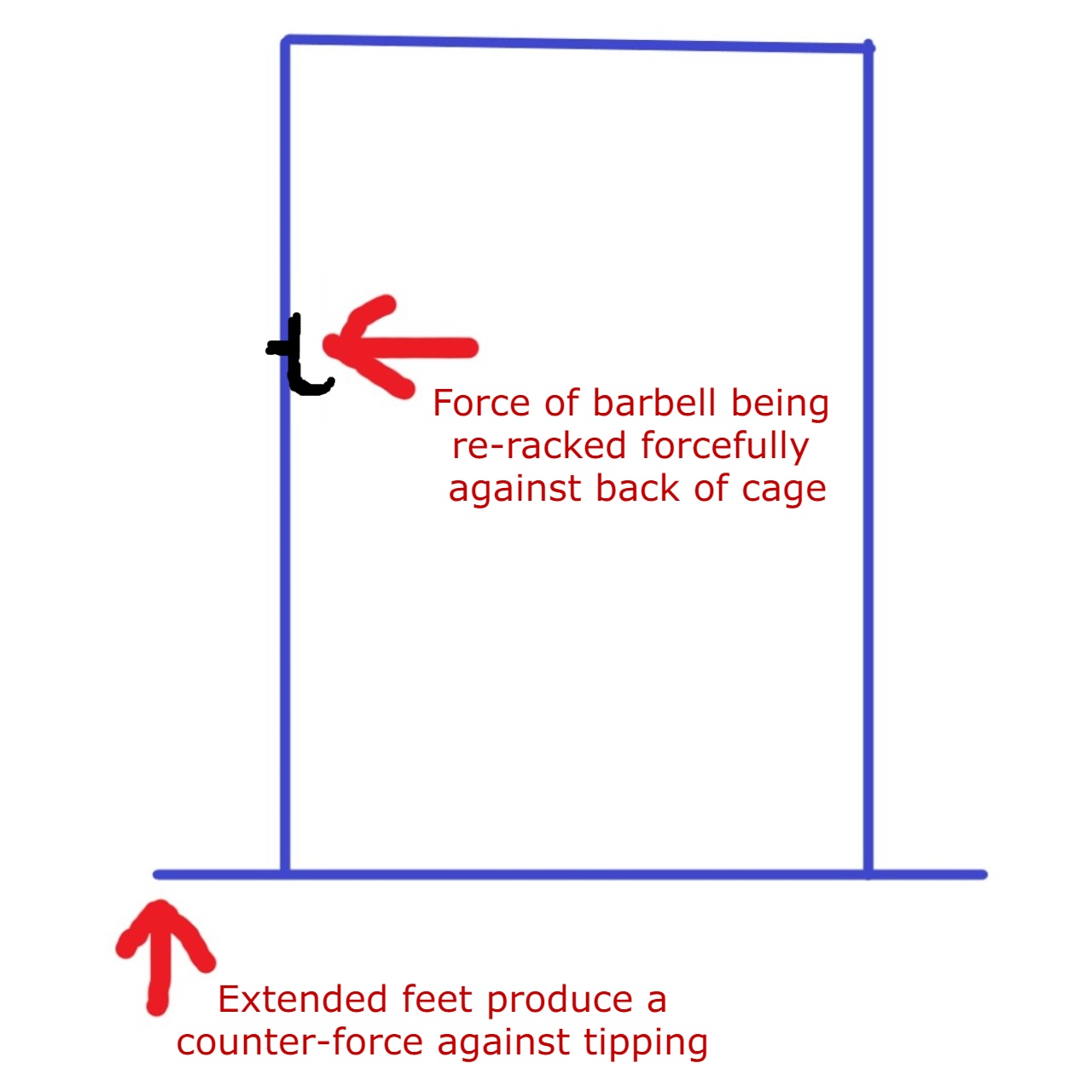
Here’s another look at why the extended footprint is necessary:
An extended footprint beyond where you’re racking the bar acts as a counter-force, leveraged against the floor, to prevent the rack from tipping. Intuitively this should make sense.
Sturdiness / Weight / Weight Capacity
Some companies advertise a weight capacity of 500 lbs, 1000 lbs, whatever. Don’t compare that number. Any rack out there will hold the amount of weight you’re lifting and not break. Steel is strong stuff. It really comes down to how stable the rack is, and that consideration is not at all indicated by a weight capacity rating.
Whether or not it’s a rack with an open-ended design, you want a rack that feels solid, doesn’t shift around, won’t tip at all when you walk into it with a heavy barbell on your shoulders, and doesn’t wobble when you do pull ups.
For that super stable feeling, get a rack made of 11-gauge steel and either 2×3 inch or 3×3 inch tubing. These always weigh in at over 200 lbs. Some commercial grade ones are closer to 400 lbs, which is a burden to assemble (or move!) but great to use. For a freestanding rack, it mostly comes down to heavy = stable.
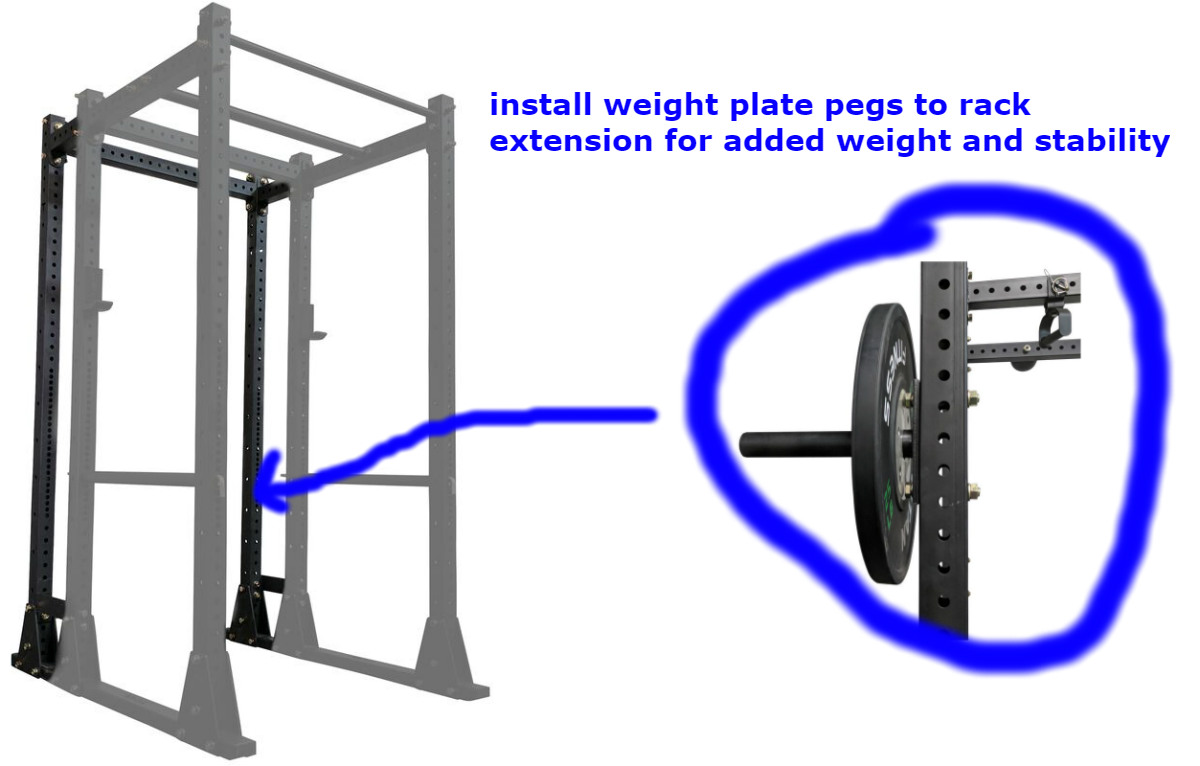
You can weigh down some racks further by adding 45lb weight plates to storage pegs, preferably close to the floor.
In terms of the rack staying put and not sliding, rubber flooring makes a huge difference. The rack will slide too easily on concrete or other surfaces.
Pull Up Bar Height and Your Ceiling Height
A power rack is partly wasted when its pull up bar is too close to the ceiling to give you head room over the bar. Sure, it’s nice to have a tall rack that you can do standing overhead presses inside, but you have to balance everything out with your ceiling height.
Modern racks with the pull-up bar installed into any holes on the uprights on the front, rather than on the top frame, gives you the flexibility to install your pull up bar at the perfect height. This is the best design, giving you a full-height rack while not sacrificing head room for pull-ups. All of the racks I feature below have this feature, with the exception of the ForceUSA MyRack.
J-Hook Choices
This is what you rack the bar on, and it’s almost as important as the bar itself, because it greatly affects your experience during every single set and whether your bar’s knurling gets ruined by the hooks.
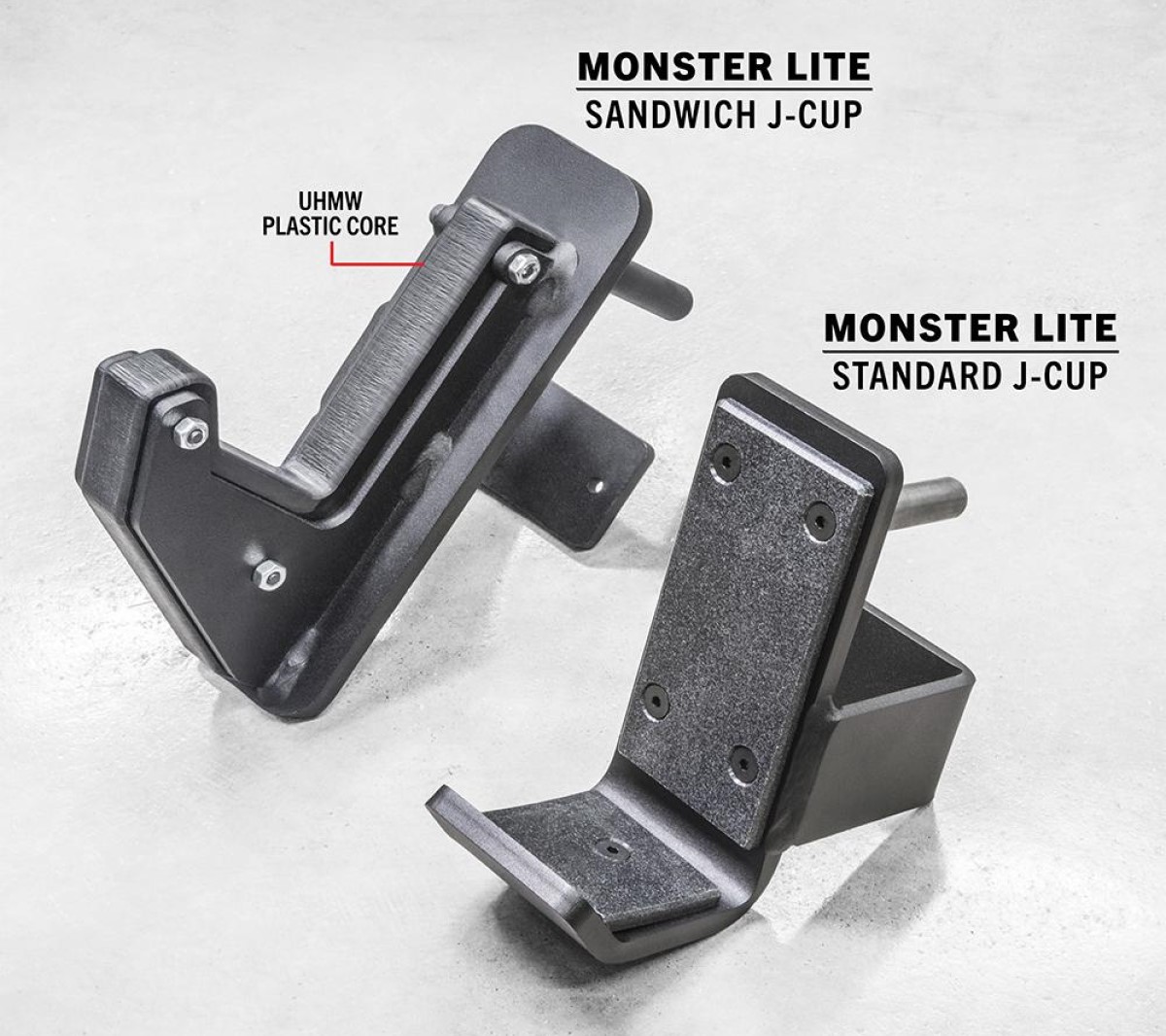
An option for sandwich J-hooks is a plus, in my opinion. The way they are constructed, there’s a thick slab of UHMW (ultra high molecular weight) plastic protecting your bar’s knurling no matter where you slam it into the hook, even against the front edge mistakenly. They also are thinner side-to-side and stick out from the rack farther, giving you more room for slop side-to-side when re-racking the bar.
This image from Rogue gives you a good comparison of the two styles
When given the option, most everyone would prefer sandwich J-hooks over regular J-hooks. The price is the only factor. I wrote a post all about these.
Failing that, at least make sure to get UHMW lined J-hooks, the one on the right side in the pic above.
These serve the same purpose as traditional steel safety bars, catching the bar at the bottom of your range of motion if you should fail a set, but with a few advantages over steel bars:
Reduced noise
Reduced wear on the bar’s knurling
Reduced risk of rack or bar damage if you drop the bar
Reduced need for Westside hole spacing
To explain that last point, straps can be set with one anchor higher than the other so as to adjust the strap hang height just right. This way the extra holes in the rack uprights are not necessary.
If you aren’t aware, Westside spacing is a feature originated by the people at Westside Barbell, a well-known and invitation-only powerlifting training facility. They started putting a hole at every inch on center in the bottom portion of the uprights, rather than every 2 inches or more, so as to allow the lifter to set the safety bars at his perfect height for bench presses, just under his range of motion but high enough to save him if you should fail. The industry has widely adopted the design. It just so happens that every rack I feature further below has Westside spacing because it’s so popular.
Anyway, if you don’t get safety straps, the next-best alternative is safety bars that have some kind of protection on them, such as pin-and-pipe safety bars or UHMW-lined safety bars. Sure, sometimes you’ll only hit them if you fail a set, but if you do a variety of exercises you might be resting the bar on the safety bars/straps for certain exercises.
Other Add-Ons, and Compatibility Between Brands
If you have your heart set on attachments like a monolift or dip handles, make sure you can get one from them or a compatible one of another brand.
You might be able to find a compatible brand of power rack attachments in this guide. There are like 20 different sizes, and some are totally incompatible with others. Your best bet for compatibility is 3×3 inch tubing for direct compatibility with Rogue, or 75x75mm (2.95″) tubing which has become common enough that incompatibilities with some Rogue attachments might not be a big deal.
Now on to specific racks that meet most of those criteria…
– Must be stabilized or bolted down – Limited compatibility with Rogue attachments due to metric sizing
What Makes it Stand Out:
– Quality control – Height and depth options – Stabilizer and extension options – Westside hole spacing
Rep Fitness makes very good quality equipment, nearly on par with Rogue, but not USA-made, and for a slightly lower price. Unlike Titan, they don’t really copy Rogue’s models.
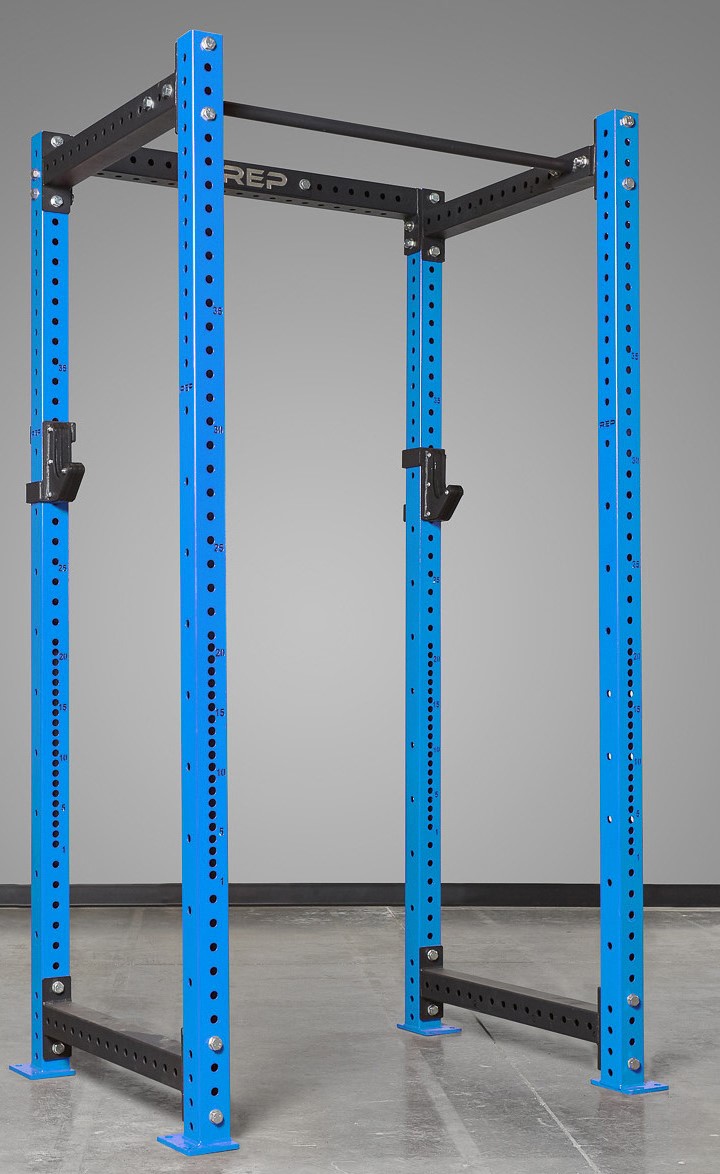
Rep doesn’t make a flat-foot rack. This is their featured power rack in the same price range of the other racks here, and although at first glance it appears to be a bolt-down rack, it can be configured to be freestanding, as I go over below.
On the product page you’ll see several customization options, including height and depth choices, which is easier to deal with than the way Rogue and Titan both separate out the different heights and depths into different models you have to browse through on separate pages.
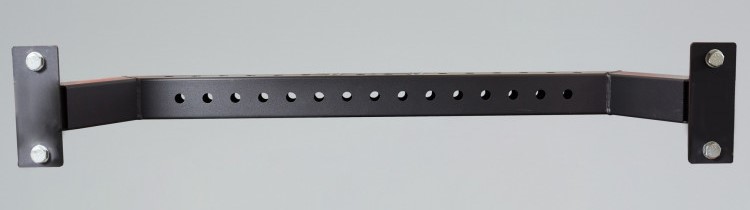
I confirmed with Lance at Rep Fitness that you can mount the pull up bar anywhere on the uprights instead of the top frame, giving you height options for it.
Speaking of the pull up bar, if you try to use the short 80″ rack under a 7ft (84″) ceiling, you’ll find that you don’t have enough room for pullups.
Optional rear stabilizer. This isn’t the best pic angle. The stabilizer is angled back so as to be out of the way.
The basic unit is meant to be bolted to the floor if you don’t add any kind of bracing.
One option to avoid bolting it down is adding the bottom rear stabilizer. I like the way the stabilizer is curved backward, a design that makes it less likely to get in the way of your bench or feet… but we’re only talking a few inches, and it will therefore still get in the way with some benches or situations.
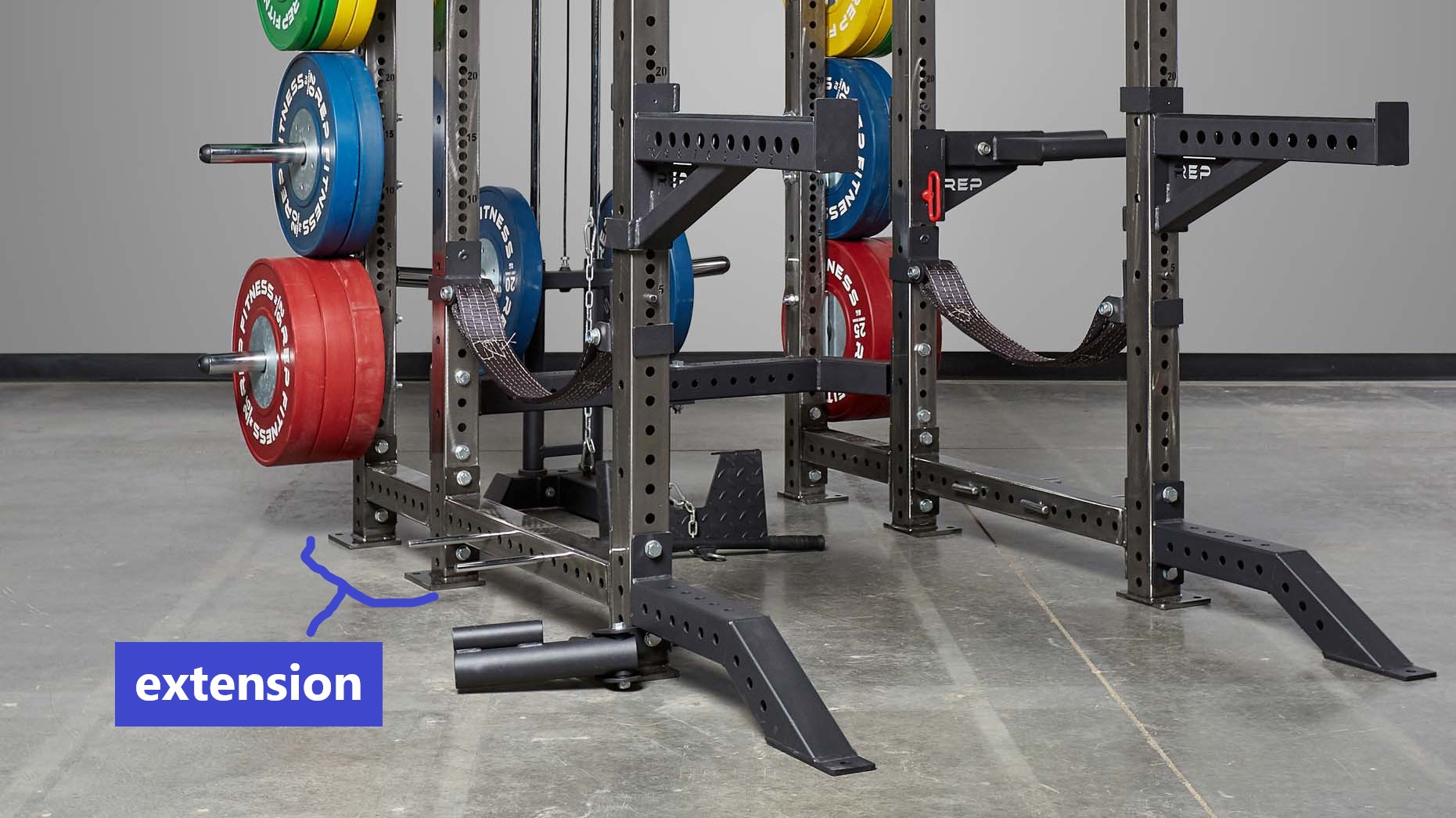
The other option is to add the rear extension shown here, on which you can optionally install plate storage pegs, which is also great to have, both for storage sake and to weigh the rack down. You also see the optional front feet extension, which will help stability a little but not as much as the rear.
The size compatibility with the Rogue Monster Lite attachments is a plus. They are sized in metric, so the compatibility is not going to be perfect and some attachments likely will not fit.
By the way, as far as those band pegs... Not a great idea to use bands on a freestanding rack unless you weigh it down good. You could pull it right off the floor.
Possible Issues:
Nothing I can think of
What Makes it Stand Out:
– Large selection of attachments – Quality control – Made in the USA – Westside hole spacing
You can’t go wrong with Rogue. Quality is always a given. Their designs and quality control are among the best, at least for this price range. People who want to avoid the risk of headaches with bad parts that need to be replaced go with Rogue. Occasionally there can be an issue, but they do such high volume that they’ve got their processes down better than anybody to avoid the problems. They make their racks (and many other things) in their own huge facility in Columbus, OH, making it one of the only made-in-the-USA choices.
Accordingly, Rogue is more expensive than other options.
The 92″ height will fit under a 8ft (96″) ceiling, and you can adjust the pull up bar a bit lower during installation as needed.
Naturally, all of the Monster Lite attachments fit this rack, as well as some from Rep Fitness and other brands.
Possible Issues:
– Limited compatibility with Rogue attachments due to metric sizing – Lower quality standards
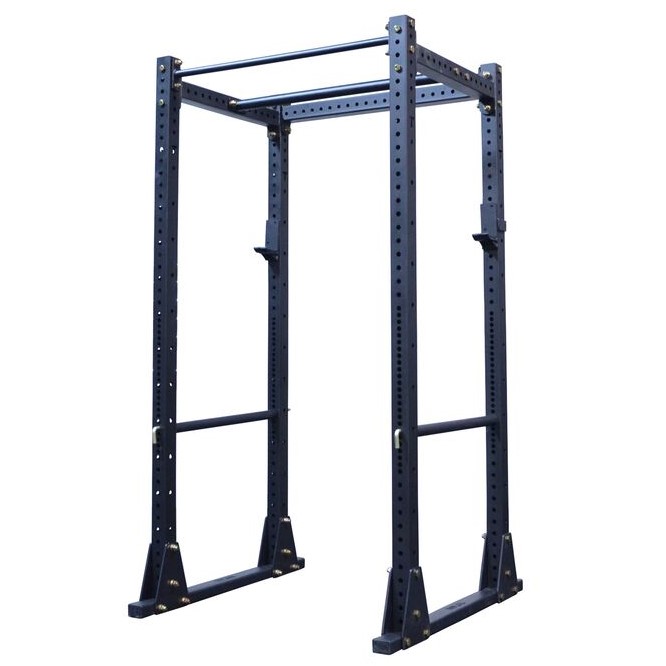
Titan’s X-3 line includes several power racks and squat stands made of 3×3 inch tubing. The flat-foot X-3 is a freestanding variation of their regular X-3 power rack.
Titan is known for their low prices and making direct copies of Rogue equipment, sometimes with corners cut. As such, this is the lowest priced of all options, even if you get the 92″ height. Be forewarned that sometimes Titan’s equipment arrives scratched up or with a weld misaligned. Their UHMW plastic inserts protecting J-cups and safety bars are a bit roughly cut compared to the clean polished look of other brands. Picky people will not like Titan. Others don’t mind taking a gamble. Titan does send you replacement parts if there’s a significant problem with the alignment or safety. I think they probably keep their prices low by not spending a lot of time doing spot checking or being too nitpicky about things until it’s a real issue.
Their flat foot rack has a 50″ deep footprint, which is 2″ deeper than Rogue’s. A previous version of this article I had this rack as weighing 343 lbs. As often is the case, the info from Titan was inaccurate and has been corrected to 296 lbs for the 92″ tall model, which is almost exactly the same weight as Rogue.
Like Rep Fitness, Titan has a short version, at 82″. As with Rep’s short option, if you use it under a 7ft (84″) ceiling you’ll find the pullup bar to be useless.
For added stability, add the rack extension and set of 8 plate storage pegs to really weigh down that sucker.
Titan’s tubing size is metric, converting to about 2.95″ square tubing and 11/16″ holes. Due to this, some attachments from Rogue and others will fit, while some may not. This may not be an issue for you, given that Titan makes a ton of attachments for it.
Possible Issues:
– No compatibility with other brands of attachments – Fixed height 87″ pull up bar – 12 gauge steel
What Makes it Stand Out:
– Modular design lets you pick features without paying for unused parts – Westside hole spacing
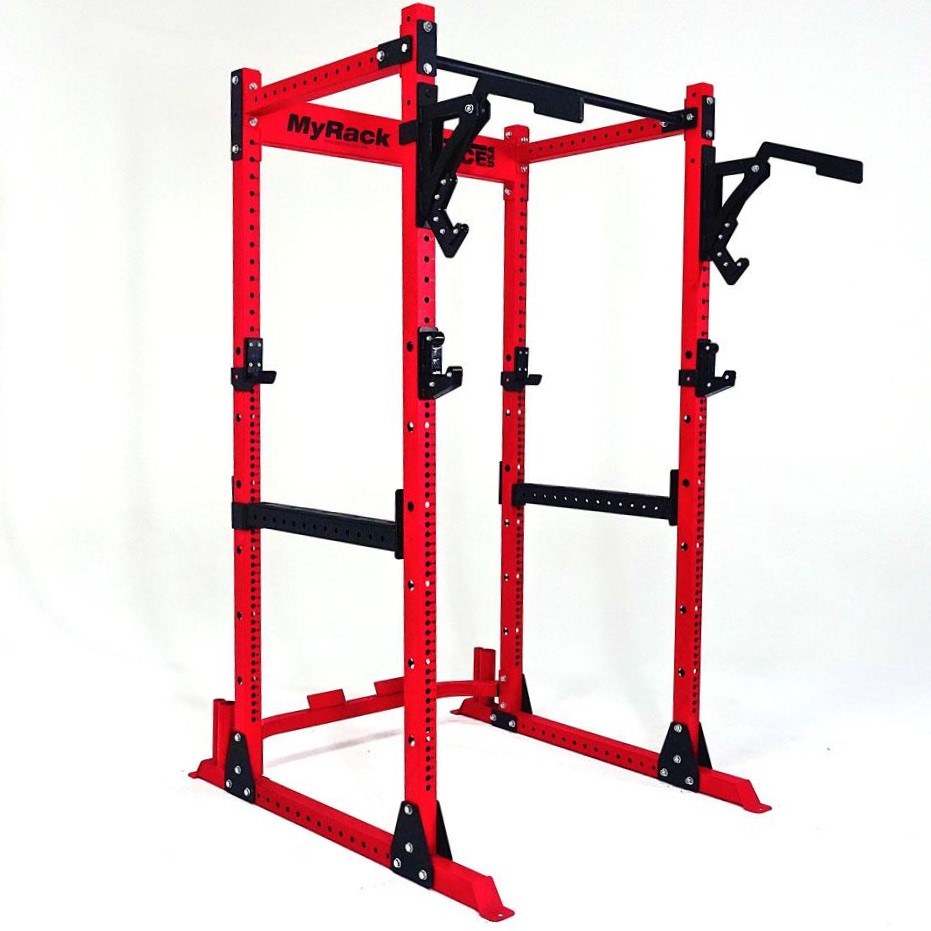
The ForceUSA brand is owned by Net Media Group, an online marketing agency that promotes many brands like Precor and others. They also own Diamondback Fitness.
Being meant for mass appeal, this rack is not as heavy duty as some other models that the more hardcore or picky lifters would prefer. It is made with only 12-gauge steel, which is a bit thinner than the 11-gauge steel in the rest of the racks I’m talking about in this post.
The initial $499 price when you view the product page is a little deceptive in that the rack is not functional unless you add a few things. For $499 you get only the basic frame. No pull up bar, no J hooks, no safety bars. You have to add those on the product page, and then you’ll see a better total, which comes to $759 minimum. It is called modular, and they give you a few options for each of those.
It has a lot of options and accessories, and at least from the pics they all look well made, clean welds, clean cuts, that kind of thing. I mention it because some brands with low pricing like this have more roughly made stuff. I have not heard much feedback about their products, however, so I can’t say whether the pics are typical.
Like the Rep PR-4000, this has a bottom rear stabilizer, though in this case it comes standard with the rack. You can either install the stabilizer or bolt the rack to the floor.
It’s a good thing that the base is so deep at 55″ to help prevent tipping, because this rack is not nearly as heavy as the other brands of racks.
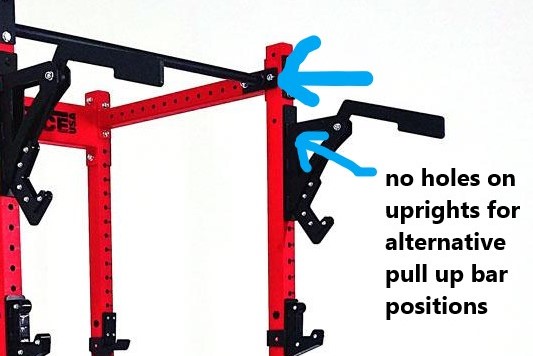
The rack is 84″ tall. The MyRack pull up bar can not be installed at any other height. This is unlike the rest of the brands here that are all flexible in where you put the pull up bar so that you can have the rack almost hitting the ceiling while the pull up bar is lower for head room. There are no holes provided on the inside edges of the MyRack uprights for the pull up bar to mount into at a different height.
As far as attachments, you are entirely limited to what ForceUSA offers. It’s an unusual tubing size that won’t fit anyone else’s.
Possible Issues:
– No extra-deep option (coming soon) – Limited compatibility with Rogue attachments due to metric sizing
What Makes it Stand Out:
– Safety straps & sandwich J-cups come standard – Extremely heavy/stable
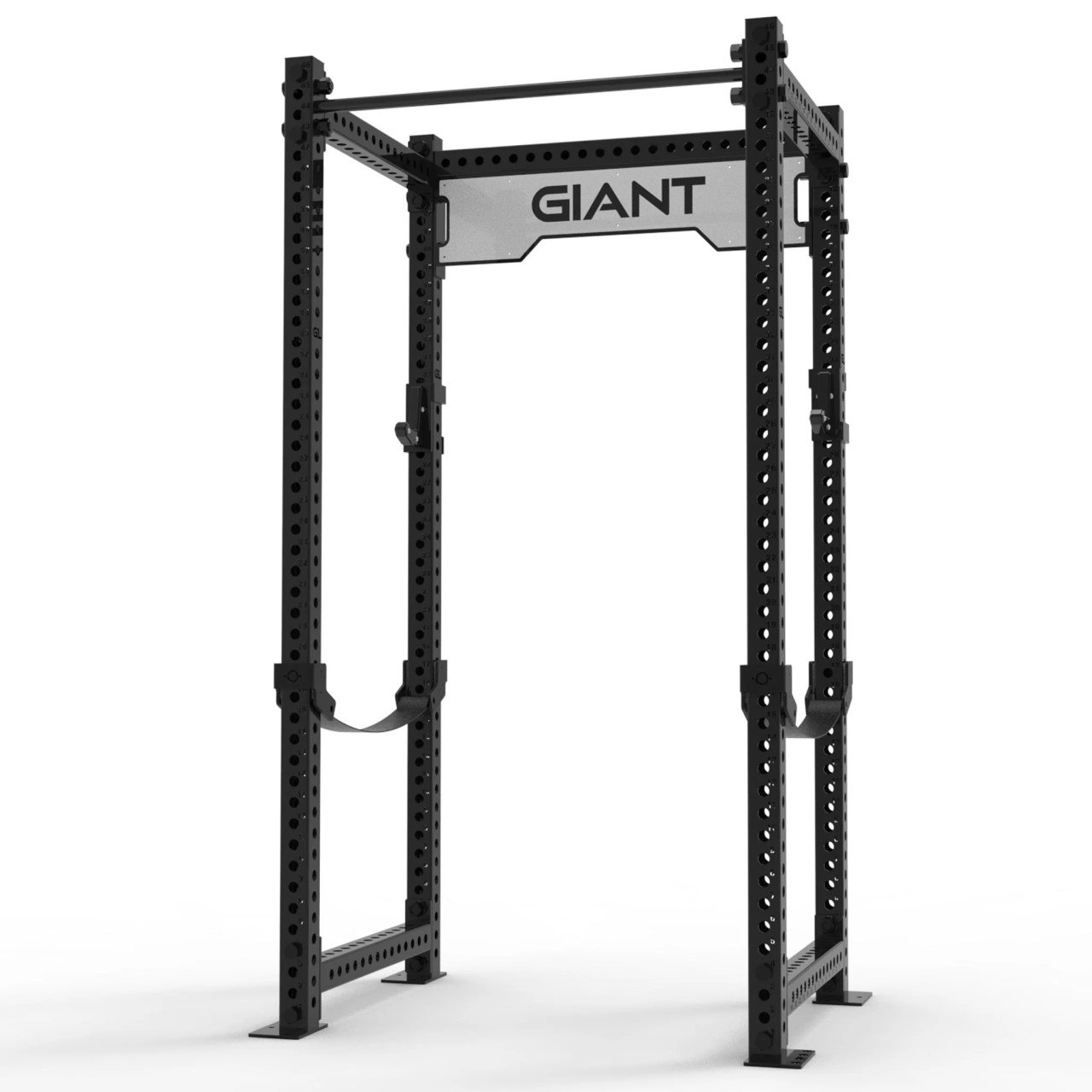
This is the highest priced rack featured here, because as standard they include sandwich J-cups and safety straps, both which are available on most of the other racks as expensive upgrades. So if you like both of those upgrades, this rack would make sense.
The 36″ depth raises the question of how stable this rack is without bolting it down. I asked Giant Lifting about it, and they assured me it’s stable when you work inside the rack, which I believe given its hefty weight of 374 lbs. If you do work outside the rack, they have front stabilizer feet available. Also, they will be releasing a deeper rack option later this year (2024).
Use our code TWOREP for 5% off your order at Giant Lifting.
Possible Issues:
– 3″ hole spacing throughout
What Makes it Stand Out:
– Fat pullup bar, multi grip pullup bar, and outside safety arms all standard – Rogue Monster compatible except the hole spacing
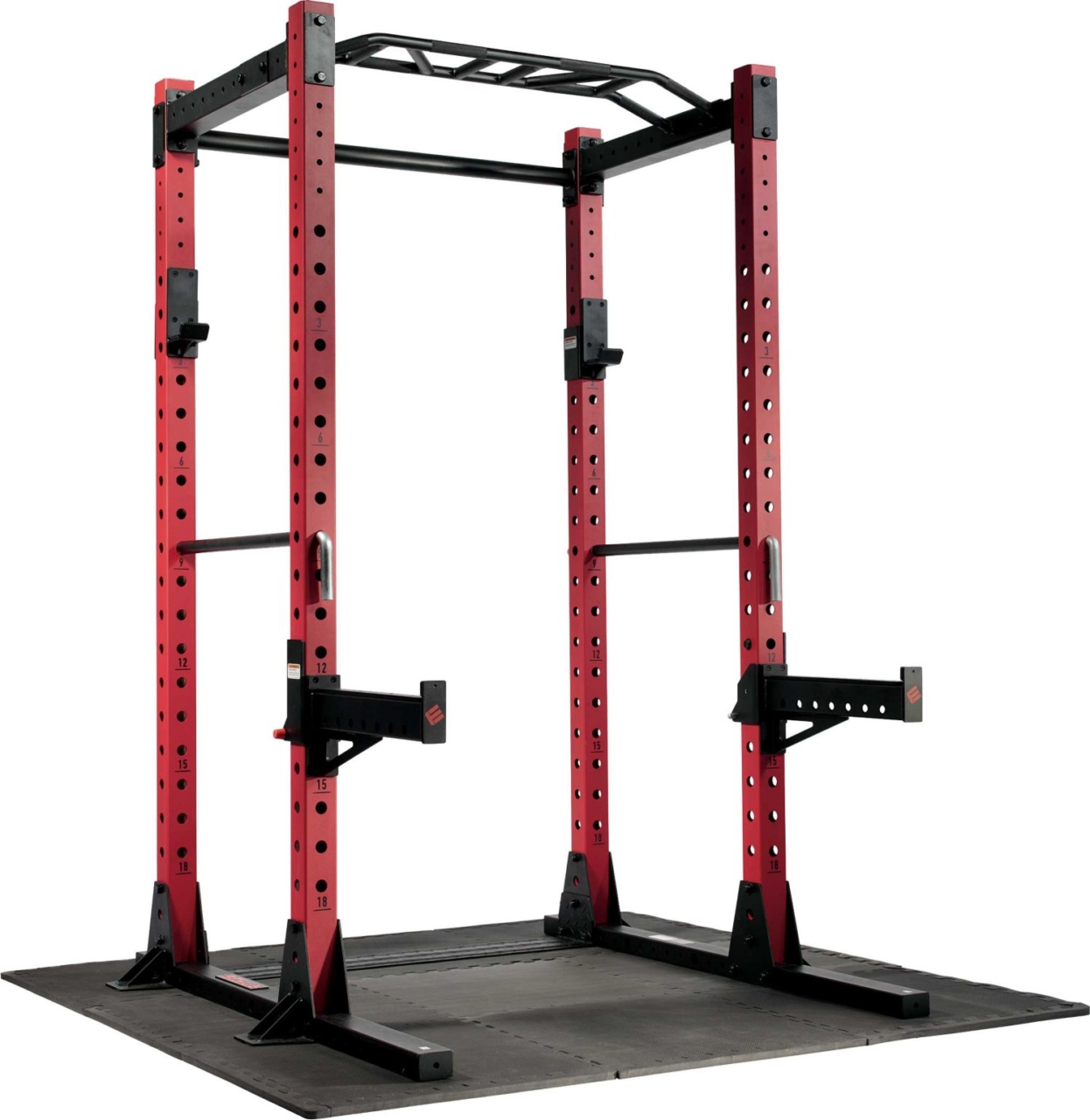
Ethos is a brand exclusive to Dick’s Sporting Goods.
Dick’s charges shipping, or you can buy online and pick up at any Dick’s store to avoid the charge.
This rack reveals a somewhat dated design with 3″ hole spacing all the way up, with no Westside style 1″ hole spacing in the bench press area, likely leading to a problem getting the safety bars at just the right height for all exercises.
While they offer zero additional attachment options, the standard rack includes outside safety spotter arms (in addition to the pin-and-pipe safeties) and multi-grip and fat pull up bars. They are compatible with some of the Rogue Monster attachments. The 3″ hole spacing could put a snafu in that for attachments using a locking pin. You could get compatible strap safeties from another store and negate the need for Westside spacing, with the way strap safeties are so adjustable.
Like the ForceUSA rack, it’s ready to be bolted down should you so choose.
If you’re an owner of one of the racks I featured here, how is it working out for you? Leave a comment below!