Fitness news Archives - Page 10 of 13 - cablebuzznewsmeta name="google-site-verification" content="6a1diVfBBjrtLHOs0wceITdcAeKPOV6tx6NhXqyRKPs" /

cablebuzznews

Category: Fitness news

Fitness can be depicted as a condition that helps us with looking, feel and set forth some courageous energy. Real Fitness incorporates the presentation of the heart and lungs, and the muscles of the body.

  • 7 Best SI Joint Pain Relief Exercises (Video)


    Relieve pain around the lower back and pelvis with this SI joint pain relief routine. These simple exercises are designed to strengthen and stabilize all the muscles surrounding the hips – reducing the amount of shifting and inflammation within the sacroiliac joint. Get relief at home with this guided stretch and strengthening routine.


    Sacroiliac joint pain is a painful, frustrating condition, but relatively common.

    Sacroiliitis is the inflammation of one or both sacroiliac (SI) joints. These joints are located on either side of the lower back, where the sacrum (the base of the spine) connects to the ilium (the top part of the pelvis).

    Sacroiliac joint dysfunction is different from sciatica (although the symptoms can be similar, which can make it difficult to diagnose). While sciatica pain tends to radiate down the legs, SI joint pain is often more localized near the lower back.

    Stressors like arthritis, excessive hip mobility, and hormone changes during pregnancy can all contribute to SI joint pain.

    These seven exercises for SI joint pain relief are designed to both strengthen and stabilize all the muscles surrounding the hip joints – reducing the amount of shifting and inflammation within the SI joint.

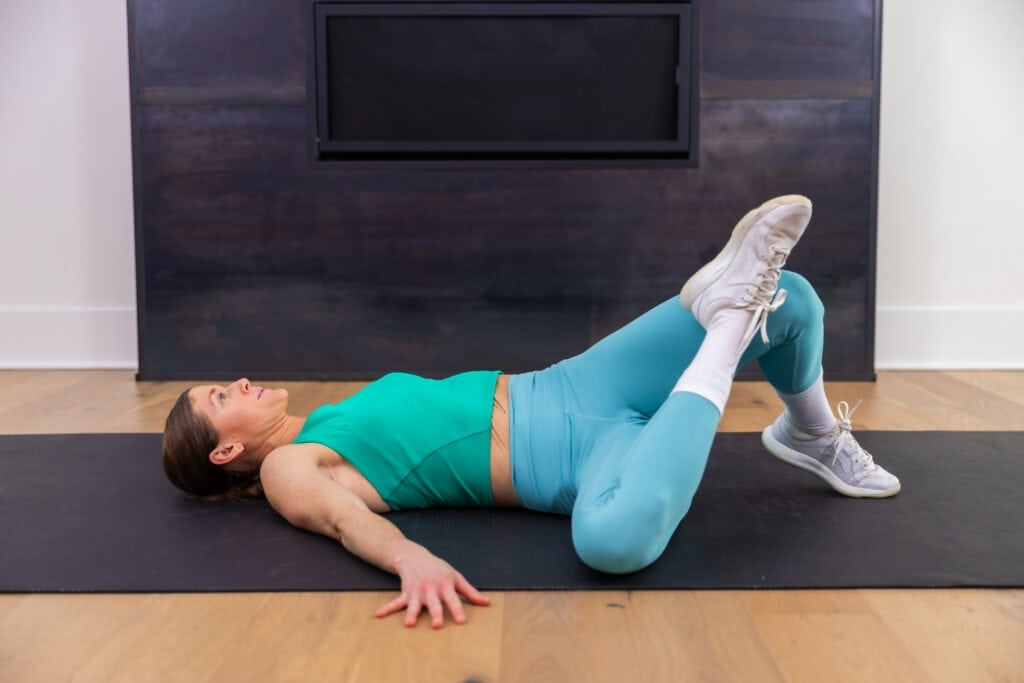
    woman performing figure four stretch as example of si joint pain relief exercises

    SI Joint Pain Relief FAQs

    How Do I Release My SI Joint?

    Gentle exercises that activate the stabilizing muscles surrounding the hips can help ease pain around the SI joint. Popular examples include glute bridges and banded squats, both of which activate the outer glutes and inner thighs.

    What Causes SI Joint Pain?

    SI joint pain is relatively common, and can be caused by a number of different stressors. Arthritis is a common cause of inflammation in the SI joint. Pregnancy is also a common cause of SI joint pain, due to hormone changes, shifting of the hips and joints loosening.

    What Are The Worst Exercises for SI Joint Pain?

    If you’re dealing with intense SI joint pain, you may want to avoid exercises like lunges which shift weight between the hips. Instead, sub hip stabilizing exercises such as glute bridges.

    How Do You Treat SI Joint Pain?

    If you’re feeling pain, I highly recommend reaching out to your doctor or physical therapist. Gentle movement, such as walking or low impact cardio, can increase blood flow to the hips and pelvis, which can reduce tightness and pain. Additionally, anti-inflammatory medications, such as ibuprofen, may temporarily help relieve pain.
    Woman performing clamshell exercise as example of SI joint pain exercises

    SI Joint Pain Relief Routine

    Reduce hip and lower back pain and increase hip stability with these seven exercises for SI joint pain.

    I suggest incorporating mobility workouts like this one to your home workout plan 1-2 times per week to protect and maintain healthy joints and muscles.

    Workout Equipment:

    Optional mini loop resistance band (discount code: NML), pilates ball, and kettlebell or dumbbell (discount code: NMLTQ5).

    You can also perform these moves with just your body weight.

    Shop My Yoga Mat

    I get so many questions about this mat! I have the EXTRA LARGE Mat (8′ x 4′ x 1/4″).

    DISCOUNT CODE: NourishMoveLove

    Click Here To Shop

    woman performing single leg glute bridge to reduce SI joint pain

    Workout Instructions:

    Follow along with these guided SI Joint Pain Relief on YouTubeled by certified personal trainer, Lindsey Bomgren. 

    Your Workout Looks Like This:

    • 7 Exercises for SI Joint Pain Relief (SI Joint Dysfunction)
    • Timed Intervals (perform exercise for 40 seconds, then rest for 20 seconds)
    • Repeat All 7 Exercises x1 Set (no repeats, just alternate sides as needed)

    Workout Outline

    1. Glute Bridge Hold with Abduction
    2. Glute Bridge Hold with Adduction
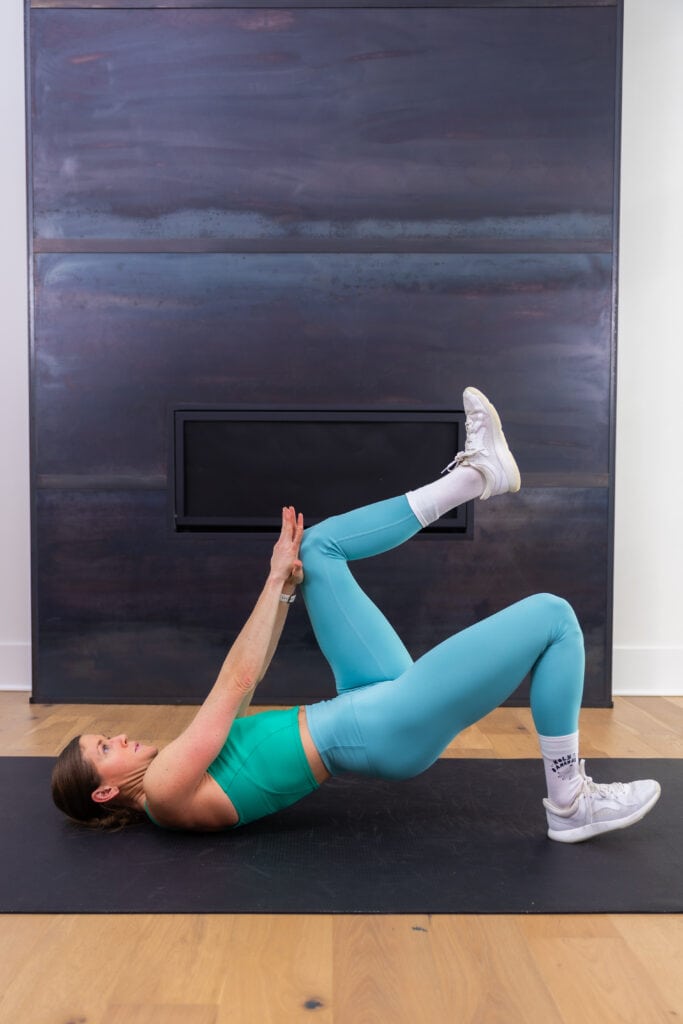
    3. Single Leg Glute Bridge and Opposite Knee Press
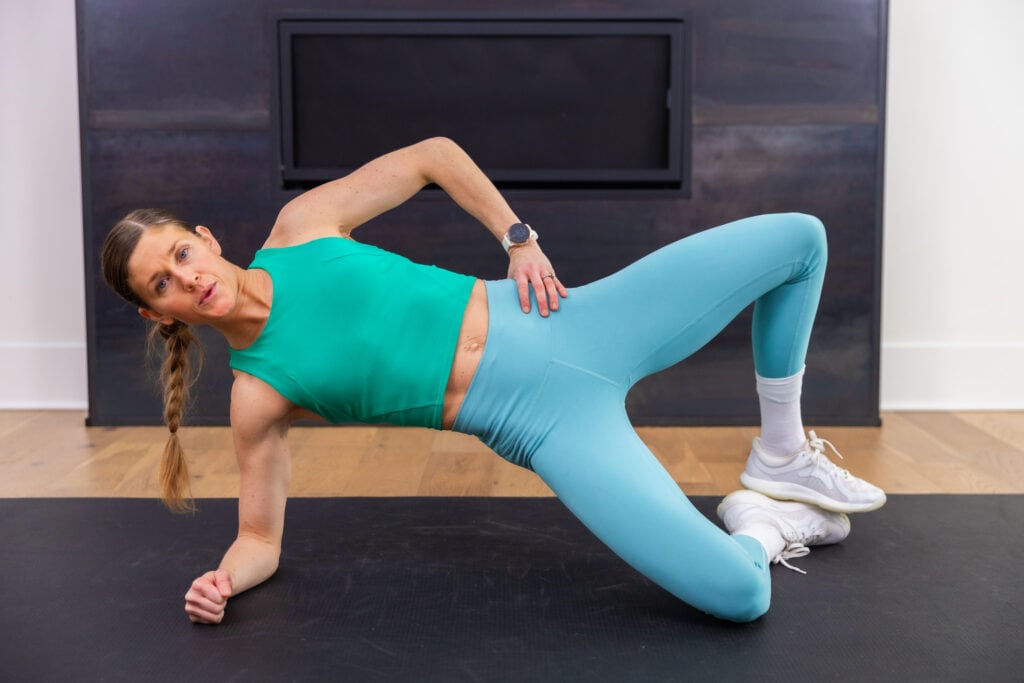
    4. Modified Plank with Clamshell Lift
    5. Banded Squats
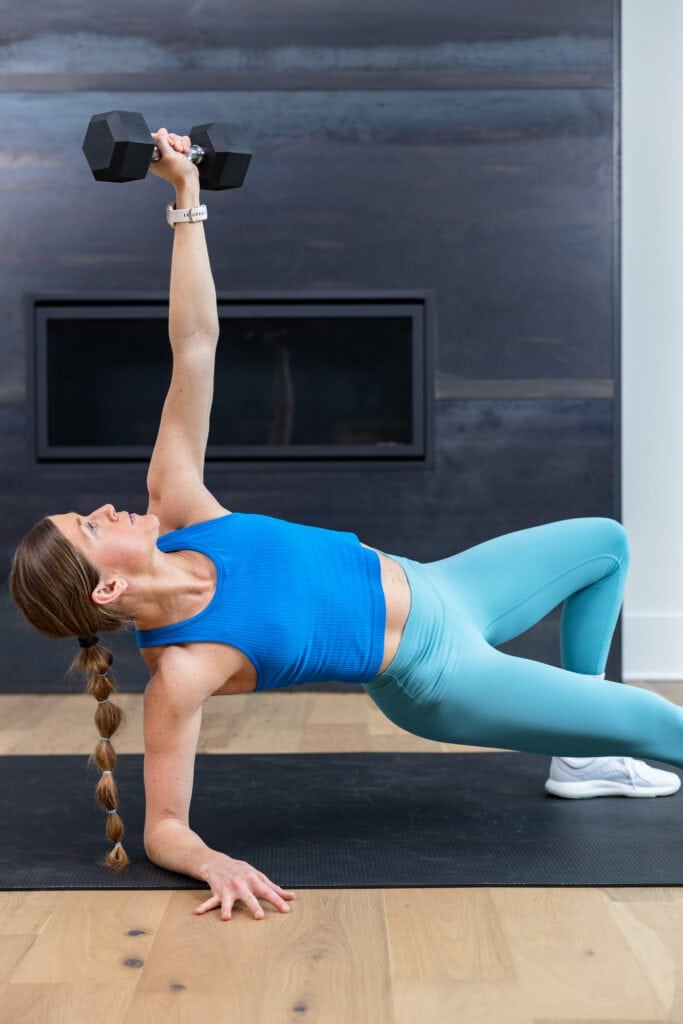
    6. Loaded Hip Shift
    7. Airplane Pose to Half Moon Pose
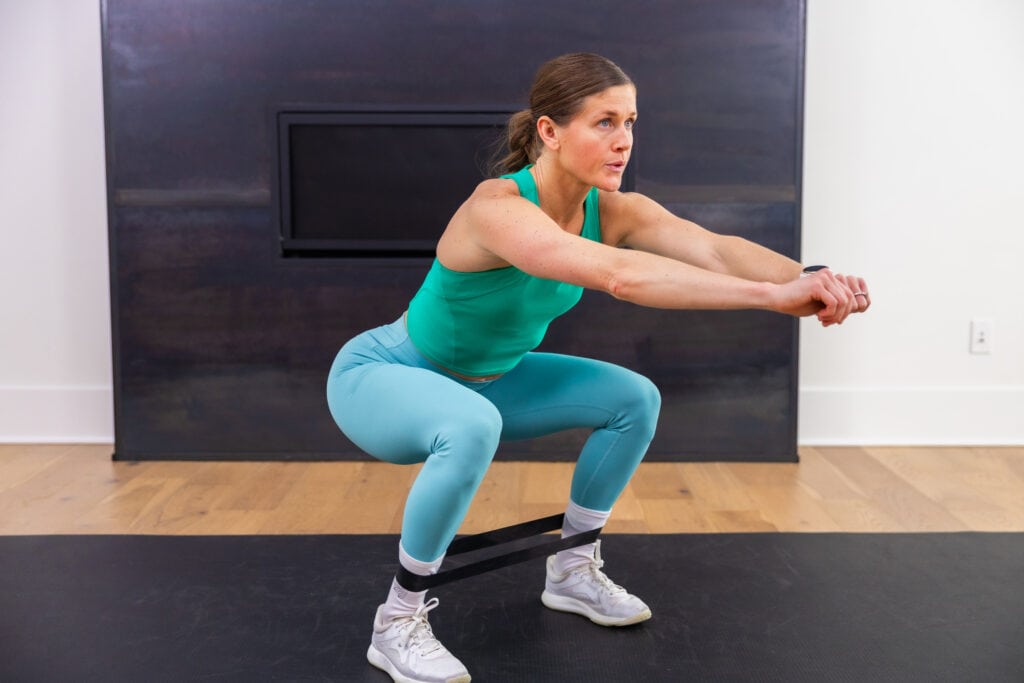
    woman performing banded squat as example of exercises for si joint pain

    7 SI Joint Pain Exercises

    Glute Bridge Hold with Abduction

    Targets: Hip abductors (outer glutes and thighs), gluteus medius and gluteus minimus (upper and side glutes).

    One of the most common exercises recommended in physical therapy to strengthen the hip abductors.
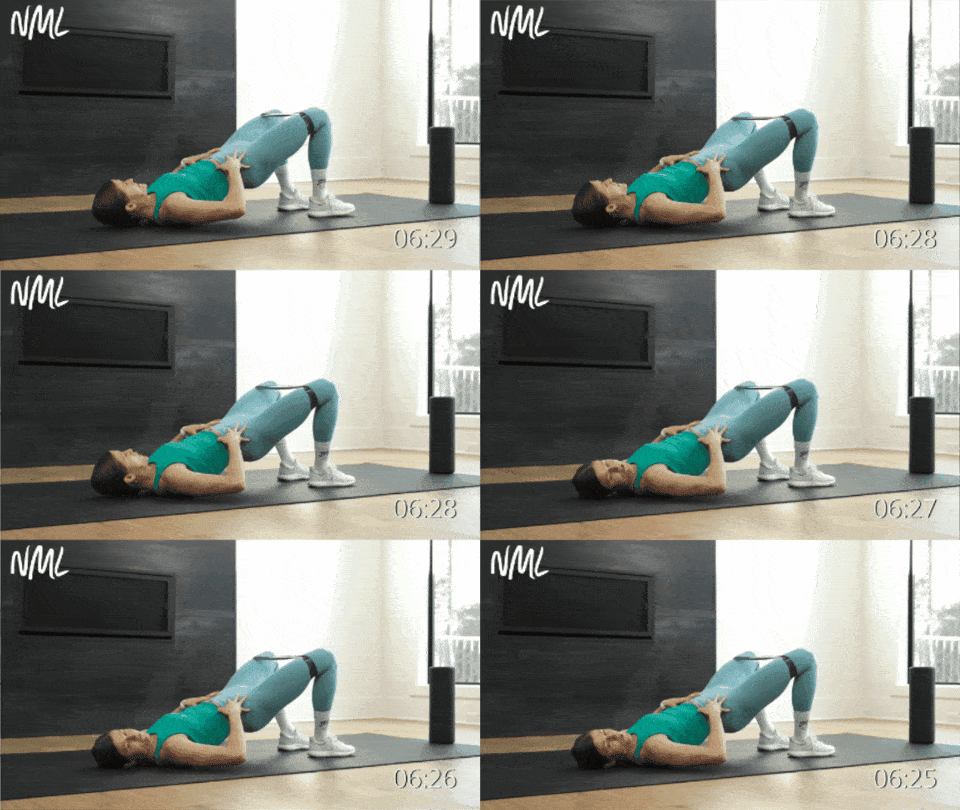
    woman performing glute bridge hold with abduction to release SI joint pain

    How To Do Glute Bridge Holds with Hip Abductions

    1. Place an optional resistance band six inches above your knees.
    2. Lie flat on the floor on your back with your knees bent and feet flat on the ground, feet hip width apart.
    3. Press through the heels to lift your hips off the ground until your knees, hips and shoulders form a straight line. This is a glute bridge. Keep your abs drawn in, belly button pulled towards the spine, so you don’t overextend your back.
    4. Hold your hips high at the top of the glute bridge, then slowly and with control, open your legs, stretching the band as your knees drive away from each other.
    5. Hold for a three-count, then lower your hips with control, returning to starting position.

    Glute Bridge Hold with Adduction

    Targets: Inner thighs (including the adductor longus, adductor brevis, and adductor magnus), glutes and core.

    Adduction means moving the limbs towards the midline of your body (the opposite of abduction). Strong hip adductors help stabilize the pelvic floor and hips.
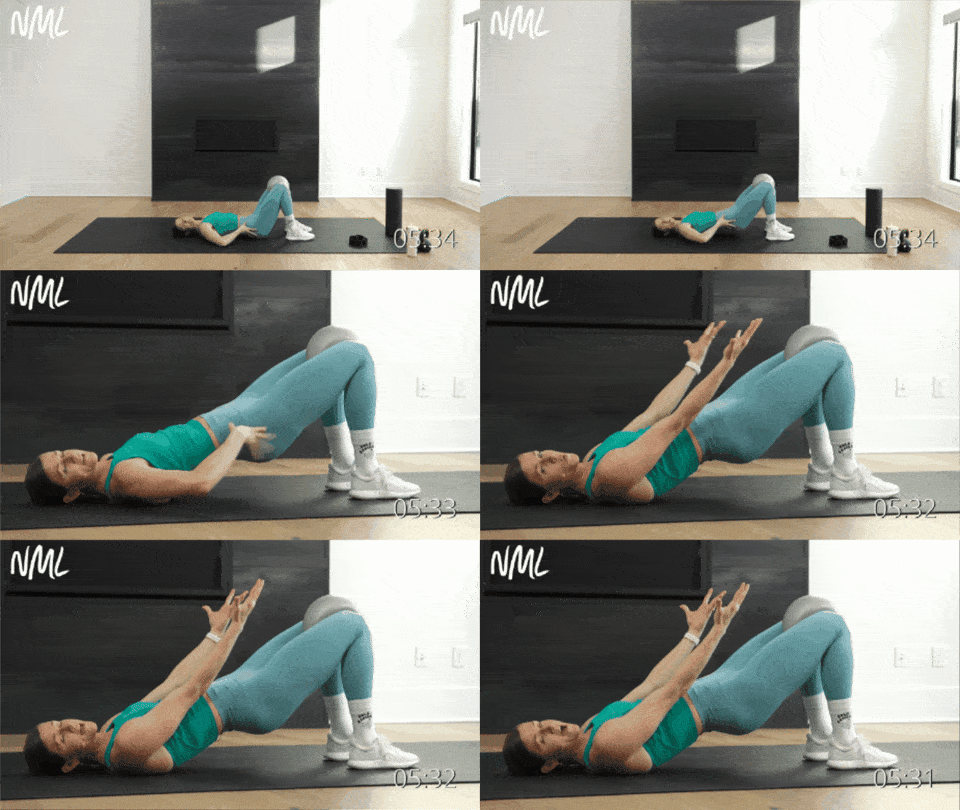
    woman performing glute bridge hold with adduction as example of si joint pain exercises

    How To Do Glute Bridge Holds with Adductions

    1. Lie flat on the floor on your back with your knees bent and feet flat on the ground, feet hip width apart. Option to place a pilates ball or pillow between your knees.
    2. Press through the heels to lift your hips off the ground until your knees, hips and shoulders form a straight line. This is a glute bridge. Keep your abs drawn in, belly button pulled towards the spine, so you don’t overextend your back.
    3. Squeeze your knees together, activating your inner thighs.
    4. Hold for a three-count, then lower the hips slowly and with control, returning to starting position.

    Single Leg Glute Bridge and Opposite Knee Press

    Targets: Glutes, hamstrings, hips, core and pelvic floor.

    This single leg exercise will challenge your balance and has been named one of the best exercises to build glute strength.
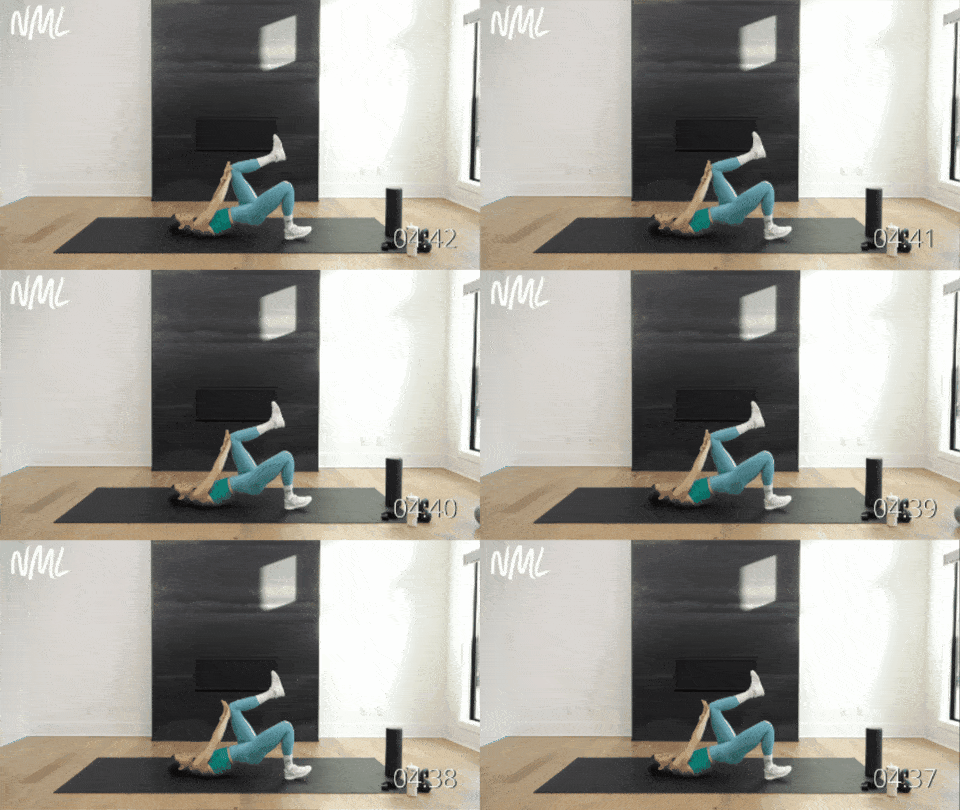
    woman performing single leg glute bridge hold with opposite arm press as example of SI Joint Pain Exercises

    How To Do Single Leg Glute Bridges and Opposite Knee Presses

    1. Start laying on your back, knees bent and feet flat on the floor.
    2. Keeping both knees bent, press through your right heel as you raise your glutes off the mat. As you raise your hips, drive your left knee up, finding a single leg glute bridge hold.
    3. Press both hands into your left knee, activating your deep core muscles.
    4. Hold for a three-count, then slowly lower with control, returning to starting position.

    Modified Plank with Clamshell Lift

    Targets: Gluteus medius (which lays on the outer edge of the buttocks and is responsible for stabilizing your pelvis), gluteus minimus (hip extension), obliques and core.

    Clamshell exercises can help balance the muscular effort between your inner and outer thighs and your pelvic floor.
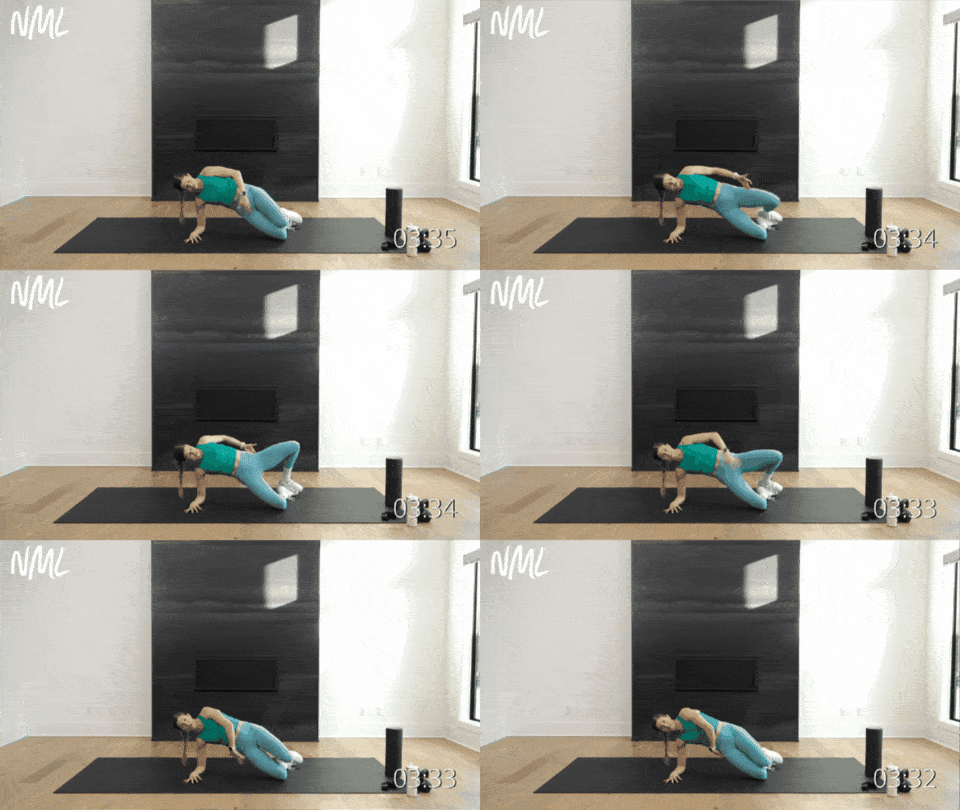
    woman performing a modified side plank with clamshells as example of si joint pain relief

    How To Do Modified Planks with Clamshell Lifts

    1. Start laying on your left side, legs stacked and knees bent at a 45-degree angle, feet together. Rest your left forearm on the mat.
    2. Press through your forearm to lift your hips, finding a modified side plank position. Shoulders are stacked over left elbow, core engaged. Hold this position.
    3. Keeping your feet touching, squeeze your outer glutes to open your top right knee, mimicking a clamshell opening.
    4. Slowly and with control, reverse the movement, bringing your right knee to touch the left knee, returning to starting position.

    Banded Squat

    Targets: Gluteus medius, hip abductors and quadriceps.
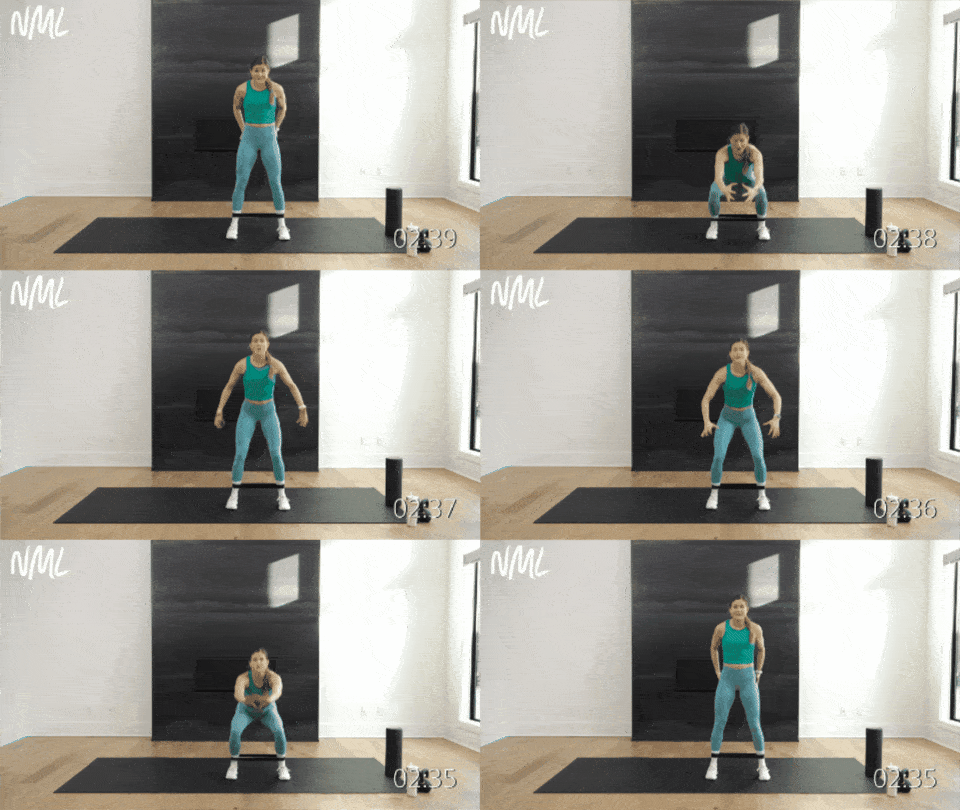
    woman performing banded squats as example of Exercises for SI Joint Pain

    How To Do Banded Squats

    1. Option to place a resistance band around your calves, avoiding placing the band directly on the ankle joint.
    2. Start standing, feet slightly wider than your hips to create tension across the band (activating your glutes).
    3. Sit back into a squat, lowering your hips until they are parallel to the knees, striving for a 90-degree angle.
    4. Then, drive through your heels to return to a standing position.

    Loaded Hip Shift

    Targets: Hip, knee, and ankle mobility. As well as increases flexibility in the hamstrings and adductors (inner thighs).
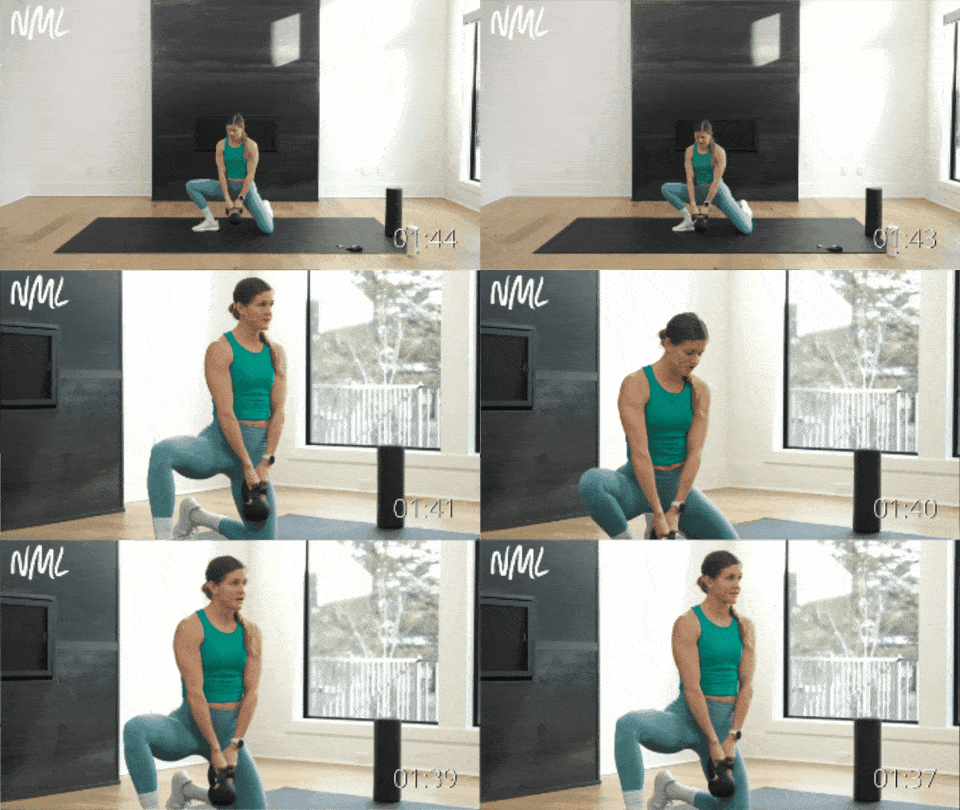
    woman performing a loaded hip shift as example of si joint pain relief

    How To Do Weighted Hip Shifts

    1. Start kneeling. Option to hold a kettlebell or dumbbell in front of your hips.
    2. Step your left foot out to the left side, left knee bent at 90 degrees and toes pointing towards the left.
    3. Slowly and with control, shift your weight towards your left heel, aiming to push your left knee towards your left toes. Focus on keeping your left heel planted on the ground.
    4. Then, slowly and with control, press through your left heel to shift your hips to the right, returning to starting position.

    Airplane Pose to Half Moon Pose

    Targets: Hamstrings, outer glutes, inner thighs and core.
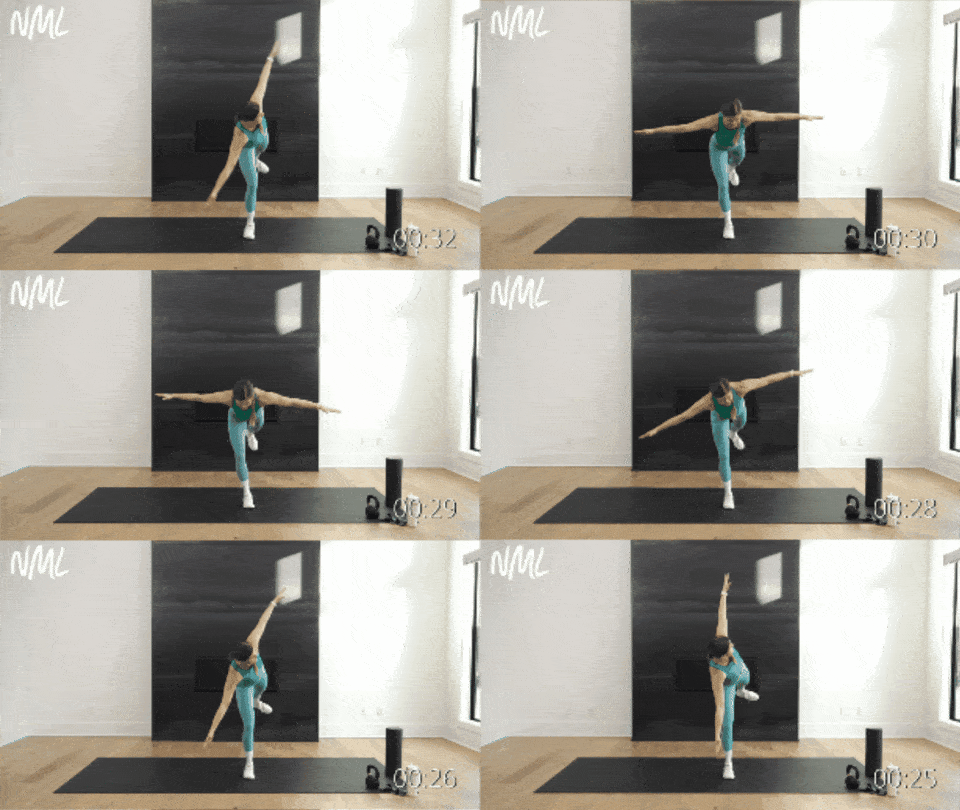
    woman performing airplane pose to half moon pose to stabilize hips

    How To Do Airplane Pose to Half Moon Pose

    1. Start standing, feet hip width apart, slight bend in both knees.
    2. Shift your weight into your left foot as you float your right leg behind you, aiming to keep both legs as straight as possible.
    3. Slowly hinge at the hips, lowering your torso towards the ground. Spread your arms out wide for balance support.
    4. Then, slowly rotate your torso and hips towards the right, opening up the body towards the right side of the room and finding half moon pose.
    5. Slowly and with control, reverse the rotation, returning to starting position.

    Pin This Workout: SI Joint Pain Relief Stretching Routine
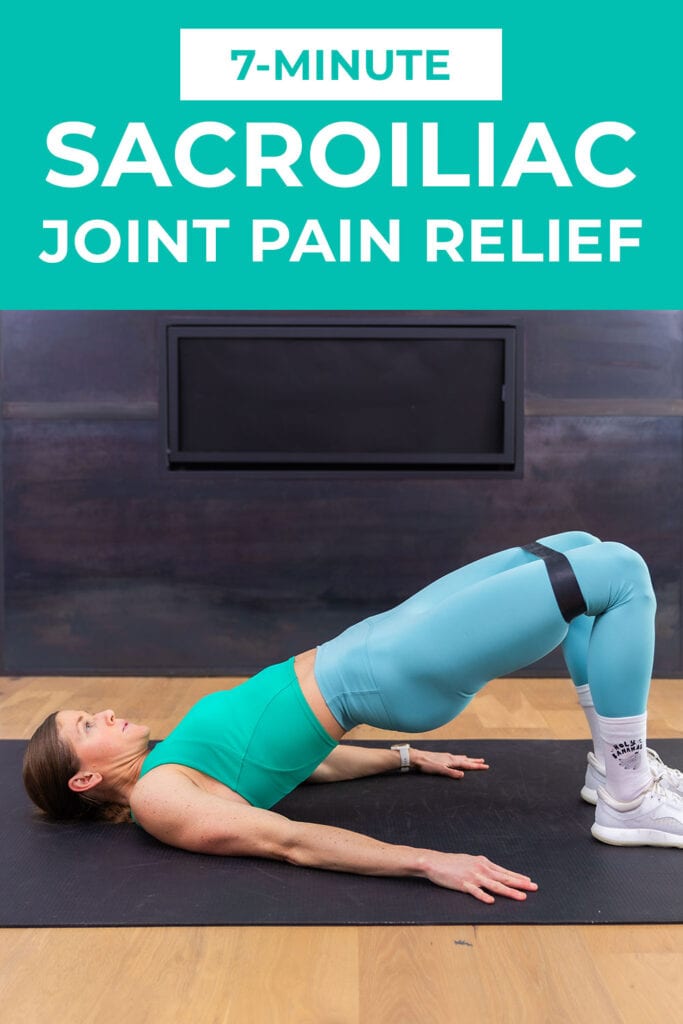
    woman performing glute bridge to relieve si joint pain

    This post includes affiliate links. I do earn a commission for products purchased using these links (at no additional cost to you). Thank you for supporting Nourish Move Love, making the content you see on this blog possible.

    #Joint #Pain #Relief #Exercises #Video

  • These New Cloudpulse Sneakers Move to the Sound of their Own Beat

    On is stepping into the training sneaker market and has now released the “Cloudpulse.” The brand says that the shoe’s innovative technology separates it from other footwear in this space because it is inspired by the movement of a cardiogram. Let’s take a closer look.

    On explains that the Cloudpulse is designed to give total stability while remaining flexible for different types of workouts. Available for both men and women, this lateral stability for side-to-side movements is made possible thanks to the company’s signature “Helion” foam, which also provides a “springy” feeling making them a great choice for stop-start style workouts such as HIIT.

    For temperature control, the Cloudpulse is equipped with a breathable upper mesh and something called a “Speedboard” in the base, to support angular movement.  The combination of flexibility and stability makes these shoes ideal for both weights and cardio says On, and if you want to support environmentally friendly products, the Cloudpulse’s upper mesh is made from 100% recycled polyester. In total these shoes are constructed from around 24% recycled content.

    On Cloudpulse training sneaker
    Courtesy of ON

    Who Would On’s Cloudpulse Training Shoes Suit?

    The Cloudpulse is aimed at athletes in and out of the gym, designed for cardio, resistance training, and HIIT style workouts. There is a midsole drop of 8mm, constructed to push your foot forward to support a more natural mid/forefoot strike. On say that this shoe gives great energy return and offers “Missiongrip” multidirectional lugs in the tread to offer great grip on a range of different surfaces. The also brand says that fitting is true to size.

    The Cloudpulse uses a standard lace-up system and is available in several colorways, priced at $149.99 direct form on.com.

    #Cloudpulse #Sneakers #Move #Sound #Beat

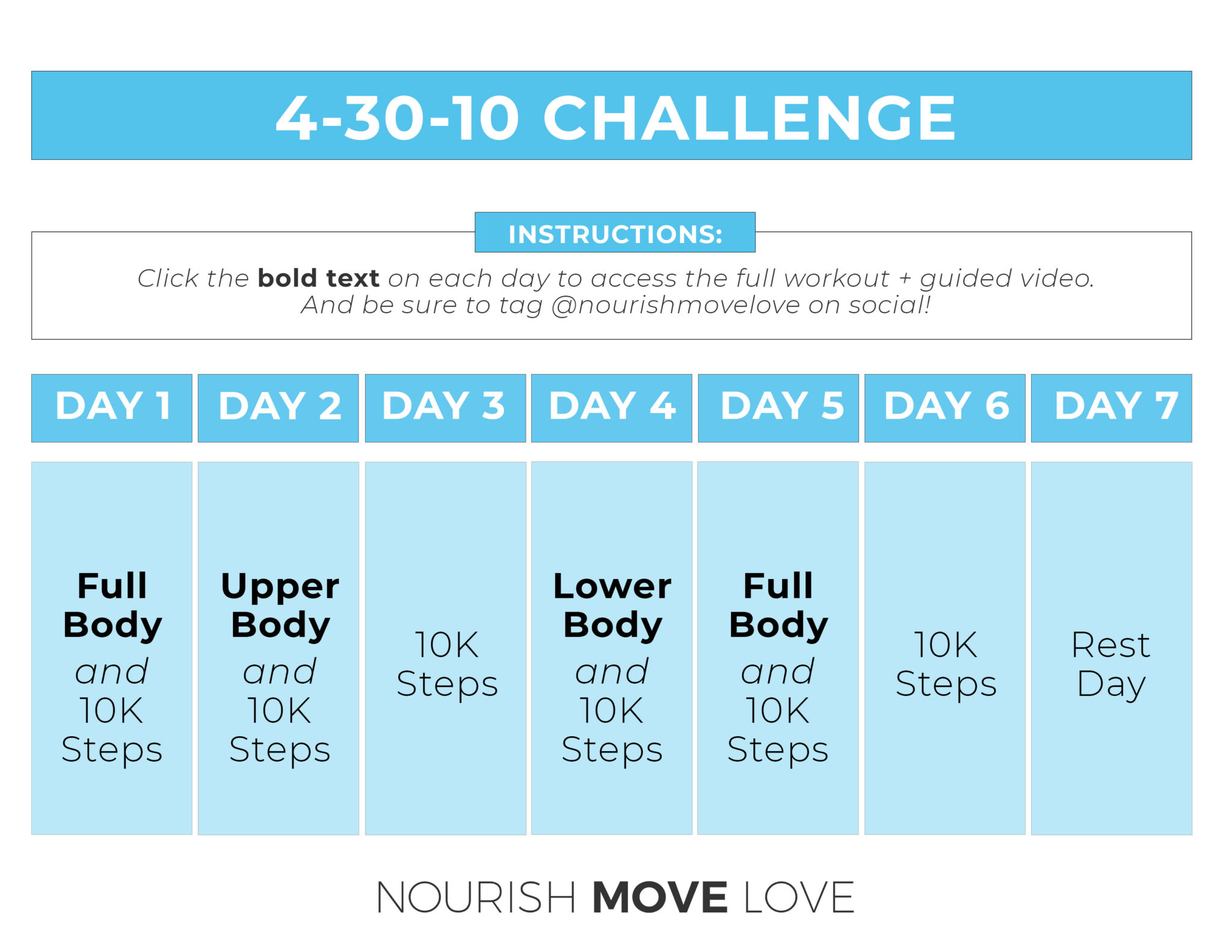
  • 4-30-10 Method Free Workout Plan (PDF)


    The “4-30-10” Method went viral on TikTok as a way to transform your health, lose weight, build muscle and increase muscle tone. As a fitness trainer I can stand behind this workout trend and thought it was worth creating a free, 7-day, “4-30-10” workout plan.


    Strength, cardio, steps and mobility — you get it all in this free 7-day workout plan at home. This free plan follows the 4-30-10 method and includes a daily, guided workout video you can do at home or at the gym.

    Plus, this workout plan encourages you to increase your daily protein intake so you can maximize your strength training results.

    What Is The 4-30-10 Method?

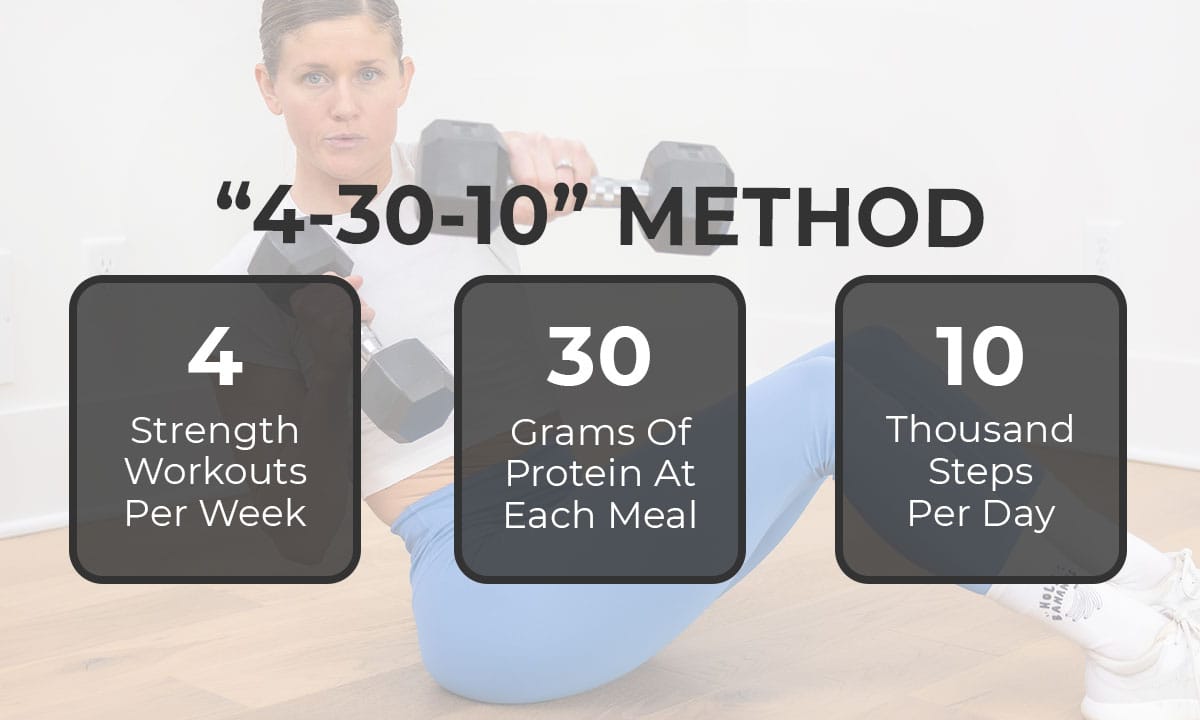
    The “4-30-10” method is a way of structuring a weekly workout plan:

    • 4 – four strength training workouts per week.
    • 30 – 30 grams of protein at breakfast, lunch and dinner. 
    • 10 – ten thousand steps per day (for reference, 10,000 steps is approximately five miles).
    Image describing what the viral tiktok 4-30-10 method is. Four strength workouts per week, 30 grams of protein at each meal and 10 thousand steps per day.

    As a certified personal trainer who’s been in the industry for over a decade I’ve seen a lot of fitness trends come and go, but this is one fitness trend I’m willing to get behind. I also got behind the 3-2-8 Workout (three strength workouts, two pilates workouts and 8,000 steps per day).

    I believe the “4-30-10” method is effective because:

    • Four strength training sessions a week is realistic for most fitness enthusiasts.
    • 30 grams of protein at every meal is an important part of any healthy diet and is key to building muscle.
    • 10 thousand steps a day promotes muscle growth and metabolic health.

    Overall, I believe the 4-30-10 method is a balanced and comprehensive approach to training.

    woman performing a low squat with dumbbells

    LET’S GET STARTED

    Download Your FREE 4-30-10 Workout Plan Here

    Download the PDF calendar for this 7-day workout plan so you can easily access your daily workouts.

    Download Plan

    This 4-30-10 Method Workout Plan is for Anyone Looking to:

    • Increase strength in the upper body, lower body and abs.
    • Save money on group fitness classes.
    • Improve athletic and cardiovascular fitness level.
    • Combine weight training and steps workouts.
    • Burn calories, lose weight and burn fat at home.
    • Increase protein intake at each meal to build muscle.
    4-30-10 method workout calendar PDF free download

    4-30-10 Method Workout Plan

    Day 1: 30-Minute Total Body Strength Workout (Time Drop)

    • Workout Focus: Full Body Strength (arms, legs, back, chest, and core)
    • Workout Time: 30 Minutes
    • Equipment: Dumbbells

    Day 2: 20-Minute Upper Body Dumbbell Workout (All Standing)

    • Workout Focus: Upper Body (chest, biceps, triceps, shoulders and back)
    • Workout Time: 25 Minutes
    • Equipment: Dumbbells

    Day 3: Walk/Jog/Run (Goal: 10K Steps)

    Day 4: 30-Minute Kettlebell Leg Workout

    • Workout Focus: Lower Body (quads, glutes, hamstrings, calves, and thighs)
    • Workout Time: 30-Minutes
    • Equipment: Kettlebell or Singe Dumbbell

    Day 5: 30-Minute Full Body Strength Workout At Home

    • Workout Focus: Full Body (upper body, lower body, abs and core)
    • Workout Time: 30 Minutes
    • Equipment: Dumbbells

    Day 6: Walk/Jog/Run (Goal: 10K Steps)

    Day 7: Rest + Recovery Day

    Option to try one of our stretching and recovery workouts:

    woman performing dumbbell punches

    4-30-10 Workout Program Details

    1. Gym Equipment Needed:

    A Set of Dumbbells. Most of the daily workouts require a set of dumbbells. Each weight training workout will have a recommended dumbbell weight, usually between 8-20 pounds. You want a weight heavy enough that your last few reps are a struggle, but you are still able to complete the workout with good form.

    Optional Exercise Equipment: 

    Activity Tracker/Smart Watch. Helpful for tracking steps throughout the day.

    Kettlebell. You always can sub a single heavy dumbbell instead.

    2. Time Requirement: 

    Strength workouts are 20-30 minutes a day, 4 days per week. You can always take more rest days as needed.

    The 4-30-10 method also includes a goal of 10,000 steps per day. This step goal includes all the steps you take during the day, whether it’s just moving around your house or taking a dedicated walk.

    3. Cost:

    FREE! No sign up needed, this is a FREE Workout Plan.

    two women performing a chest press with dumbbells

    4-30-10 Method FAQs

    What Is The 4-30-10 Method?

    The “4-30-10” Method is a fitness approach that combines four strength training workouts per week, 30 grams of protein at every meal, and ten thousand steps per day.

    Is A 4-30-10 Workout Split Effective?

    Yes, the combination of strength training and getting your daily steps in can be very effective for building muscle, strength, and endurance. This split allows you to train each muscle group multiple times per week, while giving your muscles enough time to recover between workouts.

    What Is The Best Workout Method?

    That depends on what your personal fitness goals are, but I believe the best workout method is one you can stick to! A well-rounded training routine includes cardiovascular exercise, strength training, mobility, daily steps and proper protein intake to promote overall fitness and well-being.

    Why Should I Add More Protein To My Diet?

    Protein is an important part of a healthy diet and key for anyone looking to build muscle because your body uses the amino acids in proteins to build and repair muscles. Protein helps your body build lean muscle, reduce muscle loss, speed recovery after exercise, regulate blood sugar, and help you maintain a healthy weight.

    How Can I Increase Protein Intake?

    The best way to increase your protein intake is to be cognizant of high-protein food sources. For example, greek yogurt has more protein than regular yogurt.

    Incorporating protein into your meals doesn’t have to be complicated or time-consuming. By keeping high-protein snacks on hand, and starting your day with a high-protein breakfast, you can easily stabilize your energy levels for the day.

    How To Download and Use This 7-Day Workout Plan

    More FREE Workout Programs

    Share On Pinterest: 4-30-10 Method Free Workout Plan

    Woman with calendar overlay of tiktok's 4-30-10 method

    Note: before beginning any new exercise program you should consult with your physician or midwife. The information provided with this workout challenge is intended for general information and use; it does not include specific, individualized recommendations and is not intended as medical advice. Before you begin any new exercise program Nourish Move Love, LLC recommends that you consult with your physician. Nourish Move Love, LLC primarily educates clients to assume more personal responsibility for their health by adopting a healthy and active lifestyle.

    This post includes affiliate links. I do make a small commission for products purchased using these links (at no additional cost to you). Thank you for supporting Nourish Move Love, making the content you see on this blog possible.

    #Method #Free #Workout #Plan #PDF

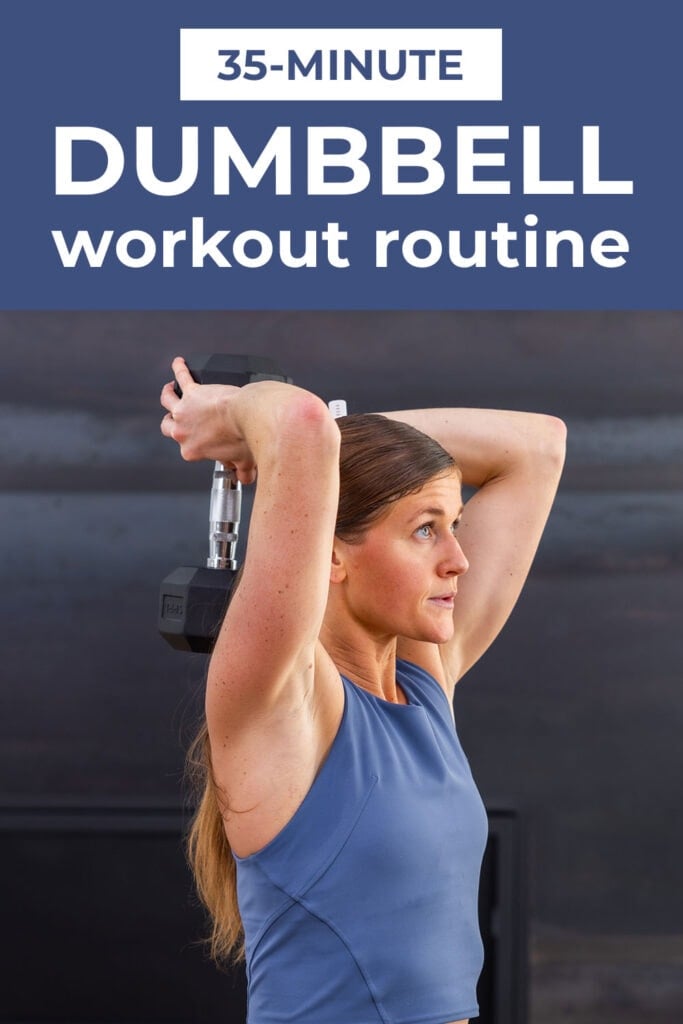
  • 35-Minute Dumbbell Workout Routine (Video)


    Build muscle, improve athletic performance, and get fit at home with this full body dumbbell workout routine. We love this time-drop format. The work time decreases with each additional set, meaning you can continue to reach for your heavy weights even as your muscles fatigue. A complete workout targeting every muscle in the body, using just a set of dumbbells.


    I have been a personal trainer for over a decade, and still find myself the most challenged and sore after effective dumbbell workout routines like this one.

    We love this time-drop format for so many reasons. This method of training is an effective way to build strength and grow muscle at home, while still feeling fun and mentally engaging.

    This is one of my personal favorite formats because I find it encourages selecting and maintaining heavier weights throughout the workout.

    Your work time will decrease with each additional set. The first set is the most intense, with the longest work period. The goal is to reach failure by the end of each set, then repeat, this time for a shorter period.

    MEMBER SPOTLIGHT

    MEET SYD!

    Today’s workout features one of our amazing YouTube Community Members – Syd! Syd is a NICU nurse, mom of two and founding YouTube Member!

    For more exclusive workout challenges, live workouts, nutrition chats, and direct support from our team, become a YouTube Member today!

    Join Team NML

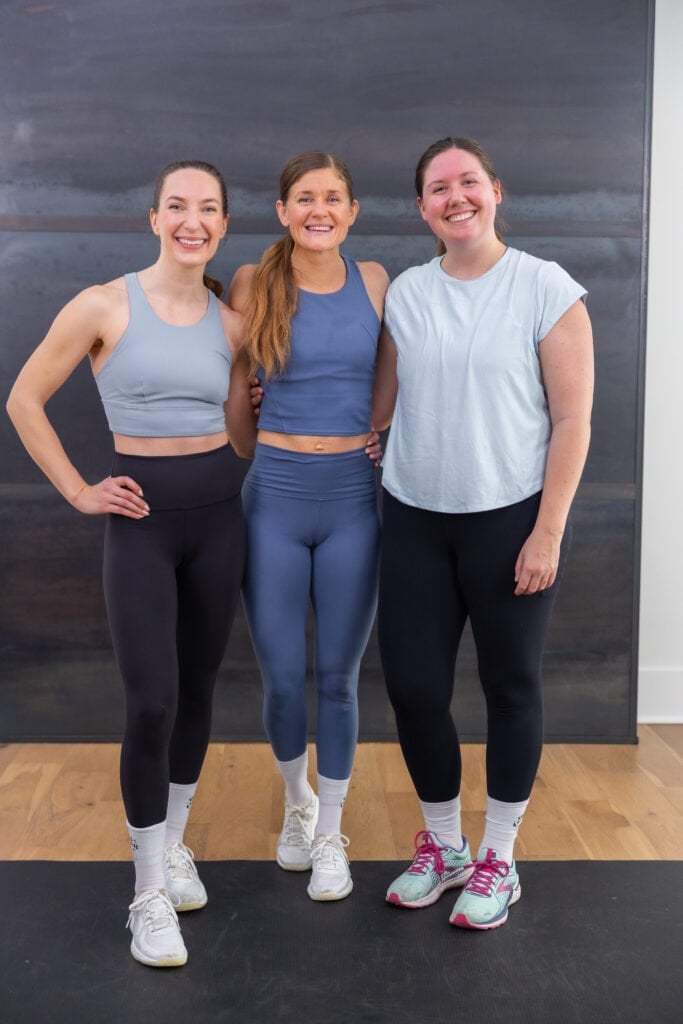
    Three women posing after completing dumbbell workout rinte

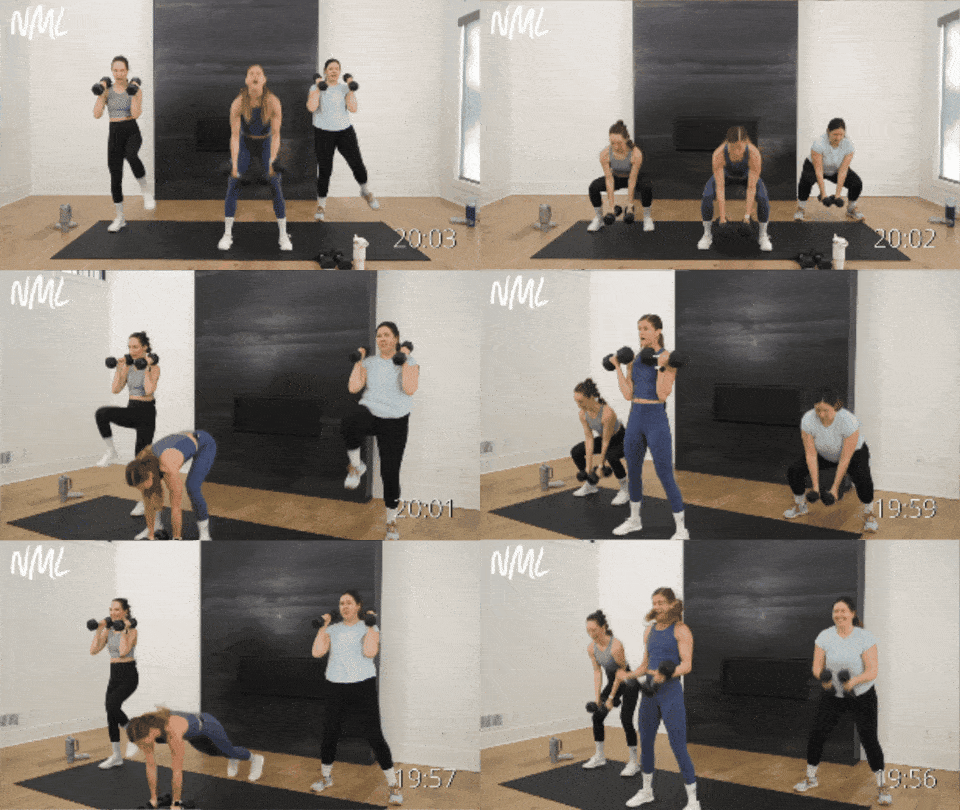
    three women performing a dumbbell clean as part of dumbbell workout routine

    35-Minute Dumbbell Workout Routine

    Build strength and muscle tone with this 35-Minute Full Body Dumbbell Workout Routine.

    A complete workout targeting every muscle group in the body: the lower body (quads, hamstrings, glutes, calves, and thighs), upper body (biceps, triceps, back, shoulders, and chest) and core.

    Add full body dumbbell workouts like this one to your home workout plan 1-2 times per week to build and maintain strength.

    Workout Instructions:

    Follow along with the guided Full Body Dumbbell Workout Routine on YouTubeled by certified personal trainer, Lindsey Bomgren. 

    Your Workout Looks Like This:

    • 2 Circuits
    • 4 Exercises Per Circuit
    • Time Drop Format (set one is 40 seconds of work, 20 seconds rest; set two is 30 seconds of work, 15 seconds rest; set three is 20 seconds work, 10 seconds rest)
    • Repeat Each Circuit x3 Sets

    Workout Equipment:

    Medium Pair of Dumbbells. I recommend between 5-25 lbs depending on your fitness level. We used 15 and 20 lb dumbbells in today’s workout.

    three women performing a squat as part of dumbbell workout routine

    Workout Outline

    CIRCUIT ONE: 

    1. 1.5 Squat, Dumbbell Clean and Overhead Press
    2. 1.5 Alternating Reverse Lunge
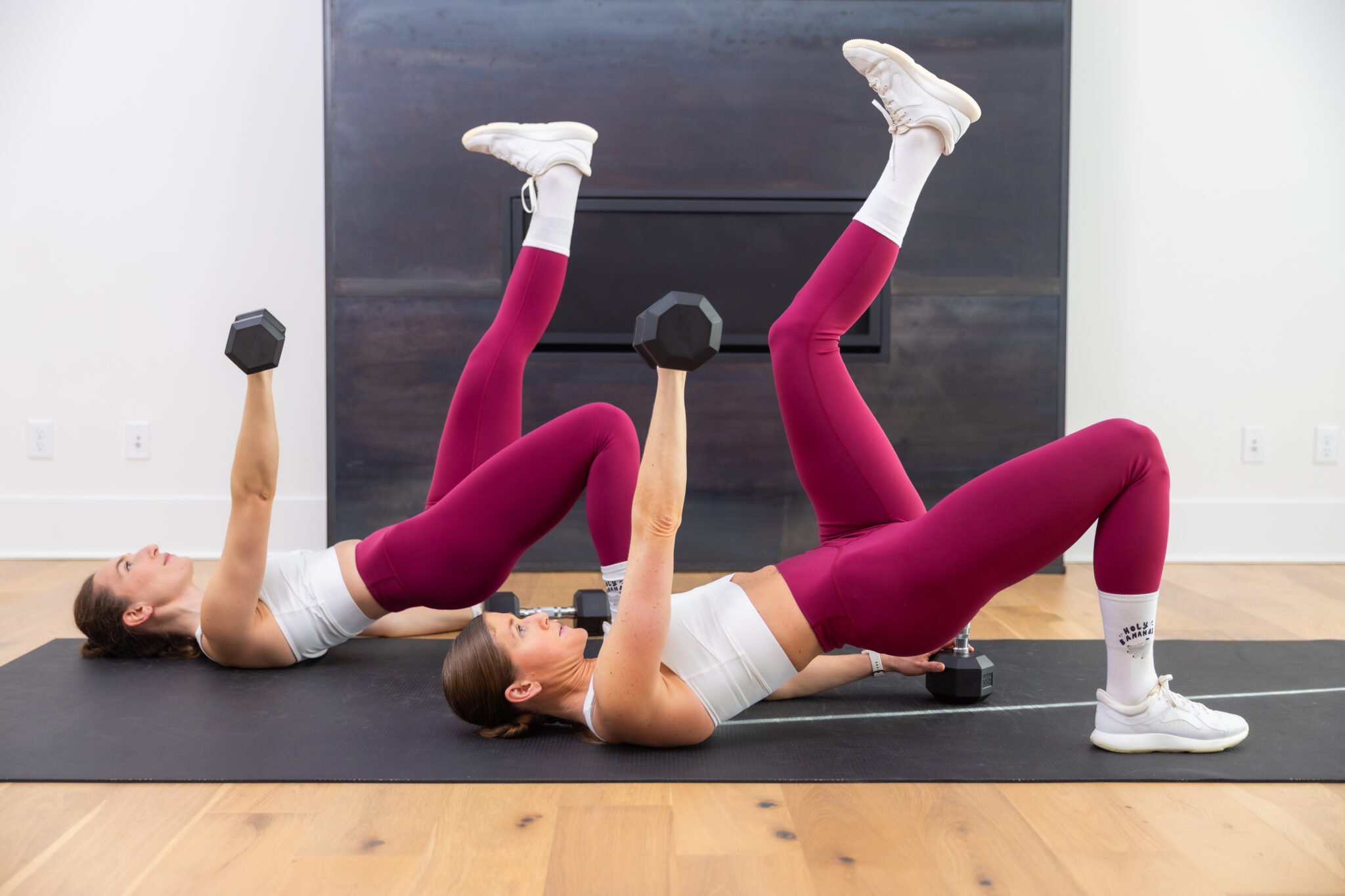
    3. Dumbbell Chest Press and Glute Bridge Hold
    4. Wide Squat Dumbbell Burpee and Bicep Curl

    CIRCUIT TWO:

    1. Staggered Stance Back Rows
    2. Deadlift, Dumbbell Clean and Lateral Lunge
    3. Overhead Tricep Extension and Calf Raises
    4. Alternating Dumbbell Snatch and Two Lateral Step Single Arm Squat Thrusters

    4 Best Dumbbell Exercises

    Dumbbell Squat, Clean and Overhead Press

    Targets: Legs, glutes, quadriceps, hamstrings, hip flexors, adductors (inner thighs), shoulders and core.

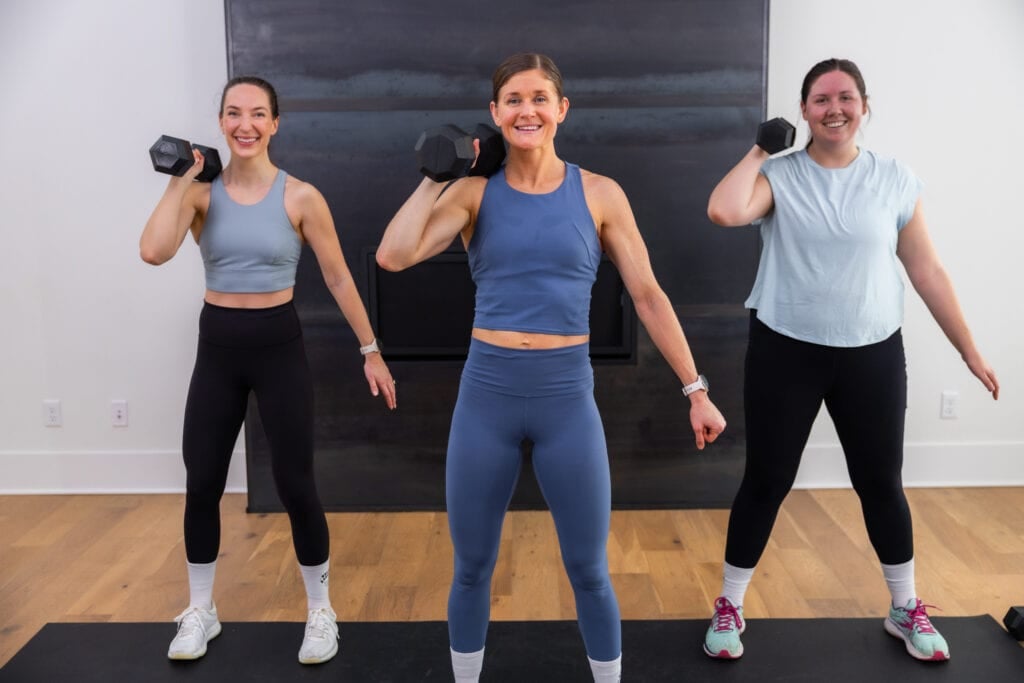
    three women performing a dumbbell squat, clean and press as part of dumbbell workout routine

    How To Do Dumbbell Squats, Dumbbell Cleans and Overhead Presses

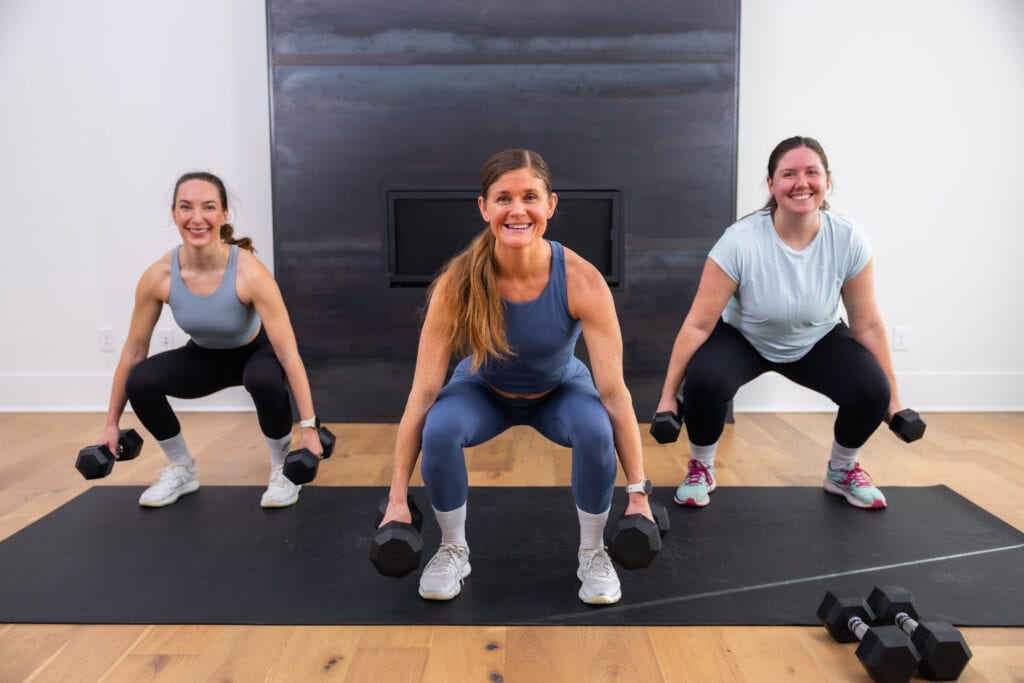
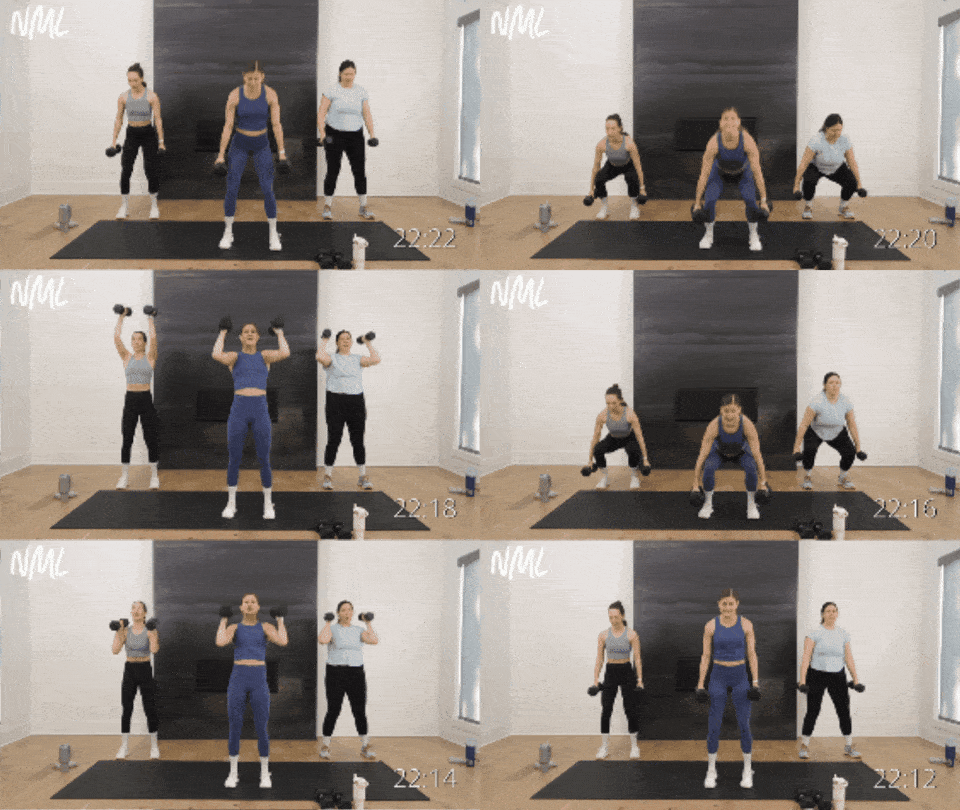
    1. Stand with your feet shoulder width apart or slightly wider. Hold a dumbbell in each hand at your sides.
    2. Inhale as you bend your knees and sit your hips back (as if sitting down in a chair). Aim for 90 degree bends at each knee, focusing on pushing your knees out (not letting them cave in). Keep your torso in an upright position.
    3. Hold a low squat position, then pulse your hips up and down two to three inches, performing an additional half-squat.
    4. Exhale as you press through your heels to stand tall, driving your hips forward to return to standing position.
    5. As you stand, ‘clean’ the dumbbell up towards your shoulders. Think about “getting under” the dumbbells to catch them at shoulder level — this is a dumbbell clean.
    6. Hold the dumbbells at your shoulders, then press the weights overhead, performing a dumbbell shoulder press.
    7. Slowly and with control, lower the dumbbells first to your shoulders, then to your hips, returning to starting position.

    Alternating Reverse Lunge

    Targets: The glutes, quads and core.

    three women performing alternating reverse lunges as part of dumbbell workout routine

    How To Do Alternating Reverse Lunges with Pulses

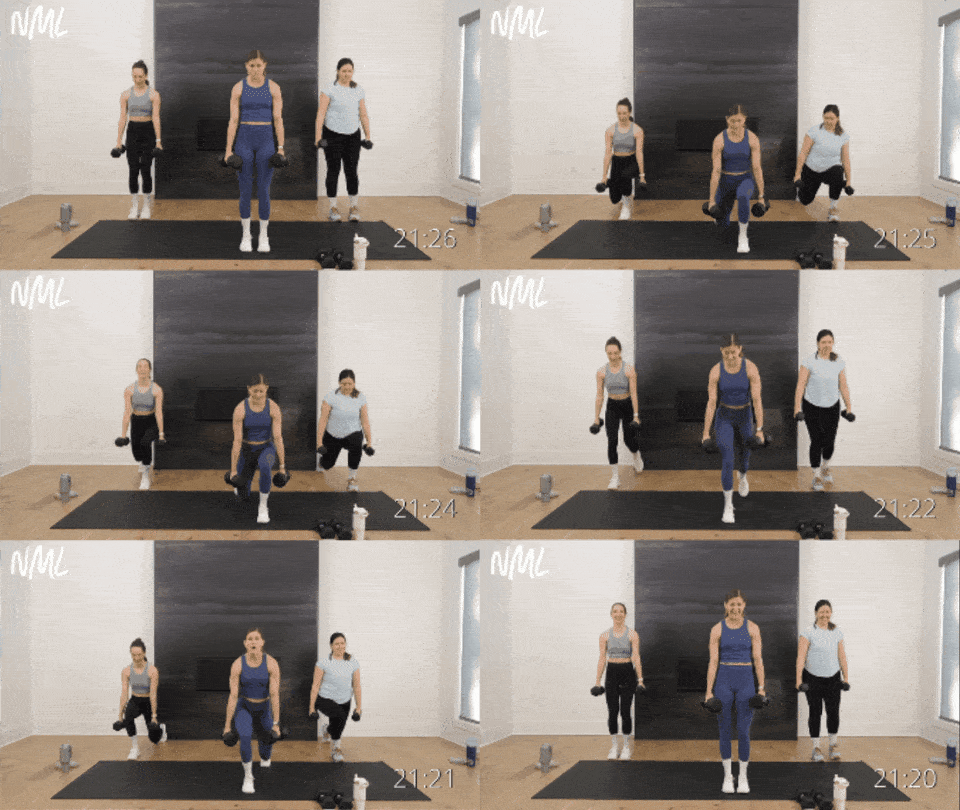
    1. Begin in neutral standing position, feet shoulder width apart. Hold a dumbbell in each hand at your sides.
    2. Step your left foot back into a reverse lunge, lowering down so both knees form 90-degree angles.
    3. Hold a low lunge position, then perform a lunge pulse by lifting and lowering your hips two to three inches.
    4. Press through your front right heel to drive forward, returning to standing position.
    5. Then alternate, this time stepping your right foot back into a reverse lunge, before driving through your front heel to return to starting position.

    Dumbbell Chest Press and Glute Bridge Hold

    Targets: Legs, glutes, thighs, hips, hamstrings and chest (pecs, or pectoralis major) muscles.

    three women performing dumbbell glute bridge hold with a chest press

    How To Do Dumbbell Chest Presses and Glute Bridge Holds

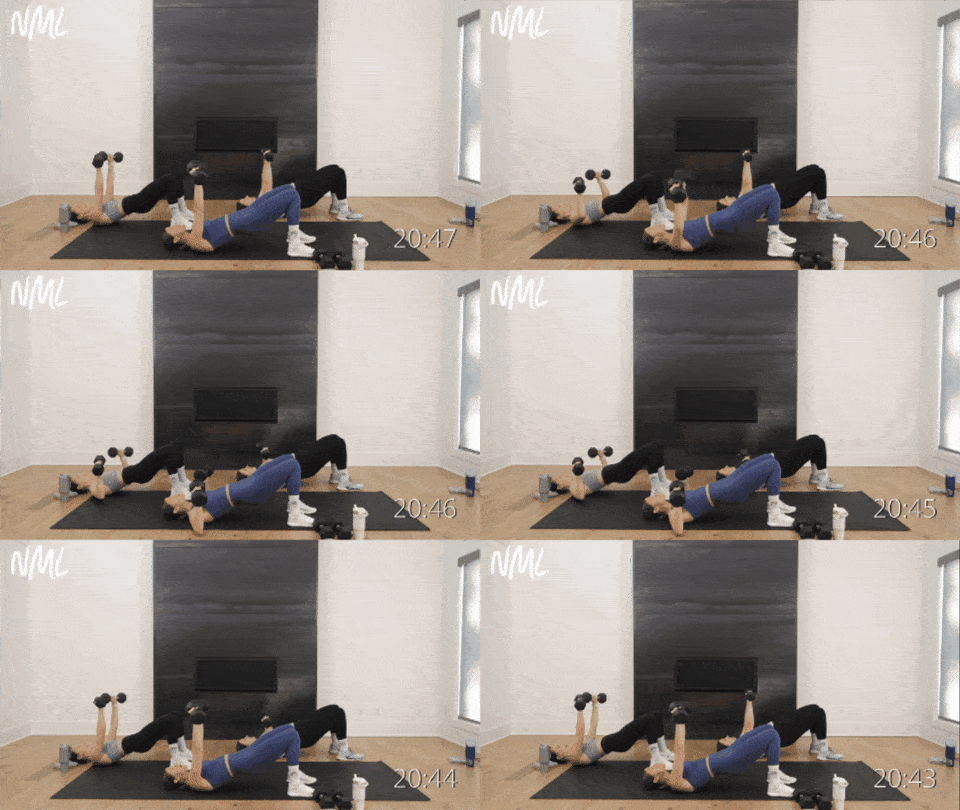
    1. Lie flat on your back with your legs bent at 90 degrees (heels on the ground).
    2. Holding one dumbbell in each hand, fully extend your arms so the dumbbells are stacked over your shoulders, palms facing away from your body.
    3. Drive through your heels, squeezing your butt to lift your hips up toward the ceiling. Perform an isometric hold at the top of your glute bridge.
    4. Then, bending at the elbows slowly lower the dumbbells towards your chest (chest puffed out and weights in line with nipples). I recommend thinking about lowering your elbows at a 45-degree angle rather than “goal-posting” your arms to protect your shoulder joints.
    5. Then exhale, pushing the dumbbells back overhead to return to the starting position.

    Wide Squat Dumbbell Burpee and Bicep Curl

    Targets: Legs, glutes, hamstrings, hips, calves, low back, shoulders, abs and core.

    The burpee is one of the most famous compound exercises, or exercises that target multiple muscles at once.

    three women performing dumbbell burpees with a wide bicep curl

    How To Do Wide Squat Dumbbell Burpees and Bicep Curls

    1. Stand with feet slightly wider than shoulder-width apart. Hold a set of dumbbells between your legs, palms facing in towards each other.
    2. Bend your knees as you lower your hips towards the ground, performing a wide squat. As you lower your hips, lower the dumbbells towards the floor, placing them on the ground between your feet.
    3. Then, keep your hands on your dumbbells as you step or jump your feet back, finding a high plank position. Shoulders are stacked over wrists, core engaged.
    4. Jump your feet in, landing softly outside the dumbbells in a low squat position.
    5. Then, press through your heels to stand tall, pulling the dumbbells up your body as you stand.
    6. Bend your elbows to curl the dumbbells up to shoulder height, performing a bicep curl.
    7. Then, slowly and with control, lower the dumbbells to your hips, returning to starting position.

    Modification: Perform a dumbbell squat, clean and alternating knee drive.

    Dumbbell Workout Routine FAQs

    Can I Build Muscle With Only Dumbbells?

    Yes! Dumbbell exercises are an effective way to add resistance training to your workouts and build muscle. Compared to using gym machines (such as a leg press machine or lat pull down machine), dumbbells engage more of the smaller, stabilizing muscles in the lower body, upper body and core. They also allow you to strength train in multiple planes of motion, mimicking real life movement patterns.

    What Is A Good Dumbbell Workout Routine?

    The best dumbbell workout routines include a combination of upper body workouts, lower body workouts, full body workouts, core workouts, and mobility workouts. Beginner workout routines may focus on three days of training a week, while more advanced split training workout plans tend to be structured in five-day workout splits, or training five days per week.

    Can You Get A Complete Workout With Just Dumbbells?

    You can build strength and burn fat exclusively with dumbbell workouts. Dumbbell workouts are also a great way to increase core strength as your body naturally has to stabilize during movements rather than relying on a machine for stability. Examples of the best dumbbell exercises include the dumbbell curl, dumbbell row, dumbbell bench press, goblet squat, deadlift, renegade row and tricep extension.

    Pin This Workout: Time-Drop Dumbbell Workout Routine

    woman performing overhead tricep extensions

    This post includes affiliate links. I do earn a commission for products purchased using these links (at no additional cost to you). Thank you for supporting Nourish Move Love, making the content you see on this blog possible.

    #35Minute #Dumbbell #Workout #Routine #Video

  • 8 Best Kettlebell Leg Exercises (Video)


    Build a strong lower body at home with the 8 BEST kettlebell leg exercises! From squats to swings, this kettlebell workout builds strength in the big, power-generating muscles in your lower body. Quads, hamstrings, glutes, calves and core – this kettlebell workout for women hits it all.


    Quads, hamstrings, glutes, calves and core: we’ll hit it all with the best kettlebell leg exercises.

    The kettlebell is one of my favorite pieces of equipment in my home gym — especially for leg day.

    If you’re used to dumbbell workouts, kettlebell exercises offer a great way to mix up your home workouts and challenge your muscles in a different way.

    Build strength, power and endurance in a low impact way with these 8 kettlebell leg exercises.

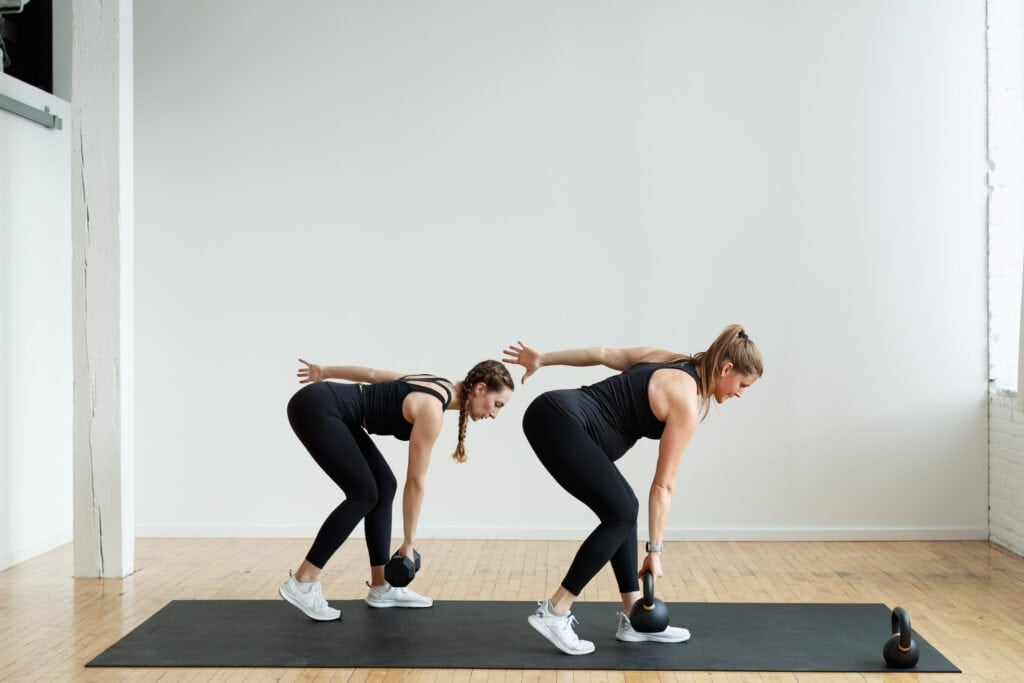
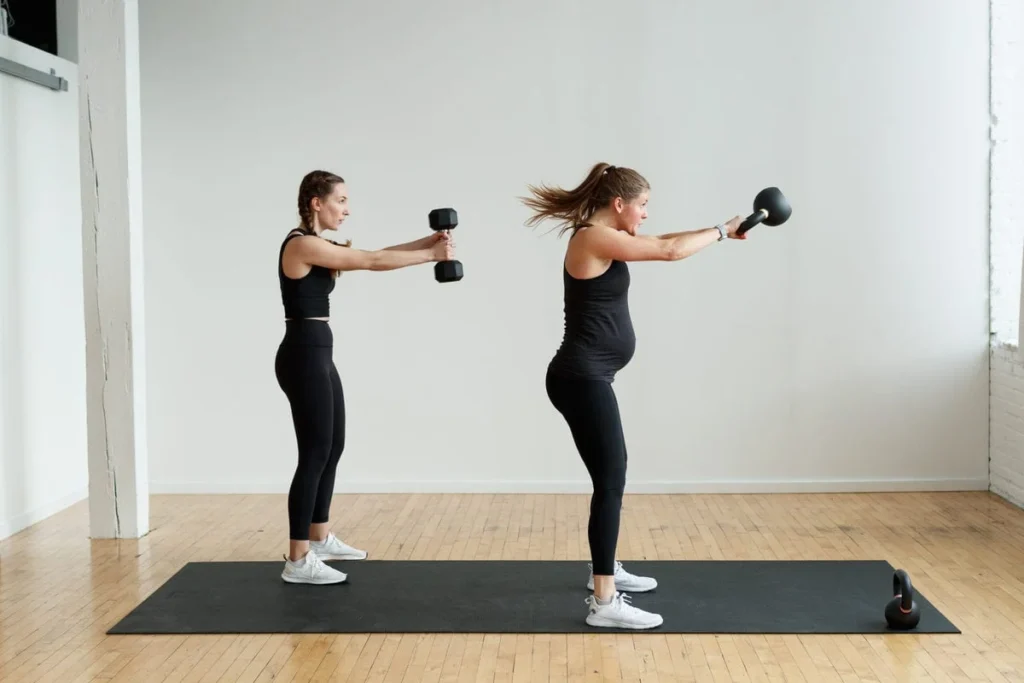
    No kettlebell? No worries, you can do this entire workout with a single dumbbell (follow Rachel on the left in the workout video).

    two women performing a staggered kettlebell deadlift in a kettlebell leg workout for women

    Build lower body strength and challenge your cardiovascular endurance with this 30-minute kettlebell leg workout.

    These are the 8 best lower body kettlebell exercises in a 30-minute workout at home.

    Add this kettlebell routine to your weekly workout plan 1-2 times a week to build muscle, increase mobility, and improve endurance.

    Workout Equipment:

    Medium to Heavy Kettlebell or Singe Dumbbell. We’re using 15-30 lbs.

    Workout Instructions:

    Follow along with the guided 30-Minute Kettlebell Leg Workout on YouTube, led by certified personal trainer Lindsey Bomgren. 

    Your Workout Looks Like This:

    • 8 Kettlebell Leg Exercises
    • Timed Intervals (40 seconds of work per exercise, followed by 20 seconds of rest)
    • Repeat All 8 Kettlebell Leg Exercises x2 Sets
    • Finish With A 4-Minute AMRAP Burnout
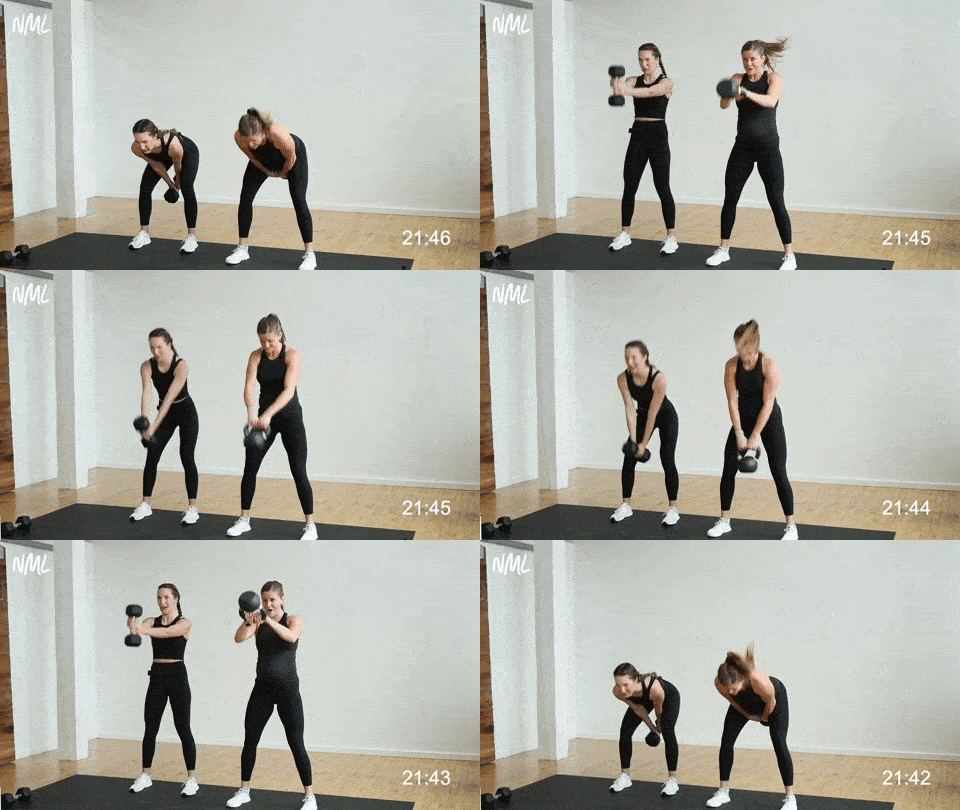
    two women performing kettlebell swings in a leg workout at home

    Workout Outline

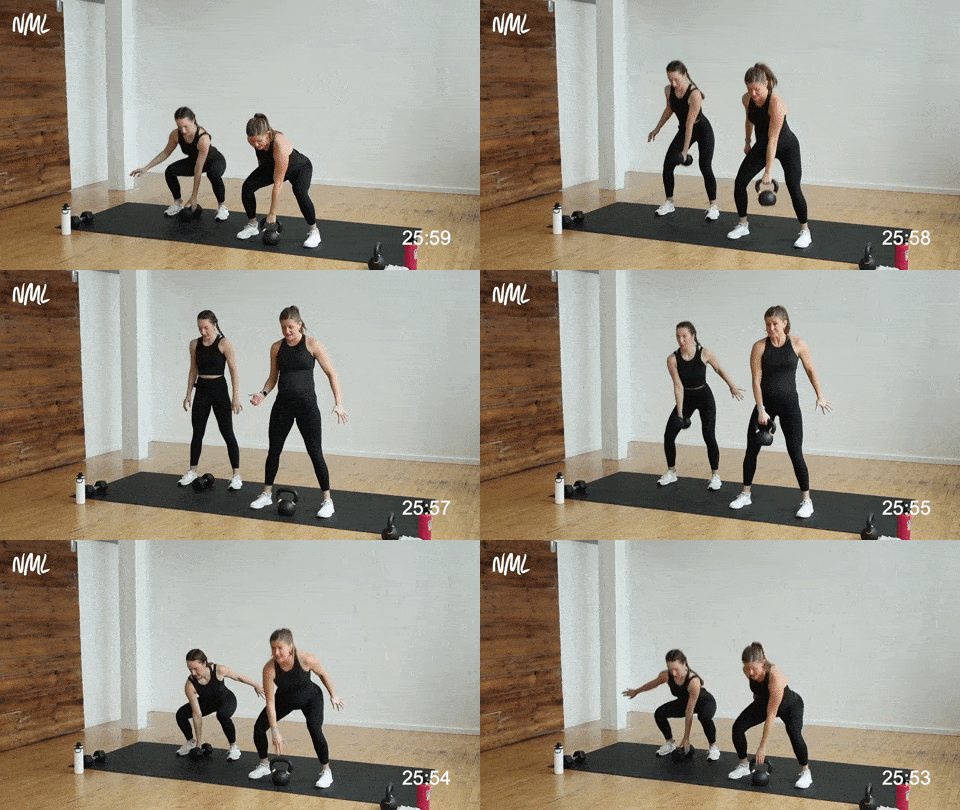
    1. Kettlebell Squats (Kettlebell Pick Up and Set Down)
    2. Hand Switch Squat Pulse and Kettlebell Clean
    3. Kettlebell Deadlift and Clean and Calf Raise
    4. Kettlebell Deadlift and Clean Catch and Front Squat Thruster
    5. Kettlebell Swings
    6. Hand Switch Front/Back Kettlebell Lunge, R/L
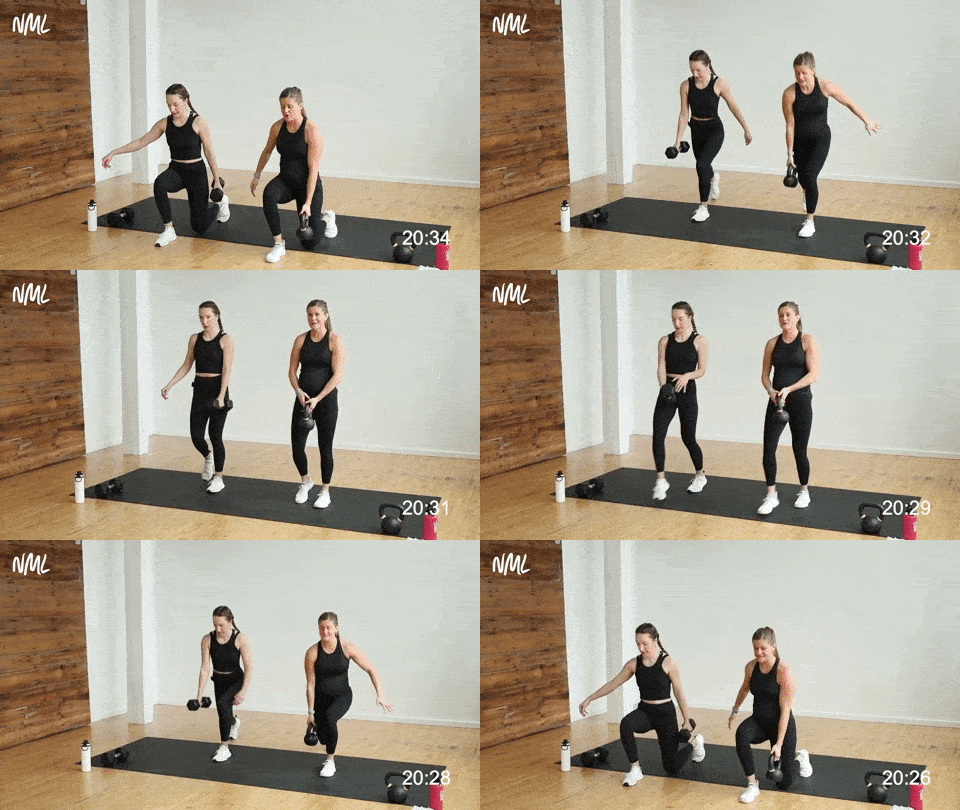
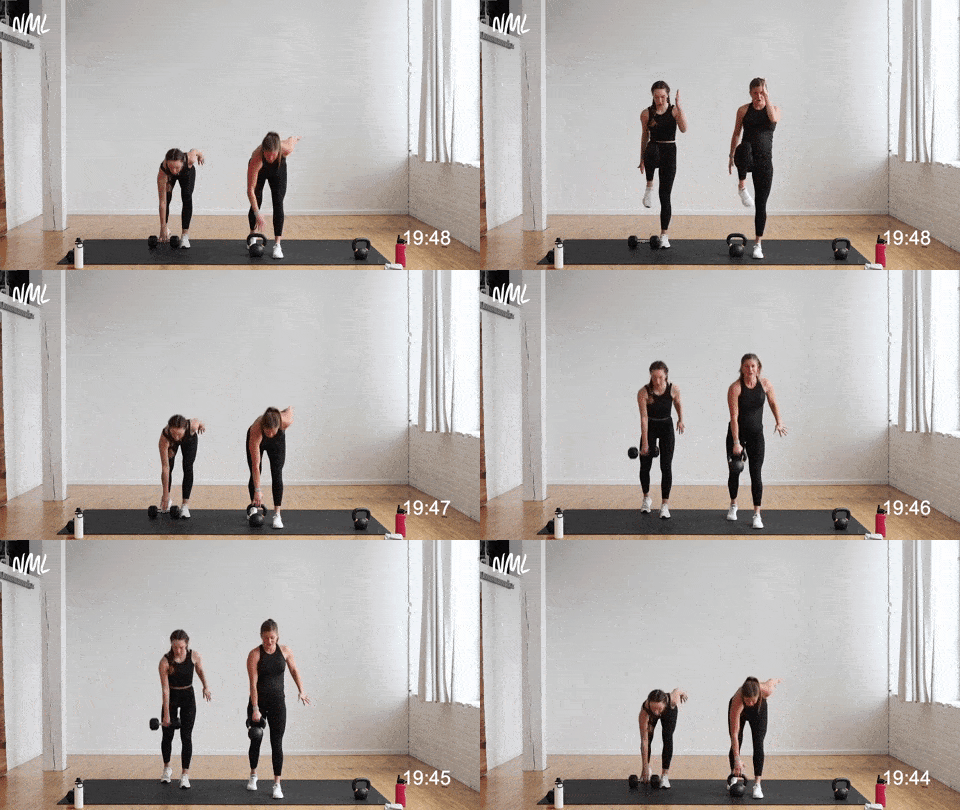
    7. Staggered Deadlift and Power Knee Drive, R/L
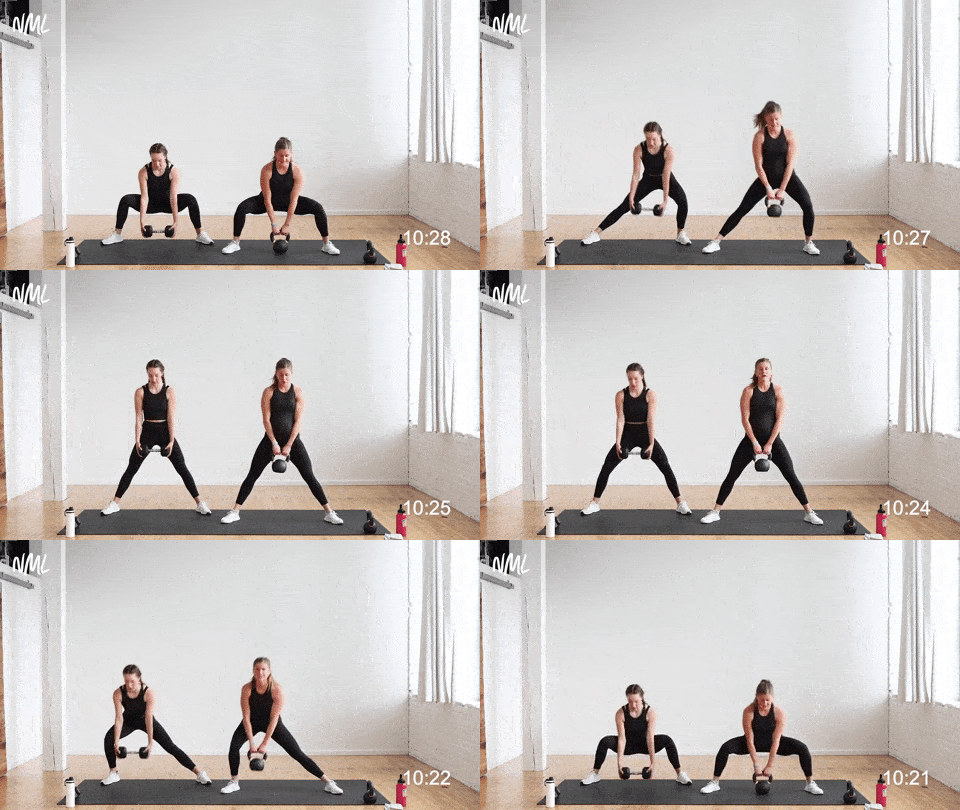
    8. Lateral Squat and Sumo Squat

    4-Minute AMRAP Finisher:
    (5) Kettlebell Pick Up Squats
    (10) Kettlebell Deadlift and Clean Catch and Front Squat Thruster
    (15) Kettlebell Swings

    8 Kettlebell Leg Exercises

    Kettlebell Pick Up Squats

    Targets: Glutes, hamstrings, hips, quads, lower back and core muscles.

    two women performing kettlebell pick up squats by squatting to pick up a kettlebell from the ground

    How To Do Kettlebell Pick Up Squats

    1. Start in a standing position, feet hip-width apart or slightly wider, core engaged. Place a kettlebell on the ground between your feet.
    2. Sit your hips down and back into a loaded squat position as you reach your right hand down to pick up the kettlebell.
    3. Drive through your heels to stand tall, pulling the kettlebell between your legs up towards your hips. Then perform another squat to return the kettlebell back to the mat.
    4. Then, repeat the squatting motion, this time picking up the kettlebell with your left hand.

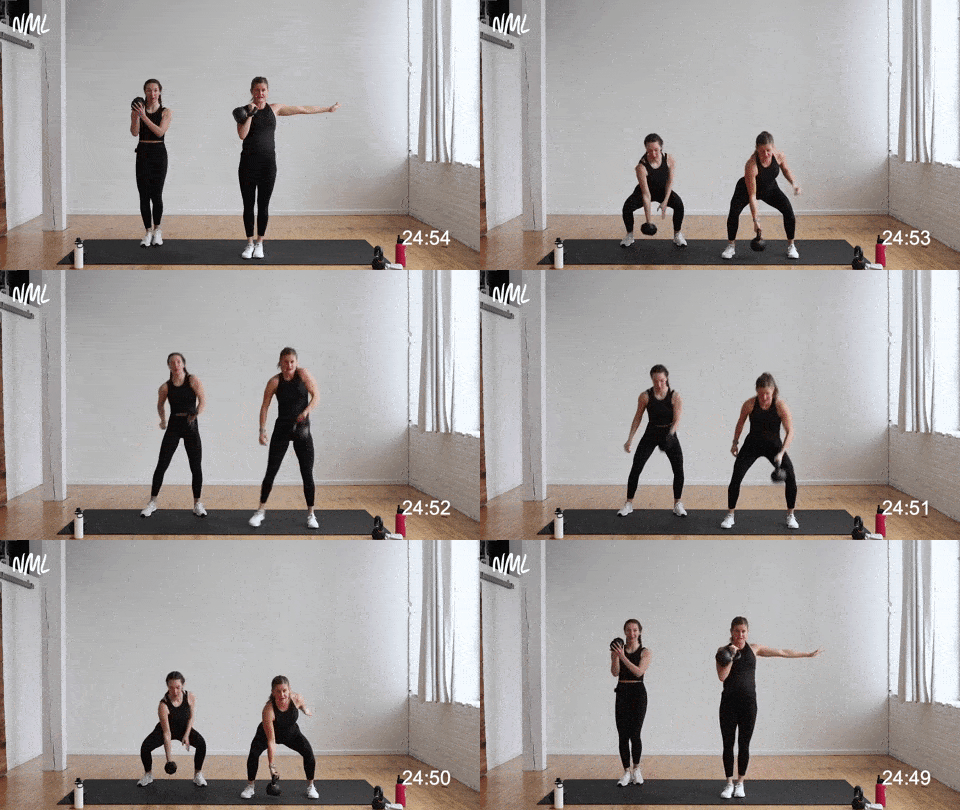
    Hand Switch Squat Pulse and Kettlebell Clean

    Targets: Glutes, hamstrings, quads, hip flexors, hip adductors (inner thighs), lower back and core muscles.

    two women performing a kettlebell squat to kettlebell clean in a kettlebell leg workout

    How To Do A Hand Switch Squat Pulse and Kettlebell Clean

    1. Start in a standing position, feet hip-width apart or slightly wider, core engaged. Hold the horn of the kettlebell in your right hand.
    2. With chest up, lower down into a squat, pushing your hips back and down until your hips align with your knees (making a 90-degree angle with your hips and knees). Knees push out towards your outer three toes.
    3. Pulse for a two-count, transferring the kettlebell handle to your left hand on the second pulse.
    4. Then exhale as you drive through your heels, squeezing your glutes to stand tall and bringing your right heel in to tap your left heel.
    5. As you stand, clean the kettlebell up to your left shoulder. Think about driving the weight up with your hips.
    6. Then, step out with your right foot and sit into a low squat and pulse for a two-count, this time transferring the kettlebell to your right hand on the second pulse.
    7. Clean the kettlebell up to your right shoulder as you stand tall, bringing your left foot in to tap your right.

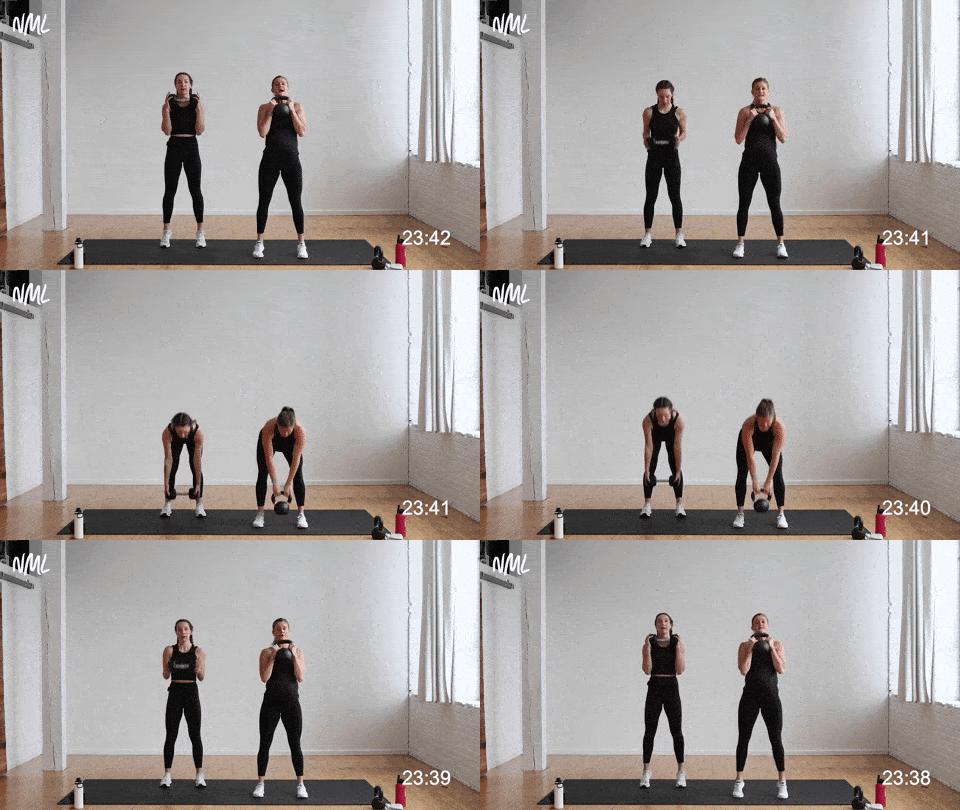
    Kettlebell Deadlift and Clean and Calf Raise

    Targets: The posterior chain or backside of the body. Specifically targeting the hamstrings, glutes, hips, calves, lower back and core.

    two women performing a kettlebell deadlift and clean with a calf raise

    How To Do A Kettlebell Deadlift and Clean and Calf Raise

    1. Start standing feet shoulder-width apart and knees slightly bent. Hold the horn of the kettlebell with both hands between your legs.
    2. Hinge forward at the hips, pushing your hips back as you lower the kettlebell down along the front of your body. You should feel a stretch in the back of your legs (hamstrings). Focus on keeping your back in neutral alignment with your neck and shoulders throughout the entire movement (straight line from head to tailbone). Keep a slight bend in your knees to avoid ‘locking out’ the joint.
    3. Then, drive through your heels, squeezing your glutes as you drive your hips forward to return to standing.
    4. As you stand tall, clean the kettlebell up to a front racked position, sliding your hands down the horn as you catch it at your chest.
    5. Then, perform a calf raise; lifting your heels off the ground.
    6. Lower your heels back to the mat to return to the starting position with feet flat on the ground.

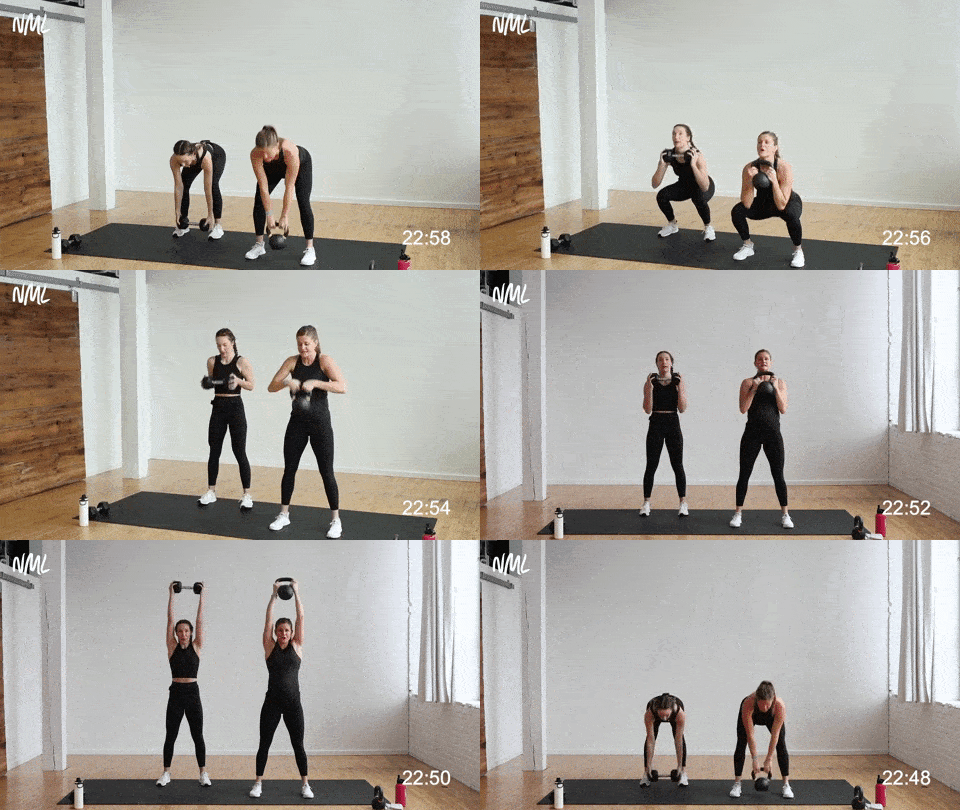
    Kettlebell Deadlift and Clean and Front Squat Thruster

    Targets: Legs, glutes, hamstrings, quads, hips, lower back, chest, shoulders and core muscles.

    two women performing a kettlebell deadlift and clean and overhead press or front squat thrusters in a kettlebell leg workout for women

    How To Do A Kettlebell Deadlift and Clean and Front Squat Thruster

    1. Start standing feet shoulder-width apart and knees slightly bent. Hold the horn of the kettlebell with both hands between your legs.
    2. Hinge forward at the hips, pushing your hips back as you lower the kettlebell down along the front of your body. You should feel a stretch in the back of your legs (hamstrings). Focus on keeping your back in neutral alignment with your neck and shoulders throughout the entire movement (straight line from head to tailbone). Keep a slight bend in your knees to avoid ‘locking out’ the joint.
    3. Then, drive through your heels, squeezing your glutes as you drive your hips forward to return to standing. As you stand tall, clean the kettlebell up to a front racked position, sliding your hands down the horn as you catch it at chest height. Keep your elbows in tight to your torso.
    4. Hold the kettlebell in the front rack position as you sit your hips back into a low kettlebell goblet squat, aiming to get your thighs parallel to the ground.
    5. Press through your heels to stand tall, pushing the kettlebell overhead as you stand.

    Kettlebell Swings

    Targets: Glutes, hamstrings, hips, core, and all the stabilizing muscles in your back and shoulders.

    The kettlebell swing is a full body exercise with an emphasis on the hamstrings, glutes and back. A dynamic exercise that will increase lower body strength and raise your heart rate.

    Two women performing kettlebell swings. One woman is using a kettlebell and one women is using a dumbbell for dumbbell swings (best kettlebell leg exercises)

    How To Do Kettlebell Swings

    1. Start standing with your feet wider than shoulder-width apart.
    2. Hinge forward at the hips to reach for the kettlebell in front of you. Place your hands on the horns of the bell, palms facing your body.
    3. Then with a slight bend in your knees and weight in your heels, ‘hike’ the kettlebell back between your legs to start the swing movement.
    4. Drive through your heels to stand tall, pushing your hips forward as you squeeze your glutes to swing the kettlebell up to shoulder height. Aim for shoulder height, with arms extended out away from the body. Think long, loose arms (your arms are just a vehicle for moving the bell, your hips and glutes generate the power to move the bell).
    5. As the kettlebell begins to descend, think of catching the weight with your hip hinge, loading the glutes and hamstrings.

    Hand Switch Front/Back Kettlebell Lunge

    Targets: Glutes, quads, hamstrings, calves, inner thighs (hip adductors) and outer thighs (hip abductors).

    two women performing kettlebell lunges

    How To Do A Hand Switch Front/Back Kettlebell Lunge

    1. Stand with your feet hip-width apart, knees slightly bent. Hold a kettlebell in your right hand at your right side.
    2. Step your left leg forward to perform a front lunge. Dropping your back right knee towards the mat, aiming for 90-degree bends in both knees. Then, drive off your front, left foot to return to standing.
    3. Transfer the kettlebell to your left hand, then step your left foot back and lower your back left knee down towards the mat into a reverse lunge.
    4. Then drive through your front, right foot to stand tall as you step your left foot forward to meet your right foot; returning to the starting position.
    5. Repeat this forward and reverse lunge pattern. Switch sides for the second set.

    Staggered Deadlift and Power Knee Drive

    Targets: Hamstrings, glutes, hip flexors, lower back and core muscles.

    two women performing a kettlebbell staggered deadlift and knee drive

    How To Do A Staggered Deadlift and Power Knee Drive

    1. Start in a standing position, feet hip-width apart or slightly wider, core engaged. Stagger your stance, so your left foot is slightly behind your right foot. Place the kettlebell in front of your left foot.
    2. Hinge at the hips as you reach down to pick up the kettlebell, pressing through your front right heel to stand tall, pulling the kettlebell up along your thigh.
    3. Perform another deadlift, pushing the hips back as you lower the kettlebell to the ground and release the handle.
    4. Then, drive your back left knee up towards your chest, performing a power knee drive.
    5. Return your left foot to the mat behind your kettlebell and repeat, hinging at the hips to pick up the kettlebell.

    Lateral Squat and Sumo Squat

    Targets: Mainly the guteus medius, or outer glute that controls hip movement and side-to-side movements. Also involved are the quads and inner thighs (or adductors).

    two women performing a lateral lunge to sumo squat with a kettlebell

    How To Do A Lateral Squat and Sumo Squat

    1. Start with your feet wider than your hips in a wide squat stance. Knees and toes point forward (or toes just slightly turned out away from your body). Hold the kettlebell horn with both hands between your legs.
    2. Perform a lateral squat on the right by shifting your weight into your right heel as you push your hips back, bending your right knee while leaving your left leg straight. Think of performing a single leg squat with your right leg while your left leg remains straight.
    3. Drive through your right foot to reverse the movement, pushing you back up to center.
    4. Then, bend your knees to lower down into a sumo squat, pushing your knees out towards your pinky toes as you drop your hips parallel to your knees.
    5. Pull your thighs together as you stand tall, returning to standing.
    6. Then, perform a lateral squat on the left, shifting your weight into your left heel and bending your left knee while leaving your right leg straight.
    7. Drive off your left foot to return to center, and perform another sumo squat.
    8. Repeat, alternating each lateral squat with a sumo squat.

    Kettlebell Leg Exercises FAQs

    Can You Build Strong Legs With Kettlebells?

    Yes! The kettlebell is one of the most versatile pieces of gym equipment and lends itself well to compound leg exercises that engage multiple leg muscles at once. Kettlebells also have an offset center of gravity compared to a dumbbell or barbell. This means that your muscles have to do the work of moving the weight AND stabilizing it, which increases the intensity. They’re a versatile tool for building muscle and burning fat.

    What Are The Best Kettlebell Leg Exercises?

    The best kettlebell leg exercises are compound exercises that engage several muscle groups at once. These include hip hinges/deadlifts, kettlebell squats, lunges, cleans and kettlebell swings. The most effective leg workouts include a combination of these exercises.

    What Are The Benefits Of Kettlebell Training?

    Kettlebell workouts provide full body strength, cardio conditioning, balance, stability, flexibility and mobility all in one workout. They offer a great way to get a high-intensity workout in a low impact way.

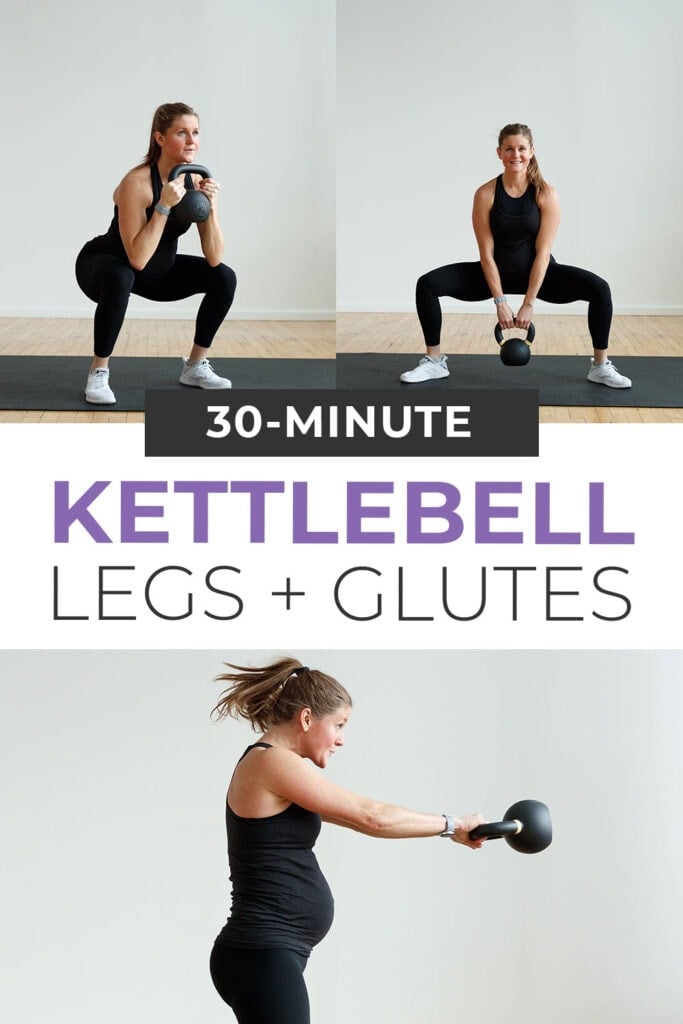
    Pin This 30-Minute Kettlebell Leg Workout for Women

    30-Minute Kettlebell Legs and Glutes Workout for Women pin for pinterest

    This post includes affiliate links. I do make a small commission for products purchased using these links (at no additional cost to you). Thank you for supporting Nourish Move Love, making the content you see on this blog possible.

    #Kettlebell #Leg #Exercises #Video
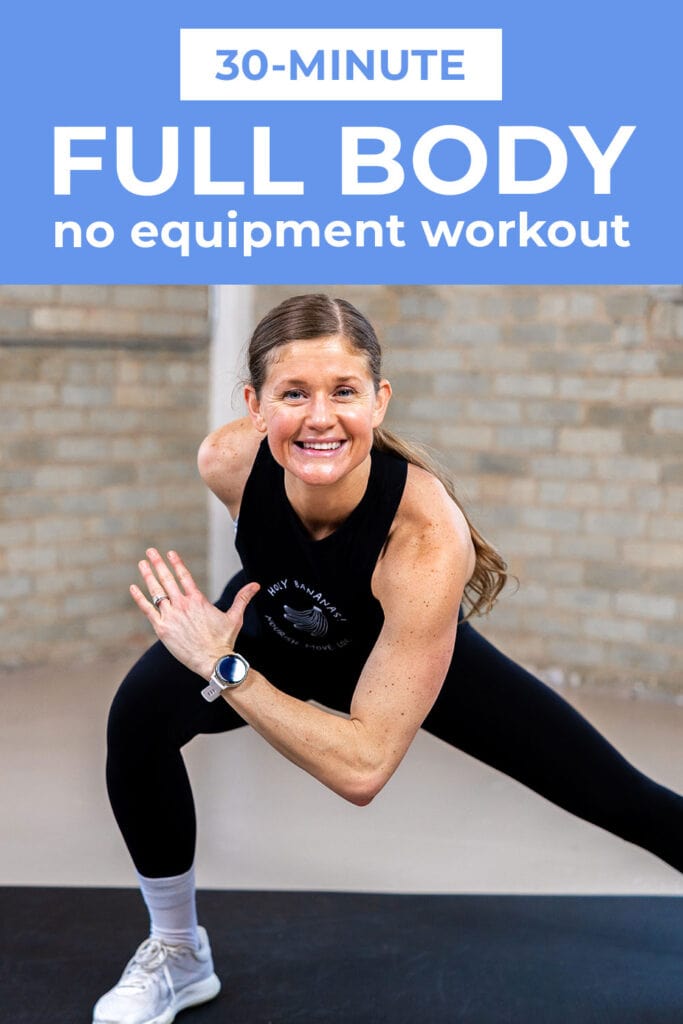
  • 30-Minute Full Body Bodyweight Workout


    Train anywhere with this effective full body bodyweight workout. The best bodyweight exercises to build muscle and tone the arms, legs, back, chest and core. We love that this workout can be scaled for all fitness levels. Each move includes options to make the exercise more advanced, or keep it low-impact and beginner-friendly.


    Despite all the benefits, I still don’t think bodyweight workouts get the recognition they deserve.

    Although I love training with heavy dumbbells, I think bodyweight workouts are a beneficial addition to any workout routine.

    Bodyweight workouts are:

    • Convenient. I find myself more likely to be consistent with workouts if I can train anywhere, anytime with just my own bodyweight.
    • Functional. Bodyweight exercises are often functional, or mimic everyday movements (such as squatting, lunging, and pushing). Functional strength training makes it easier to perform daily tasks and reduce risk of injury.
    • Challenging. One of the toughest programs I’ve filmed was our Zero30 Bodyweight Workout Plan. Bodyweight exercises can be surprisingly challenging.

    Add these five best bodyweight exercises to your routine to build strength, increase athletic power and improve cardiovascular conditioning at home or on-the-go.

    two women performing curtsy lunges as part of full body bodyweight workout

    30-Minute Full Body Bodyweight Workout

    Build total body strength anywhere with this 30-minute bodyweight workout.

    A complete bodyweight workout targeting every muscle group in the body: the lower body (quads, hamstrings, glutes, calves, and thighs), upper body (biceps, triceps, back, shoulders, and chest) and core.

    Add full body bodyweight workouts like this one to your bodyweight workout plan 1-2 times per week to build and maintain strength.

    Workout Instructions:

    Follow along with the guided Full Body Bodyweight Workout Routine on YouTubeled by certified personal trainer, Lindsey Bomgren. 

    Your Workout Looks Like This:

    • 4 Circuits
    • 3 Exercises Per Circuit
    • Timed Intervals (perform each exercise for 30 seconds, then rest for 15 seconds. Move at your pace, performing as many reps of each move as possible within the work block.)
    • Repeat Each Circuit x2 Sets

    Workout Equipment:

    No Equipment, Bodyweight Only.

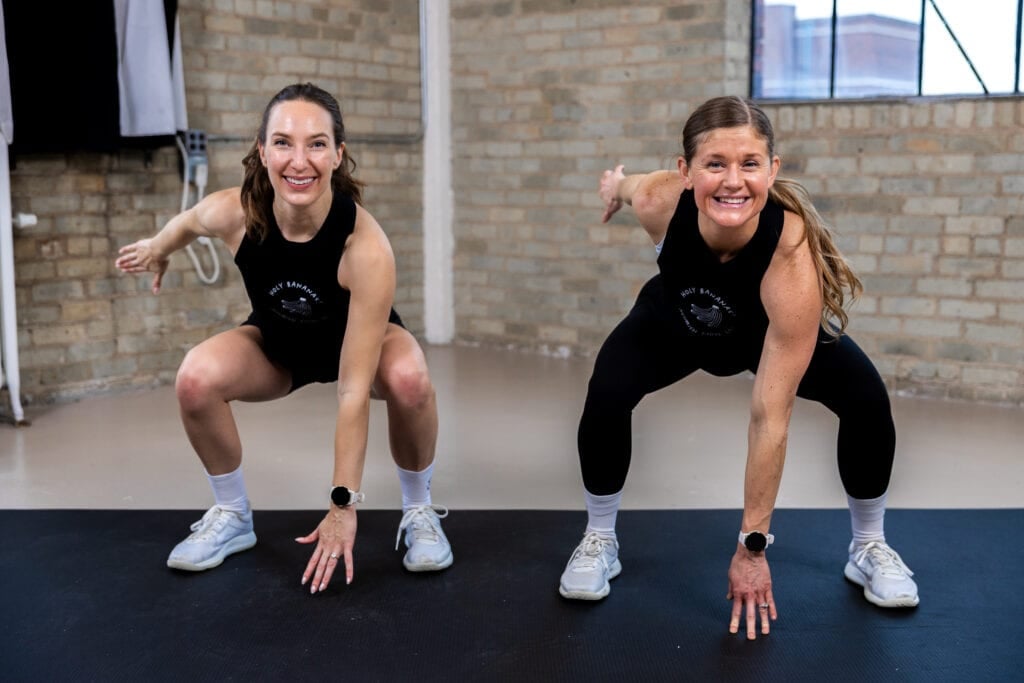
    two women performing a low squat as example of best bodyweight exercises

    Workout Outline

    CIRCUIT ONE: 

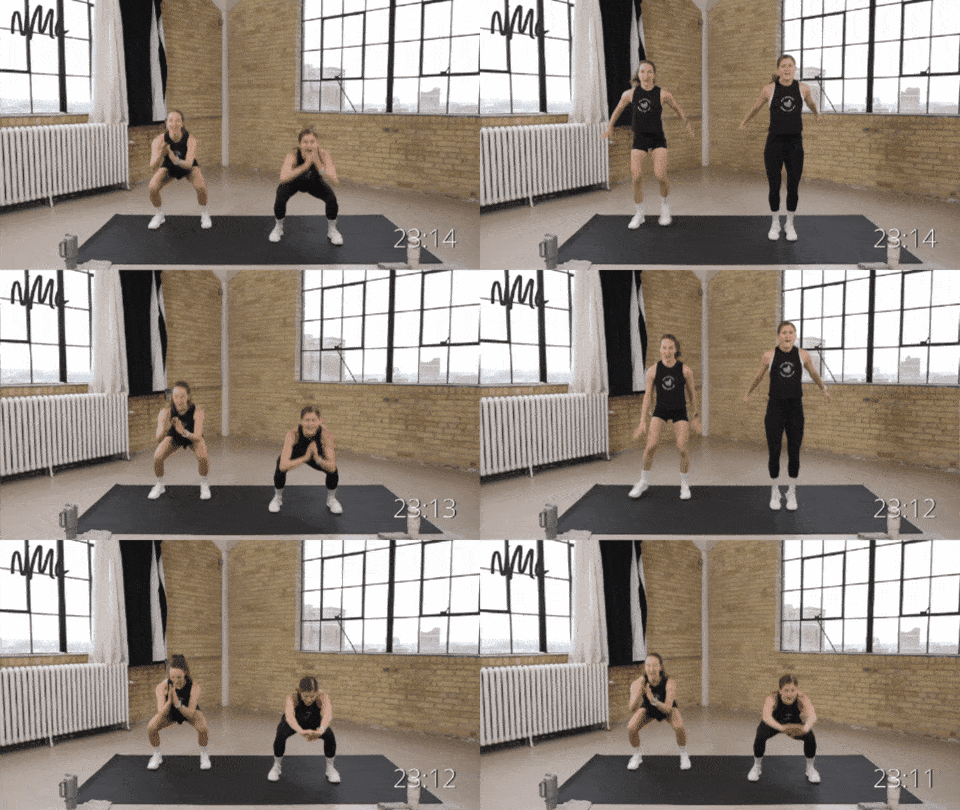
    1. Pulse Squat and Squat Jack
    2. Push Up and Shoulder Tap
    3. Push Up Burpee and Squat Jack

    CIRCUIT TWO:

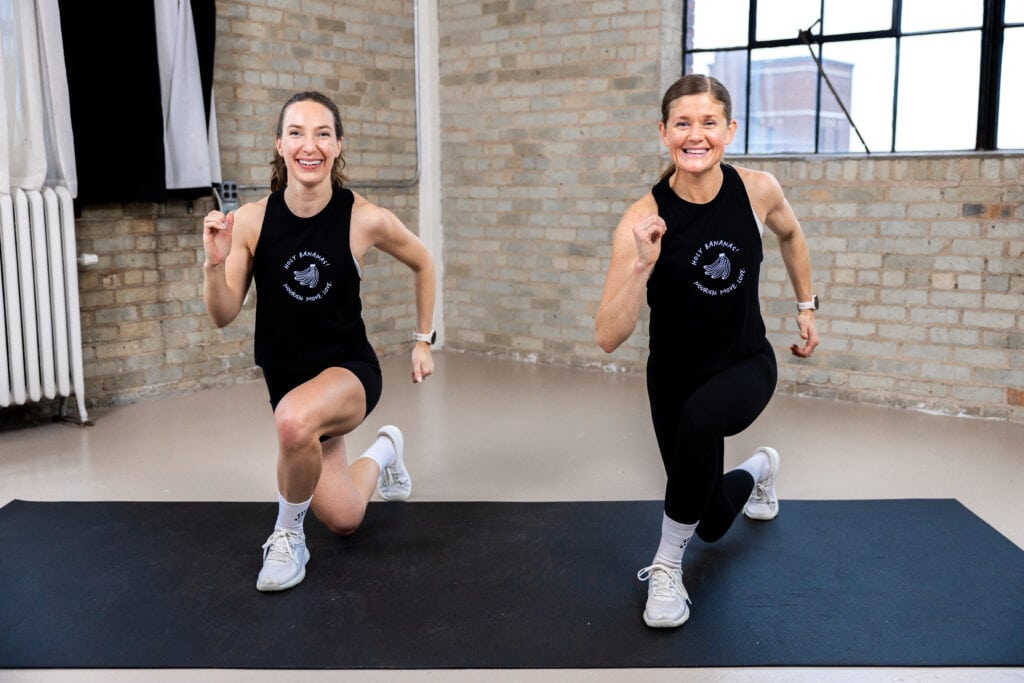
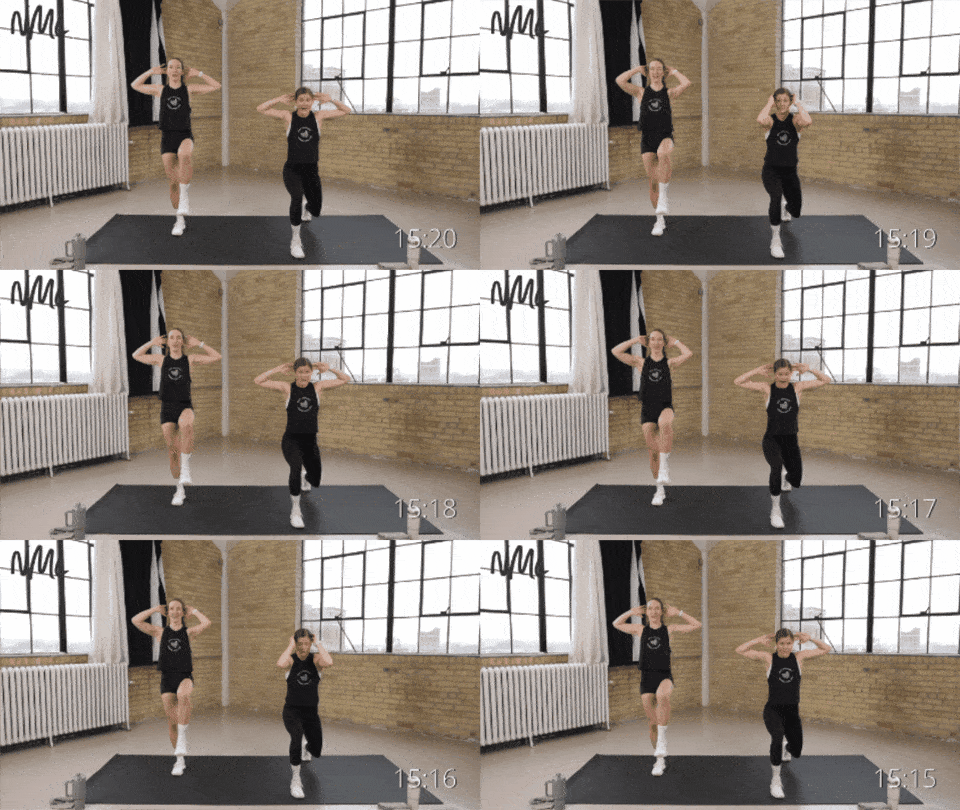
    1. Pulse Lunge and Knee Drive
    2. Lunge Hold and Back Fly
    3. Lateral Lunge and High Knees

    CIRCUIT THREE:

    1. Squat Pulse and Curtsy Lunge
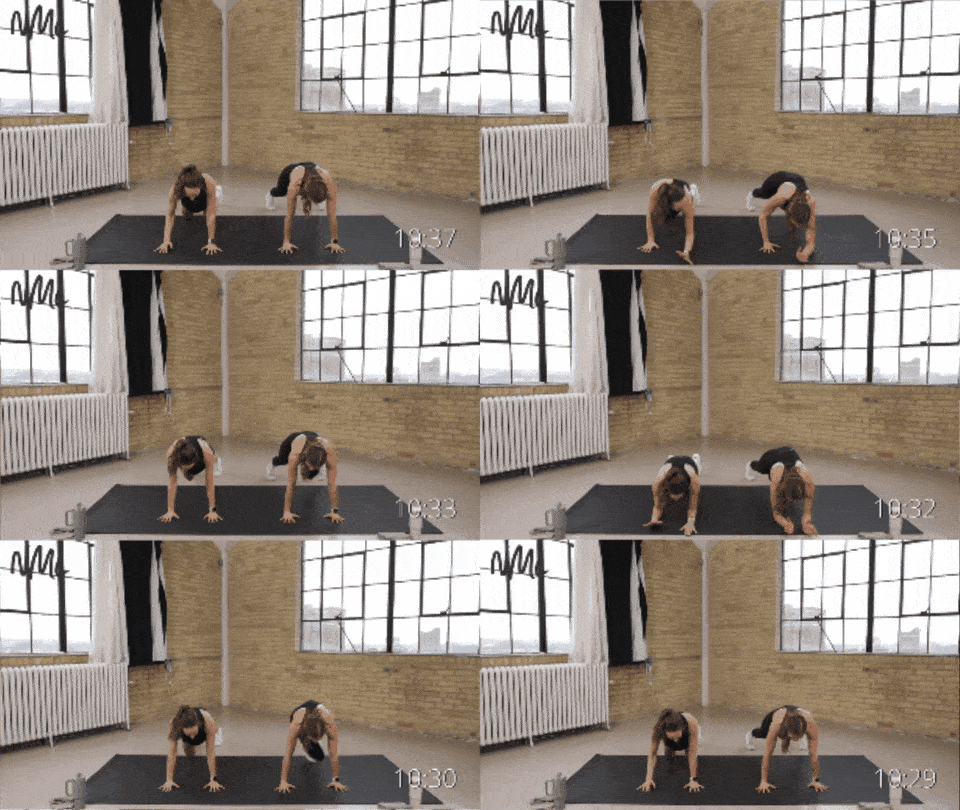
    2. Plank Army Crawl and Cross Body Knee Drive
    3. Runner Squat

    CIRCUIT FOUR:

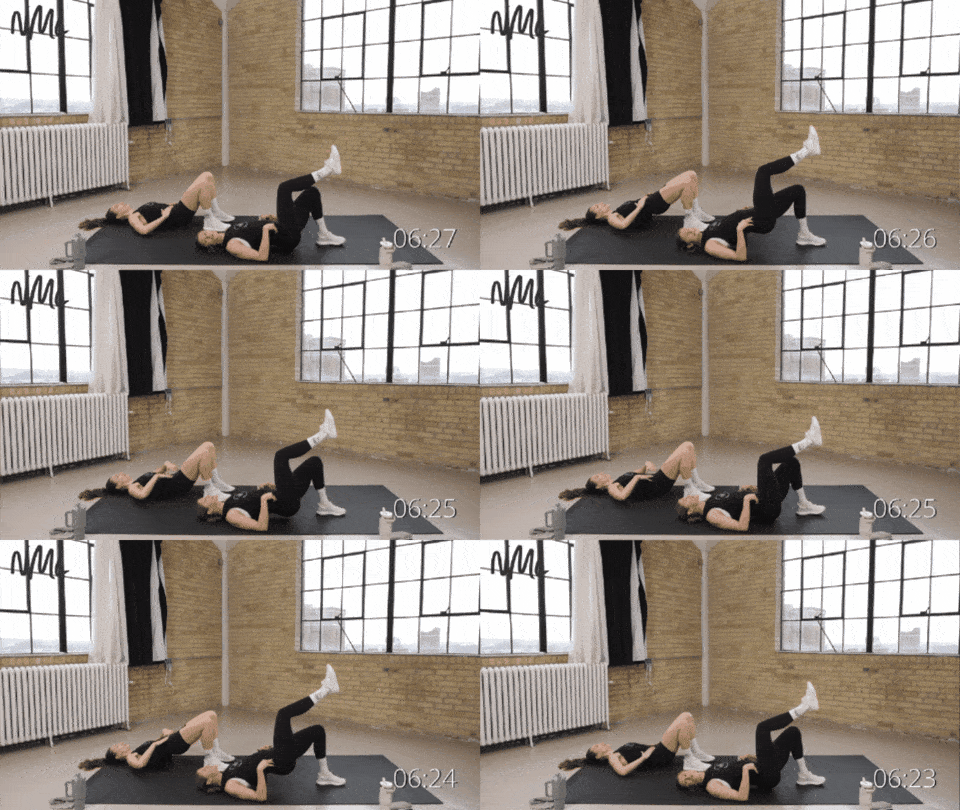
    1. Single Leg Glute Bridge
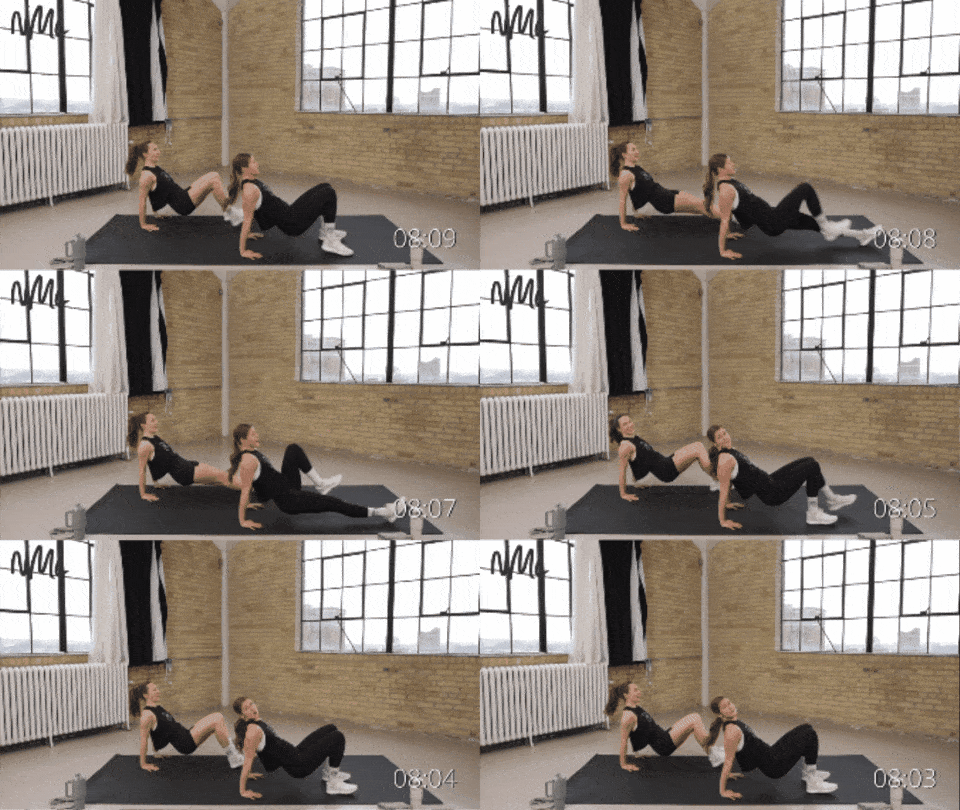
    2. Tricep Dip and Reverse Plank Walk Out
    3. Hollow Rock Hold and Seated Twists

    5 Best Bodyweight Exercises

    Squat Pulse and Squat Jack

    Targets: Legs, glutes, quadriceps, hamstrings, hip flexors, adductors (inner thighs), shoulders and core.

    two women performing squat pulses with a squat jack as part of full body bodyweight workout

    How To Do Squat Pulses and Squat Jacks

    1. Stand with your feet shoulder width apart or slightly wider.
    2. Inhale as you bend your knees and sit your hips back (as if sitting down in a chair). Aim for a 90 degree bend at each knee, focusing on pushing your knees out (not letting them cave in). Keep your torso in an upright position.
    3. Hold a low squat position, then pulse your hips up and down two to three inches, performing an additional half-squat.
    4. Exhale as you press through your heels to stand tall, driving your hips forward to return to standing position.
    5. As you stand, jump your feet in towards each other, pulling up through your inner thighs to bring your legs close together. Think about landing softly.
    6. Then, “jack” your feet out wide, bending your knees to perform another squat. Think, “feet wide at the bottom, narrow at the top”.
    7. Continue this pattern, alternating two squat pulses with two squat jacks.

    Modification: Alternate tapping feet in for the squat jack rather than jumping.

    Lunge Hold and Back Fly

    Targets: Legs, glutes, quads, calves, inner thighs (adductors), outer thighs (abductors), posterior deltoids (rear shoulders), and back muscles (rhomboids and trapezius).

    two women performing a lunge hold with a back fly as example of best bodyweight exercises

    How To Do Lunge Holds and Back Flys

    1. Stand with your feet hip-width apart, knees slightly bent.
    2. Step your right foot back and lower your back right knee down towards the mat into a reverse lunge. Aiming for a 90-degree bends in both knees. Hold this low lunge position.
    3. Then, lightly place your fingertips behind your head, elbows at shoulder level, pointing towards the front of the room.
    4. Squeeze your shoulder blades together as you open your elbows wide, performing a bodyweight back fly.
    5. Slowly and with control, reverse the movement, bringing your elbows in front of your shoulders and returning to starting position.

    Modification: Rather than a lunge hold, perform a back fly from a standing position. Option to balance on one foot for an additional core challenge.

    Plank Army Crawl and Cross Body Knee Drive

    Targets: Arms, shoulders, chest, triceps, back, legs, glutes, quads, abs, obliques and core.

    two women performing an army crawl and cross-body knee drive as part of full body bodyweight workout

    How To Do Plank Army Crawls and Cross Body Knee Drives

    1. Start in a high plank position with your shoulders stacked over your wrists, weight evenly distributed amongst all ten fingers. Hold this high plank position, maintaining a straight line with your body, gaze slightly in front of you.
    2. Then perform two crossbody knee drives — pulling right knee towards left elbow, then left knee towards right elbow.
    3. Drop first your left forearm to the mat, then your right forearm to the mat, finding a low plank or forearm plank position. Shoulders are stacked over elbows.
    4. Exhale as you push yourself back up to the starting high plank position; starting with your left arm and following with your right arm. Try to keep your hips stable and even.

    Modification: Perform a rolling plank rather than the cross-body knee drives.

    Single Leg Glute Bridge

    Targets: Glutes, hamstrings, hips and pelvic floor.

    two women performing a single leg glute bridge as part of full body bodyweight workout

    How To Do Single Leg Glute Bridges

    1. Start laying on your back, knees bent and feet planted on the floor. Feet are hip width apart. Float your left foot off the ground.
    2. Press through your right heel to lift your glutes off the mat, squeezing your glutes as you lift. Think about keeping your core engaged and knees in line with your hips.
    3. Slowly and with control, lower your hips, hovering just off the mat and returning to starting position.

    Modification: Perform a standard glute bridge with both feet planted on the ground.

    Tricep Dip and Reverse Plank Walkout

    Targets: Legs, glutes, hamstrings, hips, calves, low back, shoulders, abs and core.

    two women performing a reverse plank with two tricep dips as example of best bodyweight exercises

    How To Do Tricep Dips and Reverse Plank Walkouts

    1. Start seated on the ground, knees bent at 90 degrees and heels within reaching distance of your fingertips. Plant your hands on the ground, fingertips pointed towards your glutes.
    2. Press evenly through your palms and heels to lift your hips off the floor.
    3. Perform a tricep dip by slightly bending the elbows, lowering your hips two to three inches without touching them to the mat.
    4. Squeeze through the back of your arms to straighten your elbows, then repeat, performing two tricep dips.
    5. Then, keep elbows straightened (shoulders stacked over wrists) and hips lifted as you walk your feet away from your body, finding a reverse plank position.
    6. Hold this reverse plank, then perform two alternating knee drives, pulling first your left knee in towards your chest, then your right knee.
    7. Then, step your feet in, returning to starting position.

    Modification: Omit the knee drives, holding a reverse plank instead.

    Full Body Bodyweight Workout FAQs

    Can I Get In Shape with Just Bodyweight?

    Bodyweight moves are an accessible way to get in shape anywhere. Bodyweight training is especially effective for beginners, as it builds the mind-muscle connection, supports fuller range of motion, and teaches proper form before adding load.

    Is It OK To Do Only Full Body Workouts?

    Full body workouts are excellent for building overall strength and fitness, especially for beginners. As you advance, I recommend following a split training program to truly fatigue each muscle group with more focused workouts.

    Pin This Workout: Full Body Bodyweight Workout

    woman performing lateral lunge

    This post includes affiliate links. I do earn a commission for products purchased using these links (at no additional cost to you). Thank you for supporting Nourish Move Love, making the content you see on this blog possible.

    #30Minute #Full #Body #Bodyweight #Workout

  • Here’s a TikTok Influencers’ Advice on How to Spot ‘Single Girls’ at the Gym

    German online fitness coach and social media influencer, Katja Believe has amassed more than 850,000 TikTok followers thanks to her handy tips and advice for getting in shape. Of course, gym life isn’t related to exercise alone. Any fitness space is a community where couples often meet and come together, but how do we know who’s single and available at first glance? This beauty had a fun but flawed answer.

    Girls in a relationship training legs vs. single girls training legs

    According to Believe’s jokey TikTok post, there is one huge giveaway when searching for singles. The answer: Check out the girls’ clothing. More accurately, it’s all about how a girls’ gym gear is worn while getting down with a barbell.

    @katja.believe

    Bitte mit Humor nehmen!🤌🏻😃🙏🏻 Folge @katja_believe für tägliche Motivation, Gym-& Fitnesstipps. #gymhumor #gymhumour #gymfun

    ♬ Originalton – Katja_Believe

    As the influencer’s video demonstration explains, girls who are in a relationship will likely be more conservative and wear a loose-fitting T-shirt, whereas ladies who are open to a bit of romance are more likely to show what they’ve got and reveal some flesh. Of course, it would be a fool proof plan, if it wasn’t so obviously flawed as a method for finding a suitable date.

    “Please take it with humor,” says Believe, seemingly bracing herself for the inevitable backlash will ensue from daring to crack a joke on social media. Us gymgoers know that working hard for a super-fit body comes with the undeniable right to show our body of progress, and that goes for singles, couples, thrupples, or whatever your relationship status might be. We laughed at the post, but when it comes to Katja Believe, we suggest that you should probably take her fitness tips more seriously than her relationship coaching!

    Follow Katja Believe on TikTok!

    #Heres #TikTok #Influencers #Advice #Spot #Single #Girls #Gym

  • New Review Reveals the Harmful Effects of Ultra-processed Foods

    A new comprehensive meta-analysis of health outcomes for those who eat ultra-processed foods (UPF’s) has provided the strongest link yet between consumption and a long list of harmful health effects, making grim reading for fast food fans.

    The review, using data from almost 10 million people, assessed the effects of eating UPF’s such as salty snacks, ready meals, instant noodles, some breads, carbonated drinks, breakfast cereals and other variations to determine that there are “direct associations” between these types of foods and a number of negative health outcomes. This is especially worrying since in the United States and the United Kingdom, ultra-processed foods make up more than half of the daily average diet, and that number increases as the person gets younger or the geographical area becomes more financially challenged.

    Why is ultra-processed food potentially making us sick?

    Unlike whole foods, ultra-processed foods undergo various different industrial and mechanical processes such as chopping and shaping, plus the addition of salt, flavors and other additives. UPF’s also generally contain smaller amounts of fiber and fewer vitamins than ‘real’ foods. making them higher in calories and potentially detrimental to our health.

    “Overall, direct associations were found between exposure to ultra-processed foods and 32 health parameters spanning mortality, cancer, and mental, respiratory, cardiovascular, gastrointestinal, and metabolic health outcomes,” said the report published in the BMJ concluding; “These findings provide a rationale to develop and evaluate the effectiveness of using population based and public health measures to target and reduce dietary exposure to ultra-processed foods for improved human health.”

    The review represents the strongest available evidence to date linking UPF’s with a great incidence of all-cause mortality, but the study acknowledges that further work needs to be done in order to determine whether it is the additives, or the mechanical processing, or a combination of both that present the most harm to health.

    How to avoid ultra-processed foods

    Opting for unprocessed foods such as fresh lean meat, fruits, vegetables, and natural spices and herbs is the best way to avoid ultra-processed ready meals. When you cook a meal from scratch, you know exactly what goes into your dish, and will likely avoid the fillers, emulsifiers, and unpronounceable chemicals that go into UPF’s.

    Check out these tips for avoiding processed meat and choosing healthier options.

    #Review #Reveals #Harmful #Effects #Ultraprocessed #Foods