A global education is one that incorporates learning about the cultures, geographies, histories, and current issues of all the world’s regions. It emphasizes the interconnectedness and diversity of peoples and histories.
EPS Learning, the leading provider of PreK-12 literacy solutions, has been selected by the Iowa Department of Education through a competitive bid process to offer fully funded access to its AI-powered EPS Reading Assistant for all elementary school teachers and students through the summer of 2025. Iowa’s $3 million investment is part of a state-wide initiative to improve reading outcomes for all elementary school students across 365 public school districts and 145 accredited nonpublic schools.
Firmly grounded in the science of reading, EPS Reading Assistant is an online literacy program that uses sophisticated speech recognition and safe artificial intelligence (AI) to listen, assess, and tutor students in foundational reading skills at each student’s just-right level. In turn, educators are equipped with actionable performance data, guiding them to where their instruction will matter most.
“We believe EPS Reading Assistant can significantly enhance instructional effectiveness and transform the reading experience for students,” said Steven Guttentag, CEO of EPS Learning. “We’re proud to be a trusted partner of the State of Iowa in helping kids of all levels develop strong literacy skills: capabilities that open them up to a world of possibilities. Our goal is to ensure that every educator in Iowa has the tools they need to make this difference in their classrooms.”
EPS Reading Assistant launched in March 2024 in partnership with Amira Learning, the developer of the first AI-powered reading assistant which has helped millions of students with reading fluency and comprehension. When coupled with other EPS Learning solutions like S.P.I.R.E.—the reading intervention program used in 20% of districts nationwide including 36 Iowan school districts—EPS Reading Assistant has been proven to accelerate student achievement in foundational reading skills, including in phonemic awareness, phonics, decoding, vocabulary, and comprehension. Independent academic research out of Carnegie Mellon University, Johns Hopkins University and other R1 institutions has confirmed the efficacy of EPS Reading Assistant’s technology powered by Amira: users in the studies have achieved two to three times greater progress in reading ability compared to non-users.
“At Amira, we’ve developed the world’s most sophisticated speech recognition solution for early learners, helping millions of students improve their reading skills,” said Mark Angel, CEO of Amira Learning. “EPS Learning is a well-established company known for delivering high-quality literacy solutions, and we’re proud to partner with them to bring Amira’s groundbreaking technology to even more classrooms and make a real difference in the lives of children.”
Iowa public and nonpublic educators will have EPS Reading Assistant licenses available for the 2024-25 academic year and 2025 summer school, as well as access to synchronous and asynchronous training and support from EPS Learning.
For Iowan educators interested in obtaining free EPS Reading Assistant licenses for their classrooms or learning more, visit:https://www.epslearning.com/iowa.
eSchool Media staff cover education technology in all its aspects–from legislation and litigation, to best practices, to lessons learned and new products. First published in March of 1998 as a monthly print and digital newspaper, eSchool Media provides the news and information necessary to help K-20 decision-makers successfully use technology and innovation to transform schools and colleges and achieve their educational goals.
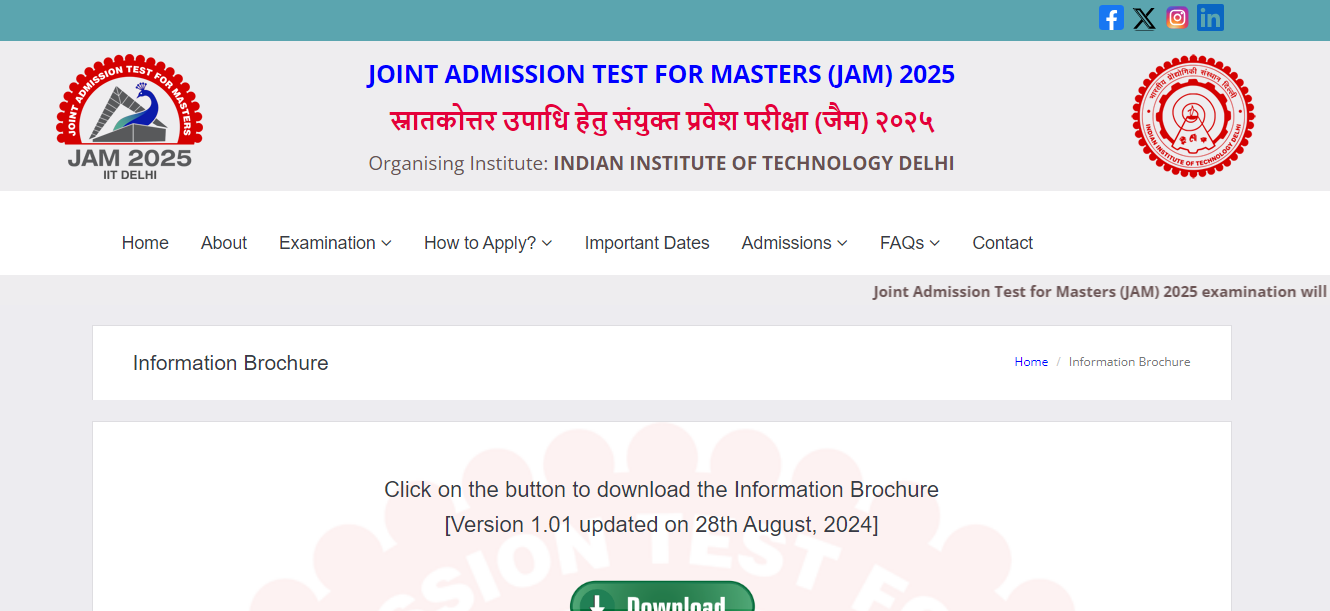
The Indian Institute of Technology (Delhi) will begin accepting registrations for the Joint Admission Test for Masters (JAM) 2025 starting September 3, 2024. Aspiring candidates can apply through the official website, joaps.iitd.ac.in, once the application window opens. JAM 2025 will be administered as a Computer-Based Test (CBT). The exam will cover seven subjects: Biotechnology (BT), Chemistry (CY), Economics (EN), Geology (GG), Mathematics (MA), Mathematical Statistics (MS), and Physics (PH).
IIT Delhi JAM 2025: Important Dates
Candidates must check the important dates for the IIT JAM 2025 admission to avoid missing out on any important event.
Event
Date
JOAPS Website Opens
September 03, 2024
Last Date for Closing Registration
October 11, 2024
Last Date to Change Examination Cities/Test Papers/Category/Gender
November 18, 2024
Deadline to Upload Valid OBC-NCL/EWS Certificate
November 20, 2024
Confirmation of Compensatory Time/Scribe Assistance
December 30, 2024
Availability of JAM Admit Cards on the Online Application Portal
Early January 2025
Date of Examination
February 02, 2025
Announcement of the Results
March 19, 2025
Scorecard download option
March 25, 2025
Portal for Admission opens
April 2, 2025
IIT JAM 2025: Eligibility Criteria
Before applying for IIT JAM 2025, candidates must ensure they meet the following eligibility criteria: Educational Qualification: A bachelor’s degree is required. Candidates completing their degree in 2025 are also eligible, provided they submit proof by September 2025 (tentative). Educational Qualification: Previously, a minimum of 55% aggregate (or 5.5 CGPA/CPI) was required for General/ Other Backward Classes (OBC), Non-Creamy Layer (NCL)/ Economically Weaker Section (EWS) candidates and 50% (or 5.0 CGPA/CPI) for reserved categories. This requirement was removed in 2022, and now only a relevant bachelor’s degree is necessary. Physical Fitness: A physical fitness certificate is required at the time of admission. Admission may be denied if a candidate is found unfit to pursue the chosen science course. Candidates should carefully review the subject-specific eligibility criteria for JAM 2025. Applicants are advised to keep checking the official site for getting the latest updates.
As per the latest Survey conducted by the Digital Education Council, a global alliance of universities and industry partners dedicated to education innovation, most students (86%) use artificial intelligence in their studies. And they use it regularly. 24 percent reported using AI every day, 54% daily or weekly, and 54% at least once a week.
The Digital Education Council Global AI Student Survey aims to provide insights into student perceptions of artificial intelligence (AI) in higher education to inform university leadership decision-making. The report covers AI usage and readiness status, student perception of AI use cases, expectations and preferences on university actions on AI, satisfaction with institutions’ AI adoption, concerns, and key attributes for AI use.
This Survey has gathered 3839 responses across 16 countries from bachelor, master, and doctorate students in multiple fields of study, offering diverse student viewpoints on AI in education. This study also guides universities looking to embrace AI while addressing potential risks and concerns.
Following are the key insights of the Survey
Usage of AI Tools
The Survey shows a broad adoption of various AI tools among students. ChatGPT emerges as the most widely used tool, with 66% of students using it in their studies. Grammarly and Microsoft Copilot also see substantial usage, each with a 25% student adoption rate. In addition to these popular tools, students report utilizing various AI applications such as Claude AI, Blackbox, DeepL, and Canva image generator. On average, each student uses more than two AI tools, and 22% of students claim to use more than three AI tools to assist their studies. Despite the widespread use of AI tools, the study found that students needed to determine whether they had sufficient AI knowledge and skills. 58 percent of students felt they needed more knowledge and skills in AI, and 48 percent said they needed more preparation for an AI-powered workplace.
Readiness, Satisfaction and Expectations
According to the research, most students believe their university’s AI integration needs to meet their expectations fully. To close this gap, universities must identify the most valued AI use cases and qualities among students. This understanding will help universities integrate AI more effectively and student-centred. In particular, 80 per cent of students surveyed said that integrating AI tools at their university (integration into teaching and learning, student and faculty training, course topics, or other areas) still needed to meet their expectations.
Key AI expectations from students included:
58% of students feel that they need more AI knowledge and skills, which universities can address through AI literacy and skills courses. Students expect clear guidelines on AI use and structured and practical courses on AI literacy to develop an accurate and functional understanding of AI.
AI competency is a necessary trait in future-ready graduates and is an in-demand core skill. Students understand that they need to develop their AI competencies to be employable and want their universities to provide the resources. 73 percent agree that universities should provide faculty training on the effective use of AI tools.
72 percent agree that universities should train students to effectively use AI tools, allowing them to practice applying AI in their work while following guidelines for maintaining academic integrity.
71 percent feel universities should involve students in deciding which AI tools to implement.
Value of AI-generated Courses
The Survey highlights that students perceive the courses primarily created and delivered by AI. Only 18 percent of the students believe they are more valuable than traditional courses. Universities should consider making cautious moves when using AI in content creation and delivery. 54 percent of students find courses primarily created and delivered by AI less valuable than traditional courses.
AI Monitoring of Well-Being Faces Pushback from Students
AI for stress level and well-being monitoring is one use case that faces strong student pushback. Only 24 percent of the students perceive such AI use positively, and 42 percent do not believe AI monitoring stress levels and giving recommendations improves their well-being.
Privacy and Trustworthiness of AI are Students’ Top Concerns
The study indicates that 60 percent of students worry about the fairness of AI evaluations. With only 11% of students unworried about the fairness of AI evaluations (scoring 1−2), this issue is a key concern among students.
Over-Reliance on AI Affects Students
Students do not want to become over-reliant on AI and do not want their professors to do so. 55 percent of students s believe over-reliance on AI in teaching decreases the value they receive, whereas 52 percent of students feel over-reliance on AI negatively impacts their academic performance Most students want to incorporate AI into their education, yet also perceive the dangers of becoming over-reliant on AI. Concern about AI over-reliance in teaching may cause students to question the quality of education they receive and the fairness of any AI evaluations without human involvement from educators.
Universities need to strike a balance between integrating AI and over-reliance on AI. When using AI in teaching and learning, institutions have to find a balance between support and over-reliance. To maintain a high-quality education, teachers and staff must set strict guidelines to ensure responsibility and monitoring of AI use.
Alessandro Di Lullo, CEO of the Digital Education Council and Academic Fellow in AI Governance at the University of Hong Kong, commented on the recently released Survey:
The rise in AI usage is forcing institutions to view AI as a core infrastructure rather than a tool. At the same time, universities need to think about how to effectively increase AI literacy to equip both students and academics with the skills they need to succeed in an AI-driven world.
About Digital Education Council
Initiated by SuperCharger Ventures, the world’s largest EdTech-only accelerator and over a dozen high-profile universities from around the world, the Digital Education Council (DEC) is a global alliance with a shared vision to drive sustainable innovation and AI adoption for Higher Education and Workforce Development. It has access to the world’s largest EdTech network, with over 10,000 solutions. DEC is more than an alliance; it is a global movement for education innovation. Its strength lies in the diverse perspectives, knowledge, and experiences that international member institutions bring.
The WorldLand Foundation is an innovative initiative aimed at creating a digital platform that represents a global free trade area. It seeks to revolutionize the way we think about property, economy, and connectivity in the digital age. WorldLand’s mission is to bridge the gap between physical and digital spaces, allowing for seamless transactions and interactions across borders. It envisions a world where digital land can be as valuable and productive as physical land. This concept extends the idea of property rights and ownership to the digital realm, where users can buy, sell or develop virtual land.
WorldLand has been promoted as a fast blockchain with post-quantum (PQ) security and decentralization since its inception. Positioned as the base-rock for the worldwide commercial payment market, WorldLand attracts followers, miners and investors. WorldLand’s powerful ECCPoW consensus algorithm utilizes coding theory to ensure robust security against attacks from quantum computers. Along with this, WorldLand is fully compatible with EVM (Ethereum Virtual Machine) allowing all dApps and smart contracts to run seamlessly and have an ultimate experience of WorldLand ecosystem.
The implications of WorldLand’s digital economy are profound. It promises to democratize access to wealth creation, allowing individuals from any corner of the globe to participate in a dynamic, borderless economy. This could lead to a redistribution of economic power and a more equitable global landscape. Also, Dr. Hueng-No Lee, the founder of the WorldLand Project envisions WorldLand as the bedrock for Web3-based distributed AI. GPUs serve as mining network components, enabling cost-effective training of Web3 AI models.
The WorldLand community is growing at a rapid pace and their team has established remarkable partnerships with key industry players which includes Gwangju Institute of Science and Technology (GIST), AICA, Consensys, Agency for Defense Development, National Research Foundation of Korea, NRF, Symverse and the renowned Sunbo Angel Partners. In addition to this, WorldLand Project ($WLC) is also listed on major crypto platforms and exchanges including FinanceX, Xeggex, CoinGecko, CoinPaprika etc. and will grow more in the foreseeable future.
Charting the course ahead, WorldLand’s strategic roadmap outlines a phased approach to growth. From establishing a robust digital infrastructure to fostering a vibrant community of digital entrepreneurs, the foundation is methodically laying the groundwork for a comprehensive digital economy. Its commitment to scalability, security and real-time transactions sets a new standard for the industry.
The WorldLand Foundation stands at the forefront of a digital revolution. As it continues to push the boundaries of what’s possible, it invites us to reimagine the fabric of our economic interactions and the potential of a connected digital world.
Navigating the journey from high school to college can be a daunting process for many students. With a multitude of choices available, from different types of colleges to various admission processes, high school counselors play a crucial role in guiding students toward making the best decision for their future. Understanding how to choose the right college involves more than just selecting a reputable institution; it also requires considering factors like admissions policies, financial aid options, campus culture, and academic programs. Here’s a comprehensive guide on how high schools can help students choose the best college for their needs.
1. Understanding the Different Types of Colleges
High schools should first educate students about the various types of colleges available. These include:
Community Colleges: Often a great choice for students looking to save on tuition or who prefer to stay close to home, community colleges offer two-year associate degrees and often have transfer agreements with four-year institutions.
Liberal Arts Colleges: These institutions focus on providing a broad-based education in the arts and sciences, encouraging critical thinking and a well-rounded academic experience.
Research Universities: Larger institutions that offer a wide range of undergraduate and graduate programs, often including a focus on research and specialized academic fields.
Technical and Vocational Schools: Ideal for students interested in specific trades or careers, these schools offer targeted education and training for jobs that require practical skills.
By understanding these options, high school counselors can help students narrow down their choices based on their career goals and personal preferences.
2. Exploring College Admission Policies
Understanding the various college admission policies is crucial for helping students make informed decisions. High schools should educate students about different types of admissions processes, such as:
Regular Admission: Most colleges have a standard application deadline, usually in January, with decisions typically released in March or April. This allows students time to apply to multiple schools and compare offers.
Early Decision and Early Action: These are options for students who are confident in their choice of college. Early Decision is binding, meaning the student must attend if accepted. Early Action is not binding, allowing students to apply early without committing.
Rolling Admissions: Colleges with rolling admissions review applications as they are received and make decisions throughout the admission season. This can be advantageous for students who apply early, as it may increase their chances of acceptance.
By explaining these different admission policies, high schools can help students determine the best strategy for their college applications based on their readiness and preferences.
3. Evaluating Financial Aid Options
Financial considerations play a significant role in choosing a college. High schools should provide resources and workshops on understanding financial aid, including:
Scholarships: Encourage students to apply for scholarships offered by the colleges themselves as well as external organizations. Scholarships are typically merit-based and can significantly reduce the cost of college.
Grants: Often need-based, grants are financial awards that do not need to be repaid. Understanding the requirements and application process for grants can help students maximize their financial aid.
Loans: While loans can provide necessary funding, they must be repaid with interest. Educating students about the implications of taking on debt and how to responsibly manage loans is crucial.
High school counselors should also help students fill out the Free Application for Federal Student Aid (FAFSA) and understand their financial aid packages from different schools, so they can make informed decisions based on their financial situation.
4. Assessing Campus Culture and Fit
Choosing a college isn’t just about academics and finances; it’s also about finding the right social and cultural fit. High schools can assist students by encouraging them to consider:
Size and Location: Some students thrive in large universities with diverse populations, while others prefer smaller, close-knit communities. Similarly, a school’s location—urban, suburban, or rural—can greatly impact a student’s college experience.
Extracurricular Activities: Encourage students to research what clubs, sports, and organizations are available at each college. These activities can play a big role in personal development and help students build a community on campus.
Campus Values and Diversity: Understanding a college’s values, mission, and diversity can help students find a place where they feel comfortable and supported. Encourage students to visit campuses, if possible, to get a sense of the environment and speak with current students about their experiences.
By assessing these factors, high schools can help students find colleges where they will feel happy, supported, and able to thrive academically and socially.
5. Researching Academic Programs and Opportunities
High schools should guide students to consider the academic strengths of each college and whether they align with the student’s career goals and interests. Key factors include:
Majors and Minors: Students should explore the variety and quality of majors and minors offered. Some colleges are known for specific programs, and attending a school with strong offerings in a desired field can provide better educational and career opportunities.
Internship and Research Opportunities: Colleges that offer robust internship programs or have strong connections with industries can provide valuable real-world experience. Similarly, students interested in research should look for schools with active research programs and opportunities for undergraduate involvement.
Study Abroad and Exchange Programs: These programs can greatly enhance the college experience by exposing students to different cultures and perspectives. Schools that offer strong study abroad programs can be appealing to students interested in international experiences.
By helping students align their academic interests with the strengths of each college, high schools can play a crucial role in ensuring that students are prepared for success in their chosen fields.
Conclusion
Choosing the best college is a complex decision that involves balancing academic goals, financial considerations, personal preferences, and future aspirations. High schools play a critical role in guiding students through this process by providing information, resources, and support. By educating students about the various types of colleges, admissions policies, financial aid options, and campus cultures, high schools can empower students to make informed choices that align with their unique needs and goals.
Through open communication, personalized counseling, and staying informed about trends in higher education, high schools can help students navigate the college selection process with confidence and clarity. As a result, students can find the best college that will set them on the path to success and fulfillment in their academic and professional lives.
B.Tech International Twinning Programs: Trends and Insight
In our increasingly interconnected world, there is a demand for engineers who can solve real-world problems with their critical analytical ability. As a result, engineering education is evolving rapidly to meet these needs. B.Tech International Twinning Programs and other twinning programs are becoming popular due to their broader future scope. These programs enable students to gain international exposure, develop their skill sets, and set up their prospects in the job market. In this blog, we will learn about the central trends driving the exponential growth of the B.Tech in various disciplines and why institutions like NIET are at the forefront of this educational evolution.
What is a B.Tech? A Comprehensive Overview
B.Tech stands for Bachelor of Technology, and it is renowned as one of the most popular undergraduate programmes in engineering and technology. The general duration of the B.tech is four years, where students study their selected discipline within the engineering profession as per their interest. Whether computer science, mechanical, electrical, civil engineering, or any other field, students receive a comprehensive blend of technical knowledge and practical skills. This multidisciplinary approach equips them to tackle real-world problems effectively.
Twinning Programs: Amalgamation of Cultures and Knowledge
Twinning programs in B.tech are the next wave of education, allowing students to spend time in two different institutions, one in their homeland and another abroad. Twinning Engineering Programs in India provides two years in an institution close to his home, building a solid foundation in engineering principles. Then, pursue the remaining course duration at a foreign university, where the institution has a tie-up for advanced knowledge, facilitating exposure to new research projects and a global orientation in engineering practices.
This approach benefits students by providing them with the comfort and familiarity of their home institution while exposing them to the diverse academic and cultural experiences available through international programs. A comprehensive education like this helps graduates adapt more effectively to the global job market.
Advantages of B.Tech. International Twinning Programs
There are many advantages to joining the B.Tech. International Twinning Program, and B.Tech. in Computer Science include the following:
Global Exposure: Twinning Engineering Programs in India expose students to several educational methodologies, cultures, and thinking perspectives. Horizons will be expanded, and adaptability will be increased with cultural intelligence, a real mover and shaker in this globalized economy and a real requirement from employers.
Networking opportunities: Building networks with fellows, faculty, and industry professionals worldwide is an asset. Often, these networks become collaborative projects, internships, and opportunities, which becomes complicated when following a typical route.
Better placed for job prospects: Most graduates from Twinning programs are seen to be more competitive in the job market. Equipped with experience and exposure, these students can stand more assertive in global engineering practices. This makes these students competitive and gives them a better chance in the job market.
Why is B.Tech. Twinning programs on the rise? Trends and driving forces:
The rapid growth of B. Tech International Twinning Programs in the country is being influenced by several trends, which include:
Globalization of workforce: The industry and business are becoming more dynamic; hence, the demand for engineers involved in core international markets insights, regulations, and cultural nuances are getting paid well. Also, a B.Tech in Computer Science typically commands a higher salary than many other fields. Twinning programs offer an ideal environment for fostering these skills, preparing students for careers with an international focus.
Technological Developments: Rapid technological development has provided the tools for collaboration between institutions across borders. Learning management systems, virtual laboratories, and digital communication have bridged collaborating universities’ spatial and geographical boundaries, effectively facilitating students’ movement into twinning programs.
Emphasize Interdisciplinary Learning: Several typical engineering challenges require interdisciplinary solutions. Twinning programs broaden the scope of student learning to expose and even give a broader view of research, thus fostering a comprehensive approach to problem-solving.
Why B.Tech from NIET? A Premier Institution for Global Engineers
Noida Institute of Engineering and Technology is one of the prestigious institutes making a significant contribution to the era of global education. Here’s why NIET is a strong option for those planning to pursue a B.Tech degree and, more importantly, aiming for international twinning programs:
Strong industry ties: The NIET has excelled in establishing strong relationships with various leading corporate entities across the globe, which help the students get high salary packages. Such tie-ups also translate into excellent placement opportunities for its graduating students, most of whom get placed in multinational companies.
Highly experienced faculty: The faculty at NIET is highly experienced, well-qualified, and with international exposure. Mentors provide unique and invaluable insights into every step of the academic journey.
International Collaborations: NIET collaborates with many leading institutions globally to encourage international exposure among students. This includes student exchange programs, joint research projects, and tie-ups with universities participating in twinning programs.
Conclusion: Shaping the Future of Engineering Education
The B.Tech. International Twinning Programs reflect a significant revolution in engineering education. These programs are uniquely designed to equip emerging engineers with the skills needed to address future challenges by offering a blend of local and international learning experiences.
NIET is the best place to enroll for a B.Tech. Degree. It offers strong exposure to global education, a modern and industry-relevant curriculum, and a good connection to the industry. Whether you aim for an international career, seek world-class facilities, or pursue a promising engineering career, NIET offers the ideal environment to support your goals.
Australia’s newly established Adelaide University, a merger between the University of South Australia and the University of Adelaide, recently celebrated its official launch with an event in New Delhi. The university, which will start welcoming students in 2026, aims to adopt a modern and innovative approach to education, preparing students to excel in their careers.
Hindustan Times Digital conducted an email interview with Professor Jessica Gallagher, Deputy Vice-Chancellor (External Engagement) at the University of Adelaide to understand the significance of this merger and its potential benefits for Indian students.(Handout image)
To explore the significance of this merger and its potential benefits for Indian students, Hindustan Times Digital conducted an email interview with Professor Jessica Gallagher, Deputy Vice-Chancellor (External Engagement) at the University of Adelaide, who is currently leading market and partner engagement activities for the new Adelaide University.
Here are excerpts from that interview:
Could you share an overview of the recent merger between the University of Adelaide and the University of South Australia? How do you see this benefiting international students, especially those from India?
Adelaide University, formed from the merger of the University of Adelaide and the University of South Australia, is Australia’s newest major university and a member of the prestigious Group of Eight (Go8). This innovative institution offers a comprehensive range of programs aligned with global and intergenerational challenges, with a particular focus on areas crucial to India, such as energy, global health, and advanced technologies. Adelaide University emphasises work-integrated learning, providing students with practical experience and strong industry connections. The university aims to be ranked in the top 1% globally and is set to become Australia’s largest educator of Australian students, with a vibrant international community. Located in one of the world’s most liveable cities, Adelaide University offers Indian students a distinctive choice, blending exceptional education with a supportive, multicultural environment and strong ties to industry and global partnerships.
What new and unconventional courses will Adelaide University offer? How can Indian students benefit from them?
Adelaide University is set to offer over 300 degrees across various disciplines, including unconventional and emerging areas such as digital business, AI and machine learning, environmental sustainability, and modular learning. These courses are designed with industry input and grounded in world-leading research, ensuring that students are prepared for future industry demands.
Indian students can greatly benefit from this innovative approach in several ways:
Modular and Stackable Learning: Students can tailor their education by selecting specific modules or earning micro-credentials, providing flexibility to adapt their studies to their individual needs and career goals.
Flexible Academic Calendar: The 10-week modular courses allow students to manage their studies alongside other commitments, offering greater balance and adaptability.
Digitally Forward Learning: With a hybrid learning environment enriched by AI technologies and interactive analytics, students have access to cutting-edge educational resources.
Integrated Learning: Work-integrated learning opportunities, including internships and global study options, ensure students gain practical, industry-relevant experience alongside their academic studies.
Universal Common Core Courses: These courses build essential transferable skills in areas like AI, entrepreneurship, and cultural competency, equipping students to thrive in a global, interdisciplinary workplace.
What specific programs and disciplines do you think will be most relevant to Indian students?
Currently for Indian students studying at the University of South Australia and the University of Adelaide, the most popular programs include information technology, engineering, construction management, data science, business, and business administration.
These are all offered at Adelaide University, and we expect their popularity to continue. We also expect to see more students in areas such as advanced manufacturing, aviation, data science, energy transition, and healthcare – which align with India’s increasing skills demands.
Could you elaborate on the admission process for international students? What criteria are most important for Indian applicants?
Indian students should apply through an Adelaide University authorised education agent who will assist with the preparation and submission of their application as well as their student visa application. Students will need to provide to their agent, complete academic and English language proficiency documentation and provide evidence of their genuine intention to study their chosen degree at Adelaide University. Some degrees may have additional requirements. If available, students should also submit a copy of the personal details and signature pages of their passport.
Some applicants will be required to participate in an interview as part of their application process, prior to eligibility being confirmed, this is conducted via Zoom and takes no more than 15 minutes.
Could you provide an idea of the expenses that an international student, particularly from India, should be prepared for when applying to these programmes at Adelaide University?
International students will incur a variety of expenses while studying at Adelaide University, however as Adelaide is a mid-sized and compact city, the cost of living is slightly more affordable compared to other larger cities in Australia. In addition to costs such as a visa and degree tuition fees, international students will need to consider living expenses such as accommodation, food, transport, utilities, study materials, health and personal care and entertainment. Detailed information is available on the Study Australia and StudyAdelaide websites.
Are there any plans to allow enrolled students to complete part of their course in India, which could help reduce their expenses?
While Adelaide University enrolled students cannot complete part of their course in India, the founding universities have a number of established key articulation partners and Adelaide University is eager to build on these relationships. This will potentially allow students from partner institutions to articulate into Adelaide University programs.
Are there specific scholarships or financial aid options available for Indian students? What are the eligibility criteria, and how can Indian students apply?
Adelaide University will offer a diverse range of scholarships catering to academic excellence, emerging leaders, merit, alumni and partner students. The scholarships offer a range of incentives including discounts on fees of up to 50%.
Details on the scholarships available and the application processes are available on the Adelaide University website. The Adelaide Academic Excellence Scholarship will open for applications in 2025, other scholarships are assessed automatically upon application to an eligible program.
How does Adelaide University plan to enhance the employability of its graduates? What initiatives are in place to support Indian students in achieving their career goals?
Research and industry engagement is central to Adelaide University’s degree design. Rich work-integrated learning will be embedded in all degrees, and the curriculum will be shaped by industry and world-leading research. The founding universities have hundreds of established partnerships and thousands of collaborations with Australian and international companies, which will be drawn on to ensure learning responds to current and emerging workforce needs and graduates are equipped for the future workplace.
Adelaide University will have a Deputy Vice Chancellor Student Experience and Success, the first position of its kind in Australia. They will oversee the delivery of exceptional student experience, looking holistically across the student journey. The founding universities have a foundation focused on student success with strong outcomes in graduate employment. Adelaide University will build on this to ensure its graduates are in demand around the globe and optimally prepared for modern workplaces. Graduates will also join a highly engaged alumni community of more than 400,000 global citizens from around 150 countries.
How does Adelaide University plan to contribute to and benefit from the bilateral education agreements between India and Australia?
Adelaide University is strategically positioned to contribute to and benefit from the robust bilateral education agreements between India and Australia, particularly under the Australia-India Economic Cooperation and Trade Agreement (AI-ECTA) and the recent Migration and Mobility Partnership Arrangement. These agreements facilitate greater student mobility, making India a priority market for Australian education providers. The mutual recognition of qualifications between the two countries, a landmark achievement, further strengthens this partnership, allowing smoother academic and professional exchanges.
India’s vast youth demographic, expanding middle class, and ambitious education reform agenda create fertile ground for collaboration. Adelaide University is building on the strong foundation of its predecessor institutions’ partnerships with leading Indian institutions such as the Indian Institute of Science, Vellore Institute of Technology, and several IITs. These collaborations are set to deepen, particularly in areas of strategic importance to India, such as artificial intelligence, advanced technology, energy, sustainability, health, and entrepreneurship.
The synergy between Australia’s expertise and India’s priorities opens up significant opportunities for collaborative research and educational initiatives. Adelaide University aims to expand these partnerships, contributing to both countries’ educational and economic goals, and helping to deliver a prosperous future fueled by innovation and shared knowledge. This collaboration will enhance Adelaide University’s global impact while supporting India’s development objectives.
Indian Institute of Technology (Delhi) is all set to commence the registration process for the Joint Admission Test for Masters (JAM) 2025 from September 3, 2024. Candidates interested in taking the test can submit their applications on the official website at joaps.iitd.ac.in, once the window is opened.
IIT Delhi will be commencing the registration window for JAM 2025 from September 3, 2024. (Representative image/HT Archive)
As per the official schedule, following are the important dates for JAM 2025:
Registrations for JAM 2025 will begin on September 3, 2024.
Registrations for JAM 2025 will close on October 11, 2024.
JAM 2025 examination will be conducted on February 2, 2025.
Candidates must note that JAM 2025 will be conducted in the (CBT) Computer-Based Test mode in seven test papers which include Biotechnology (BT), Chemistry (CY), Economics (EN), Geology (GG), Mathematics (MA), Mathematical Statistics (MS), and Physics (PH).
The examination will be conducted in over 100 cities across the country.
Eligibility criteria:
Candidates who have completed an undergraduate degree or are currently studying in the final year of undergraduate programmes can apply for the JAM 2025 examination.
There is no age restriction.
Additionally, foreign nationals with an Indian degree are eligible to apply, subject to the policy of the admitting institute.
It may be mentioned here that candidates who qualify in the JAM 2025 can seek admission in approximately 3000 seats in various postgraduate programmes at IITs and over 2000 seats at IISc and NITs, IIEST Shibpur, SLIET, DIAT through CCMN.
A press release issued by IIT Delhi informed that admissions will be for held various Masters programmes such as M.Sc., M.Sc. (Tech), M.Sc.-M.Tech. Dual Degree, M.S. (Research), Joint M.Sc.-Ph.D., and M.Sc.-Ph.D. Dual Degree in various institutes.