meta name="google-site-verification" content="6a1diVfBBjrtLHOs0wceITdcAeKPOV6tx6NhXqyRKPs" /

30-Minute Full Body Workout At Home (Video)


Build total body strength in just 30 minutes with this full body workout at home. Each circuit contains four exercises targeting the lower body, upper body and core. A complete dumbbell workout designed to build strength and challenge your endurance.

All you need is a set of dumbbells and 30 minutes to challenge your total body strength and muscular endurance in this full body workout at home.

I have been a personal trainer for over a decade, and when I taught in-person fitness classes, I loved to structure them in this full body circuit format.

The combination of an upper body, lower body, total body and core exercise in each circuit provides an effective way to build strength and grow muscle at home.

Personally, this is one of my favorite formats because I find it prioritizes compound exercises, or exercises that engage multiple muscle groups at once.

Compound exercises allow you to lift heavier weights, increase calorie-burn, improve core strength and stability, and build muscle.
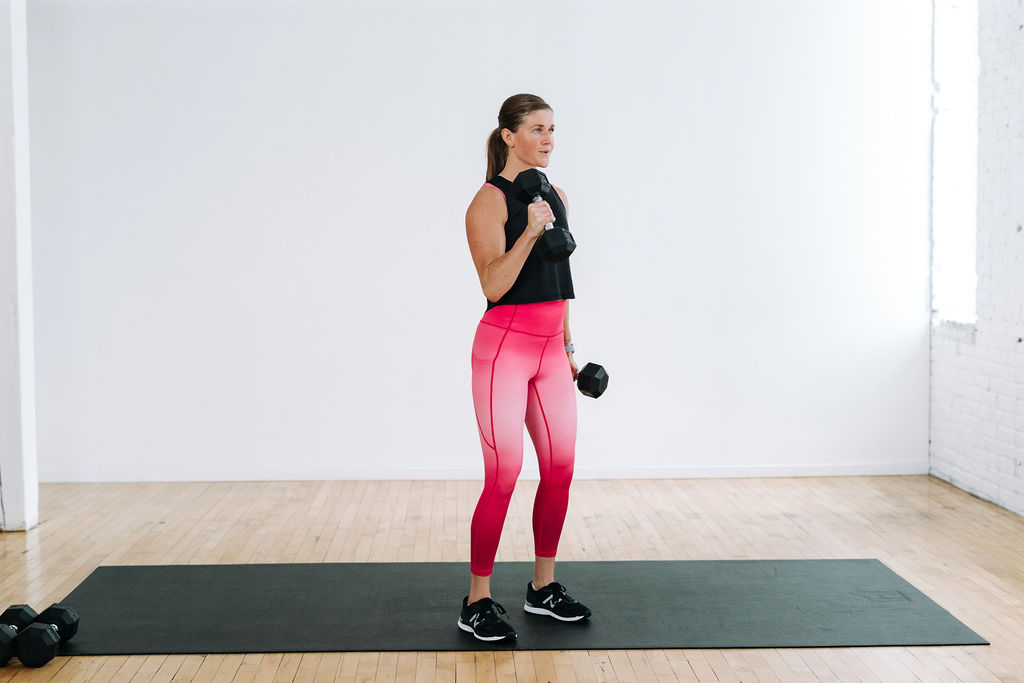
woman performing an alternating bicep curl in a full body workout at home with dumbbells

Build total body strength with this efficient 30-Minute Full Body Workout At Home!

Each strength circuit includes an upper body exercise, lower body exercise, full body exercise, and a core exercise.

Add full body workouts like this one to yourworkout routine1-2 times a week to build muscle mass and increase endurance.

Workout Equipment:

Medium-to-heavy set of dumbbells. I recommend 8-20 lbs depending on your fitness level. I’m using 15-20 lbs in this workout video.

Workout Instructions:

Follow along with the guided Full Body Strength Workout on YouTube, led by certified personal trainer, Lindsey Bomgren.

Your Workout Looks Like This:

  • 3 Full Body Circuits
  • 4 Exercises Per Circuit(upper body, lower body, full body and core)
  • Timed Intervals(perform each exercise for 40 seconds of work, then rest 20 seconds)
  • Repeat Each Circuit x2 Sets
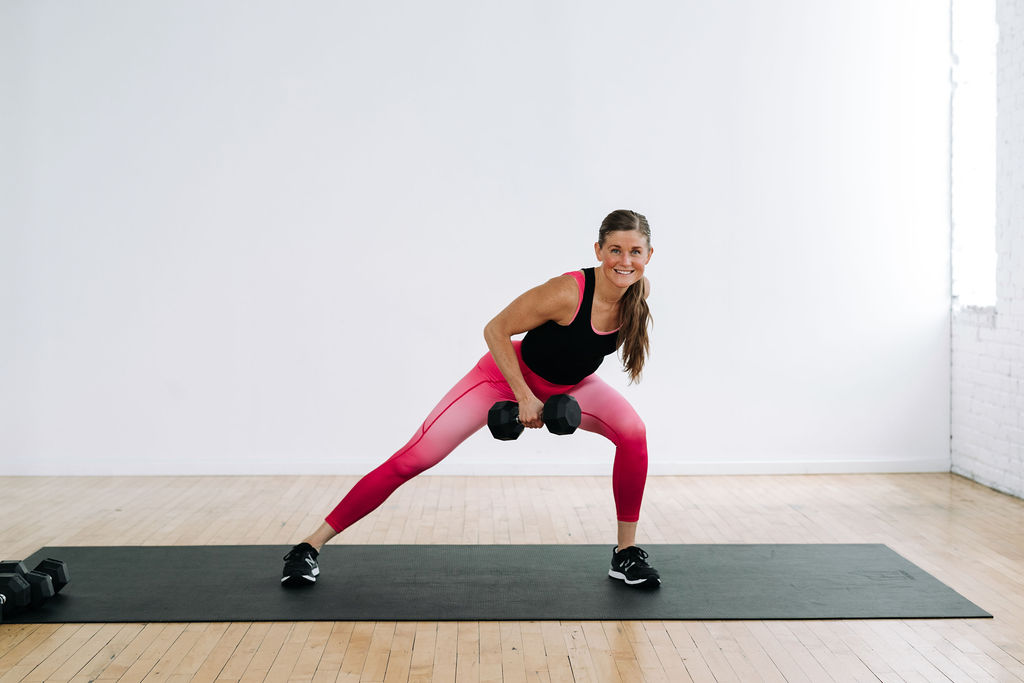
woman performing a lateral lunge in a full body workout at home

Workout Outline

CIRCUIT ONE:

  1. Upper Body: 3-Way Back Row
  2. Lower Body: Lateral Lunge and Narrow Squat
  3. Full Body: Lateral Squat and Single Arm Row
  4. Core: Dumbbell Pullover and Leg Lower

CIRCUIT TWO:

  1. Upper Body: Bicep Curl and Reverse Overhead Press
  2. Lower Body: Split Lunge
  3. Full Body: Alternating Front Lunge and Single Arm Curl Press
  4. Core: Plank and Dumbbell Pass

CIRCUIT THREE:

  1. Upper Body: Chest Fly and Skull Crusher
  2. Lower Body: Staggered Deadlift and Squat
  3. Full Body: Push Up and Dumbbell Burpee
  4. Core: Seated Twist with Dumbbell

12 Full Body Exercises with Dumbbells

3-Way Back Row (Wide Row, Narrow Row, Reverse Row)

Targets:Upper back, mid-back, lower back (latissimus dorsi, rhomboids, trapezoids and rear deltoid muscles), and biceps.
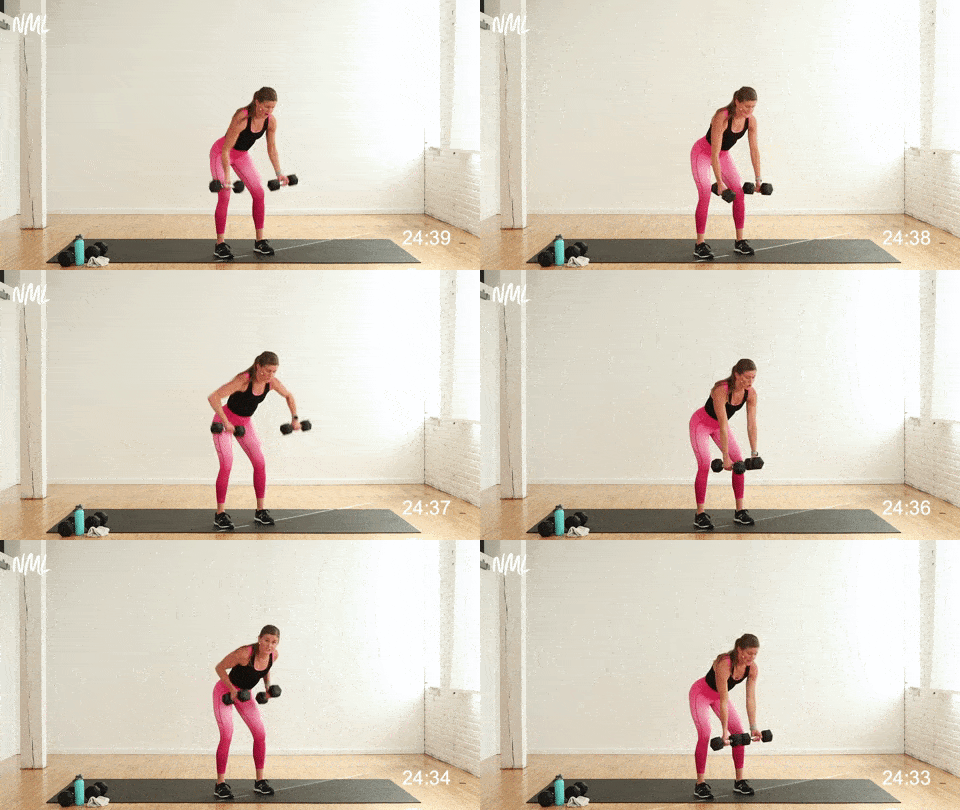
woman performing a 3 way back row in a dumbbell strength training workout at home

How To Do A 3-Way Back Row

  1. Stand with your feet slightly wider than shoulder width apart, knees slightly bent.
  2. Hinge forward at the hips with a neutral spine, core engaged.
  3. Grip a set of dumbbells, palms facing in towards your body (wide row position).
  4. Pull your elbows wide towards the ceiling, squeezing your shoulder blades together as you bring your elbows parallel to shoulders. Control the dumbbells back down to the starting position.
  5. Rotate your palms to face in towards each other (narrow row position). Pull the weights back towards your hips, elbows parallel to ribcage. Return to starting position.
  6. Rotate your palms to face outwards (reverse row position). Then pull the weights back towards your hips, elbows parallel to ribcage. Return to starting position and repeat this 3-way row pattern.

Lateral Lunge And Narrow Squat

Targets: Legs, quads, outer glutes (gluteus medius), inner thighs (adductors), hips and core.
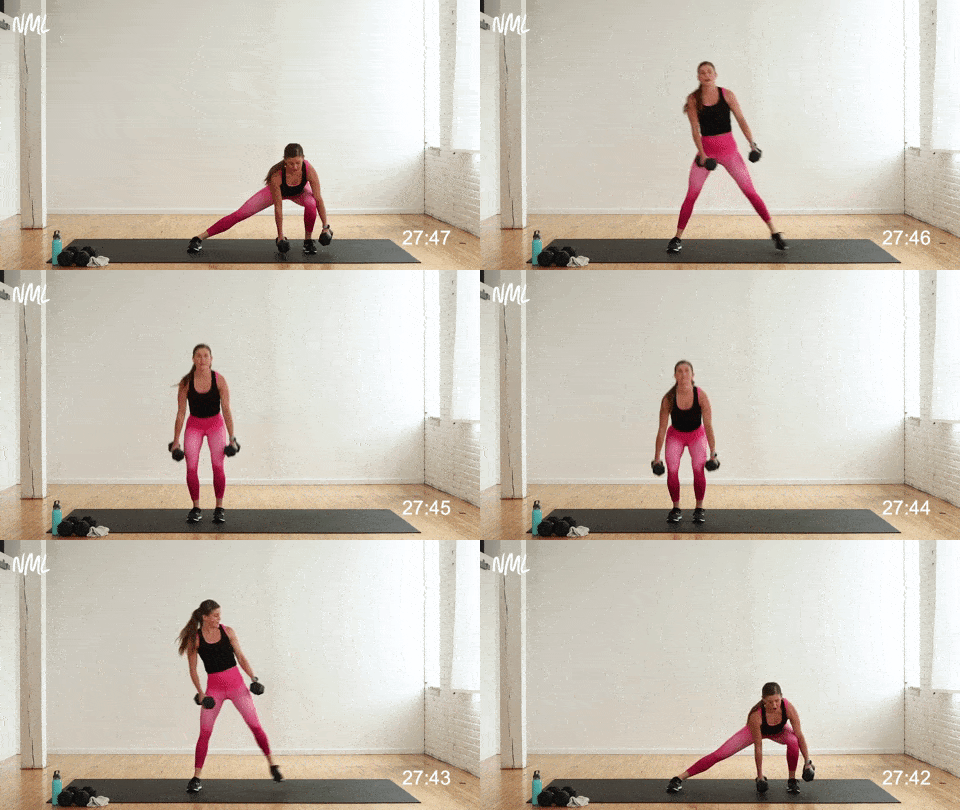
woman performing a lateral lunge narrow squat

How To Do A Lateral Lunge And Narrow Squat

  1. Start standing, feet hip width apart, slightly bent knees. Hold one dumbbell in each hand at your sides.
  2. Step your right leg out to the side as you push your hips back, bending your right knee while leaving your left leg straight. Think of performing a single leg squat with your right leg while your left leg remains straight. Dumbbells frame right foot with knees and toes pointing forward.
  3. Then, drive off your right foot to reverse the movement, pushing back to center.
  4. Lower into a narrow squat (feet no wider than hip distance apart), sitting your hips back as you lower down. Push through your heels to stand tall returning to the starting position.

Lateral Squat And Single Arm Row

Targets: Legs, quads, outer glutes (gluteus medius), back (lats) and core.
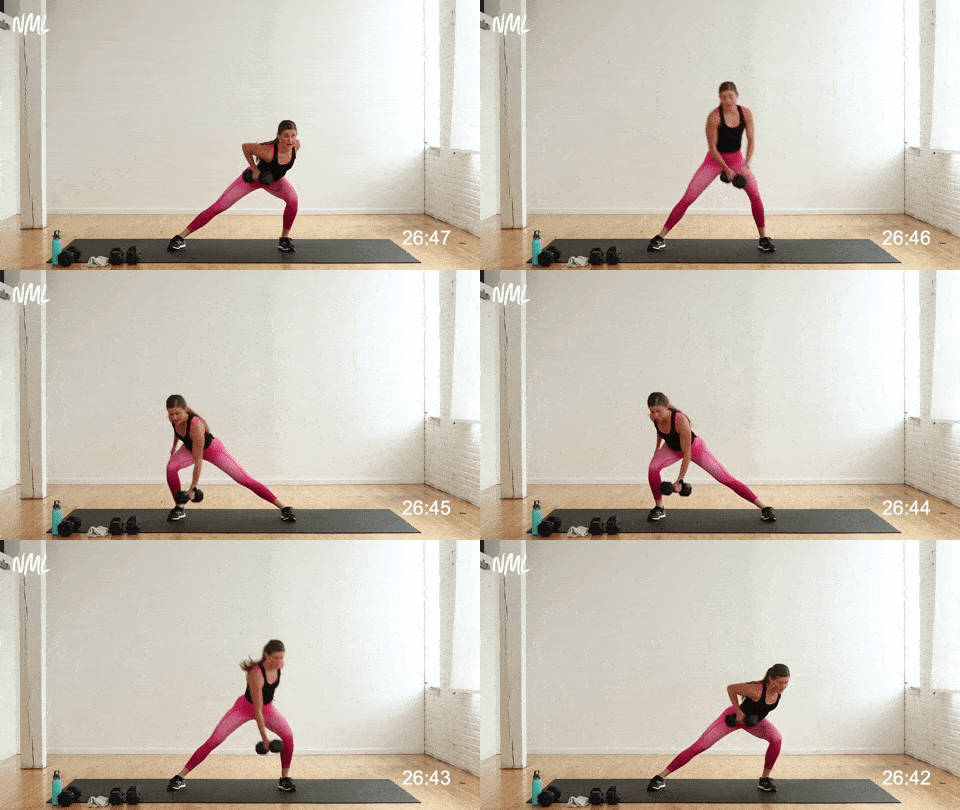
woman performing a lateral squat and single arm dumbbell row in a full body workout

How To Do A Lateral Squat And Single Arm Row

  1. Start standing in a wide-stance squat, feet outside of shoulders, knees softly bent. Hold a dumbbell in your left hand between your legs.
  2. Transfer your weight into your right leg as you sit your hips back and to the right. Bending your right knee while leaving your left leg straight. Think of performing a single leg squat on your right leg while your left leg remains straight. Knees and toes pointing forward.
  3. Hold your lateral squat on the right as you perform a single arm row with the dumbbell in your left hand, pulling your elbow towards your rib cage.
  4. Then, drive off your right foot to reverse the movement, pushing back to center. Transfer the weight to your right hand as you push your hips back towards the left, sitting into a lateral squat on your left leg.
  5. Perform a single arm row with your right arm. Repeat this pattern.

Dumbbell Pullover And Leg Lower

Targets: Back (lats), chest (pecs), core and lower abs.
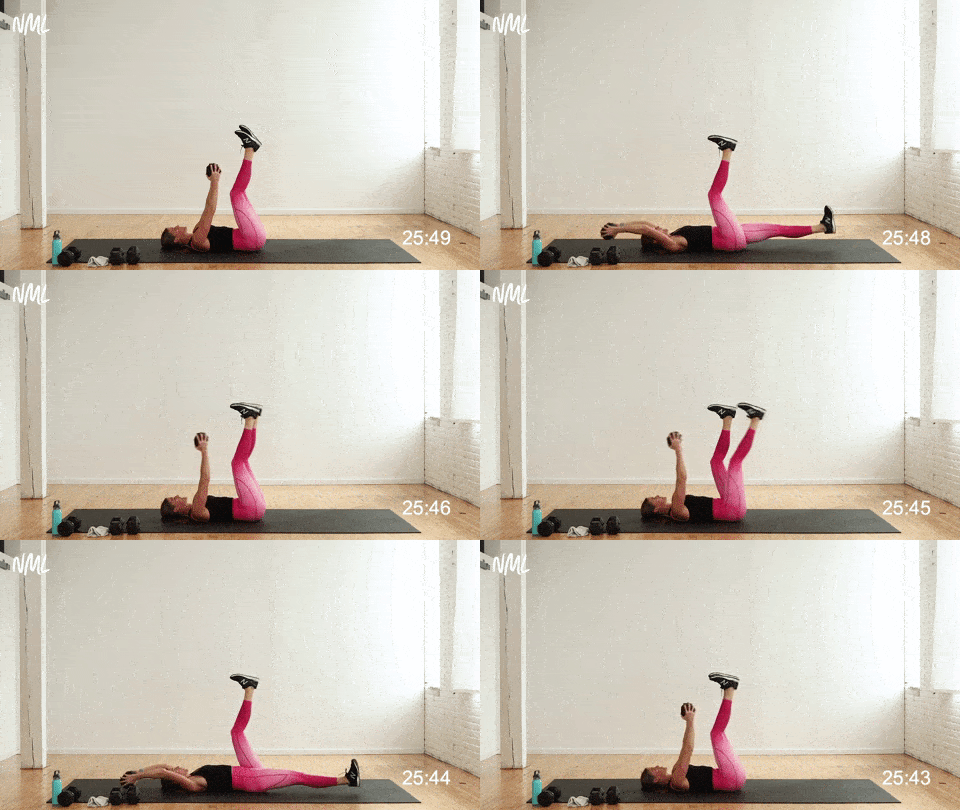
woman performing a dumbbell pullover and leg lower in a full body workout

How To Do A Dumbbell Pullover And Leg Lower

  1. Lay flat on your back with legs fully extended overhead (modification: bent at 90 degrees). Hold a dumbbell horizontally between your hands, arms extended overhead.
  2. With a slight bend in the elbows, slowly lower the dumbbell overhead towards the ground. Try to keep your low back pressed into the mat/ground. As you lower the dumbbell, lower one or both of your legs towards the ground.
  3. Then exhale as you pull the dumbbell back overhead while also pulling your legs back to center. Think of pulling your armpits down towards your hips to return back to the starting position.

Bicep Curl And Reverse Overhead Press

Targets:Biceps, shoulders (specifically the front head of the shoulders), back and core.
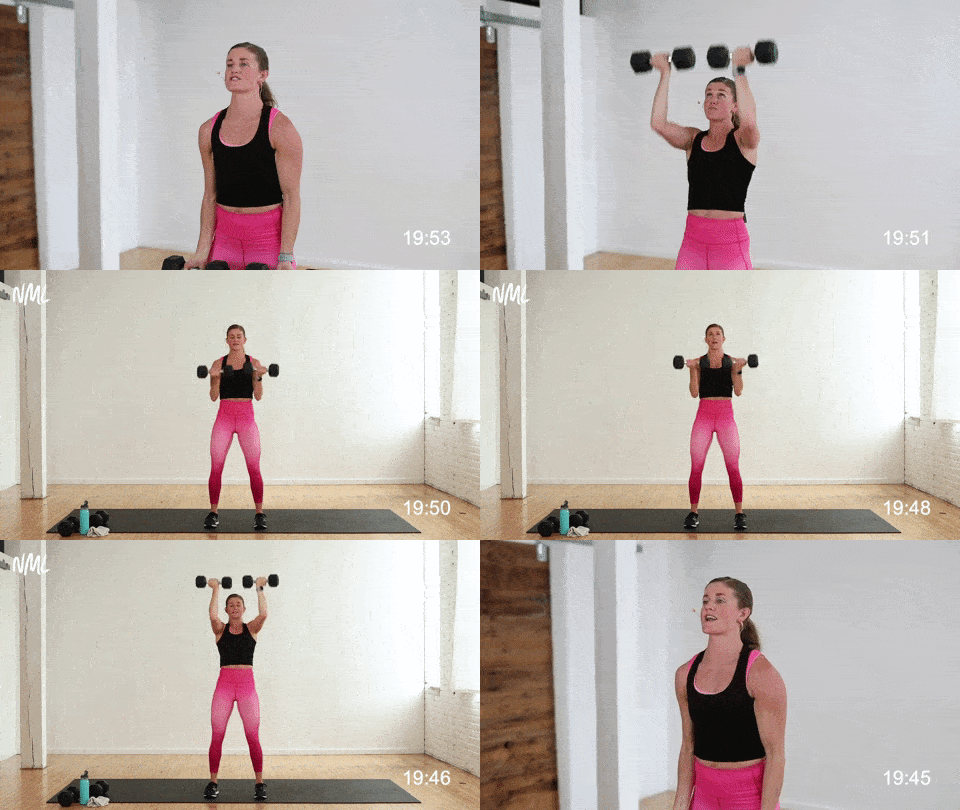
woman performing a bicep curl and press with dumbbells in a full body workout at home

How To Do A Bicep Curl And Reverse Press

  1. Start standing, feet under hips, core engaged, soft bed in the knees. Holding a dumbbell in each hand with palms facing out.
  2. Squeeze your biceps to pull the dumbbells up to shoulder height.
  3. Then press the dumbbells straight overhead, palms still facing in towards your body (reverse press).
  4. With control, lower the dumbbells back to shoulder height and then back down to the starting position.

Split Lunge

Targets: Legs, quads, glutes, hamstrings and calves.
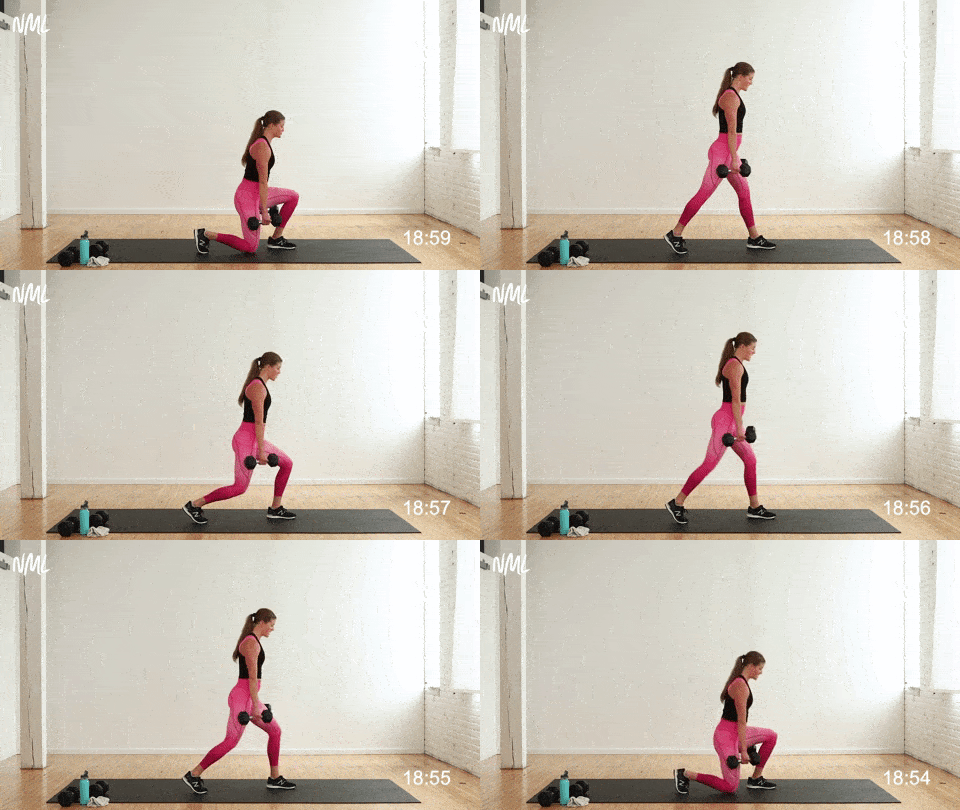
woman performing a split lunge or split squat

How To Do A Split Lunge

  1. Start standing feet hip-distance apart, holding a dumbbell in each hand at your sides, palms facing your body.
  2. Step your right leg forward, then drop your back left knee towards the ground. Lowering your hips until both knees reach a 90 degree angle, front right thigh parallel to the floor. Shoulders remain stacked over hips throughout the entire exercise.
  3. Press into your front right heel to stand tall, returning to the starting position.

Alternating Front Lunge And Single Arm Curl Press

Targets: Legs, quads, hamstrings, biceps, shoulders, abs and all the stabilizing muscles in the core.
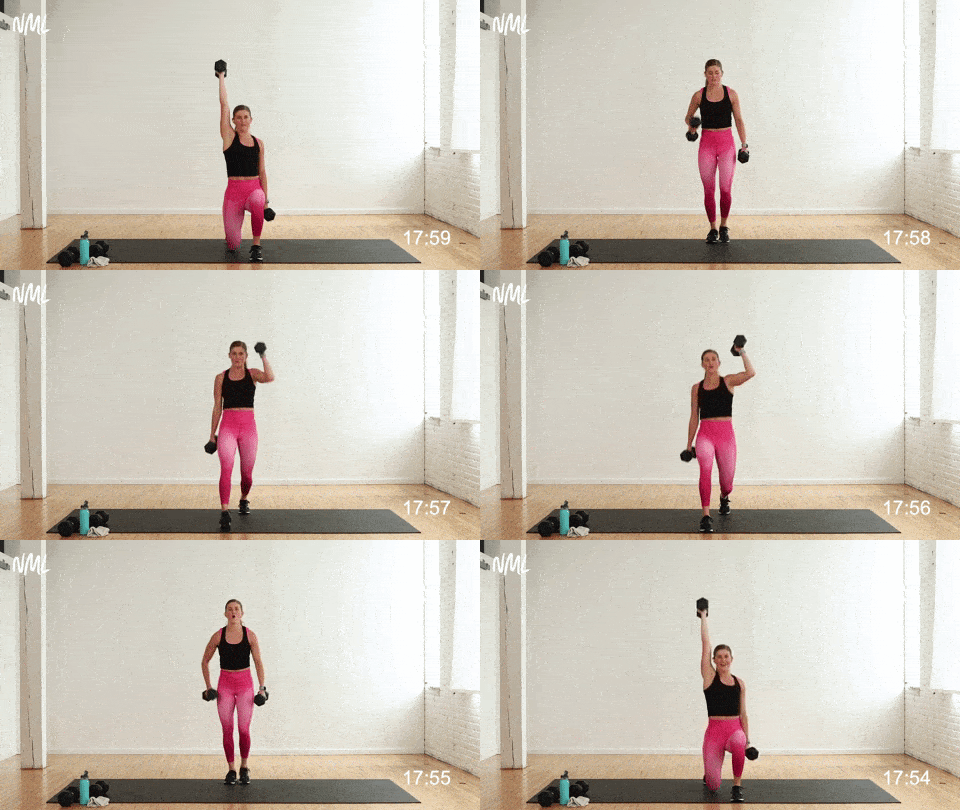
woman performing a front lunge and shoulder press in a full body workout at home

How To Do A Front Lunge And Single Arm Press

  1. Start standing, feet shoulder-width apart with a soft bend in knees. Hold one dumbbell in each hand (palms facing in towards the body).
  2. Step your right foot forward, lowering down until both knees reach a 90 degree angle or right thigh is parallel with the ground. As you step the right foot forward, curl the dumbbell in your left hand up to shoulder height, then press overhead.
  3. With control, reverse the shoulder press, lowering the dumbbell back to shoulder height and back to the starting position. As your arm lowers, press through your right heel to drive back to starting position. Switch sides, repeating on the other side of the body.

Plank And Dumbbell Pass

Targets: Entire core, back, shoulders and arms.
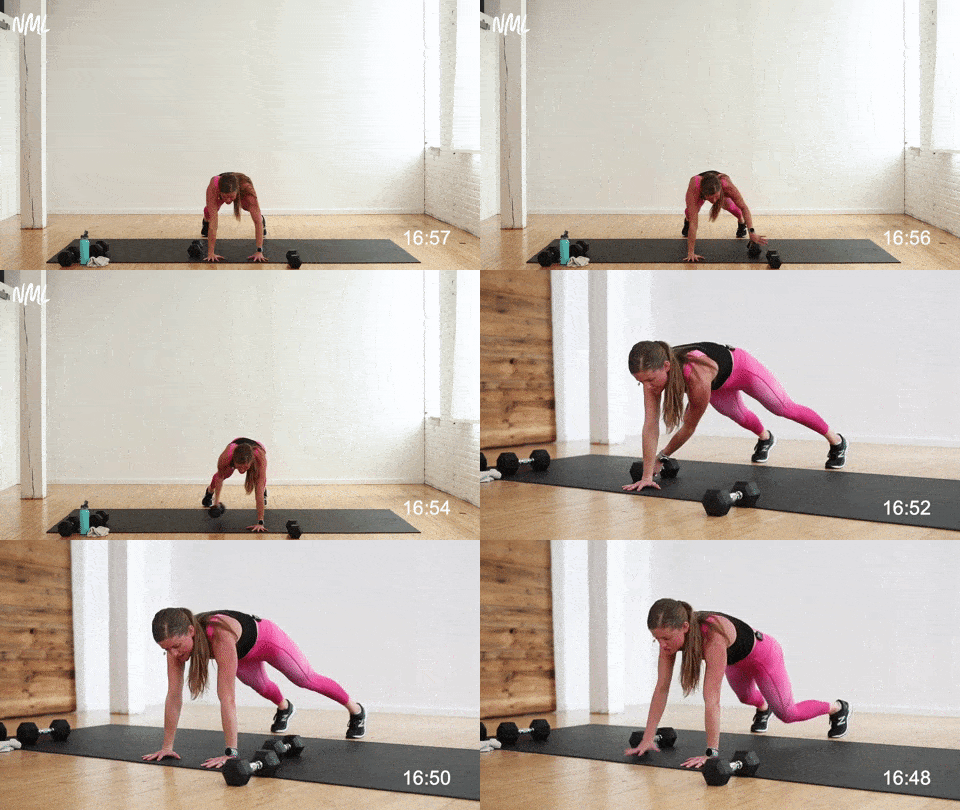
woman performing a plank dumbbell pull through in a full body workout

How To Do A Plank And Dumbbell Pass

  1. Start in a high plank position, shoulders over wrists, core engaged. Place a dumbbell outside your right hand.
  2. Engage your core, then reach your left hand underneath your body to grab the dumbbell and pull it through to the left side. Place the dumbbell on the mat just outside where you’ll plant your left hand when you return to high plank.
  3. Switch sides, pulling the dumbbell back to the right with the right hand. Repeat this pattern while holding a high plank.

Chest Fly And Skull Crusher

Targets:Chest (pecs), shoulders and triceps.
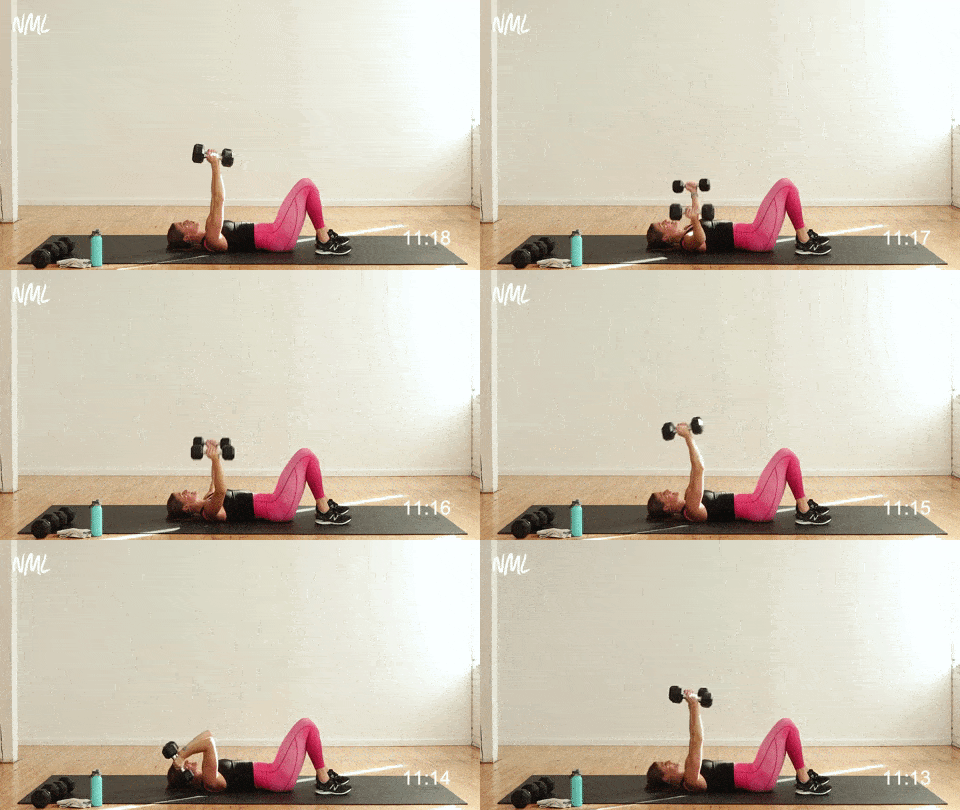
woman performing a chest fly and skull crusher in a total body workout

How To Do A Chest Fly And Skull Crusher

  1. Lay flat on your back, legs bent at 90 degrees, arms straight overhead holding one dumbbell in each hand, palms facing in.
  2. With a soft bend in the elbows slowly open your arms, lowering the dumbbells in a wide arc until they reach shoulder level (or the ground).
  3. Exhale as you pull the dumbbells back to starting position, keeping your chest puffed out. This is a chest fly.
  4. Once back to the starting position, perform a skull crusher by bending at the elbows to lower the dumbbells towards your forehead. Then squeeze the back of your arm (triceps) to press the dumbbells back overhead to return to the starting position.
  5. Alternate performing one chest fly and one skull crusher.

Staggered Deadlift And Squat

Targets: Legs, hamstrings, glutes, hips, quads and core.
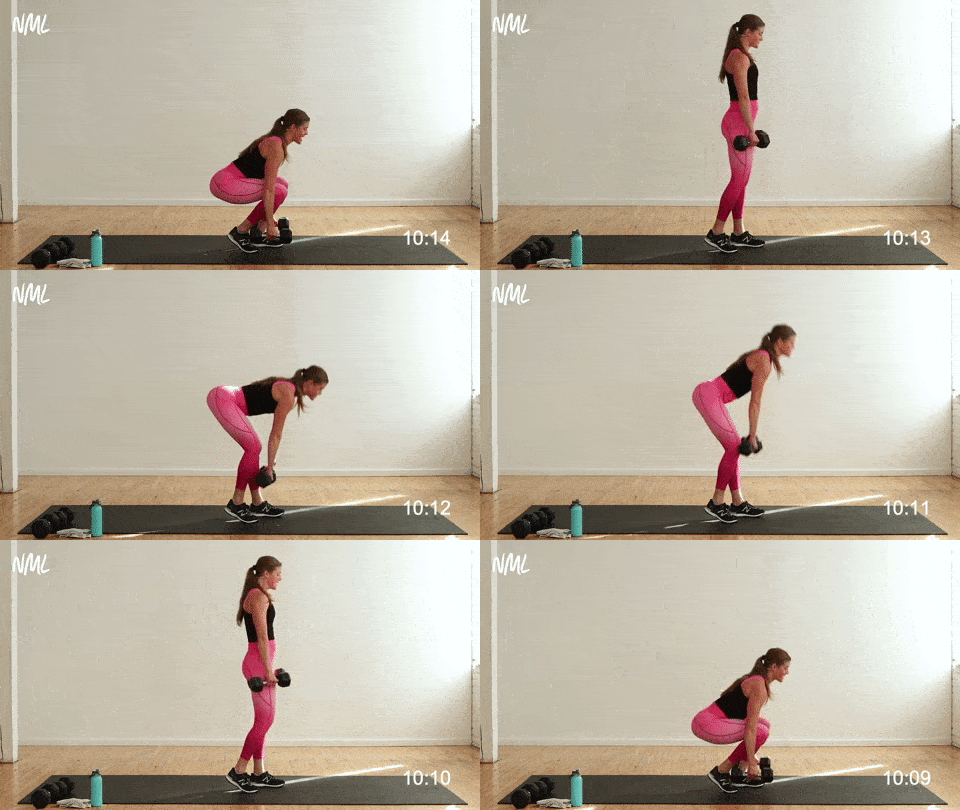
woman performing a staggered deadlift and squat in a total body workout

How To Do A Staggered Deadlift And Narrow Squat

  1. Stand with feet hip-width apart, hold one dumbbell in each hand at your thighs, palms facing your body.
  2. Stagger your feet, so your right leg is slightly in front of your left foot. Kickstand your back left foot, left heel floating off the ground.
  3. Keep 80% of your weight in your front right foot, 20% in your back left toe.
  4. With a soft bend in the knees, hinge at your hips to lower your torso as you slide the dumbbells down your legs. Think about pushing your hips back behind you.
  5. Hinge until you feel a stretch in the back of your front right leg (range of motion will be different for everyone). Then drive through your front right heel to stand up straight; returning to the starting position.
  6. Maintain a staggered stance as you lower your hips down, sitting back into a staggered squat. Push through the heel of your right foot to return to standing.
  7. Continue to alternate one staggered deadlift and one staggered squat.

Push Up And Dumbbell Burpee

Targets:Chest, shoulders, triceps, legs, glutes, quads, hamstrings, abs and core. A compound dumbbell exercise to build full body strength.
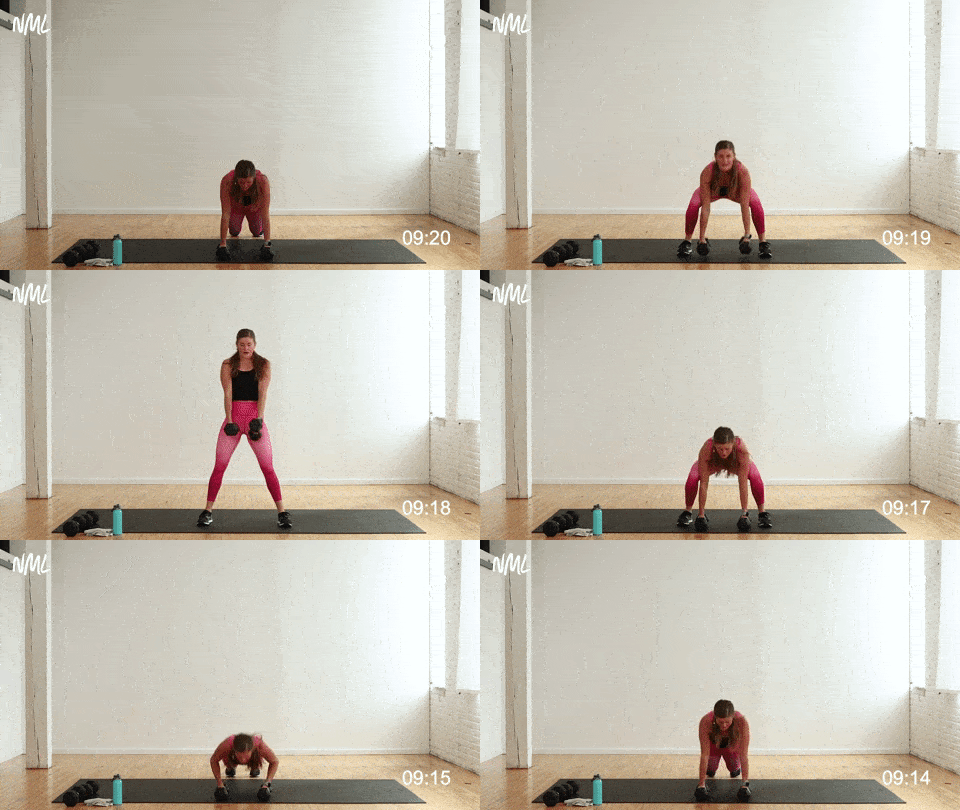
woman performing a dumbbell burpee in a full body workout

How To Do A Push Up And Dumbbell Burpee

  1. Start in a high plank position, hands on dumbbells, core engaged.
  2. Elbows fall back towards your body as you lower your chest towards the ground for a push up. Press back up to high plank.
  3. Step or jump your feet outside of your hands, landing in a loaded squat position.
  4. Then drive through your heels to stand, holding one dumbbell in each hand (palms face in).
  5. Lower into a squat to return the dumbbells to the mat; then step or jump your feet back to high plank position.

Seated Twist with Dumbbell

Targets:Upper abs, lower abs, obliques, core and hips.
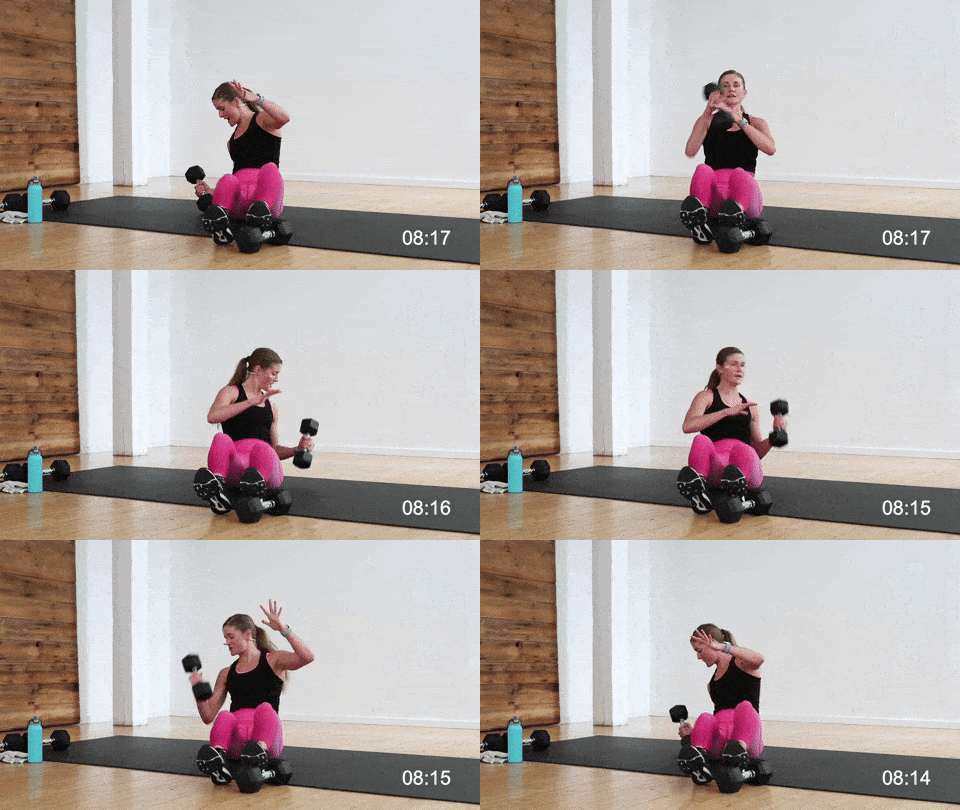
woman performing a Russian twist with dumbbell in a total body workout

How To Do A Seated Twist With Dumbbell

  1. Start in a seated position, sitting on your sit bones as you lean back; heels resting on the ground (option to float one or both feet to increase intensity).
  2. Holding a dumbbell in your right hand, pull your right elbow back towards your right hip as you rotate through your torso to tap the dumbbell to the mat near your right hip.
  3. Use your obliques and abs to return to center. Then transfer the dumbbell to your left hand.
  4. Pull your left elbow back towards your left hip as you rotate through your torso to tap the dumbbell to the mat near your left hip.

Full Body Workout At Home FAQs

What Is The Best Full Body Workout At Home?

The best full body workout includes a combination of upper body exercises, lower body exercises and core exercises. Effective full body workouts will include a variety of compound exercises and will challenge you to move in different planes of motion, mimicking real life movement patterns.

Are Full Body Workouts At Home Effective?

Yes, dumbbell workout routines offer an effective way to build muscle definition, increase strength and improve endurance. Full body workouts are particularly effective for beginners who need to build a solid strength base. They’re also effective for those who want to maximize muscle build and calorie burn.

Is 30 Minutes Enough For A Full Body Workout?

Yes! Effective full body workouts will target all muscle groups through compound exercises. If you choose heavy weights and prioritize efficient exercises that target multiple muscle groups at once, a 30 minute workout is enough.

Pin this Full Body Workout
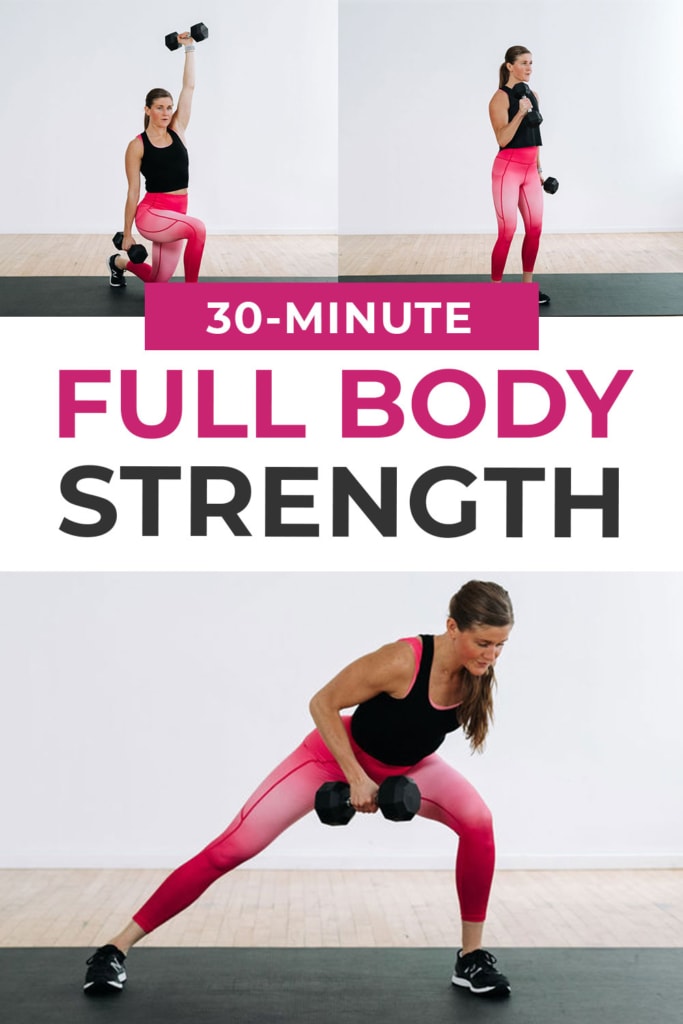
Full Body Workout At Home pin for pinterest

This post includes affiliate links. I do make a small commission for products purchased using these links (at no additional cost to you). Thank you for supporting Nourish Move Love, making the content you see on this blog possible.

#30Minute #Full #Body #Workout #Home #Video

5 Best Nutritious and Delicious Foods You Should Start Eating Now

Inquisitive, open and adventurous is not how it’s best to describe the eating habits of most men. The idea of eating something different ends up being a little more than using ground turkey instead of beef for a batch of burgers or opting to top breakfast oatmeal with raspberries instead of blueberries. Wow, look you mister courageous eater. You can and should start thinking beyond the pork chop and brown rice and dive into more nutritious and delicious ingredients.

Branching out into a new edible territory brings with it some notable benefits. Not only will embracing a handful of unfamiliar foods shake your taste buds out of their coma, but they also bring with them a whole new set of culinary possibilities. Adding more variety to your menu will also help you load up on a greater diversity of nutrients and bioactive compounds to support your health. Researchers at Harvard and New York University found that people who include a greater variety of healthy foods in their daily menu tend to be less pudgy. And don’t forget that packing your day with exciting new tastes makes it easier and more satisfying to stick to a better-body diet. Hungry for beef heart and sorghum, yet?

Start with these fresh picks that just might be the healthiest foods you aren’t eating. Hopefully, that is about to change.

5 Nutritious and Delicious Foods You Should Try Now

Nutritious and Delicious Watercress in a glass bowl
Brent Hofacker

Watercress

Move over kale, this is the supergreen you should be eating a lot more of, even if it’s sometimes considered just a weed. According to a recent report released by the Centers for Disease Control and Prevention (CDC) that examined 17 different nutrient markers (i.e., folate, zinc, potassium, and calcium) of 41 different vegetables and fruits including spinach, blueberries, and broccoli, watercress scored the highest among them in terms of its “nutrient density” score (a perfect 100 score). The nutrient density score was based on the levels of nutrients per 100 calories of the food. That means adding watercress, which is part of the Brassicaceae family of vegetables that also includes kale, Brussels sprouts and cabbage, to your salads will give you a range of nutrients for very little calorie cost. Watercress is especially rich in vitamin K, a nutrient that can benefit heart and bone health.

Its small, round leaves and edible stems have a peppery, slightly spicy flavor that can jazz up salads. You can also add it to soups, blend it into “green” smoothies, use it as a green in pesto, or add a handful to any sandwich. If you can’t find watercress at your normal supermarket look for the green giant at Asian grocers.

Hemp-Seed
John Carey / Getty

Hemp Seeds

They won’t give you the munchies, but they will give you a big dose of nutrition. Yes, hemp seeds fly high nutritionally. Also called hemp hearts, these tender seeds that taste like a lovechild of pine nuts and sunflower seeds are a good source of complete plant-based protein – about 10 grams in 3 tablespoon serving. That is more muscle-making protein than most of the common nuts and seeds that Americans are eating. Another nutritional highlight is the notable amounts of omega-3 fat. An analysis of data from 41 studies published in The BMJ linked a high intake of alpha-linolenic acid, the type of omega-3 found in hemp, to a 10% lower risk of all-cause mortality, an 8% lower risk of death from cardiovascular disease and an 11% reduced risk of death from coronary heart disease, compared with lower consumption levels. Hemp seeds are also a source of several must-have micronutrients including magnesium, iron, thiamine and phosphorus.

Getting your fill of hemp seeds is as easy as sprinkling them on soups, yogurt, oatmeal and salads. You can also blend them into protein shakes. Health food sections of supermarkets is a good place to find these nutritional heroes or source them online from Manitobaharvest.

A bowl of nutritious and healthy Freekeh
Dina Saeed

Freekeh

No shade to rice and quinoa, but freekeh should be where it’s at. Freekeh is quite simply a type of wheat that’s harvested while young and green. Then, it’s roasted, and its shell is burned and rubbed off, which explains why the term “freekeh” is derived from the Arabic word “to rub.” With a nutty, smoky flavor think of it as the bacon of the whole grain world. The great flavor isn’t just what makes freekeh special, but also its nutrition pedigree.

Freekeh has more protein and twice as much fiber as quinoa, and three times as much fiber as brown rice. One-half cup of cooked freekeh has about 10 grams of protein and 8 grams of fiber, which is seriously impressive for a grain. Because of its rather high amounts of protein, freekeh can be considered a viable source of plant-based protein which might be good news for your ticker. A study in JAMA Internal Medicine found found replacing a small amount of animal proteins, such as meat and eggs, with plant-based proteins in the diet may reduce the risk for premature death overall and death from cardiovascular disease. What’s more, it delivers the same vision-protecting antioxidant duo lutein and zeaxanthin found in leafy greens.

It’s not the easiest grain to find in stores, but markets specializing in Middle Eastern fare are a safe bet for finding bags of freekeh. Or, of course, count on Amazon. To prepare it on the stovetop, you’ll need 2.5 cups of liquid for every 1 cup of dry freekeh. Bring water or broth to a boil on the stovetop, add freekeh, and simmer for approximately 20 to 25 minutes. Use it as a stand-alone side dish or add the cooked grains to salads, burritos, and soups. For a sweet-savory snack, try sprinkling cooked freekeh and some pomegranate seeds over Greek yogurt. You can even try enjoying it as a breakfast porridge like you would steel-cut oats.

A spoonful of Nutritious and Delicious quark
Ivanna Pavliuk

Quark

Quark is a tricky dairy to pin down: Is it yogurt or cheese or something NASA scientists discovered? To make this dairy product, milk that has been soured via the addition of acid is warmed until it curdles and then is strained before bacterial strains are added to ferment the lactose further. Next, it’s continuously stirred to prevent hardening and to give quark its signature thick and smooth texture (and, hence, being so creamy and delicious). Technically, quark is a soft, spreadable cheese. However, because of its velvety texture, it’s more often compared to a thick yogurt, similar to Greek or Skyr. While it may be a relatively new addition to American supermarkets, it has long been a staple in German households. Its flavor is best described as mild and neither sweet nor sour, meaning it lacks the tangy aftertaste of yogurt that not everyone enjoys.

Quark has protein levels on par with Greek yogurt – about 15 grams in a cup – making it a muscle-maker, hunger-buster food. Being a fermented dairy, quark can also help fertilize your gut with a resupply of beneficial bacteria, which is good news for digestive, immune, and brain health. And if your tummy cries foul when faced with lactose, quark might be better tolerated since the fermentation process makes it lower in this dairy sugar than milk. Other nutritional perks include useful amounts of B vitamins, vitamin A, and bone-assisting calcium and vitamin D.

One of the most straightforward ways to eat quark is to spoon it up like you would yogurt for a protein-packed snack or breakfast, but the possibilities are nearly endless: blend into smoothies and dips, whisk into dressings, and spoon dollops onto baked potatoes, tacos, pancakes or even pizza.

Peppadew Peppers
Daleen_Prinsloo

Peppadew Peppers

Rosy Peppadews, which are a trademarked name for piquanté peppers, are cherry tomato-sized peppers hailing from South Africa with a habit-forming sweet flavor and subtle fiery kick. Ao eating them won’t cause you to break out in a sweat. Bland red bell peppers these are not. This low-calorie diminutive Capsicum cultivar provides a good amount of vitamin C like other peppers as well as the plant chemical compound capsaicin which is responsible for any heat you feel in your mouth. Interestingly, consumption of capsaicin was associated with changes in the gut microbial structure that increased microbial diversity and short-chain fatty acids abundance, according to a study in the journal Nutrients. These changes to the microbiome may be responsible for some of the health benefits such as alower risk of death from heart disease associated with consuming capsaicin.

You can sometimes find the peppers sold loosely in the deli section of grocers or more often preserved in jars and sold alongside other specialty foods like olives and artichoke hearts. Drain the peppers and use them to top salads, pizza, pasta, sandwiches, and wraps to punch up the flavor. Whirl them into dips like hummus to add a new flavor dimension. They are also great for stuffing with items like goat cheese or ricotta as a way to up your party appetizer game. The leftover pickling brine can also be used to add sweet, tangy flavor to salad dressings and marinades.

#Nutritious #Delicious #Foods #Start #Eating

Indian rupee retreats from six-month high on likely central bank intervention

Indian rupee retreats from six-month high on likely central bank intervention The rupee was at 82.7750 against the U.S. dollar as of 10:25 a.m. IST, up 0.05% compared with its close of 82.8225 in the previous session.
Indian rupee retreats from six-month high on likely central bank intervention The rupee was at 82.7750 against the U.S. dollar as of 10:25 a.m. IST, up 0.05% compared with its close of 82.8225 in the previous session. , Indian rupee retreats from six-month high on likely central bank intervention

Guide To Overcoming Female Hormones To Lose Weight

Let’s face it, when it comes to building muscle, men pack it on faster than women. Not only that, they shed fat at high speed as well. (I know, it’s not fair.) The answer to why men reap faster fitness results compared to women isn’t hard to figure out: hormones.

“While testosterone is hailed as the primary muscle builder, women typically have lower concentrations, around 15-20% less than men,” explains Marlyne Perez, RD, CPT, NASM.

“Additionally, females have higher levels of estrogen and progesterone, which can affect muscle growth and recovery in different ways than testosterone,” she adds, hence, creating these hormonal hurdles that can make building muscle and shedding fat a bit of a struggle for females.
The good news is, there are simple strategies for women to overcome these hormonal hurdles to pack on muscle and shed unwanted fat. With a little patience and understanding of how the female body works, you’ll be on your way to meeting your goals

Two Hormones That Play an Important Role in Building Muscle

“Effective bodybuilding relies on optimal levels of anabolic hormones, a necessity that extends to female athletes,” explains Perez. “Alongside resistance training, these hormones, including insulin, testosterone, and growth hormone (GH), drive bone and muscle growth, enhance strength, and promote leanness.”

Here is a quick overview of these important hormones.

  • Insulin: Its role in carbohydrate metabolism is pivotal, facilitating the infusion of sugars into muscle cells and aiding in post-workout recovery.
  • GH (Growth Hormone): Not only contributes to muscle building and fat burning but also expedites healing after injury and repairs muscle tissue post-exercise. GH also stimulates protein synthesis, which promotes muscle growth and fat metabolism.

Fun Fact: Females inherently boast higher GH levels than males, an asset considering the decline in GH levels with age.

Female fitness model showing off her sleek obliques and muscular sexy abs
Nikolas_jkd

Top Tips To Overcome The Female Hormonal Hurdles

Despite variances in biology, Perez explains women can successfully develop and maintain muscle mass through sound nutrition and strength training. “It’s essential to highlight the importance of a well-rounded, nutrient-dense diet and incorporating strength exercises that work for all major muscle groups.”

Therefore, by emphasizing nutrition, exercise, and recovery, women can optimize their muscle-building capabilities and reach their fitness goals effectively.

Address Your Stress

Cortisol, a hormone released in response to stress, can trigger muscle breakdown when it accumulates excessively. Prolonged elevation of cortisol levels from chronic stress can result in muscle loss and disrupt muscle tone. To mitigate or prevent this, implementing stress management techniques is critical. These include:

  • Deep breathing
  • Meditation or Prayer
  • Walking in nature
  • Relaxation techniques like Tai chi, yoga, stretching, biofeedback, music and art therapy, aromatherapy, or hydrotherapy.
  • Journaling

Don’t Be Afraid to Lift Heavy

To stimulate muscle growth, resistance training is essential, providing the necessary mechanical tension and metabolic stress. This concept, known as “progressive overload,” involves consistently challenging muscles with increased loads to drive adaptation and growth. Research indicates that even just three 13-minute sessions per week over eight weeks can significantly enhance strength and endurance. However, muscle hypertrophy is influenced by training volume, with higher volumes yielding greater gains.

Perform a Bit of HIIT

High-intensity exercise triggers GH release from the anterior pituitary gland, aiding muscle repair. The more muscles are fatigued, the more GH is released.

Eat Clean and Get Enough Calories

To support muscle growth effectively, it’s crucial to ensure that the extra calories come from the right sources, primarily protein—the building blocks of muscle. Skeletal muscle size hinges on the equilibrium between muscle protein synthesis (MPS) and breakdown (MPB), both influenced by exercise and amino acid intake.

MPS is particularly sensitive to the quantity and quality of amino acids, especially leucine, whereas MPB is regulated in part by dietary protein. While excessive protein consumption offers no added benefits, aiming for at least 1g per pound of body weight helps maintain a positive nitrogen balance. Besides protein, incorporating healthy fats, abundant fruits and vegetables for phytonutrients, and minimizing refined and processed foods is crucial.

Get Adequate Sleep

Growth hormone release coincides with deep sleep, and its levels correlate with the duration of this sleep stage. Inadequate deep sleep means less growth hormone, impacting muscle recovery and growth. Moreover, insufficient sleep disrupts hunger hormones, affecting appetite regulation. It lowers leptin levels while increasing ghrelin, leading to heightened hunger and food intake.

Therefore, quality sleep isn’t just crucial for muscle health but also for appetite control and weight management.

Sleep Tip

To ensure proper rest, Perez suggests aiming for seven to nine hours of uninterrupted sleep and adopting sleep hygiene practices like limiting screen time before bed, maintaining a cool environment, avoiding late caffeine consumption, ensuring darkness in the bedroom, wearing light clothing, and practicing relaxation techniques.

#Guide #Overcoming #Female #Hormones #Lose #Weight

Stock and Share Market News, Economy and Finance News, Sensex, Nifty, Global Market, NSE, BSE Live IPO News


How to give a demand boost to the Indian economy that it so badly needs


Relatively affluent middle-income households drive the demand for high-value discretionary items such as consumer durables, education, health and recreation services, and homes. Unless they get some relief in the form of lower taxes on their incomes and/or consumption, households’ demand, and in turn, investment from India’s private sector will stay muted


How to give a demand boost to the Indian economy that it so badly needs


Relatively affluent middle-income households drive the demand for high-value discretionary items such as consumer durables, education, health and recreation services, and homes. Unless they get some relief in the form of lower taxes on their incomes and/or consumption, households’ demand, and in turn, investment from India’s private sector will stay muted

, Stock and Share Market News, Economy and Finance News, Sensex, Nifty, Global Market, NSE, BSE Live IPO News

Dominique Columbus Was Ready for ‘Road House’ Before He Even Got the Role

Dominique Columbus has been climbing the ranks in Hollywood for quite some time now. He’s taken on smaller roles on various TV and film projects, and he was even cast as Damon on the series “Ray Donovan,” but the 32-year-old actor has never been a part of a project the magnitude of “Road House.”

Columbus will be in the new reimagining of the Patrick Swayze classic film that is set to be released on March 8. The film also stars Jake Gyllenhaal, UFC great Conor McGregor, and Daniela Melchior. Columbus will have a prominent role as “Reef,” and as far as he’s concerned, he’s been ready for this moment for quite some time now.

“Honestly, it’s just preparation meeting opportunity,” he explained. “I grew up as an athlete. So, I put a lot of energy and time into this field.”

Even with his confidence in his abilities, the moment is not lost on him, neither is the expectation of the film to deliver. The original Roadhouse has been ranked as one of the elite films of all time, and it has its own massive fan base. The 2024 edition will have to deliver on its own merits while paying homage to the significance of the first if it doesn’t want to be classified as “another retread”. Columbus understands this and is optimistic about the new film’s potential.

“This on its own is special just because of the weight that comes behind it,” he shared. “Roadhouse is iconic, and to be a part of this one is a blessing.”

Dominique Columbus Has a Fighter’s Mentality

Columbus was comfortable portraying his character because of his familiarity with fighting. He was born and raised in California, and he grew up a big fan of boxing. He was first connected to the sport through his father, who was also his coach. He actually started a boxing school called “K.O. High” that helped mentor up and coming fighters. Columbus’ own passion grew as he advanced through childhood as a result.

“Boxing was my main sport growing up. It was very big in my family, and the character I play is a boxer. He knows how to fight. There was a lot of natural synergy for me and my character.”

Doing a fight scene during any shoot can be a challenge if you don’t know what you’re doing. Imagine having someone the caliber of McGregor alongside you. Columbus embraced the opportunity and felt a great connection to the original UFC “champ champ.” The average viewer may think McGregor had to share some tips with the young actor, but he revealed that wasn’t the case.

“We both had to learn and understand camera fighting. It’s a dance. The things we may do in real life had to be adjusted for the cameras. So, we both just had to figure out the dance, which was dope. He was so fun to work with.”

Filming a ‘Notorious’ Fight Scene

Even though McGregor was built for fighting, literally and figuratively, one may think that it’s harder to coordinate a dance like that which Columbus described. When asked to compare the MMA legend’s abilities versus more experienced actors, Columbus answered with no hesitation.

“There’s no comparison because he’s Conor McGregor,” he said with a smile. “It was about the energy behind it. I can’t compare it.”

Dominique Columbus invested more than time reading lines into this role. He went all in by committing physically as well. He put on 20 solid pounds for the role while maintaining a lean physique. He attributed that to maintaining his cardio and pushing himself in the weight room while following a solid and consistent diet. His discipline as an athlete helped him with this, but having a girlfriend that works as a fitness trainer and nutrition coach certainly helped him as well. Elizabeth Bash wasn’t in front of the camera, but she played her own big role in making sure Columbus was prepared when he was.

“I was able to work with someone who was amazing in her field to help me elevate what I am doing. I am already athletic, but the biggest work I needed to do was in the kitchen. The meal prep, extra calories to take in, all of that was what I had to pay extra attention to.”

Dominique Columbus hasn’t taken too many days off since filming wrapped. He already has more irons in the fire because he focuses on what’s next instead of looking back. Among those projects are other films, TV shows, and a podcast. He didn’t want to reveal too much just yet but promises details will be forthcoming in the near future. His long goal is to do many more films in the future, and projects like this one appeal to him.

“My goal is to keep impacting the action lane.”

You can follow Columbus on Instagram @domsperspective

#Dominique #Columbus #Ready #Road #House #Role

Stock and Share Market News, Economy and Finance News, Sensex, Nifty, Global Market, NSE, BSE Live IPO News


Meet Ganesh Baraiya: The 3-foot-tall doctor whose determination defies the odds


Meet Ganesh Baraiya, a 3-foot-tall doctor from Gujarat, whose determination to pursue his dreams knows no bounds. Despite facing obstacles due to his dwarfism, Ganesh overcame challenges to complete his MBBS degree. Initially denied admission to medical school, he fought a legal battle that culminated in a Supreme Court ruling in his favour. Now working as an intern doctor at a hospital in Bhavnagar, Ganesh’s story is one of resilience and inspiration


Meet Ganesh Baraiya: The 3-foot-tall doctor whose determination defies the odds


Meet Ganesh Baraiya, a 3-foot-tall doctor from Gujarat, whose determination to pursue his dreams knows no bounds. Despite facing obstacles due to his dwarfism, Ganesh overcame challenges to complete his MBBS degree. Initially denied admission to medical school, he fought a legal battle that culminated in a Supreme Court ruling in his favour. Now working as an intern doctor at a hospital in Bhavnagar, Ganesh’s story is one of resilience and inspiration

, Stock and Share Market News, Economy and Finance News, Sensex, Nifty, Global Market, NSE, BSE Live IPO News

The Only 3 Chest Exercises You Need for Fuller Pecs

I want you to forget everything you know about chest training. You only need three exercises to get monster pecs – a flat press, an incline press, and a fly variation. The specific exercises have some wiggle room, but three stand out above the rest.

This article covers my favorite chest exercises: the flat barbell bench press, incline dumbbell press, and cable crossover. If you think you can’t get jacked with only three chest exercises, this article is for you. Too much exercise variation has likely been holding you back. Progressing on these three movements is the key to growth. So, if you are ready to change how you train your chest, let’s dive in.

1. The Flat Barbell Bench Press

flat bench press

As popular as the barbell bench press is, it’s clouded in controversy in the bodybuilding community. Some say it’s the best chest builder, while others claim it’s just an injury waiting to happen.

Early in my training career, I listened to the latter crowd. Instead of barbell benching, my chest training was all dumbbells, cables, and machines. These implements are great, but they shouldn’t replace the barbell. Ironically, my chest didn’t begin growing until I started powerlifting. My chest exploded as soon as I threw away all of the bodybuilding dogma and focused on barbell benching.

Now, it wasn’t just the bench press. It’s how I attacked it. Here is a bench press tip you don’t hear a lot of bodybuilders provide – go heavy for low reps. Yes, use the barbell bench press the way the big boys do. Research shows that you can build muscle even with low reps, so don’t be afraid to put some weight on the bar.¹ I want you to bully the weights and focus on hitting new personal records in the 3-6 rep range.

Lifting progressively heavier weights over time is the key. Keep track of your training in a notebook. Write down the weight, sets, and reps. Every time you go to bench press, try to add an extra rep or an extra 5 pounds to the bar.

Barbell Bench Press Tip: Technique

Learning how to bench press properly will keep you healthy and allow you to get the most out of the exercise. The biggest thing is tension. We want everything from your feet to your head to be tight.

During the set-up, dig your traps and upper back into the bench while squeezing your shoulder blades together. If done right, this will give you an arch. It doesn’t need to be a crazy powerlifting arch, but an arch is good. It puts your shoulders in a safer position to press and mimics a decline angle without the awkwardness of a decline bench. See, we will still sneak some lower pec work in after all.

2. The Incline Dumbbell Press

Incline Dumbbell Press

The second exercise is the incline dumbbell press. Barbells are great, but including a dumbbell chest exercise after the flat barbell bench press makes sense. Dumbbells allow for unilateral training, meaning each limb works independently, helping to address muscle imbalances and asymmetries. Plus, I’m not too fond of the incline barbell press, mainly because it’s hard to safely get the bar off the rack. It always feels like I will tear my shoulder off just getting the bar into position. So, nine times out of ten, I opt for dumbbells.

The angle is crucial in the incline bench. Research shows you only need a 30-degree angle to maximize upper chest development as displayed by the EMG graph below.² Thirty degrees is less than you think.

Graph of EMG Activation

Figure 1: Rodríguez-Ridao, D., Antequera-Vique, J. A., Martín-Fuentes, I., & Muyor, J. M. (2020)

Typically, people use 45 degrees or higher. The problem with this is that it brings the front delts more into play, taking some of the tension off the pecs. If your gym has no adjustable bench that goes to 30 degrees, take a free-standing flat bench and put two 45-pound bumper plates under one side.

Some evidence suggests the upper chest is activated more with a narrow grip.³ With dumbbells, this translates to keeping your elbows tight versus flared out. This detail isn’t a huge deal, so do whatever feels best. That said, keeping your elbows semi-tucked is typically more comfortable on your shoulders.

A quick note on technique. Many people use too much of an arch on an incline press. You should still retract your shoulders and get yourself in a good position to press, but if you arch too much, it almost turns the incline press into a flat press, defeating the purpose.

Incline Dumbbell Press Tip: No Ego Lifting

The barbell bench press is typically called the ultimate ego lift, but in my experience, the incline dumbbell press is just as bad. I want you to push yourself to move around heavy dumbbells, but not at the expense of good technique. Use a weight you can control, especially when lowering the dumbbells.

Another advantage dumbbells have over barbells is that you can use a greater range of motion. The problem is only a few people use it. Get a good stretch at the bottom and press until your arms lock out at the top. Yes, you might have to lower the weight a bit, but it’s worth it if it leads to fuller pecs.

3. The Cable Crossover

cable crossover

Last but not least is the cable crossover, also known as the cable fly. The first question is, why include a fly? I love pressing movements, which is why the first two exercises are presses. That said, flies offer a safer way to emphasize the stretched position. Moreover, flies allow you to get a full contraction at the top. Anyone who has taken a set of cable crossovers close to failure knows what I am talking about. The chest pump is real.

The next question is, why a cable fly versus the countless other options?

The cable crossover is an excellent exercise for fuller pecs because it provides constant tension on the pecs for the full range of motion, maximizing muscle fiber recruitment and promoting hypertrophy. Compare this to a dumbbell fly that only provides tension at the bottom and is an easy decision. This is clearly on display in the chart below.

EMG Activation Barbell Bench Vs Other Chest Exercises

Figure 2: Schanke, Whitnee (2012)

Now, you may look at the chart and wonder why I didn’t select the pec deck. Unlike a pec deck, which is fixed in one plane of movement, you can play with the cable adjustments up and down for variation or to find the best position on your pecs.This wide range of movement angles helps stimulate growth across the entire pectoral region for more complete development.

My favorite cable crossover position is the high to low. To do this, set the cables to the highest or near the highest setting, with D-handles attached. The movement begins with your hands at shoulder height and ends with them around waist height.

Cable Crossover Tip: Focus On The Stretch

An increasing body of research indicates that resistance training at long muscle lengths (the stretched position) enhances muscular growth. When doing cable crossovers, focus on stretching the pecs as much as you can. Keep your arms slightly bent, and bring your elbows back as far as your mobility and flexibility allow. Here is a bonus tip. Cross your hands at the end of the movement to get a gnarly contraction. Remember to alternate which hand goes in front of the other on every other rep.

Chest Anatomy 101

Pectoral Muscle Heads

Before we get into the exercises, we need to discuss chest anatomy. It’s important to know because simply changing the angle or grip of a movement can change the impact on your chest development.

The pectorals (pecs), comprised mainly of the pec major and minor, are the primary chest muscles. The larger of the two, the pec major, controls the upper arm’s internal rotation, flexion, and adduction. It has two heads: the sternocostal head, which starts at the breastbone and upper ribs, and the clavicular head, which begins at the collarbone.

Research shows the best way to target the sternocostal head is to use a flat press, and the best way to target the clavicular head is with an incline press, as you can see below.

sternocostal muscle activation

Figure 3:Sternocostal Head Muscle Activation Trebs, A. A., Brandenburg, J. P., & Pitney, W. A. (2010)

clavicular muscle activation

Figure 4:Clavicular Head Muscle ActivationTrebs, A. A., Brandenburg, J. P., & Pitney, W. A. (2010)

This point is critical because it shows you must incorporate multiple pressing angles to maximize chest development. I love the bench press, but only flat benching is a common mistake people make. To build a full chest, you must also incorporate something for the upper pecs.

Beneath the pectoralis major is the smaller, triangular-shaped pectoralis minor. It enters the scapula after emerging from the third, fourth, and fifth ribs. The pectoralis minor is crucial in shoulder depression and essential for bench press strength and stabilization of the shoulder blade. That said, we can avoid paying attention to it for bigger pecs.

The Decline Bench Press Is a Waste of Time

Do we need to include a decline press, too? The short answer is no. For a brief period, the decline bench got a lot of love. Much of it stemmed from a 1997 EMG study that showed the decline bench press caused more muscle activation for the sternocostal head and the same muscle activation in the clavicular head as an incline bench press.¹⁰

Sternocostal Incline vs decline

Figure 5:Sternocostal Head Glass, Stephen & Armstrong, Ty. (1997)

Clavicular incline vs decline

Figure 6:Clavicular HeadGlass, Stephen & Armstrong, Ty. (1997)

Based on that, the decline bench is the perfect chest exercise. Not so fast.

A complete dissection of EMG studies is beyond the scope of the article, but their application is limited. More importantly, research does not consistently show equal muscle activation in the upper chest between the decline and incline bench press—quite the opposite, as most research shows what bodybuilders have known for decades. The incline press is the best option for the upper pecs.¹¹

Activation-of-the-lower-pectoralis

Figure 7: Lauver, J. D., Cayot, T. E., & Scheuermann, B. W. (2016)

Activation-of-the-upper-pectoralis

Figure 8: Lauver, J. D., Cayot, T. E., & Scheuermann, B. W. (2016)

So, what’s the deal? The decline bench is fine for targeting the sternocostal head of the pecs. The problem is that so is the flat bench press. And when comparing the decline to a flat bench press, the flat bench wins.

For one, most gyms don’t even have a decline bench press. You can’t do it if they don’t have it. In gyms with one, the bench has your feet elevated or strapped in to prevent you from sliding down the bench. It isn’t easy to be stable with your feet off the ground.

Stability is critical because it allows you to handle more weight and overload the muscle more effectively. Speaking of more weight, lifting heavier is one reason people like the decline press. However, while it is true you can lift more weight on a decline, it’s due to a reduced range of motion (ROM). Research consistently shows training with a full ROM is best for muscle growth.¹²

The Perfect Chest Workouts For Fuller Pecs

Exercise order matters when putting together the perfect chest routine for fuller pecs. If doing all three exercises in one workout, I prefer hitting the barbell bench press first when fresh to maximize performance, and I like to finish up with a cable fly. This order leaves the dumbbell incline press sandwiched in the middle.

However, starting with an incline press could be best if your upper chest is weak. Even then, the sternocostal head makes up most of the chest mass, so I still recommend starting with a flat press.

Here are two chest workout examples based on one or two weekly chest sessions.

Option 1: Training Chest Once a Week

  1. Barbell Bench Press: 5 sets x 3-6 reps
  2. Incline Dumbbell Press: 4 sets x 6-10 reps
  3. Cable Crossover: 3 sets x 10-15 reps

Option 2: Training Chest Twice a Week

Workout 1

  1. Barbell Bench Press: 3 sets x 3-6 reps
  2. Incline Dumbbell Press: 3 sets x 6-10 reps

*Add exercises for the shoulders and triceps

Workout 2

  1. Barbell Bench Press: 3 sets x 7-10 reps
  2. Cable Crossover: 3 sets x 10-15 reps

*Add exercises for the shoulders and triceps

The Bottom Line

The TLDR version is this: You only need three exercises to train your chest effectively. The exercises are a barbell flat bench press, an incline dumbbell press, and a cable crossover. With that said, exercise selection is only part of the battle. You must still use good form, utilize progressive overload, and be consistent with your training. If you do that, you will be well on your way to a bigger, fuller chest.

Are you looking for a new workout program to start? We created what we consider the ultimate hypertrophy program to take your physique to the next level.

References:

  1. Schoenfeld, B. J., Grgic, J., Van Every, D. W., & Plotkin, D. L. (2021). Loading Recommendations for Muscle Strength, Hypertrophy, and Local Endurance: A Re-Examination of the Repetition Continuum. Sports, 9(2), 32. https://doi.org/10.3390/sports9020032
  2. Rodríguez-Ridao, D., Antequera-Vique, J. A., Martín-Fuentes, I., & Muyor, J. M. (2020). Effect of Five Bench Inclinations on the Electromyographic Activity of the Pectoralis Major, Anterior Deltoid, and Triceps Brachii during the Bench Press Exercise. International journal of environmental research and public health, 17(19), 7339. https://doi.org/10.3390/ijerph17197339
  3. Barnett, Chris1; Kippers, Vaughan2; Turner, Peter1. Effects of Variations of the Bench Press Exercise on the EMG Activity of Five Shoulder Muscles. Journal of Strength and Conditioning Research 9(4):p 222-227, November 1995.
  4. “Chest Isolation Exercises: 3 Most Effective Chest Exercises.”ACE Fitness, www.acefitness.org/certifiednewsarticle/2884/ace-sponsored-research-top-3-most-effective-chest-exercises/
  5. Maeo, S., Huang, M., Wu, Y., Sakurai, H., Kusagawa, Y., Sugiyama, T., Kanehisa, H., & Isaka, T. (2021). Greater Hamstrings Muscle Hypertrophy but Similar Damage Protection after Training at Long versus Short Muscle Lengths. Medicine and science in sports and exercise, 53(4), 825–837. https://doi.org/10.1249/MSS.0000000000002523
  6. Maeo, S., Wu, Y., Huang, M., Sakurai, H., Kusagawa, Y., Sugiyama, T., Kanehisa, H., & Isaka, T. (2023). Triceps brachii hypertrophy is substantially greater after elbow extension training performed in the overhead versus neutral arm position. European journal of sport science, 23(7), 1240–1250. https://doi.org/10.1080/17461391.2022.2100279
  7. Sato, S., Yoshida, R., Kiyono, R., Yahata, K., Yasaka, K., Nunes, J. P., … & Nakamura, M. (2021). Elbow joint angles in elbow flexor unilateral resistance exercise training determine its effects on muscle strength and thickness of trained and non-trained arms. Frontiers in physiology, 12, 734509.
  8. Trebs, A. A., Brandenburg, J. P., & Pitney, W. A. (2010). An electromyography analysis of 3 muscles surrounding the shoulder joint during the performance of a chest press exercise at several angles. Journal of strength and conditioning research, 24(7), 1925–1930. https://doi.org/10.1519/JSC.0b013e3181ddfae7
  9. Chaves, S. F. N., Rocha-JÚnior, V. A., EncarnaÇÃo, I. G. A., Martins-Costa, H. C., Freitas, E. D. S., Coelho, D. B., Franco, F. S. C., Loenneke, J. P., Bottaro, M., & Ferreira-JÚnior, J. B. (2020). Effects of Horizontal and Incline Bench Press on Neuromuscular Adaptations in Untrained Young Men. International journal of exercise science, 13(6), 859–872.
  10. Glass, Stephen & Armstrong, Ty. (1997). Electromyographical Activity of the Pectoralis Muscle During Incline and Decline Bench Presses. The Journal of Strength & Conditioning Research. 11. 10.1519/00124278-199708000-00006
  11. Lauver, J. D., Cayot, T. E., & Scheuermann, B. W. (2016). Influence of bench angle on upper extremity muscular activation during bench press exercise. European journal of sport science, 16(3), 309–316. https://doi.org/10.1080/17461391.2015.1022605
  12. Wolf, Milo & Androulakis-Korakakis, Patroklos & Fisher, James & Schoenfeld, Bradley & Steele, James. (2022). Partial vs full range of motion resistance training: A systematic review and meta- analysis. 10.51224/SRXIV.198.

#Chest #Exercises #Fuller #Pecs