meta name="google-site-verification" content="6a1diVfBBjrtLHOs0wceITdcAeKPOV6tx6NhXqyRKPs" /

States are Bad at Giving Teachers Raises

[ad_1]

Returning to the Census data, Figure 3 illustrates how inefficiently each state is in converting a new education dollar per student into spending per student on instructional salaries (higher instructional salaries and new instructional hires, including instructional aides). Nationally, only seven cents of each new dollar devoted to education between 2002 and 2020 went to instructional salaries. Massachusetts led the nation in effectively translating new education spending into teacher take-home pay—but even in that case it was only 34 cents of each new education dollar per student.

This lens allows for better apples-to-apples comparisons between states that make varying amounts of new investments in public education. Nebraska, for example, ranks 33rd in the country in revenue growth between 2002 and 2020 and 29th in average teacher salary. But as Figure 3 demonstrates, Nebraska ranks second in the nation during this timeframe by translating 32 cents of each new dollar into higher instructional spending. By contrast Pennsylvania ranks 6th in per-student revenue growth and 10th in average teacher salary. But from 2002 to 2020, the state performed below the national average by only directing five cents of each new dollar to instructional salary spending. Pennsylvania has invested more money into public education than Nebraska over the last two decades and has higher overall teacher pay, but Nebraska has done a much better job at funneling new dollars into the classroom.

High spending growth states generally fare better at converting new funds into instructional salaries. That said, some states with modest spending growth (Ohio, Mississippi) have been more efficient than states with higher spending growth (California, New Jersey) at devoting new funds to instructional pay. And low spending growth states such as Georgia and Missouri shouldn’t be let off the hook, since their new dollars have resulted in less funding going to instructional salaries per student. No state does a very good job at getting new dollars to instructional salaries, suggesting that the problem is systemic.

Why giving teachers raises is easier said than done

Why do states do such a poor job of prioritizing teacher salaries? First, salaries are not the only component of total compensation. The compensation gains that teachers made from 2002 to 2020 were largely eaten up by higher costs in benefits. Figure 1 shows that instructional benefit costs per student, which primarily comprise retirement and healthcare expenses, have grown by nearly $1,000, or 79 percent. For every new dollar going to instructional salaries, four went to benefits. Importantly, benefit cost growth is due largely to rising unfunded liabilities in teacher pension systems, which helps explain why states like Pennsylvania and New Jersey with ailing pension systems do a poor job at increasing teacher salaries despite ample K–12 investments.

Second, Public Education at A Crossroads details how states have prioritized hiring new staff, especially non-teachers like school-level support personnel, over salary bumps for existing teachers. Nationally, total public school staff grew by 13.2 percent from 2002 to 2020 while enrollment grew by 6.6 percent. Non-teaching staff alone grew by 20 percent. The issue of benefit costs crops up here as well because new personnel are also affected by the rising costs of non-salary compensation.

But most fundamentally, compensation and staffing decisions are made primarily at the school district level, and district leaders have different incentives than governors or state legislators. While state officials might focus on how their teacher salaries compare with those of other states, district leaders are more concerned with day-to-day school operations and competing with neighboring districts for staff. Additionally, district budget officers are risk-averse and thus inclined to deploy new dollars toward marginal support personnel additions rather than increases to teacher salary schedules that lock them into longer-term commitments. Consequently, district leaders rarely plan to take advantage of staff attrition and re-purpose funds for raises.

To be fair, district leaders may have limited latitude to make these kinds of shrewd budget decisions, especially in localities with strong teacher unions. A chief budget officer in Los Angeles or Chicago would likely roll their eyes at any suggestion that they should make long-run budget tradeoffs; even if financial course corrections are desperately needed, their collective bargaining agreements would never allow it. And since nearly one-quarter of the country’s public school students live in one of the largest 120 school districts, a handful of contracts in union-friendly states can exert outsized influence on overall staffing and salary trends.

Notably, Figure 3 shows that union stronghold states generally fare better at driving new funds toward teacher salaries. This trend is corroborated by research showing that stronger collective bargaining agreements are associated with higher teacher salaries. But even if a strong union presence leads district leaders to do a comparatively better job at channeling new funds into teacher paychecks, that doesn’t mean they therefore do a good job at balancing raises with other budget priorities. Teacher unions also have competing incentives like adding more members and securing disproportionate benefits for senior members, both of which cut against broad-based salary increases. Union-friendly states also tend to have more staffing bloat and higher benefit costs.

No easy solutions

If their goal is to ensure new funds result in higher teacher salaries, state legislators may need to force the issue on local school districts. States would first need to shore up their pension systems and free up dollars for salaries. But beyond that, the tools states already use—minimum state salary schedules, maximum class sizes, staffing prescriptions—would have to be put on steroids.

Of course, that approach would curtail school district autonomy and scramble local salary schedules. It’s unclear how tightly funding restrictions could be enforced on wealthier school districts funded largely with local property tax revenue. Similarly, less wealthy districts with fewer dollars to go around would have their hands tied most tightly. For a glimpse of how difficult this option is, look at how Arkansas districts are handling the recent $14,000 increase in starting teacher salaries on the statewide salary schedule. Seventy-one of the state’s districts have resorted to compressing salary schedules so that teachers of all experience levels temporarily get paid the same until local leaders can fully determine how the new law will affect their budgets.

The only other available option within the current public education system is equally unattractive, even though it’s what states are currently doing: pump large shares of new dollars into the education system and hope some of it trickles into teacher paychecks.

[ad_2]

Source link

SSC GD 2024 Answer Key: Direct link to check it when released | Competitive Exams

[ad_1]

SSC GD Answer Key 2024: The Staff Selection Commission (SSC) will release answer keys of the recruitment examination for Constable (GD) in Central Armed Police Forces (CAPFs), SSF, and Rifleman (GD) in the Assam Rifles Examination, 2024 in due course of time. Candidates who have appeared in the examination will get the SSC GD answer keys on the new website of the commission, ssc.gov.in.

SSC GD answer key 2024 awaited(Shutterstock)

The examination was held from February 20 to March 7 and provisional answer keys will be released next.

The minimum educational qualification required for SSC Constable GD is Class 10 pass and the age limit is 18-23 years.

Candidates who qualify in the computer-based examination will appear for Physical Standard Test (PST), Physical Efficiency Test (PET), Medical Examination and Document Verification in the later stages.

Detailed information of PET, PST, medical exam and document verification will be mentioned in the result notice of the computer examination, and subsequent notifications to be released later. Candidates should visit the commission’s website on a regular basis to stay updated with all the latest developments.

[ad_2]

Source link
35-Minute Dumbbell Workout Routine (Video)


Build muscle, improve athletic performance, and get fit at home with this full body dumbbell workout routine. We love this time-drop format. The work time decreases with each additional set, meaning you can continue to reach for your heavy weights even as your muscles fatigue. A complete workout targeting every muscle in the body, using just a set of dumbbells.

I have been a personal trainer for over a decade, and still find myself the most challenged and sore after effective dumbbell workout routines like this one.

We love this time-drop format for so many reasons. This method of training is an effective way to build strength and grow muscle at home, while still feeling fun and mentally engaging.

This is one of my personal favorite formats because I find it encourages selecting and maintaining heavier weights throughout the workout.

Your work time will decrease with each additional set. The first set is the most intense, with the longest work period. The goal is to reach failure by the end of each set, then repeat, this time for a shorter period.

MEMBER SPOTLIGHT

MEET SYD!

Today’s workout features one of our amazing YouTube Community Members – Syd! Syd is a NICU nurse, mom of two and founding YouTube Member!

For more exclusive workout challenges, live workouts, nutrition chats, and direct support from our team, become a YouTube Member today!

Join Team NML

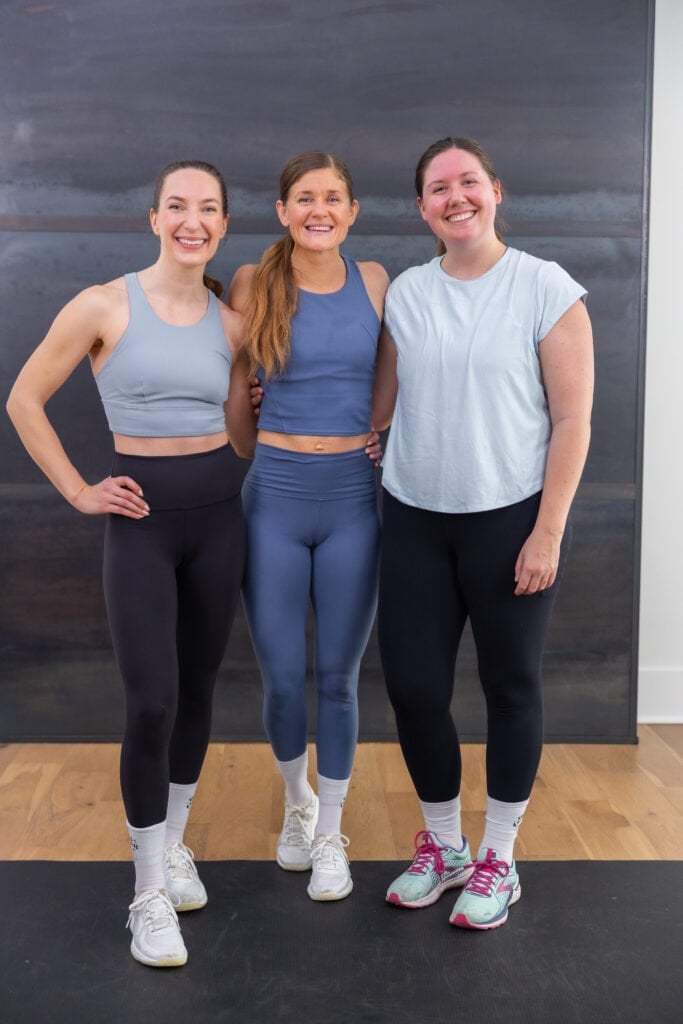
Three women posing after completing dumbbell workout rinte

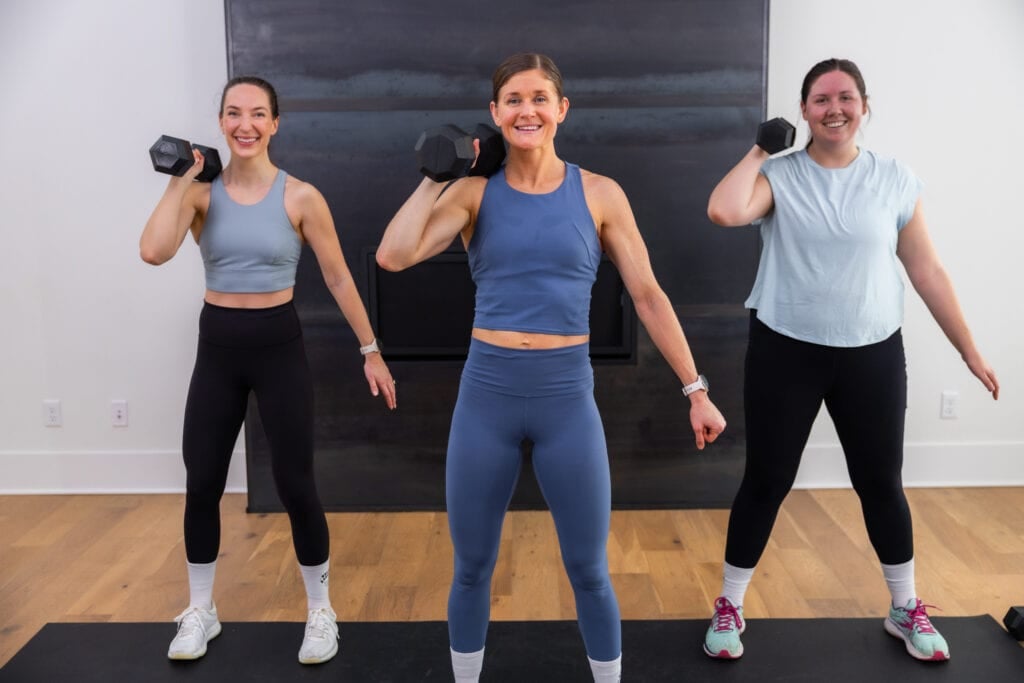
three women performing a dumbbell clean as part of dumbbell workout routine

35-Minute Dumbbell Workout Routine

Build strength and muscle tone with this 35-Minute Full Body Dumbbell Workout Routine.

A complete workout targeting every muscle group in the body: the lower body (quads, hamstrings, glutes, calves, and thighs), upper body (biceps, triceps, back, shoulders, and chest) and core.

Add full body dumbbell workouts like this one to yourhome workout plan 1-2 times per week to build and maintain strength.

Workout Instructions:

Follow along with theguided Full Body Dumbbell Workout Routine on YouTube,led by certified personal trainer, Lindsey Bomgren.

Your Workout Looks Like This:

  • 2 Circuits
  • 4 Exercises Per Circuit
  • Time Drop Format(set one is 40 seconds of work, 20 seconds rest; set two is 30 seconds of work, 15 seconds rest; set three is 20 seconds work, 10 seconds rest)
  • Repeat Each Circuit x3 Sets

Workout Equipment:

Medium Pair of Dumbbells. I recommend between 5-25 lbs depending on your fitness level. We used 15 and 20 lb dumbbells in today’s workout.

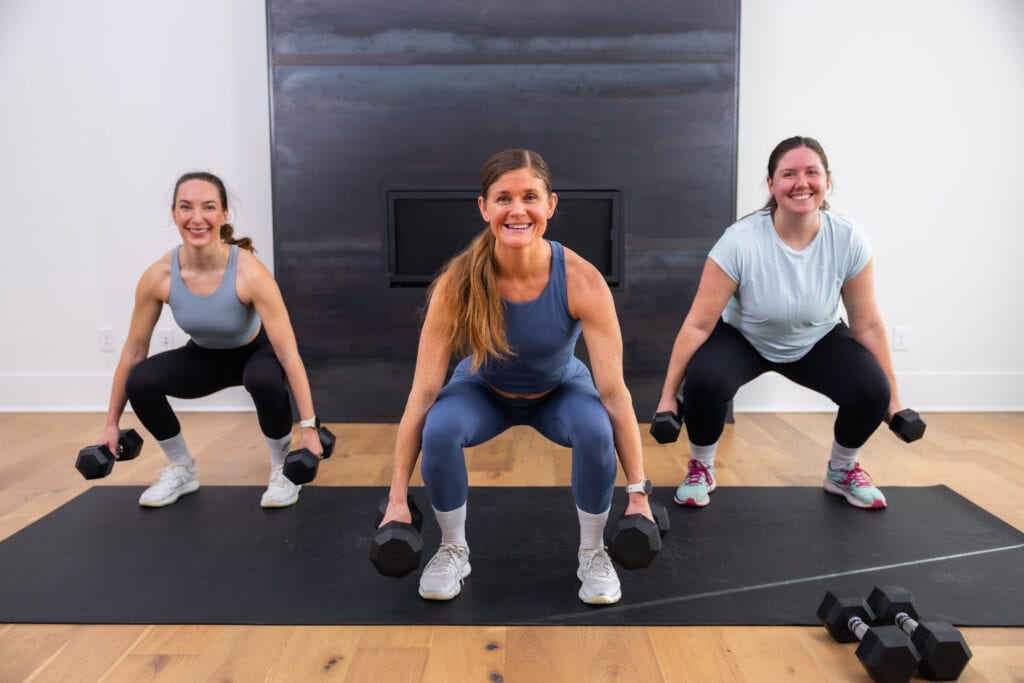
three women performing a squat as part of dumbbell workout routine

Workout Outline

CIRCUIT ONE:

  1. 1.5 Squat, Dumbbell Clean and Overhead Press
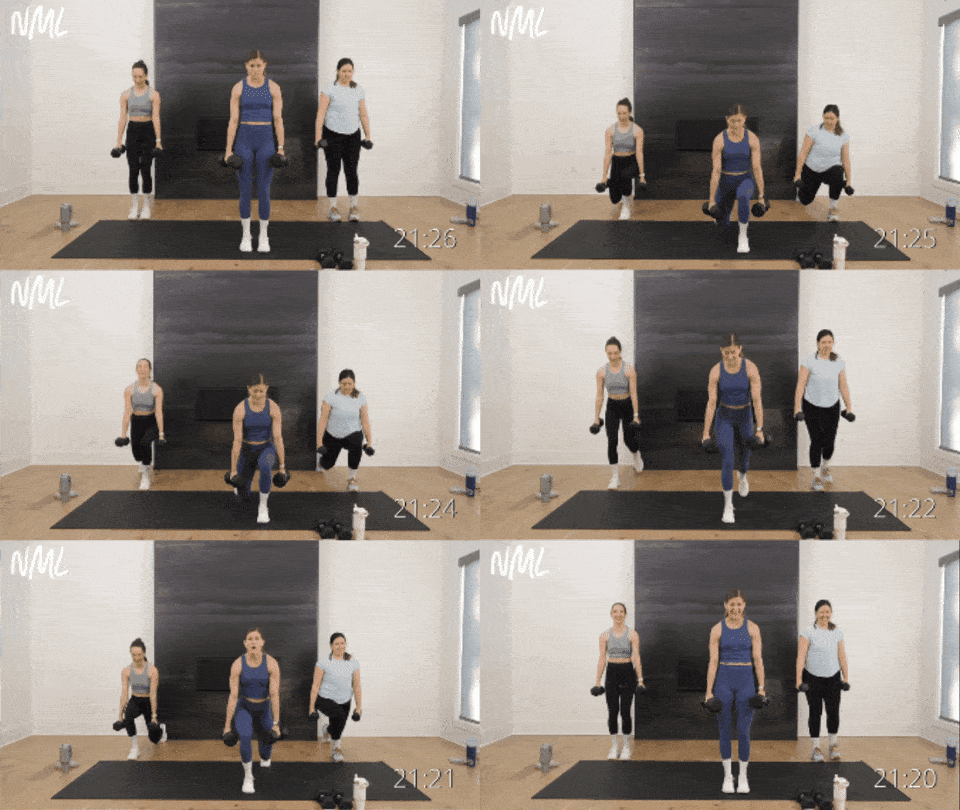
  2. 1.5 Alternating Reverse Lunge
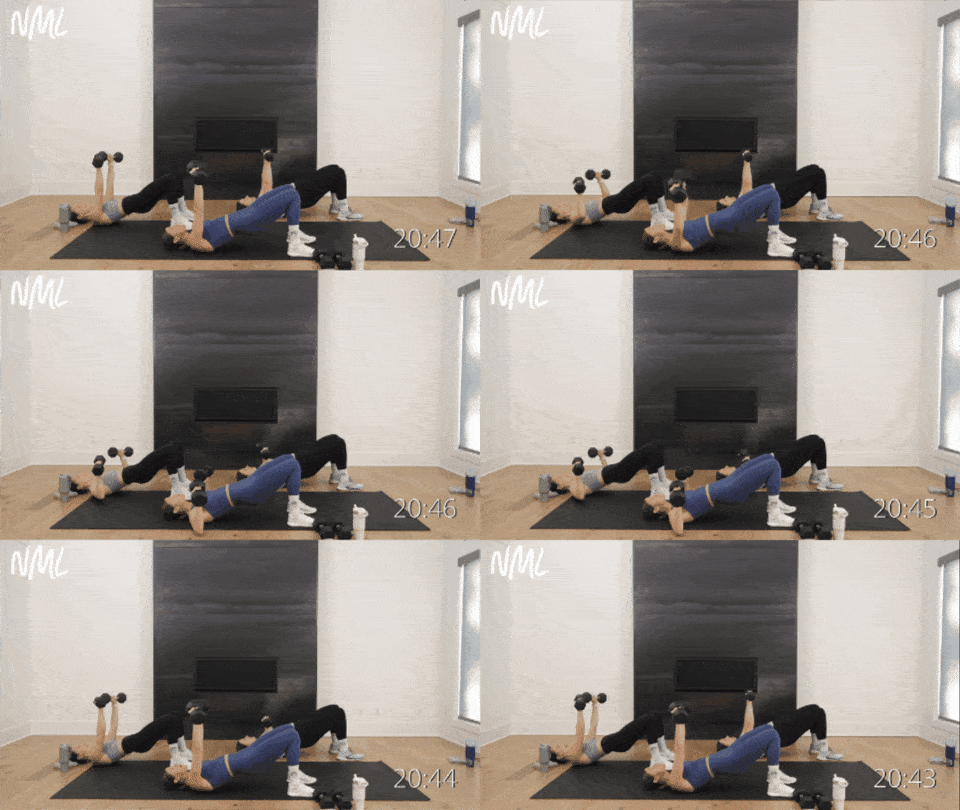
  3. Dumbbell Chest Press and Glute Bridge Hold
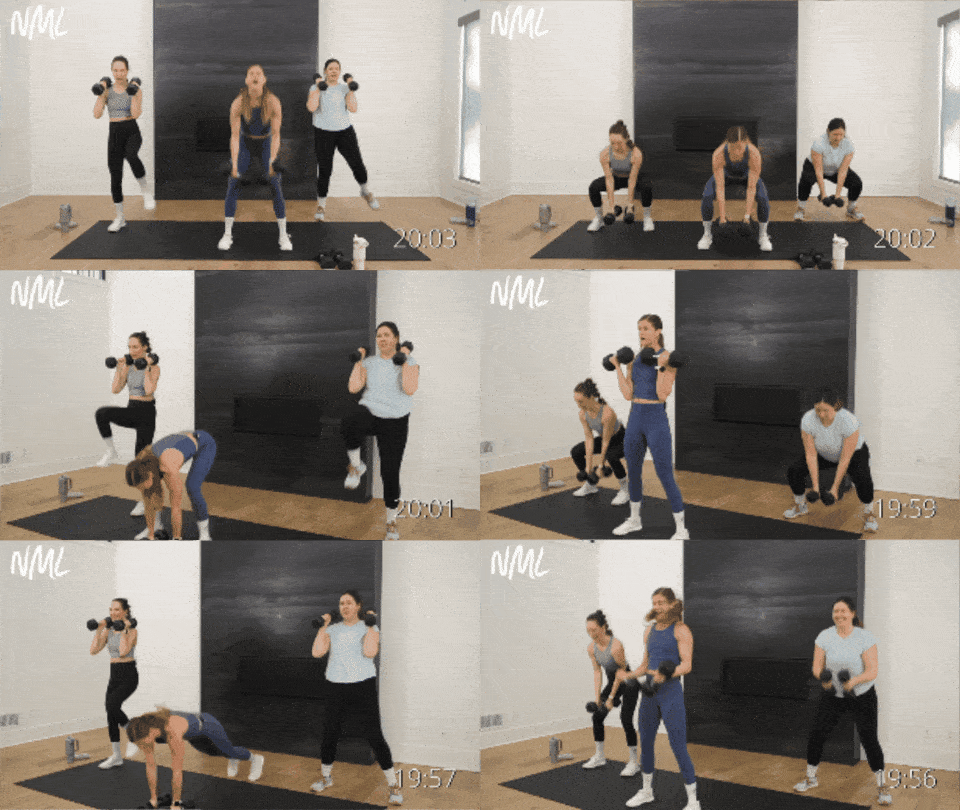
  4. Wide Squat Dumbbell Burpee and Bicep Curl

CIRCUIT TWO:

  1. Staggered Stance Back Rows
  2. Deadlift, Dumbbell Clean and Lateral Lunge
  3. Overhead Tricep Extension and Calf Raises
  4. Alternating Dumbbell Snatch and Two Lateral Step Single Arm Squat Thrusters

4 Best Dumbbell Exercises

Dumbbell Squat, Clean and Overhead Press

Targets: Legs, glutes, quadriceps, hamstrings, hip flexors, adductors (inner thighs), shoulders and core.

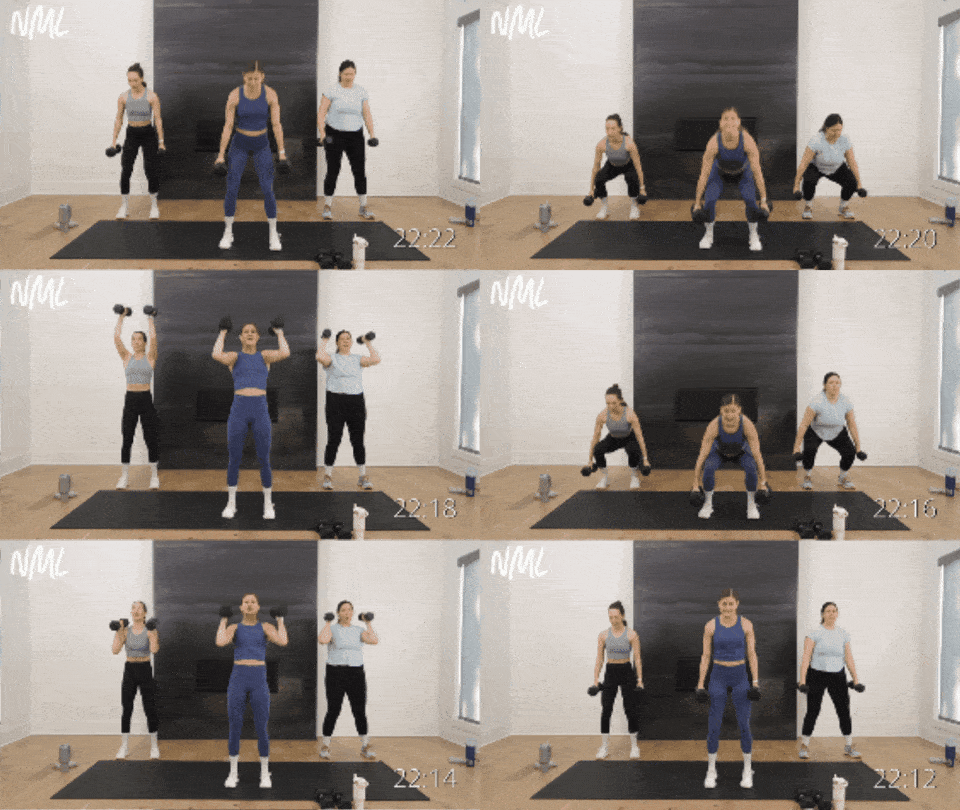
three women performing a dumbbell squat, clean and press as part of dumbbell workout routine

How To Do Dumbbell Squats, Dumbbell Cleans and Overhead Presses

  1. Stand with your feet shoulder width apart or slightly wider. Hold a dumbbell in each hand at your sides.
  2. Inhale as you bend your knees and sit your hips back (as if sitting down in a chair). Aim for 90 degree bends at each knee, focusing on pushing your knees out (not letting them cave in). Keep your torso in an upright position.
  3. Hold a low squat position, then pulse your hips up and down two to three inches, performing an additional half-squat.
  4. Exhale as you press through your heels to stand tall, driving your hips forward to return to standing position.
  5. As you stand, ‘clean’ the dumbbell up towards your shoulders. Think about “getting under” the dumbbells to catch them at shoulder level — this is a dumbbell clean.
  6. Hold the dumbbells at your shoulders, then press the weights overhead, performing a dumbbell shoulder press.
  7. Slowly and with control, lower the dumbbells first to your shoulders, then to your hips, returning to starting position.

Alternating Reverse Lunge

Targets: The glutes, quads and core.

three women performing alternating reverse lunges as part of dumbbell workout routine

How To Do Alternating Reverse Lunges with Pulses

  1. Begin in neutral standing position, feet shoulder width apart. Hold a dumbbell in each hand at your sides.
  2. Step your left foot back into a reverse lunge, lowering down so both knees form 90-degree angles.
  3. Hold a low lunge position, then perform a lunge pulse by lifting and lowering your hips two to three inches.
  4. Press through your front right heel to drive forward, returning to standing position.
  5. Then alternate, this time stepping your right foot back into a reverse lunge, before driving through your front heel to return to starting position.

Dumbbell Chest Press and Glute Bridge Hold

Targets: Legs, glutes, thighs, hips, hamstrings and chest (pecs, or pectoralis major) muscles.

three women performing dumbbell glute bridge hold with a chest press

How To Do Dumbbell Chest Presses and Glute Bridge Holds

  1. Lie flat on your back with your legs bent at 90 degrees (heels on the ground).
  2. Holding one dumbbell in each hand, fully extend your arms so the dumbbells are stacked over your shoulders, palms facing away from your body.
  3. Drive through your heels, squeezing your butt to lift your hips up toward the ceiling. Perform an isometric hold at the top of your glute bridge.
  4. Then, bending at the elbows slowly lower the dumbbells towards your chest (chest puffed out and weights in line with nipples). I recommend thinking about lowering your elbows at a 45-degree angle rather than “goal-posting” your arms to protect your shoulder joints.
  5. Then exhale, pushing the dumbbells back overhead to return to the starting position.

Wide Squat Dumbbell Burpee and Bicep Curl

Targets: Legs, glutes, hamstrings, hips, calves, low back, shoulders, abs and core.

The burpee is one of the most famous compound exercises, or exercises that target multiple muscles at once.

three women performing dumbbell burpees with a wide bicep curl

How To Do Wide Squat Dumbbell Burpees and Bicep Curls

  1. Stand with feet slightly wider than shoulder-width apart. Hold a set of dumbbells between your legs, palms facing in towards each other.
  2. Bend your knees as you lower your hips towards the ground, performing a wide squat. As you lower your hips, lower the dumbbells towards the floor, placing them on the ground between your feet.
  3. Then, keep your hands on your dumbbells as you step or jump your feet back, finding a high plank position. Shoulders are stacked over wrists, core engaged.
  4. Jump your feet in, landing softly outside the dumbbells in a low squat position.
  5. Then, press through your heels to stand tall, pulling the dumbbells up your body as you stand.
  6. Bend your elbows to curl the dumbbells up to shoulder height, performing a bicep curl.
  7. Then, slowly and with control, lower the dumbbells to your hips, returning to starting position.

Modification: Perform a dumbbell squat, clean and alternating knee drive.

Dumbbell Workout Routine FAQs

Can I Build Muscle With Only Dumbbells?

Yes!Dumbbell exercisesare an effective way to add resistance training to your workouts and build muscle. Compared to using gym machines (such as a leg press machine or lat pull down machine), dumbbells engage more of the smaller, stabilizing muscles in the lower body, upper body and core. They also allow you to strength train in multiple planes of motion, mimicking real life movement patterns.

What Is A Good Dumbbell Workout Routine?

The best dumbbell workout routines include a combination of upper body workouts, lower body workouts, full body workouts, core workouts, and mobility workouts. Beginner workout routines may focus on three days of training a week, while more advanced split training workout plans tend to be structured in five-day workout splits, or training five days per week.

Can You Get A Complete Workout With Just Dumbbells?

You can build strength and burn fat exclusively with dumbbell workouts. Dumbbell workouts are also a great way to increase core strength as your body naturally has to stabilize during movements rather than relying on a machine for stability. Examples of the best dumbbell exercises include the dumbbell curl, dumbbell row, dumbbell bench press, goblet squat, deadlift, renegade row and tricep extension.

Pin This Workout: Time-Drop Dumbbell Workout Routine

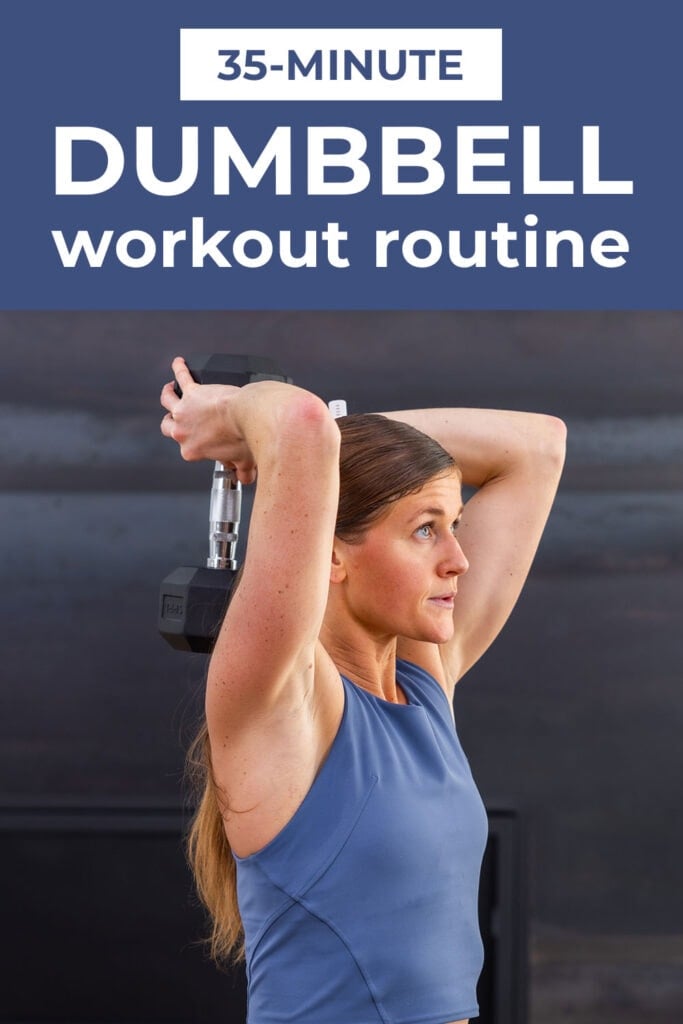
woman performing overhead tricep extensions

This post includes affiliate links. I do earn a commission for products purchased using these links (at no additional cost to you). Thank you for supporting Nourish Move Love, making the content you see on this blog possible.

#35Minute #Dumbbell #Workout #Routine #Video

New visa requirements for Mexicans in Canada hits language education sector

[ad_1]

Languages Canada reports that 12% of students currently studying English or French at their member institutions are from Mexico, making it the association’s third-largest sending country.

Close to 12,000 Mexican students studied English or French in Canada in 2022.

The majority of these students complete short programs and therefore were visa exempt.

However under new rules announced onFebruary 29, Mexican students require visitor visas, unless they hold a US visa or have held a Canadian visa in the last 10 years. The change took effect less than 24 hours after it was announced.

Gonzalo Peralta, executive director of Languages Canada, classified the change as “disruptive” and worries it could have a “real impact on the number of Mexicans who come to Canada” to study.

Approximately 80% of the students at the English Language Centre at Lakehead University in Thunder Bay are from Mexico, according to Ismel Gonzalez, director.

The Centre receives groups of students sponsored by governments or universities to study English or undergo language teacher training.

These are “amazing initiatives”, Gonzalez said, an “opportunity [for] students who do not have the financial resources to do it on their own”.

Gonzalez worries the decision won’t just affect Canadian institutions.

He predicts fewer students will be sponsored to study in Canada, as Mexican institutional funds will now have to be stretched to cover visa fees and the cost for students living outside Mexico City to travel to the capital to give the biometric data required for the visa application.

“[IRCC doesn’t] foresee the consequences of a decision like this. It’s stopping genuine students from accessing education.” he told The PIE.

With these added costs and longer lead time, Gonzalez fears institutions will choose other countries for their study programs.

Founder and President of Heartland International English School in Winnipeg and Mississauga, Gary Gervais, thinks it’s “too early to know for sure” what the effect of this change will be.

“It’s kind of going back to the way it used to be,” he shared, referring to the period between 2009 and 2016 when visas had previously been required.

“It doesn’t seem like a crisis,” he added.

Gervais acknowledged that there was “more work to do with [education] agents and our messaging in Mexico”.

“There’s a new process in place, and it’s not as convenient as before, but it’s not like the doors are closed to students,” he detailed.

For 20 years, Lupita del Toro has “proudly” been sending students from Guadalajara, Mexico, to study languages in Canada via Destinos Educativos, the education agency that she founded and manages.

While Canada has always been the top study destination for her students due to location, educational quality and the warm and “respectful” reception Mexicans receive, she described the situation since the announcement as “chaotic”.

With the Easter study travel period a few weeks away, students have suddenly had to change or cancel plans. She reported that those students with the means to travel to Mexico City to give biometrics are faced with two-month wait times for an appointment.

“They’re very disappointed”

The “hardest part” is that young people with a dream to go to another place, and their parents finally have the money to send them, are unable to obtain visa, she said.

“They’re very disappointed.”

Peralta, Gonzalez, Gervais and Del Toro were all adamant that measures were necessary to curb the number of asylum claims by Mexicans in Canada. However, they all see room for improvement in IRCC’s processes.

“It’s not the what, it’s the how,” stated Peralta, noting that the short notice caught institutions and students off guard.

He urged dialogue and for IRCC to establish “trusted and reliable relationships” and to “work with stakeholders to work out better solutions”.

Gonzalez agreed, saying, “Planning time is needed by all parties involved.”

Gervais underlines the need for continued advocacy, “telling the story of language [education] and [its] importance to success in Canada”.

According to Del Toro, “giving [young people] a language skill and all the experience that they have abroad [gives] so much to our culture”. She hopes for improvements to visa application processes and resources.

“As soon as they can fix this part, things can get better, sooner.”

[ad_2]

Source link

Human Resources Partner/Benefits – HigherEdJobs

[ad_1]


Logo

Serve as a primary benefits investigator, problem solver, and analyzer (ACA tracking, benefits auditing/billing, benefits tracking,). Provide HR support in the areas of leaves of absence and ADA accommodations. The ideal candidate will have a strong background in benefits administration and HR best practices, with a focus on delivering exceptional service to employees. They will collaborate closely with the HR team to ensure that our benefits offerings meet the needs of our diverse workforce.

Position Specific Accountabilities

Manage the administration of employee benefits programs, including group medical, dental, vision, life, AD&D, long term disability, Employee Assistance Program, Health Savings Account, Health Care/Dependent Care Flexible Spending Accounts, voluntary/supplemental benefits, leaves of absence and ADA accommodations.

Coordinate with benefit providers, brokers, and vendors to ensure the smooth implementation and ongoing maintenance of benefits programs.

Manage benefits-related billing issues; investigate and run Workday custom reports to ensure that correct benefit groups are correct on the health and welfare benefits (medical, dental, vision, life insurance, AD&D, supplemental insurance monthly; MetLife voluntary benefits bi-weekly and semi-monthly; WageWorks/COBRA monthly; Bank of America/HSA bi-weekly and semi-monthly, EAP, and Group Legal). Compile benefits data for planning and evaluation purposes.

Conduct regular audits and reviews of benefits data to ensure accuracy and compliance with regulatory requirements. Track and audit full-time and part-time benefits eligibility for purposes of offering health coverage and enrollment throughout the year (including part-time premium payments when applicable). Assist the Director of Benefits with ACA tracking and compliance.

Audit funding for Flexible Spending Accounts (FSAs) and Health Savings Account (HSA) and review integration file for any discrepancies.

Audit domestic partner eligibility.

Manage integration files to carriers and review all file discrepancies. Serve as a liaison between LMU ITS, HRIS team and the carriers.

Manage benefits Open Enrollment setup including participating in utilization meetings, communications, benefits fair and test scenarios in Workday.

During and after Open Enrollment, audit active rates to ensure that new plan rates will deduct correctly from first paycheck in the new year, audit COBRA rates to ensure rates are correct and audit retiree rates before uploading into Workday.

Generate life event reports to ensure accurate deductions are being taken from paychecks.

Stay informed about industry trends, best practices, and regulatory changes related to employee benefits, and make recommendations for program enhancements as needed.

Conduct New Hire Orientation on a rotating basis.

Perform other duties as assigned or requested.

Loyola Marymount University Expectations

Exhibit behavior that supports the mission, vision, and values of the university. Communicate and employ interpersonal actions that models high standards of professional, responsible, accountable, and ethical conduct. Demonstrate a commitment to outstanding customer service.

Requisite Qualifications

  • Typically a Bachelor’s degree in Business Administration, Communications, Organizational Development or related field or equivalent experience. Incumbent will be expected to continue upgrading knowledge, skills, and abilities needed to keep abreast of benefit regulation/policy changes.
  • Minimum 4 years benefit administration experience, encompassing experience managing large amounts of data/information; and process improvement experience.
  • Demonstrated knowledge in the areas of current benefits ‘best practices,’ benefit billing, employee benefit laws, compliance, benefit analysis, leaves of absence and accommodations, and general human resources policy and procedure.
  • Thorough knowledge of federal and state regulations governing benefits administration, including ERISA, ACA, HIPAA, and COBRA.
  • Ability to perform mathematical calculations in computing benefit rates, insurance premiums and adjustments.
  • Excellent communication skills (both written and oral) evidenced by experience in preparing reports and other business communications.
  • Bilingual proficiency in Spanish is preferred.
  • Ability to manage multiple conflicting priorities.
  • Highly developed organizational and analytical skills.
  • Demonstrated computer competency and preferably knowledgeable of HRIS systems.

The above statements are intended to describe the general nature and level of work being performed. They are not intended to be construed as an exhaustive list of all responsibilities, duties and skills required of personnel so classified.

# HERC# #HEJ#

Staff Regular

Salary range

$72,500.00 – $103,314.00 Salary commensurate with education and experience. Loyola Marymount University, a Carnegie classified R2 institution in the mainstream of American Catholic higher education, seeks outstanding applicants who value its mission and share its commitment to inclusive excellence, the education of the whole person, and the building of a just society. LMU is an equal opportunity employer committed to providing an environment free from discrimination and harassment as defined by federal, state and local law. We invite all persons in the full diversity of their being, life experience, and beliefs to apply. (Visit www.lmu.edu for more information.)

[ad_2]

Source link

How universities can prepare graduates for an AI-driven world

[ad_1]

This audio is auto-generated. Please let us know if you have feedback.

Nido Qubein is the president of High Point University, a private nonprofit institution in North Carolina.

When the AI-powered ChatGPT made its big debut, higher education leaders naturally questioned how their students would use high-tech tools like it to write essays and research papers for class.

Just a short time later, we know that’s only a microscopic way that AI is impacting higher education. There’s a bigger question that universities should answer: How can we help students succeed and lead in a complex, AI-powered world after graduation?

I believe the answer is life skills — the kind that outlast and extend beyond inevitable technological changes. We should stop fearing AI and instead teach students to be resilient, self-reliant, compassionate and capable of sound judgment.

We won’t shortchange students on technical skills, but this won’t be enough in the face of AI. AI will eliminate more traditional technical jobs and drive major disruption — some positive, some much less so — in the way we live and work.

Universities must ensure they’re teaching the following skills to students.

Judgment and problem solving

A fast-moving technology with a reputation for making significant errors requires oversight by people with strong critical thinking skills.

I recently had the pleasure of interviewing famed theoretical physicist Michio Kaku. I asked him if it is possible for us to someday have artificial wisdom since we already have artificial intelligence. His answer was telling.

“Intelligence is more than just being smart. It’s being able to put the data together and come up with some conclusions,” Kaku said, “and then from the conclusions calculate the consequence of these conclusions. That gets us into wisdom, and artificial intelligence does not go that far. It simply allows you to compute.”

Experience is the best way to help students hone their judgment and problem-solving abilities.

Nido Qubein

Nido Qubein

Permission granted by Nido Qubein

We need to deliver more experiences sooner for every major and every type of student pursuing a degree. When a student has opportunities to solve a real-world problem, implement a solution to a community issue or create something that betters the lives of others, they flex and build these abilities.

Campuses usually have laboratories and real-world studios where students conduct research, produce creative works, master new technologies, invent new ways of doing things and encounter scenarios that will occur time and time again in the workforce.

We need to give all students access to these resources as well as the freedom they need to be intellectually curious. AI lacks the human element we look for in leaders. Our priority is to develop the entire student, making them well-rounded, global citizens.

Empathy and emotional intelligence

A society going through the type of disruption that AI will bring requires strong leaders who have the ability to put themselves in other people’s shoes and lend a hand to those in need.

In 2022, our university’s Survey Research Center questioned 500 executives at organizations with 2,500 employees or more to examine what leaders are looking for when they hire candidates, as well as what qualities employees need to get promoted and continue to grow in their careers.

The survey confirmed what I have always believed: People skills are in high demand and harder to develop than technical skills. If you consider what Kaku said, that’s even more true in an AI-driven world. AI can guide the technical aspects of something, but only humans can frame it with empathy and emotional wisdom.

A majority of executive leaders, 64%, said they would be more hesitant to hire a new college graduate who lacked emotional intelligence than a person who lacked technical skills. That isn’t surprising when you consider that an even larger majority of executives said it is much easier to develop an employee’s technical skills than their personal initiative and coachability.

Another way to look at the importance of having life skills, such as emotional intelligence, is to consider how you feel in your doctor’s office.

[ad_2]

Source link
8 Best Kettlebell Leg Exercises (Video)


Build a strong lower body at home with the 8 BEST kettlebell leg exercises! From squats to swings, this kettlebell workout builds strength in the big, power-generating muscles in your lower body. Quads, hamstrings, glutes, calves and core – this kettlebell workout for women hits it all.

Quads, hamstrings, glutes, calves and core: we’ll hit it all with the best kettlebell leg exercises.

The kettlebell is one of my favorite pieces of equipment in my home gym — especially for leg day.

If you’re used to dumbbell workouts, kettlebell exercises offer a great way to mix up your home workouts and challenge your muscles in a different way.

Build strength, power and endurance in a low impact way with these 8 kettlebell leg exercises.

No kettlebell? No worries, you can do this entire workout with a single dumbbell (follow Rachel on the left in the workout video).

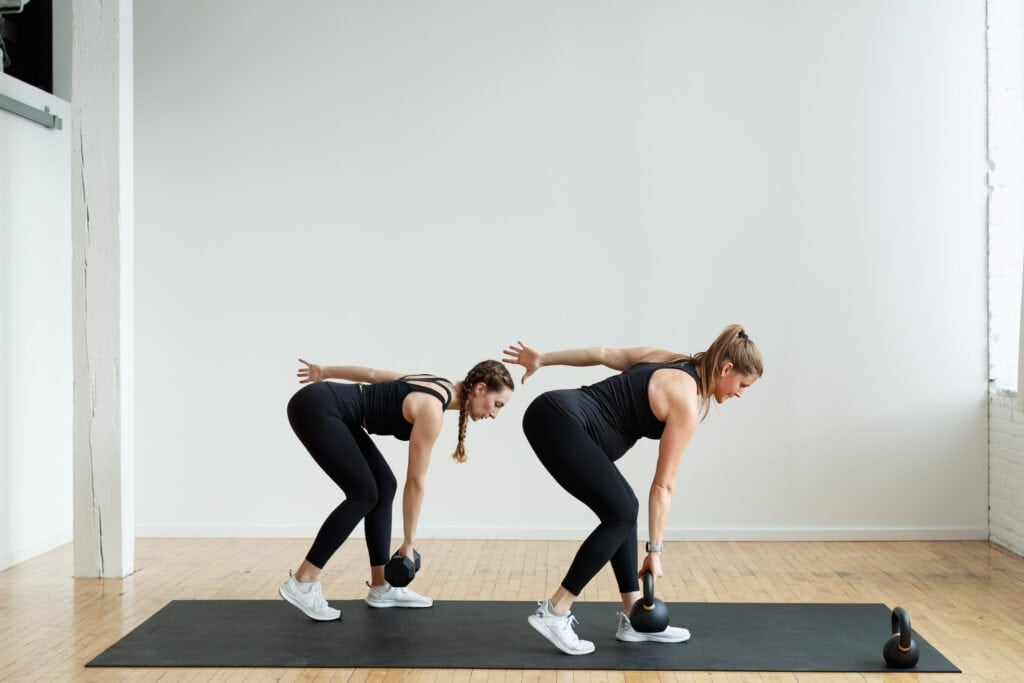
two women performing a staggered kettlebell deadlift in a kettlebell leg workout for women

Build lower body strength and challenge your cardiovascular endurance with this 30-minute kettlebell leg workout.

These are the 8 best lower body kettlebell exercises in a 30-minute workout at home.

Add this kettlebell routine to your weekly workout plan 1-2 times a week to build muscle, increase mobility, and improve endurance.

Workout Equipment:

Medium to Heavy Kettlebell or Singe Dumbbell. We’re using 15-30 lbs.

Workout Instructions:

Follow along with the guided 30-Minute Kettlebell Leg Workout on YouTube, led by certified personal trainer Lindsey Bomgren.

Your Workout Looks Like This:

  • 8 Kettlebell Leg Exercises
  • Timed Intervals (40 seconds of work per exercise, followed by 20 seconds of rest)
  • Repeat All 8 Kettlebell Leg Exercises x2 Sets
  • Finish With A 4-Minute AMRAP Burnout
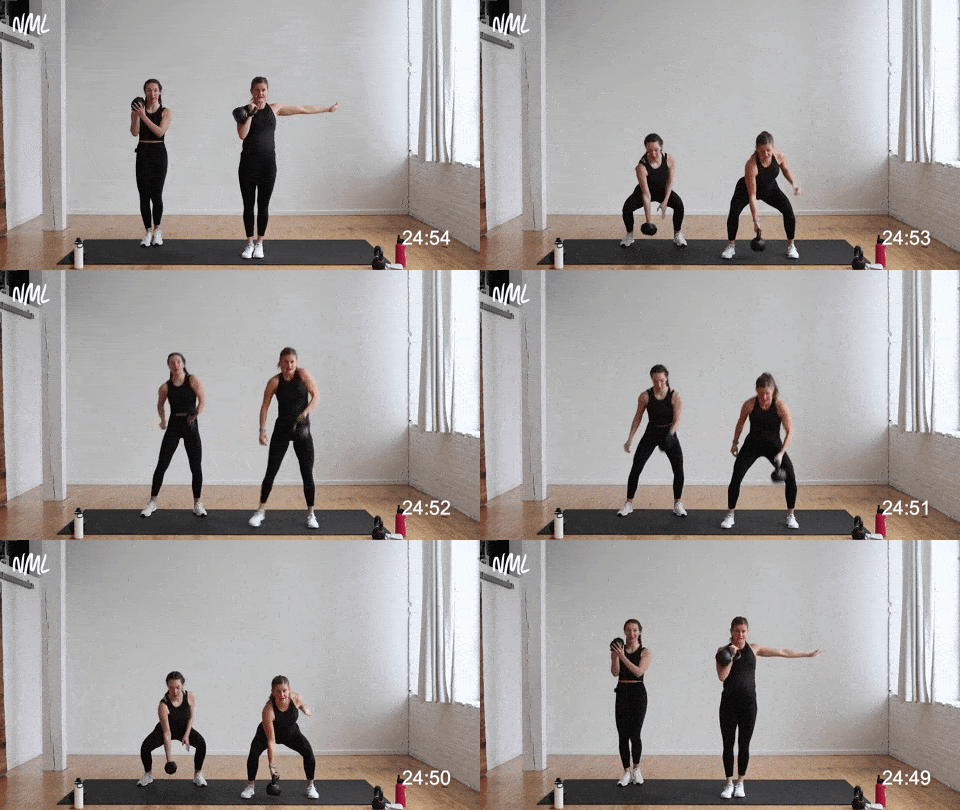
two women performing kettlebell swings in a leg workout at home

Workout Outline

  1. Kettlebell Squats (Kettlebell Pick Up and Set Down)
  2. Hand Switch Squat Pulse and Kettlebell Clean
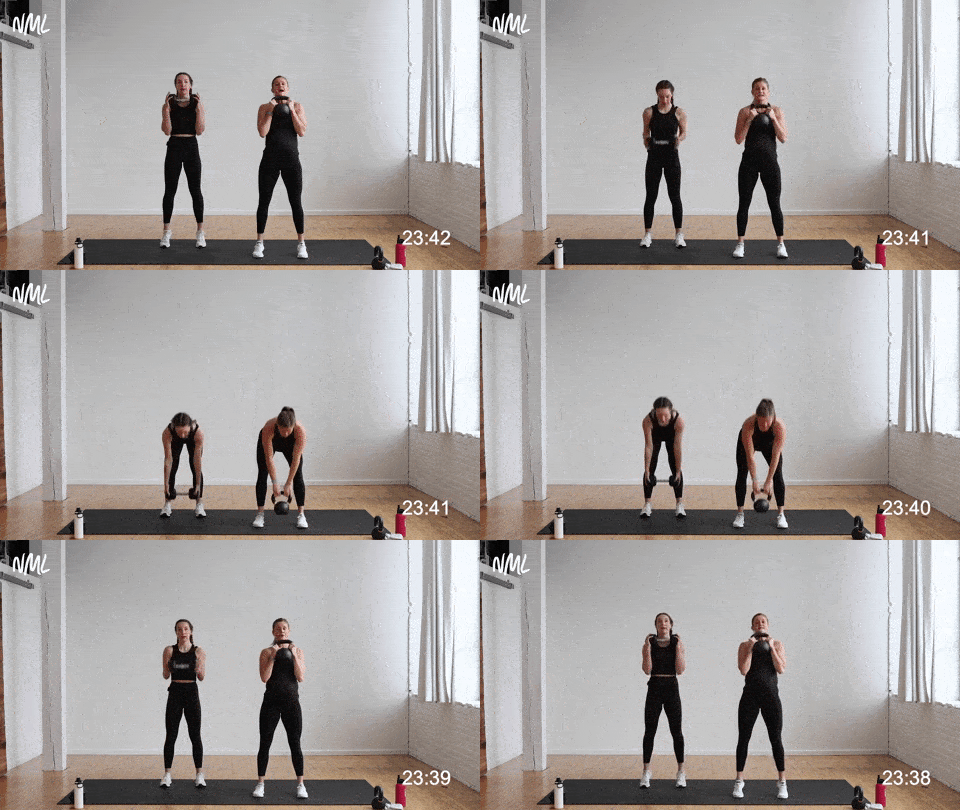
  3. Kettlebell Deadlift and Clean and Calf Raise
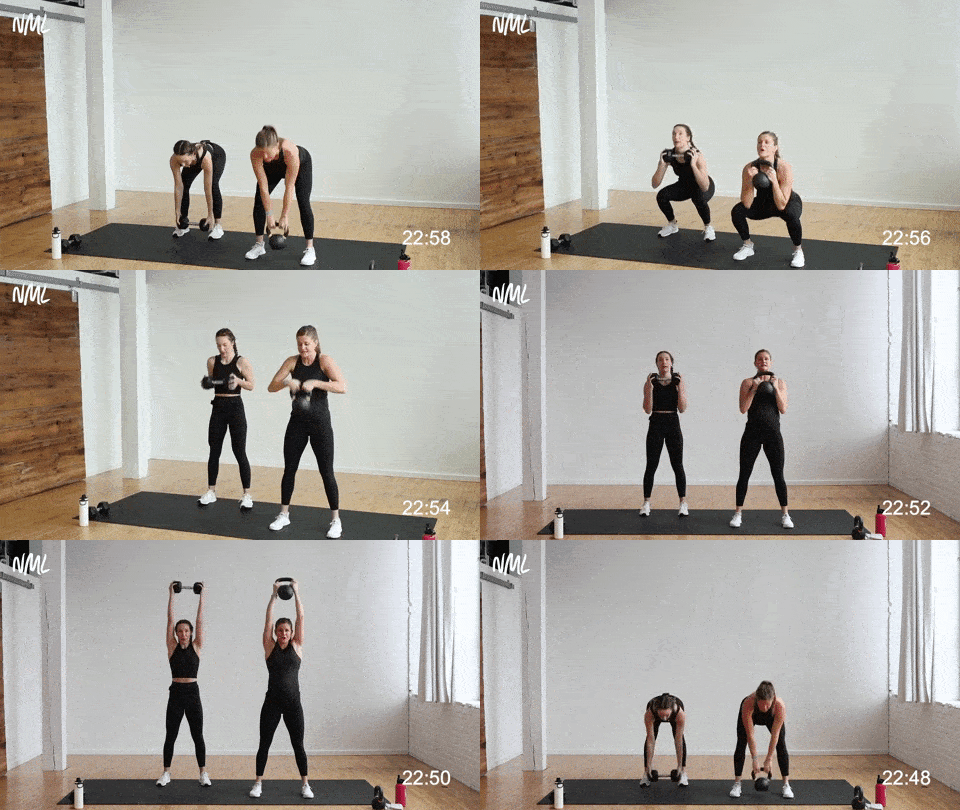
  4. Kettlebell Deadlift and Clean Catch and Front Squat Thruster
  5. Kettlebell Swings
  6. Hand Switch Front/Back Kettlebell Lunge, R/L
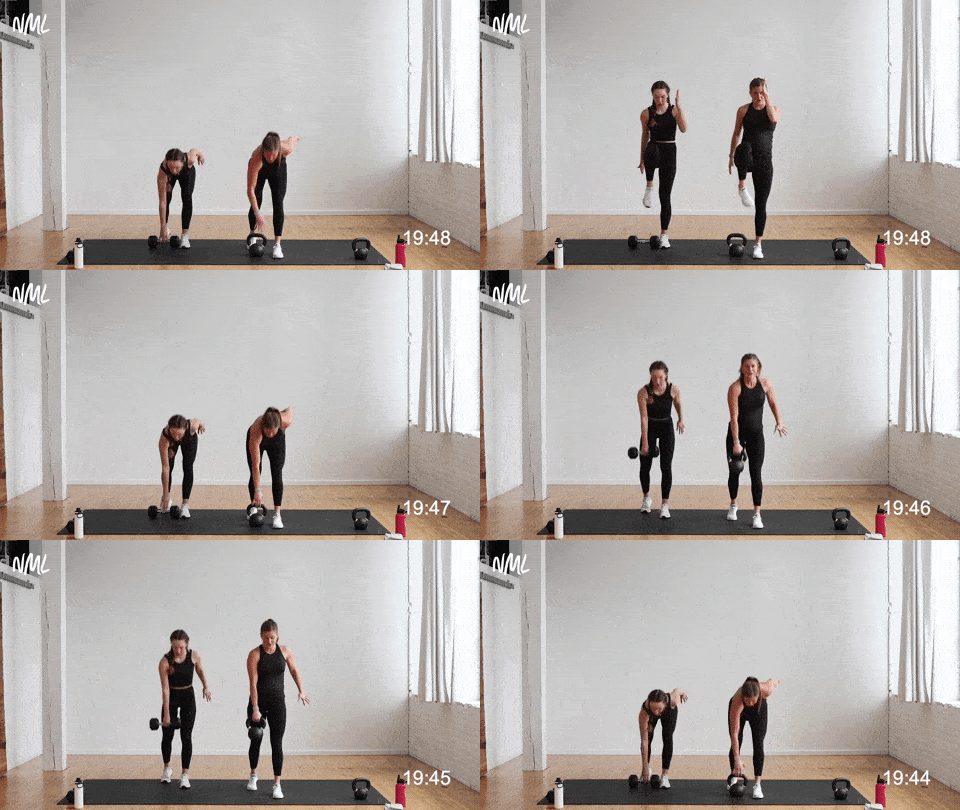
  7. Staggered Deadlift and Power Knee Drive, R/L
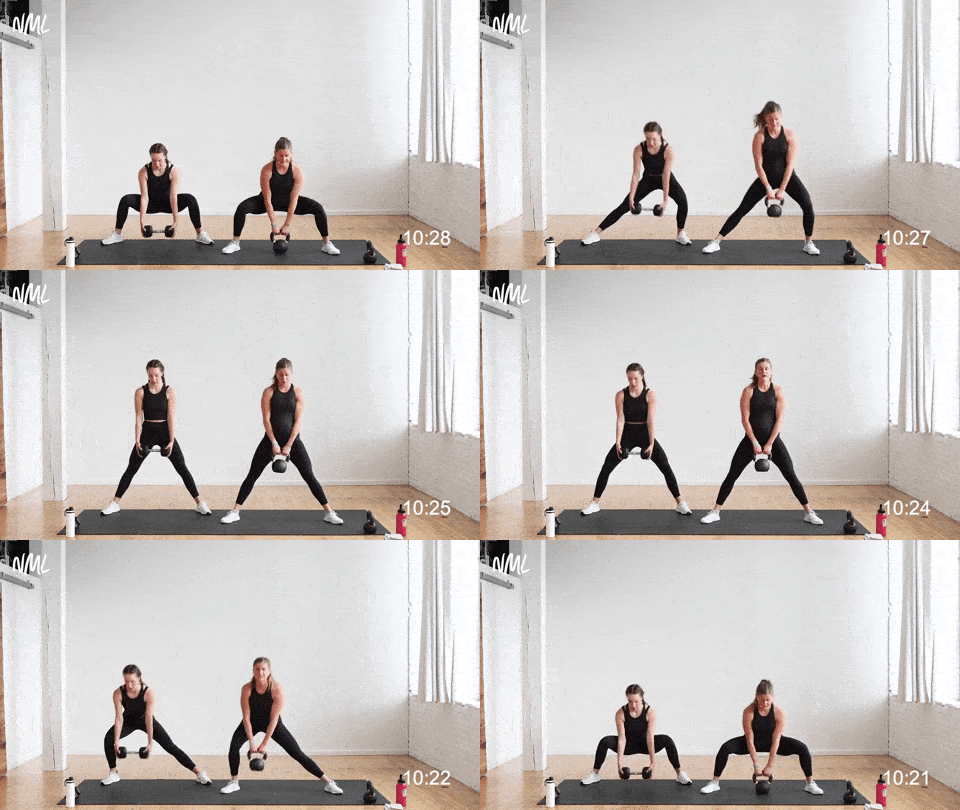
  8. Lateral Squat and Sumo Squat

4-Minute AMRAP Finisher:
(5) Kettlebell Pick Up Squats
(10) Kettlebell Deadlift and Clean Catch and Front Squat Thruster
(15) Kettlebell Swings

8 Kettlebell Leg Exercises

Kettlebell Pick Up Squats

Targets: Glutes, hamstrings, hips, quads, lower back and core muscles.

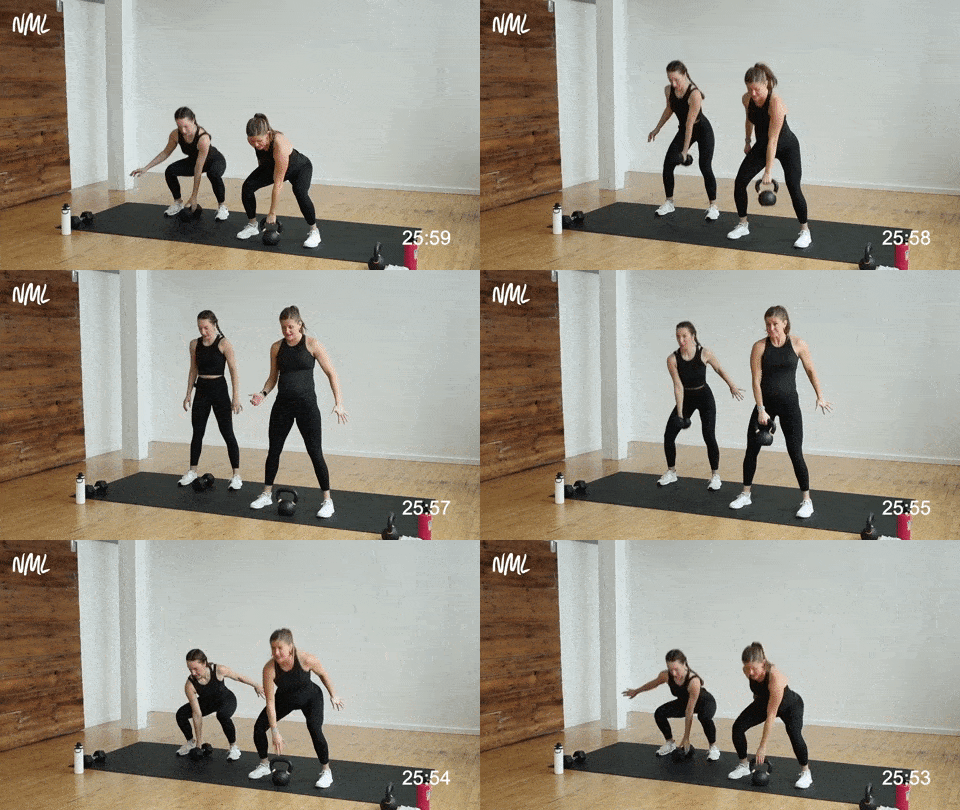
two women performing kettlebell pick up squats by squatting to pick up a kettlebell from the ground

How To Do Kettlebell Pick Up Squats

  1. Start in a standing position, feet hip-width apart or slightly wider, core engaged. Place a kettlebell on the ground between your feet.
  2. Sit your hips down and back into a loaded squat position as you reach your right hand down to pick up the kettlebell.
  3. Drive through your heels to stand tall, pulling the kettlebell between your legs up towards your hips. Then perform another squat to return the kettlebell back to the mat.
  4. Then, repeat the squatting motion, this time picking up the kettlebell with your left hand.

Hand Switch Squat Pulse and Kettlebell Clean

Targets: Glutes, hamstrings, quads, hip flexors, hip adductors (inner thighs), lower back and core muscles.

two women performing a kettlebell squat to kettlebell clean in a kettlebell leg workout

How To Do A Hand Switch Squat Pulse and Kettlebell Clean

  1. Start in a standing position, feet hip-width apart or slightly wider, core engaged. Hold the horn of the kettlebell in your right hand.
  2. With chest up, lower down into a squat, pushing your hips back and down until your hips align with your knees (making a 90-degree angle with your hips and knees). Knees push out towards your outer three toes.
  3. Pulse for a two-count, transferring the kettlebell handle to your left hand on the second pulse.
  4. Then exhale as you drive through your heels, squeezing your glutes to stand tall and bringing your right heel in to tap your left heel.
  5. As you stand, clean the kettlebell up to your left shoulder. Think about driving the weight up with your hips.
  6. Then, step out with your right foot and sit into a low squat and pulse for a two-count, this time transferring the kettlebell to your right hand on the second pulse.
  7. Clean the kettlebell up to your right shoulder as you stand tall, bringing your left foot in to tap your right.

Kettlebell Deadlift and Clean and Calf Raise

Targets: The posterior chain or backside of the body. Specifically targeting the hamstrings, glutes, hips, calves, lower back and core.

two women performing a kettlebell deadlift and clean with a calf raise

How To Do A Kettlebell Deadlift and Clean and Calf Raise

  1. Start standing feet shoulder-width apart and knees slightly bent. Hold the horn of the kettlebell with both hands between your legs.
  2. Hinge forward at the hips, pushing your hips back as you lower the kettlebell down along the front of your body. You should feel a stretch in the back of your legs (hamstrings). Focus on keeping your back in neutral alignment with your neck and shoulders throughout the entire movement (straight line from head to tailbone). Keep a slight bend in your knees to avoid ‘locking out’ the joint.
  3. Then, drive through your heels, squeezing your glutes as you drive your hips forward to return to standing.
  4. As you stand tall, clean the kettlebell up to a front racked position, sliding your hands down the horn as you catch it at your chest.
  5. Then, perform a calf raise; lifting your heels off the ground.
  6. Lower your heels back to the mat to return to the starting position with feet flat on the ground.

Kettlebell Deadlift and Clean and Front Squat Thruster

Targets: Legs, glutes, hamstrings, quads, hips, lower back, chest, shoulders and core muscles.

two women performing a kettlebell deadlift and clean and overhead press or front squat thrusters in a kettlebell leg workout for women

How To Do A Kettlebell Deadlift and Clean and Front Squat Thruster

  1. Start standing feet shoulder-width apart and knees slightly bent. Hold the horn of the kettlebell with both hands between your legs.
  2. Hinge forward at the hips, pushing your hips back as you lower the kettlebell down along the front of your body. You should feel a stretch in the back of your legs (hamstrings). Focus on keeping your back in neutral alignment with your neck and shoulders throughout the entire movement (straight line from head to tailbone). Keep a slight bend in your knees to avoid ‘locking out’ the joint.
  3. Then, drive through your heels, squeezing your glutes as you drive your hips forward to return to standing. As you stand tall, clean the kettlebell up to a front racked position, sliding your hands down the horn as you catch it at chest height. Keep your elbows in tight to your torso.
  4. Hold the kettlebell in the front rack position as you sit your hips back into a low kettlebell goblet squat, aiming to get your thighs parallel to the ground.
  5. Press through your heels to stand tall, pushing the kettlebell overhead as you stand.

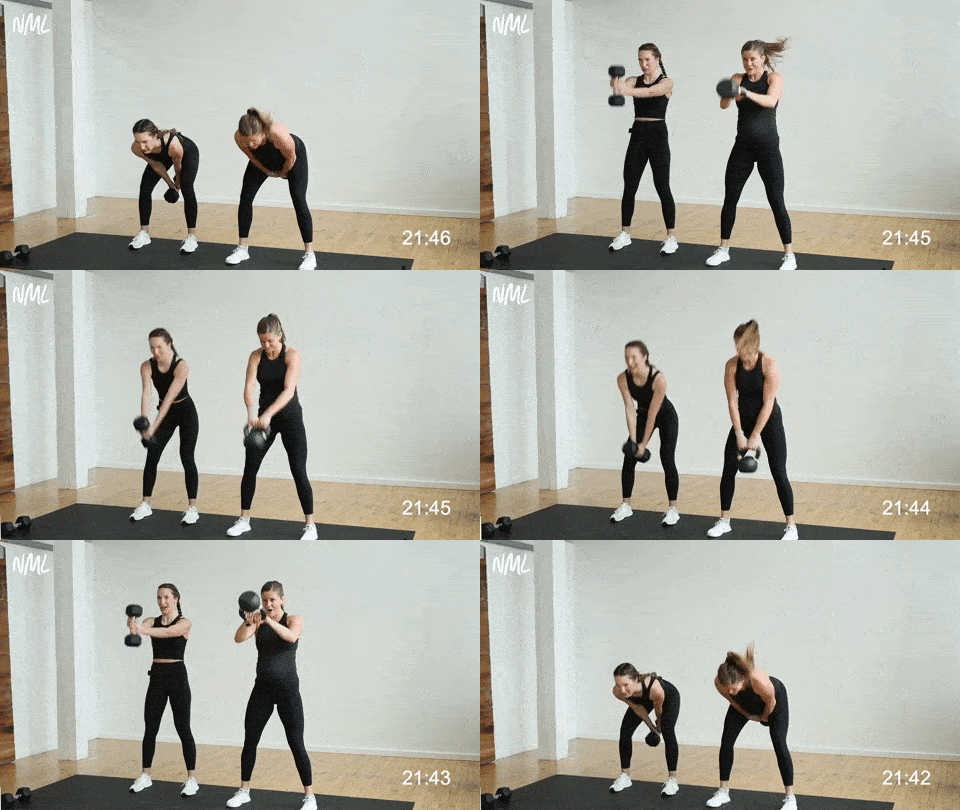
Kettlebell Swings

Targets: Glutes, hamstrings, hips, core, and all the stabilizing muscles in your back and shoulders.

The kettlebell swing is a full body exercise with an emphasis on the hamstrings, glutes and back. A dynamic exercise that will increase lower body strength and raise your heart rate.

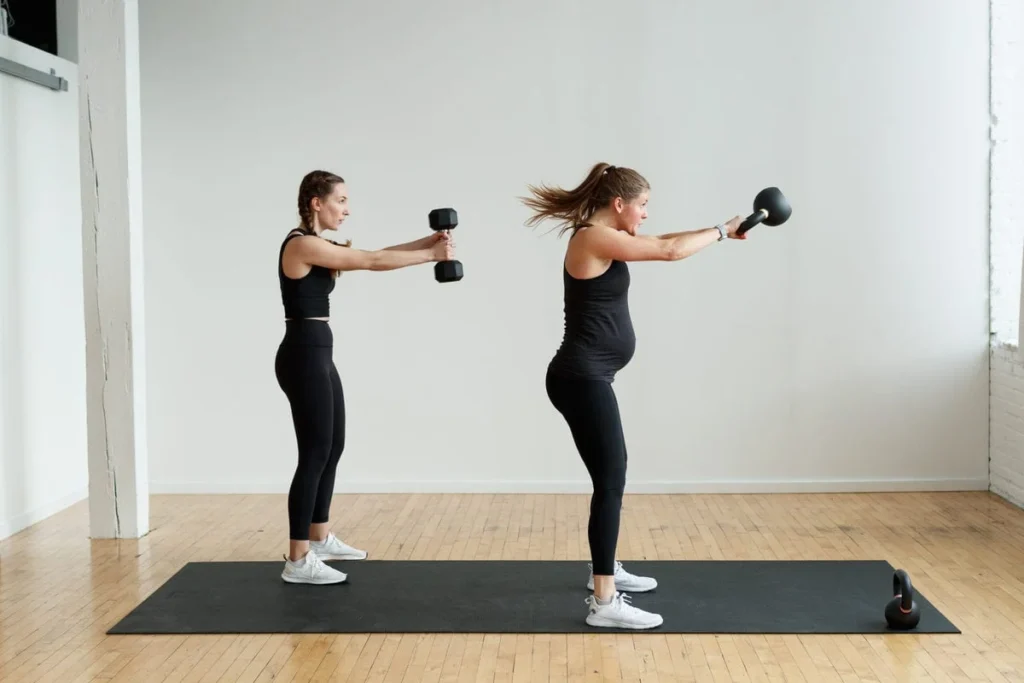
Two women performing kettlebell swings. One woman is using a kettlebell and one women is using a dumbbell for dumbbell swings (best kettlebell leg exercises)

How To Do Kettlebell Swings

  1. Start standing with your feet wider than shoulder-width apart.
  2. Hinge forward at the hips to reach for the kettlebell in front of you. Place your hands on the horns of the bell, palms facing your body.
  3. Then with a slight bend in your knees and weight in your heels, ‘hike’ the kettlebell back between your legs to start the swing movement.
  4. Drive through your heels to stand tall, pushing your hips forward as you squeeze your glutes to swing the kettlebell up to shoulder height. Aim for shoulder height, with arms extended out away from the body. Think long, loose arms (your arms are just a vehicle for moving the bell, your hips and glutes generate the power to move the bell).
  5. As the kettlebell begins to descend, think of catching the weight with your hip hinge, loading the glutes and hamstrings.

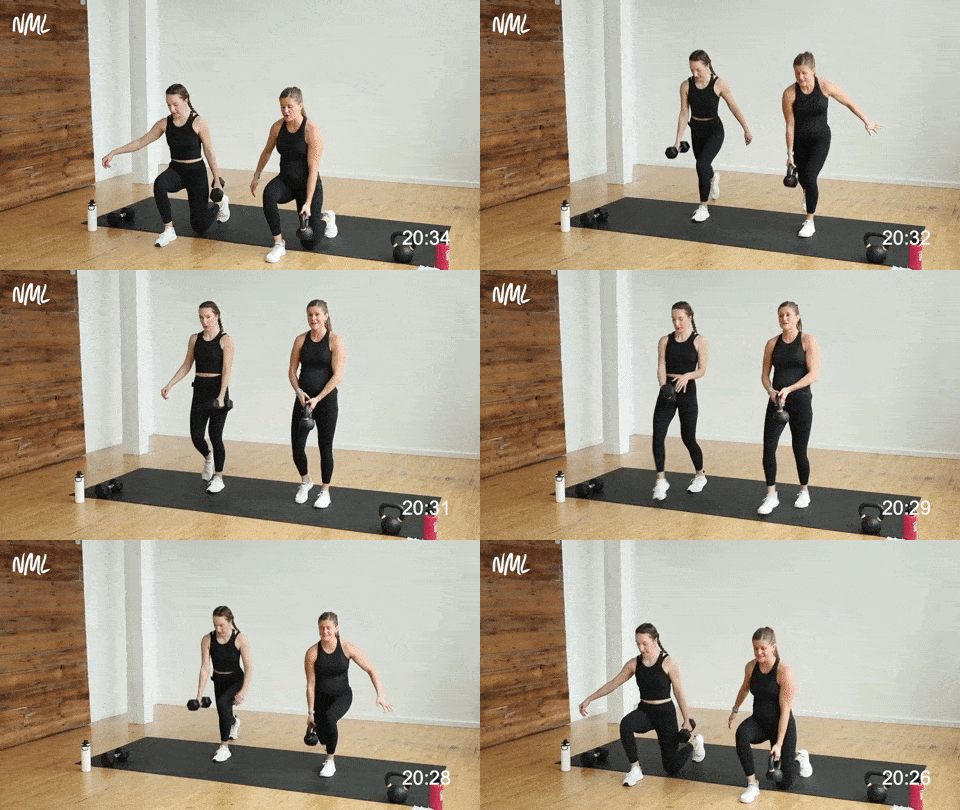
Hand Switch Front/Back Kettlebell Lunge

Targets: Glutes, quads, hamstrings, calves, inner thighs (hip adductors) and outer thighs (hip abductors).

two women performing kettlebell lunges

How To Do A Hand Switch Front/Back Kettlebell Lunge

  1. Stand with your feet hip-width apart, knees slightly bent. Hold a kettlebell in your right hand at your right side.
  2. Step your left leg forward to perform a front lunge. Dropping your back right knee towards the mat, aiming for 90-degree bends in both knees. Then, drive off your front, left foot to return to standing.
  3. Transfer the kettlebell to your left hand, then step your left foot back and lower your back left knee down towards the mat into a reverse lunge.
  4. Then drive through your front, right foot to stand tall as you step your left foot forward to meet your right foot; returning to the starting position.
  5. Repeat this forward and reverse lunge pattern. Switch sides for the second set.

Staggered Deadlift and Power Knee Drive

Targets: Hamstrings, glutes, hip flexors, lower back and core muscles.

two women performing a kettlebbell staggered deadlift and knee drive

How To Do A Staggered Deadlift and Power Knee Drive

  1. Start in a standing position, feet hip-width apart or slightly wider, core engaged. Stagger your stance, so your left foot is slightly behind your right foot. Place the kettlebell in front of your left foot.
  2. Hinge at the hips as you reach down to pick up the kettlebell, pressing through your front right heel to stand tall, pulling the kettlebell up along your thigh.
  3. Perform another deadlift, pushing the hips back as you lower the kettlebell to the ground and release the handle.
  4. Then, drive your back left knee up towards your chest, performing a power knee drive.
  5. Return your left foot to the mat behind your kettlebell and repeat, hinging at the hips to pick up the kettlebell.

Lateral Squat and Sumo Squat

Targets: Mainly the guteus medius, or outer glute that controls hip movement and side-to-side movements. Also involved are the quads and inner thighs (or adductors).

two women performing a lateral lunge to sumo squat with a kettlebell

How To Do A Lateral Squat and Sumo Squat

  1. Start with your feet wider than your hips in a wide squat stance. Knees and toes point forward (or toes just slightly turned out away from your body). Hold the kettlebell horn with both hands between your legs.
  2. Perform a lateral squat on the right by shifting your weight into your right heel as you push your hips back, bending your right knee while leaving your left leg straight. Think of performing a single leg squat with your right leg while your left leg remains straight.
  3. Drive through your right foot to reverse the movement, pushing you back up to center.
  4. Then, bend your knees to lower down into a sumo squat, pushing your knees out towards your pinky toes as you drop your hips parallel to your knees.
  5. Pull your thighs together as you stand tall, returning to standing.
  6. Then, perform a lateral squat on the left, shifting your weight into your left heel and bending your left knee while leaving your right leg straight.
  7. Drive off your left foot to return to center, and perform another sumo squat.
  8. Repeat, alternating each lateral squat with a sumo squat.

Kettlebell Leg Exercises FAQs

Can You Build Strong Legs With Kettlebells?

Yes! The kettlebell is one of the most versatile pieces of gym equipment and lends itself well to compound leg exercises that engage multiple leg muscles at once. Kettlebells also have an offset center of gravity compared to a dumbbell or barbell. This means that your muscles have to do the work of moving the weight AND stabilizing it, which increases the intensity. They’re a versatile tool for building muscle and burning fat.

What Are The Best Kettlebell Leg Exercises?

The best kettlebell leg exercises are compound exercises that engage several muscle groups at once. These include hip hinges/deadlifts, kettlebell squats, lunges, cleans and kettlebell swings. The most effective leg workouts include a combination of these exercises.

What Are The Benefits Of Kettlebell Training?

Kettlebell workouts provide full body strength, cardio conditioning, balance, stability, flexibility and mobility all in one workout. They offer a great way to get a high-intensity workout in a low impact way.

Pin This 30-Minute Kettlebell Leg Workout for Women

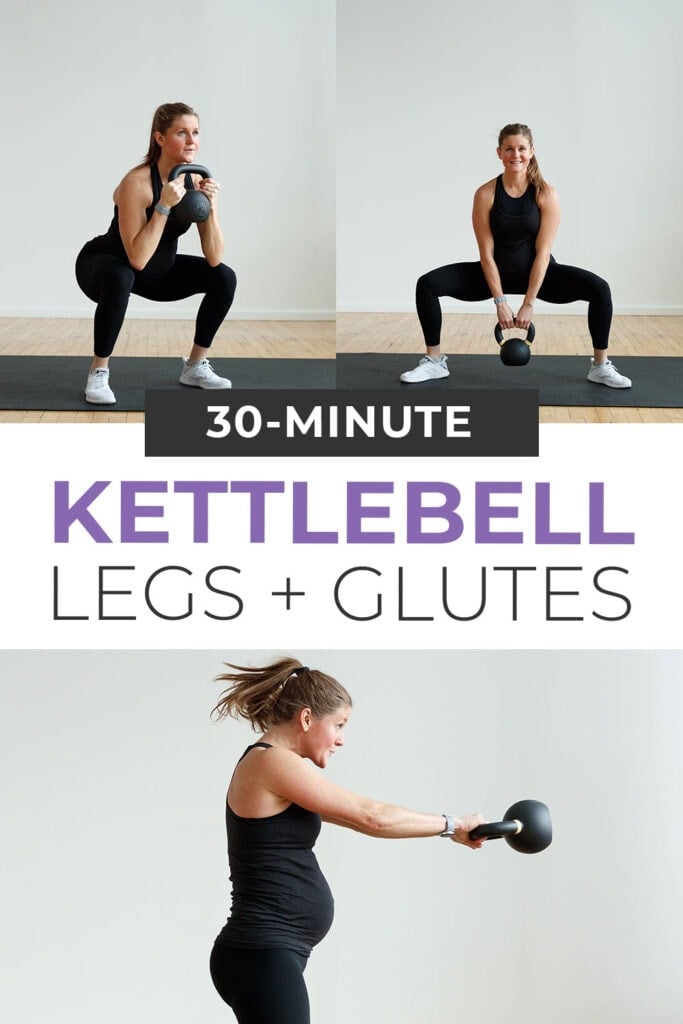
30-Minute Kettlebell Legs and Glutes Workout for Women pin for pinterest

This post includes affiliate links. I do make a small commission for products purchased using these links (at no additional cost to you). Thank you for supporting Nourish Move Love, making the content you see on this blog possible.

#Kettlebell #Leg #Exercises #Video

Optical Sales Associate – HigherEdJobs

[ad_1]


Logo

UIW Mission

University of the Incarnate Word is a Catholic institution that welcomes to its community persons of diverse backgrounds, in the belief that their respectful interaction advances the discovery of truth, mutual understanding, self-realization, and the common good.

Position Summary

The Optical Sales Associate provides optical support for the University of Incarnate Word’s Rosenberg School of Optometry (UIWRSO) clinical network.

This position is primarily responsible for assisting with frame and lens selection, optical orders, fitting, and dispensing of spectacles and processing of invoices and insurance claims.

The Optical Sales Associate reports to the Assistant Optical Manager-Bowden.

Benefits

UIW has been identified year after year as one of the nation’s Great Colleges to Work For based on employee feedback. UIW offers an outstanding benefits package for full-time employees that includes medical, dental, vision, flexible spending accounts, numerous paid holidays, vacation and sick leave. Tuition benefits include UIW tuition waivers, tuition exchange programs and Brainpower Connection discounts for employees and dependents. Retirement benefits include 403b retirement plans with a 7% employer match, plus a retirement health solution. We also offer employer-paid Life/AD&D, long-term disability, pet insurance, an Employee Assistance Program (EAP), wellness programs, employee discount program, Public Service Loan Forgiveness (PSLF) eligibility and more! Please refer to the Human Resources webpage for additional details on our benefits and eligibility.

Job Duty Name
Optician

Description of Job Duties

  • Provides assistance with selection of eyewear to include fitting and measurements.
  • Collects patient financial and demographic information.
  • Determines eligibility for insurance materials and provides patients with guidance on appropriate selection.
  • Reviews lab orders and invoices for accuracy prior to submission for payment.
  • Processes invoices and insurance claims.
  • Verifies the accuracy of all incoming eyewear orders to ensure quality within the guidelines of applicable ANSI standards.
  • Cut lenses for frames with the edger as needed.
  • Dispenses eyewear using proper optician protocols.
  • Performs necessary adjustments to eyewear for proper fit.
  • Maintains the dispensary.
  • Performs routine maintenance and upkeep of optical equipment.
  • Manages inventory in accordance with protocols.
  • Provides guidance and instruction to optometry interns on how to operate a successful optical dispensary to include performing quality checks on orders taken by interns.
  • Performs all other duties as assigned.

Knowledge Skills and Abilities

  • Strong customer service skills.
  • Strong communication and organizational skills.
  • Ability to work collaboratively with others to achieve shared goals.
  • Ability to provide quality care to customers.
  • Ability to demonstrate sound judgment and attention to detail.
  • Ability to maintain confidentiality at all times.
  • Ability to work well under pressure.
  • Ability to work effectively with individuals from diverse communities and cultures.
  • Employee shall adhere to all applicable rules and regulations of the University, the Conference, and the NCAA.

Required Education

High School Diploma or equivalent.

Required Work Experience

  • At least two (2) years of work experience as an Optician in optical dispensing.
  • Experience working with electronic medical records.
  • Experience in a work setting with medical office procedures and HIPAA compliance.

Preferred Qualifications

  • Prior experience as an Optician in a teaching institution or private practice.
  • ABO Certification.
  • Fluency in Spanish.

Required Certifications, Licenses or Registrations

  • Must have a valid driver’s license with the ability to be insured through UIW’s vehicle insurance carrier.
  • Must be at least 21 years of age.

Work Hours

  • This position is primarily located at 2547 E. Commerce Street, San Antonio, TX 78203.
  • The work hours for this position area Monday-Friday 9am-6pm and one Saturday
  • per month 9am-4pm.
  • Employee will have Sunday and one day off during the week (TBD) when scheduled to work a Saturday.
  • UIWRSO personnel will be subject to the leave and holiday policies of the School of Optometry and its clinical services, which may differ from those of UIW.

Physical Demands

None specified.

Posting Number: AS1906PO

Number of Vacancies: 1

Job Type: Full Time

Job Category: Staff (non-exempt)

Desired Start Date: 03/01/2024

Reports to: Assistant Optical Manager

Salary: 30,00-32,000

Open Date: 02/23/2024

Open Until Filled: Yes

EOE

UIW is committed to a policy of equal opportunity in employment, without regard to race, color, sex, sexual orientation, citizenship status, national origin, age, marital status, disability, genetic information, gender identity or expression, veteran status, pregnancy, and religion (except in limited circumstances when religious preference is both permitted by law and deemed appropriate as a matter of University policy).

Title IX

This position is considered a “Responsible Employee” under Title IX federal regulations and “Mandatory Reporter” under Texas state law and the UIW Sexual Misconduct Policy. As a Mandatory Reporter, this position requires you as the employee to promptly report any incident that you witness or receive information about Title IX violations. These reporting responsibilities are set out in the UIW Sexual Misconduct Policy.

UIW is committed to a policy of equal opportunity in employment, without regard to race, color, sex, sexual orientation, citizenship status, national origin, age, marital status, disability, genetic information, gender identity or expression, veteran status, pregnancy, and religion (except in limited circumstances when religious preference is both permitted by law and deemed appropriate as a matter of University policy).

[ad_2]

Source link