The Indian Institute of Science (IISc) Bangalore is all set to announce the results of the Graduate Aptitude Test in Engineering (GATE) on March 16, 2024. Candidates who appeared in the examinations can check their results on the official website at gate2024.iisc.ac.in. Candidates can check their results on the Online Application Processing System (GOAPS) portal of GATE 2024.
GATE 2024: Results set to be released on March 16 on official website gate2024.iisc.ac.in.
Along with the results, IISc may also release the cut-off details for 2024.
Notably, GATE 2024 was held between February 3 and 11, 2024. After the results are out on March 16, candidates will be able to download scorecards from March 23 to May 31, 2024, on the GOAPS portal.
Candidates with valid GATE scores can seek admission to Master’s programs and direct Doctoral programs in Engineering/ Technology/ Science/ Architecture/ Humanities, as well as Doctoral programs in relevant branches of Engineering/ Technology/ Science/ Architecture/ Humanities in the institutions supported by the Ministry of Education and other Government agencies.
Job Family:
STAFF – Supoort Non- Exempt (SNE) Grade: 08 $16.69Salary: $16.69 – $20.20 Department: Animation & Game Development Reports To: Department Chair, Director or Program
Manager Closing Date: April 21, 2024 FLSA Status: Non-Exempt First Review Date:
February 28, 2024
Job Summary:
Provides
administrative support to Department Chairs, Directors, and/or Program
Managers.
Duties & Responsibilities:
Checks
voicemail and emails regularly and ensures that emergencies, such as faculty absences are communicated immediately
Acts as or
oversees department receptionist area by answering telephone, transferring calls to the appropriate person and greeting
visitors
Opens, sorts, distributes department mail and prepares outgoing mail
Maintains supervisors appointment
calendar
Creates and maintains office files
Makes copies of correspondence or other documents as required
Maintains
documentation of the operations of the department, which requires preparing and typing a variety of routine correspondence and documents
including statistical reports, minutes, agendas, budget worksheets and requisitions
Responds to student
inquiries
Communicates extensively with various faculty, staff and students
Prepares and/or maintains on-line payrolls for
part-time and full-time personnel
Prepares on-line disbursement requests, requisitions, and leave forms
Maintains and
adheres to College policies and procedures
Handles confidential information
Performs other duties as
assigned
Minimum Requirements:
Associates Degree and one (1) year experience; or two (2) years of experience in advanced clerical
work, including or supplemented by courses in secretarial training or Business courses in high school or college; or a combination of
experience and training
All degrees must be from a regionally accredited institution
Knowledge of spreadsheets, Microsoft
and database software applications and office equipment (i.e., photocopier, printer, fax machine, calculator)
Knowledge of office
practices and procedures
Effective interpersonal skills in order to make sound judgments to decide how duties and responsibilities
are completed between himself/herself and coworkers, the supervisory chain, faculty, staff, and students
Ability to use tact, poise,
patience and courtesy
Ability to type 40 wpm
Ability to pass an MDC Clerical Assessment
Ability to think, reason,
and make sound judgments to decide how duties and responsibilities are completed in compliance with college standards and
guidelines
Ability to read and interpret documents such as safety rules, operating and maintenance instructions, and procedures
manuals
Ability to write routine reports and correspondence
Ability to make arithmetical calculations such as addition,
subtraction, multiplication and division
Ability to multi-task and meet tight deadlines
Ability to speak effectively before
groups of customers or employees of organizations
Ability to work a flexible schedule that may include evening, and weekend
assignments
Ability to work in a multi-ethnic and multi-cultural environment with students, faculty and
staff
Additional Requirements:
The
final candidate is to successfully complete a background screening and reference check process.:
Miami-Dade is an equal access/equal opportunity community college and does not discriminate on the basis of handicap. An official online MDC Employment Application is required. Please visit our web site for application and instructions.
The “4-30-10” Method went viral on TikTok as a way to transform your health, lose weight, build muscle and increase muscle tone. As a fitness trainer I can stand behind this workout trend and thought it was worth creating a free, 7-day, “4-30-10” workout plan.
Strength, cardio, steps and mobility — you get it all in this free 7-day workout plan at home. This free plan follows the 4-30-10 method and includes a daily, guided workout video you can do at home or at the gym.
Plus, this workout plan encourages you to increase your daily protein intake so you can maximize your strength training results.
What Is The 4-30-10 Method?
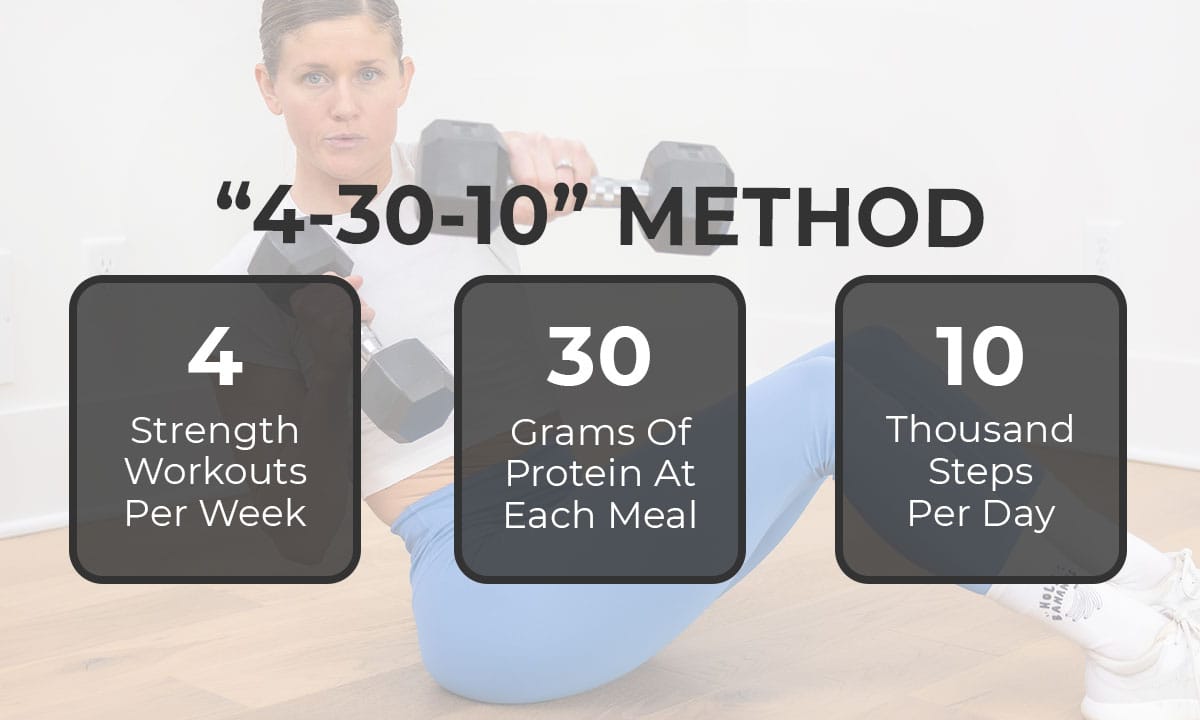
The “4-30-10” method is a way of structuring a weekly workout plan:
4 – four strength training workouts per week.
30 – 30 grams of protein at breakfast, lunch and dinner.
10 – ten thousand steps per day (for reference, 10,000 steps is approximately five miles).
As a certified personal trainer who’s been in the industry for over a decade I’ve seen a lot of fitness trends come and go, but this is one fitness trend I’m willing to get behind. I also got behind the 3-2-8 Workout (three strength workouts, two pilates workouts and 8,000 steps per day).
I believe the “4-30-10” method is effective because:
Four strength training sessions a week is realistic for most fitness enthusiasts.
30 grams of protein at every meal is an important part of any healthy diet and is key to building muscle.
10 thousand steps a day promotes muscle growth and metabolic health.
Overall, I believe the 4-30-10 method is a balanced and comprehensive approach to training.
LET’S GET STARTED
Download Your FREE 4-30-10 Workout Plan Here
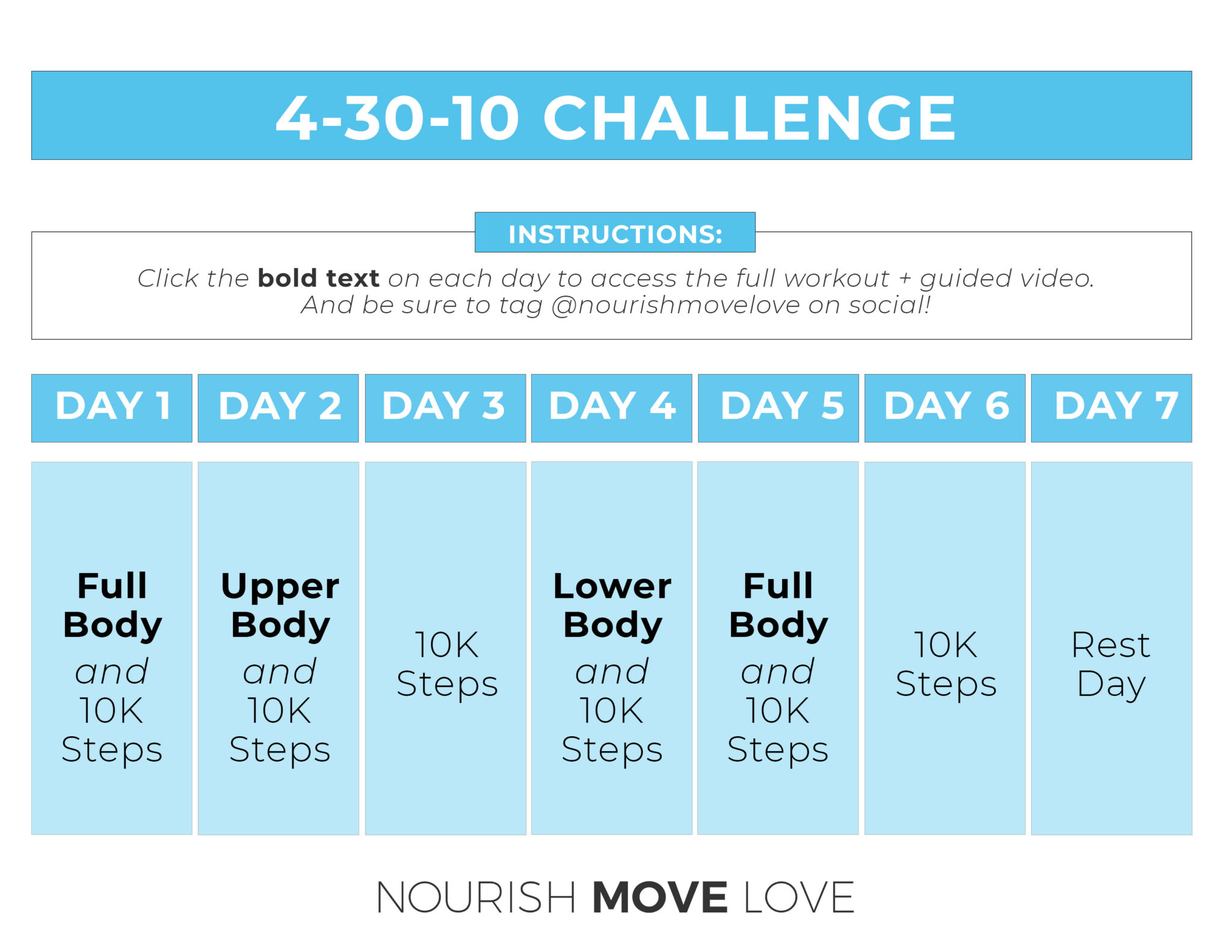
Download the PDF calendar for this 7-day workout plan so you can easily access your daily workouts.
Workout Focus: Full Body (upper body, lower body, abs and core)
Workout Time: 30 Minutes
Equipment: Dumbbells
Day 6: Walk/Jog/Run (Goal: 10K Steps)
Day 7: Rest + Recovery Day
Option to try one of our stretching and recovery workouts:
4-30-10 Workout Program Details
1. Gym Equipment Needed:
A Set of Dumbbells. Most of the daily workouts require a set of dumbbells. Each weight training workout will have a recommended dumbbell weight, usually between 8-20 pounds. You want a weight heavy enough that your last few reps are a struggle, but you are still able to complete the workout with good form.
Kettlebell. You always can sub a single heavy dumbbell instead.
2. Time Requirement:
Strength workouts are 20-30 minutes a day, 4 days per week. You can always take more rest days as needed.
The 4-30-10 method also includes a goal of 10,000 steps per day. This step goal includes all the steps you take during the day, whether it’s just moving around your house or taking a dedicated walk.
3. Cost:
FREE! No sign up needed, this is a FREE Workout Plan.
4-30-10 Method FAQs
What Is The 4-30-10 Method?
The “4-30-10” Method is a fitness approach that combines four strength training workouts per week, 30 grams of protein at every meal, and ten thousand steps per day.
Is A 4-30-10 Workout Split Effective?
Yes, the combination of strength training and getting your daily steps in can be very effective for building muscle, strength, and endurance. This split allows you to train each muscle group multiple times per week, while giving your muscles enough time to recover between workouts.
What Is The Best Workout Method?
That depends on what your personal fitness goals are, but I believe the best workout method is one you can stick to! A well-rounded training routine includes cardiovascular exercise, strength training, mobility, daily steps and proper protein intake to promote overall fitness and well-being.
Why Should I Add More Protein To My Diet?
Protein is an important part of a healthy diet and key for anyone looking to build muscle because your body uses the amino acids in proteins to build and repair muscles. Protein helps your body build lean muscle, reduce muscle loss, speed recovery after exercise, regulate blood sugar, and help you maintain a healthy weight.
How Can I Increase Protein Intake?
The best way to increase your protein intake is to be cognizant of high-protein food sources. For example, greek yogurt has more protein than regular yogurt.
Incorporating protein into your meals doesn’t have to be complicated or time-consuming. By keeping high-protein snacks on hand, and starting your day with a high-protein breakfast, you can easily stabilize your energy levels for the day.
How To Download and Use This 7-Day Workout Plan
More FREE Workout Programs
Share On Pinterest: 4-30-10 Method Free Workout Plan
Note:before beginning any new exercise program you should consult with your physician or midwife. The information provided with this workout challenge is intended for general information and use; it does not include specific, individualized recommendations and is not intended as medical advice. Before you begin any new exercise program Nourish Move Love, LLC recommends that you consult with your physician. Nourish Move Love, LLC primarily educates clients to assume more personal responsibility for their health by adopting a healthy and active lifestyle.
This post includes affiliate links. I do make a small commission for products purchased using these links (at no additional cost to you). Thank you for supporting Nourish Move Love, making the content you see on this blog possible.
The Jawaharlal Nehru University (JNU) has announced that the students’ union elections will be held on March 22, the results of which will be declared on March 24.
The Jawaharlal Nehru University (JNU) will be holding students’ union elections on March 22, 2024, after a gap of four years. (HT file)
The Jawaharlal Nehru University Students’ Union (JNUSU) elections were last held in 2019.
According to the schedule released by JNU’s Election Committee, which is responsible for overseeing the polls, the tentative voter list will be displayed on Monday and will be open for correction till Tuesday.
Students can file their nominations from March 14 and the final list of candidates will be displayed on March 16, an official notice stated.
A University Governing Body Meeting (UGBM) will be held on March 20, followed by the presidential debate wherein the candidates will address other students.
Voting will be held on March 22. The counting of votes will take place on March 24, following which the results will be declared, according to the notice.
Gold steady early Monday after hitting last week’s record high on Friday. Investors now await the latest inflation data for further signals on the timeline of U.S. interest rate cuts.
The U.S. consumer price index is scheduled for release Tuesday with March data. The Federal Reserve closely tracks both labor market and inflation data when determining monetary policy. The monthly U.S. jobs report came in Friday and showed the country added a greater-than-expected 275,000 jobs in February, though the unemployment rate went up.
Gold rallied on the jobs report, reaching a fresh record high. The strong labor market added to speculation that the Fed will cut interest rates soon. Lower interest rates are considered bullish for the yellow metal, making it a more attractive asset for investors. The market is currently pricing in a June start to rate cuts.
Front-month gold futures rose 4.3% last week to settle at $2,185.50 an ounce on Comex after the most-active April contract gained 0.9% Friday. Bullion dropped 0.6% in February after declining 0.2% in January and gaining 0.7% in December. The metal rose 13% in 2023. The April contract is currently down $1.30 (-0.06%) an ounce to $2184.20 and the DG spot price is $2180.50.
Comex gold speculators boosted their net long positions by 63,018 contracts in the week ended March 5 to 131,060, according to the Commitments of Traders report released Friday by the U.S. Commodity Futures Trading Commission.
Geopolitical unrest, particularly the wars in Ukraine and Gaza, have bolstered haven demand for the precious metal in recent months, and central banks in places like China are adding to their holdings. But high prices are also dampening consumer demand in places like Dubai.
About 97% of the investors tracked by the CME FedWatch Tool are betting that the Fed will keep rates unchanged this month, while 3% expect a 25 basis point cut. Most investors tracked by the tool also anticipate the Fed will hold rates steady at the following policy meeting in May. Most are now looking to June for a rate cut.
The central bank has raised interest rates by 5.25 percentage points since March 2022 in an effort to cut inflation, but kept rates unchanged at 5.25% to 5.50% at its last meeting.
Front-month silver futures rose 5.1% last week to settle at $24.55 an ounce on Comex, though the May contract slipped 0.1% Friday. Silver lost 1.2% in February after falling 3.8% in January and dropping 6.1% in December. It ticked up 0.2% in 2023. The May contract is currently up $0.066 (+0.27%) an ounce to $24.615 and the DG spot price is $24.48.
Spot palladium increased 6.2% last week to $1,027.00 an ounce but dropped 2.4% Friday. Palladium fell 4.6% in February after tumbling 11% in January and advancing 8.6% in December. Palladium plummeted 38% last year. Currently, the DG spot price is up $19.20 an ounce to $1048.50.
Spot platinum advanced 2.9% last week to $916.30 an ounce but retreated 1% Friday. Platinum decreased 4.9% in February after falling 8% in January and rising 8.1% in December. Platinum dropped 6.8% in 2023. The DG spot price is currently up $21.40 an ounce to $938.20.
Disclaimer: This editorial has been prepared by Dillon Gage Metals for information and thought-provoking purposes only and does not purport to predict or forecast actual results. This editorial opinion is not to be construed as investment advice or a recommendation regarding any particular security, commodity, or course of action. Opinions expressed herein cannot be attributable to Dillon Gage. Reasonable people may disagree about the events discussed or opinions expressed herein. In the event any of the assumptions used herein do not come to fruition, results are likely to vary substantially. It is not a solicitation or advice to make any exchange in commodities, securities, or other financial instruments. No part of this editorial may be reproduced in any manner, in whole or in part, without the prior written permission of Dillon Gage Metals. Dillon Gage Metals shall not have any liability for any damages of any kind whatsoever relating to this editorial. You should consult your advisers with respect to these areas. By posting this editorial, you acknowledge, understand, and accept this disclaimer.
Gold steady early Monday after hitting last week’s record high on Friday. Investors now await the latest inflation data for further signals on the timeline of U.S. interest rate cuts.
The U.S. consumer price index is scheduled for release Tuesday with March data. The Federal Reserve closely tracks both labor market and inflation data when determining monetary policy. The monthly U.S. jobs report came in Friday and showed the country added a greater-than-expected 275,000 jobs in February, though the unemployment rate went up.
Gold rallied on the jobs report, reaching a fresh record high. The strong labor market added to speculation that the Fed will cut interest rates soon. Lower interest rates are considered bullish for the yellow metal, making it a more attractive asset for investors. The market is currently pricing in a June start to rate cuts.
Front-month gold futures rose 4.3% last week to settle at $2,185.50 an ounce on Comex after the most-active April contract gained 0.9% Friday. Bullion dropped 0.6% in February after declining 0.2% in January and gaining 0.7% in December. The metal rose 13% in 2023. The April contract is currently down $1.30 (-0.06%) an ounce to $2184.20 and the DG spot price is $2180.50.
Comex gold speculators boosted their net long positions by 63,018 contracts in the week ended March 5 to 131,060, according to the Commitments of Traders report released Friday by the U.S. Commodity Futures Trading Commission.
Geopolitical unrest, particularly the wars in Ukraine and Gaza, have bolstered haven demand for the precious metal in recent months, and central banks in places like China are adding to their holdings. But high prices are also dampening consumer demand in places like Dubai.
About 97% of the investors tracked by the CME FedWatch Tool are betting that the Fed will keep rates unchanged this month, while 3% expect a 25 basis point cut. Most investors tracked by the tool also anticipate the Fed will hold rates steady at the following policy meeting in May. Most are now looking to June for a rate cut.
The central bank has raised interest rates by 5.25 percentage points since March 2022 in an effort to cut inflation, but kept rates unchanged at 5.25% to 5.50% at its last meeting.
Front-month silver futures rose 5.1% last week to settle at $24.55 an ounce on Comex, though the May contract slipped 0.1% Friday. Silver lost 1.2% in February after falling 3.8% in January and dropping 6.1% in December. It ticked up 0.2% in 2023. The May contract is currently up $0.066 (+0.27%) an ounce to $24.615 and the DG spot price is $24.48.
Spot palladium increased 6.2% last week to $1,027.00 an ounce but dropped 2.4% Friday. Palladium fell 4.6% in February after tumbling 11% in January and advancing 8.6% in December. Palladium plummeted 38% last year. Currently, the DG spot price is up $19.20 an ounce to $1048.50.
Spot platinum advanced 2.9% last week to $916.30 an ounce but retreated 1% Friday. Platinum decreased 4.9% in February after falling 8% in January and rising 8.1% in December. Platinum dropped 6.8% in 2023. The DG spot price is currently up $21.40 an ounce to $938.20.
Disclaimer: This editorial has been prepared by Dillon Gage Metals for information and thought-provoking purposes only and does not purport to predict or forecast actual results. This editorial opinion is not to be construed as investment advice or a recommendation regarding any particular security, commodity, or course of action. Opinions expressed herein cannot be attributable to Dillon Gage. Reasonable people may disagree about the events discussed or opinions expressed herein. In the event any of the assumptions used herein do not come to fruition, results are likely to vary substantially. It is not a solicitation or advice to make any exchange in commodities, securities, or other financial instruments. No part of this editorial may be reproduced in any manner, in whole or in part, without the prior written permission of Dillon Gage Metals. Dillon Gage Metals shall not have any liability for any damages of any kind whatsoever relating to this editorial. You should consult your advisers with respect to these areas. By posting this editorial, you acknowledge, understand, and accept this disclaimer.
The Academic Advisor I provides academic guidance and support to new and continuing
students in a variety of majors at the Pitt-Greensburg campus, while utilizing a broad knowledge base of the Pitt Greensburg curriculum,
majors, minors, and certificates, as well as technology platforms including PeopleSoft, Canvas, Pathways, and Microsoft products such as
Outlook and Teams. Responsibilities include a) meeting in-person and virtually with students throughout the year regarding a wide range of
topics include enrollment, class and schedule concerns, academic difficulties, long-term planning, referrals to campus resources, and more,
b) initiating open lines of communication with advisees via email, phone, and Canvas, c) assisting with the advisement of special
populations, such as students in specific majors, veterans, and student athletes, d) completing transfer credit evaluations for incoming and
perspective students, e) representing the Academic Advising Center during summer orientation (SOAR) and Admissions events, and f) serving as
a liaison with faculty in specific majors.
Job
Summary
Utilizes basic advising knowledge, theory, and practical experience to serve as an academic
liaison for students to identify academic and career goals, select appropriate courses, and plan for degree attainment. Manages small,
routine projects.
Essential Functions
The Academic Advisor must be able to use a computer and
keyboard and be able to use video communication technology (Zoom, Teams, etc.). Work is frequently conducted by email, telephone, in person,
or using video communication technology. The ability to communicate in a clear and concise fashion is essential.
Physical Effort
The position is primarily sedentary, however, some walking on campus to
attend meetings and/or events is required.
The University of Pittsburgh is committed to
championing all aspects of diversity, equity, inclusion, and accessibility within our community. This commitment is a fundamental value of
the University and is crucial in helping us advance our mission, which includes attracting and retaining diverse workforces. We will
continue to create and maintain an environment that allows individuals to discover, belong, contribute, and grow, while honoring the
experiences, perspectives, and unique identities of all.
The University of Pittsburgh is an Affirmative
Action/Equal Opportunity Employer and values equality of opportunity, human dignity and diversity. EOE, including
disability/vets.
Minimum
Years of Experience Required: No experience required
Will this position accept substitution in lieu of education or
experience: Combination of education and relevant experience will be considered in lieu of education and/ or experience requirement.
Work Schedule: Monday-Friday 8:30a.m. – 5:00 p.m.
Work Arrangement: Monday-Friday 8:30a.m. – 5:00
p.m.
Hiring Range: To be determined based on qualifications
Relocation_Offered: No
Visa Sponsorship Provided: No
Background Check: For position finalists, employment with the University will
require successful completion of a background check
Returning to the Census data, Figure 3 illustrates how inefficiently each state is in converting a new education dollar per student into spending per student on instructional salaries (higher instructional salaries and new instructional hires, including instructional aides). Nationally, only seven cents of each new dollar devoted to education between 2002 and 2020 went to instructional salaries. Massachusetts led the nation in effectively translating new education spending into teacher take-home pay—but even in that case it was only 34 cents of each new education dollar per student.
This lens allows for better apples-to-apples comparisons between states that make varying amounts of new investments in public education. Nebraska, for example, ranks 33rd in the country in revenue growth between 2002 and 2020 and 29th in average teacher salary. But as Figure 3 demonstrates, Nebraska ranks second in the nation during this timeframe by translating 32 cents of each new dollar into higher instructional spending. By contrast Pennsylvania ranks 6th in per-student revenue growth and 10th in average teacher salary. But from 2002 to 2020, the state performed below the national average by only directing five cents of each new dollar to instructional salary spending. Pennsylvania has invested more money into public education than Nebraska over the last two decades and has higher overall teacher pay, but Nebraska has done a much better job at funneling new dollars into the classroom.
High spending growth states generally fare better at converting new funds into instructional salaries. That said, some states with modest spending growth (Ohio, Mississippi) have been more efficient than states with higher spending growth (California, New Jersey) at devoting new funds to instructional pay. And low spending growth states such as Georgia and Missouri shouldn’t be let off the hook, since their new dollars have resulted in less funding going to instructional salaries per student. No state does a very good job at getting new dollars to instructional salaries, suggesting that the problem is systemic.
Why giving teachers raises is easier said than done
Why do states do such a poor job of prioritizing teacher salaries? First, salaries are not the only component of total compensation. The compensation gains that teachers made from 2002 to 2020 were largely eaten up by higher costs in benefits. Figure 1 shows that instructional benefit costs per student, which primarily comprise retirement and healthcare expenses, have grown by nearly $1,000, or 79 percent. For every new dollar going to instructional salaries, four went to benefits. Importantly, benefit cost growth is due largely to rising unfunded liabilities in teacher pension systems, which helps explain why states like Pennsylvania and New Jersey with ailing pension systems do a poor job at increasing teacher salaries despite ample K–12 investments.
Second, Public Education at A Crossroads details how states have prioritized hiring new staff, especially non-teachers like school-level support personnel, over salary bumps for existing teachers. Nationally, total public school staff grew by 13.2 percent from 2002 to 2020 while enrollment grew by 6.6 percent. Non-teaching staff alone grew by 20 percent. The issue of benefit costs crops up here as well because new personnel are also affected by the rising costs of non-salary compensation.
But most fundamentally, compensation and staffing decisions are made primarily at the school district level, and district leaders have different incentives than governors or state legislators. While state officials might focus on how their teacher salaries compare with those of other states, district leaders are more concerned with day-to-day school operations and competing with neighboring districts for staff. Additionally, district budget officers are risk-averse and thus inclined to deploy new dollars toward marginal support personnel additions rather than increases to teacher salary schedules that lock them into longer-term commitments. Consequently, district leaders rarely plan to take advantage of staff attrition and re-purpose funds for raises.
To be fair, district leaders may have limited latitude to make these kinds of shrewd budget decisions, especially in localities with strong teacher unions. A chief budget officer in Los Angeles or Chicago would likely roll their eyes at any suggestion that they should make long-run budget tradeoffs; even if financial course corrections are desperately needed, their collectivebargaining agreements would never allow it. And since nearly one-quarter of the country’s public school students live in one of the largest 120 school districts, a handful of contracts in union-friendly states can exert outsized influence on overall staffing and salary trends.
Notably, Figure 3 shows that union stronghold states generally fare better at driving new funds toward teacher salaries. This trend is corroborated by research showing that stronger collective bargaining agreements are associated with higher teacher salaries. But even if a strong union presence leads district leaders to do a comparativelybetter job at channeling new funds into teacher paychecks, that doesn’t mean they therefore do a good job at balancing raises with other budget priorities. Teacher unions also have competing incentives like adding more members and securing disproportionate benefits for senior members, both of which cut against broad-based salary increases. Union-friendly states also tend to have more staffing bloat and higher benefit costs.
No easy solutions
If their goal is to ensure new funds result in higher teacher salaries, state legislators may need to force the issue on local school districts. States would first need to shore up their pension systems and free up dollars for salaries. But beyond that, the tools states already use—minimum state salary schedules, maximum class sizes, staffing prescriptions—would have to be put on steroids.
Of course, that approach would curtail school district autonomy and scramble local salary schedules. It’s unclear how tightly funding restrictions could be enforced on wealthier school districts funded largely with local property tax revenue. Similarly, less wealthy districts with fewer dollars to go around would have their hands tied most tightly. For a glimpse of how difficult this option is, look at how Arkansas districts are handling the recent $14,000 increase in starting teacher salaries on the statewide salary schedule. Seventy-one of the state’s districts have resorted to compressing salary schedules so that teachers of all experience levels temporarily get paid the same until local leaders can fully determine how the new law will affect their budgets.
The only other available option within the current public education system is equally unattractive, even though it’s what states are currently doing: pump large shares of new dollars into the education system and hope some of it trickles into teacher paychecks.
SSC GD Answer Key 2024: The Staff Selection Commission (SSC) will release answer keys of the recruitment examination for Constable (GD) in Central Armed Police Forces (CAPFs), SSF, and Rifleman (GD) in the Assam Rifles Examination, 2024 in due course of time. Candidates who have appeared in the examination will get the SSC GD answer keys on the new website of the commission, ssc.gov.in.
SSC GD answer key 2024 awaited(Shutterstock)
The examination was held from February 20 to March 7 and provisional answer keys will be released next.
The minimum educational qualification required for SSC Constable GD is Class 10 pass and the age limit is 18-23 years.
Candidates who qualify in the computer-based examination will appear for Physical Standard Test (PST), Physical Efficiency Test (PET), Medical Examination and Document Verification in the later stages.
Detailed information of PET, PST, medical exam and document verification will be mentioned in the result notice of the computer examination, and subsequent notifications to be released later. Candidates should visit the commission’s website on a regular basis to stay updated with all the latest developments.