meta name="google-site-verification" content="6a1diVfBBjrtLHOs0wceITdcAeKPOV6tx6NhXqyRKPs" /

Romano: Steroids Aren’t the Villain You Think They Are

I know I rolled my eyes during the last show and went off on a little tirade when the topic of Greg Valentino’s gall bladder issue was relegated immediately to his steroid use from 25 years ago voiced in the comments. This knee-jerk reaction is generally trumpeted by those not in the medical profession, ignorant of any personal facts about the individual, his health, and his family history; or they’re just ignorant. It is the latter adjective with which I would like to take issue, mainly because it’s not their fault.

Click here to donate to Greg Valentino’s gallbladder surgery

The Cyclops of Public Opinion: Navigating Misconceptions

There’s an old saying in Mexico that goes, ‘in the land of the blind, the Cyclops is king.’ I can’t fault those in our audience who come to the table ill-informed. You’re all blind to the issue, and the cyclops, who was in charge, only had one eye, and it was jaundiced at that! So, I’m going to go ahead and go off on a little rant about it. I’m going to meander all over the place and leave out some of the events that transpired in between the gaps, but I only have so much space. The path I’m about to go down is book-length to do it any real justice. I’m only going to hit the peaks of my particular view of things—from a much less jaundiced eye than the cyclops.

So let’s say you were born blind. All throughout your childhood, everyone close to you was also blind—your parents and grandparents, siblings, aunts, uncles… but you didn’t know that. You thought they could all see because they spoke very confidently about such things as the sky being green with yellow stripes. Now, you don’t know that’s not true. You’re relying on the info you’re given, from supposedly trusted sources, so you believe it.

Then, someday later, you stumble across someone who can see. They say hello to you and comment that ‘it’s such a beautiful sunny day today.’
And you respond by saying something like, ‘Is the green and yellow striped sky really bright?’
They say, ‘dude, the sky is blue. Solid color. No stripes.’
Then you naturally respond by countering the assertion, ‘No it’s not!’ You shout. ‘The sky is green with yellow stripes!’
And therein lies the problem with misinformation. We have people who can’t see arguing about the color of the sky.

Put PEDs aside for a minute and look what happened with marijuana. Can you imagine the reaction a hard toking Rastafarian, fresh off Negril beach, would have if he sat down to watch Reefer Madness? Those primitive, overly melodramatic scenes of high school students, lured by pushers to try marijuana… For those of you who don’t know, immediately upon the first toke, the travesties unfolded. These included becoming addicted, eventually leading the teens to become involved in various crimes, such as a hit and run accident, manslaughter, murder, conspiracy to murder and rape. While all this is happening, they suffer hallucinations, descend into insanity, associate with organized crime and, in one case, commit suicide. Can you imagine this today? The Rasta man would still be laughing. Unless he got arrested for weed. Then he’d still be crying.

The Political Football of Performance-Enhancing Drugs

Over the years, the government has picked a fight with various drugs. In the ’60s and ’70s, it was weed and heroin. In the ’80s, it was cocaine and Quaaludes, then club drugs, GHB, painkillers, Fentanyl… All throughout the decades, the DEA has been… let’s say ‘directed’ to go after certain drugs specifically, usually to satisfy pressure from one lobby or another, parent groups, public outcry, whatever. It was only a matter of time before steroids would be found in the crosshairs.

STATE OF THE UNION ADDRESS, WASHINGTON DC
Shutterstock

That time came in 2005 during the State Of The Union Address. In it, President Bush (the younger one) decided he was going to shoot fish in a barrel and proclaim his assault on steroids. He stated: ‘The use of performance-enhancing drugs like steroids in baseball, football, and other sports is dangerous, and it sends the wrong message… that there are shortcuts to accomplishment, and that performance is more important than character. So tonight I call on team owners, union representatives, coaches, and players to take the lead, to send the right signal, to get tough, and to get rid of steroids now.’ This, of course, was after baseball emerged from its post-strike slump.

Why was this like shooting fish in a barrel? Bush was the managing partner of the Texas Rangers from 1989 to 1994, a period that overlapped with the steroid era in baseball. Jose Canseco, who played for the Rangers during part of Bush’s tenure, was known as ‘the godfather of steroids’ and had not only admitted to using steroids during his career, he also had been linked to, or somehow assisted in, the use of steroids by numerous teammates… I should probably stop here and say that any direct involvement or knowledge on Bush’s part regarding Canseco’s steroid use is speculative on my part and not definitively proven… But, the likelihood of him not knowing is pretty slim. It’s a fact that Canseco was openly known as the godfather of steroids. Bush couldn’t possibly not have known.

Nevertheless, some weeks later, then US Attorney John Ashcroft personally read – from the steps of the White House – the indictments against BALCO president Victor Conte and several others on numerous counts of trafficking steroids to athletes. That saga went on to suck in Barry Bonds and… That’s a whole other tangent we can talk about on another show….

The ’90s Major League Baseball strike lasted from August 12, 1994, until April 2, 1995. This strike was a labor dispute between Major League Baseball (MLB) players and team owners over issues such as revenue sharing, salary caps, and free agency rules. It was the eighth work stoppage in MLB history and resulted in the cancellation of the remainder of the 1994 regular season, the entire postseason, and the World Series. The strike was resolved when the players and owners reached a new collective bargaining agreement on March 31, 1995, allowing the 1995 season to commence. But the fans were still pissed.

By the time the ’95 season opened, fans were thoroughly disenchanted and had gotten used to no baseball and weren’t going to the games. MLB was hemorrhaging money, and they were desperate to get fans back in their stadiums. By 1998 MLB was set to pull out all the stops. Baseball was literally on the ropes. Ultimately, the directive from MLB was, according to Jose Canseco during an interview I did with him, for the players to ‘do whatever it takes’ to generate interest in baseball. Apparently, ‘whatever it takes’ had undisclosed boundaries.

Roger Maris (NY Yankees) hits 61st home run
Everett / Shutterstock

Both Mark McGwire and Sammy Sosa were having remarkable seasons in ’98, hitting home runs at an unprecedented pace. Fans became captivated by their pursuit of the single-season home run record set by Roger Maris in 1961.

As McGwire and Sosa continued to hit homers at an extraordinary rate, media coverage of their chase intensified. Television networks, newspapers, and magazines devoted significant coverage to the race, generating widespread interest and excitement among fans. The home run race captured the attention of not only die-hard baseball fans but also casual sports enthusiasts and the general public. People who may not have previously been interested in baseball were drawn to the drama and suspense of the record-breaking chase. It was as American as it gets.

On September 8, 1998, Mark McGwire surpassed Roger Maris’s record by hitting his 62nd home run of the season. Sammy Sosa also reached the 62-homer mark later that month. These historic milestones achieved by McGwire and Sosa further fueled public fascination with the home run race, and provided a unifying and feel-good story for baseball fans, helping to heal some of the wounds left by the bitterness of the 1994–95 strike. The excitement surrounding McGwire and Sosa’s accomplishments brought fans back to the ballpark and rejuvenated interest in baseball.

Overall, the 1998 home run race between Mark McGwire and Sammy Sosa is regarded as one of the most memorable and significant moments in baseball history. It played a crucial role in revitalizing interest in the sport following the turmoil of the strike years and reaffirmed baseball’s place as America’s No. 1 pastime… But, it was ‘all drugs.’ So, after MLB cleared $1 billion in profits, they threw the players, who did do whatever it took, under the bus. But not without help.

Texas Ranger outfielder, Jose Canseco, had a contentious relationship with many individuals in baseball, including teammates, coaches, and team executives. His career had been marred by controversies, including legal troubles and allegations of misconduct on and off the field. By coming forward with revelations about steroid use in baseball, Canseco may have hoped to rehabilitate his image and portray himself as a truth-teller who was willing to confront uncomfortable truths about the sport. In his 2005 tell-all book, Juiced: Wild Times, Rampant ‘Roids, Smash Hits, and How Baseball Got Big, Canseco recounted numerous personal conflicts and grievances within the baseball world, suggesting that his decision to expose steroid use may have been motivated in part by a desire to settle scores or seek revenge against those who he felt wronged him.

Subsequently, Canseco’s accusations against America’s favorite pastime got the attention of Congress, particularly those on the House Government Reform Committee, led by Chairman Tom Davis. The House initiated the hearings to investigate the prevalence of steroid use in baseball, the effectiveness of MLB’s drug testing policies, and the role of league officials and players’ union representatives had in addressing the issue.

The congressional hearings provided a platform for lawmakers to question witnesses, including current and former MLB players, league officials, medical experts, and representatives from the players’ union, about the extent of steroid use in baseball and its impact on the sport.

THE BASEBALL STEROID HEARING, WASHINGTON DC
Ron Sachs / Shutterstock

The first set of hearings took place on March 17, 2005, where Canseco testified to his own steroid use, and also implicated his former teammates, claiming that he had personally injected other players with steroids. The revelations in Canseco’s book and his congressional testimony sparked widespread controversy and further scrutiny of steroid use in baseball. They received significant media attention and public scrutiny, leading to reforms in MLB’s drug testing policies and stricter penalties for players caught using PEDs.

Overall, the congressional baseball hearings were initiated in response to public outcry and concerns about the integrity of the sport in the face of widespread doping allegations. They played a significant role in raising awareness about the issue of PEDs in baseball and prompting reforms to address it. The lion’s share of the concerns over steroids in baseball was not only the nefarious message it sends to kids, but much hay was also made over fairness and the ‘level playing field.’

Apparently, fair competition requires a ‘level playing field’ where all competitors abide by the same rules and regulations. This includes rules against certain substances or practices that could provide an unfair advantage. Unfortunately, the scope of that idea becomes hypocritical. The advantage of certain substances and practices is not unfair when everyone has equal access to them. That is the exact definition of an even playing field. The rules against the use of PEDs are designed to quell a moral issue. It’s because some athletes think they are ‘dangerous’ and don’t want to use them that they are banned. In so doing, an unequal playing field has been created! You take something that is readily available to any athlete who wants it and ban it because certain athletes don’t want to use it. The objective of an athlete should be to win. Whatever it takes. To try to limit that in favor of athletes who simply don’t want to do whatever it takes is horribly unfair to the athlete who wants to leave no stone unturned when it comes to being the best.

The Bodybuilder’s Burden: Death, Steroids, and Public Perception

2023 Olympia Men's Bodybuilding comparisons
Kent Leckie

Imagine if bodybuilders were vilified, outed, and prosecuted for using steroids like the baseball players were. No one would be over 250. Bodybuilding is the most overtly steroid-dependent sport on the planet, bar none by a country mile. Yet, the top three at the Olympia have yet to be hauled before Congress and grilled about the audacity of their steroid use, the character-destroying message it sends our precious youth, and the assault on the public trust that the players are following the rules! And the bodybuilders are like, ‘Rules? What rules? We have rules?’ And therein lies the rub, people care about the sanctity of baseball. No one gives a rat’s ass about bodybuilding. Therefore, bodybuilding is the de facto unlimited class in sports. Run what ya brung, no limits, bring on the horsepower and the displacement. Do whatever it takes.

Then somebody dies.

Oh boy… what a cacophony of impeccable ignorance follows. First, for some reason, once you become a bodybuilder you’re not allowed to die. Ever. If you dare have the audacity to wander off this earth anytime before your 700th birthday, the cause had to be some lurid aspect of bodybuilding, most likely from steroids. If a bowler dies, it’s never from the hot dogs and beer; if a golfer dies, it’s never from riding the golf cart and drinking whiskey; if a basketball player dies, it’s never from the cocaine and partying all night. But, if a bodybuilder dies, it was the drugs. Period. No other acceptable answer.

Next, to hammer that point home, comes the parade of twenty-something-year-old internet bro-scientists, whose credentials are their post counts. These guys know absolutely nothing. Yet, they will, with authority and impunity, state that the cause of death, without ever knowing a single thing about the decedent, his health, his family history, toxicology reports, or autopsy, was from steroids. And their followers swoon. It’s probably one of the most pathetic and predictable sequences of events I frequently encounter. Tragic too. Because it highlights an incredible wave of acceptable ignorance in society. These people are blind, and they are not only arguing the sky is green with yellow stripes but their followers cheer them on!

The reason? Steroids are bad, m’kay. They got that way long before these authoritative blowhards were even a twinkle in their parents’ eyes. It was because steroids had infiltrated the great American pastime and gave it a black eye and put asterisks in its record books. The media cried in outrage and sensationalized every aspect of steroid use.

The Hooton Narrative: Exploiting Tragedy for Fame and Financial Gain

Then they got Taylor Hooton, who tragically took his life on July 15, 2003. Suddenly their cause had a face. Hooton was a young, good-looking, high school baseball player who, according to his family, had begun using anabolic steroids in an attempt to enhance his athletic performance. His suicide became a focal point in discussions about the dangers of steroid use among young athletes, and his father, Don Hooton, became an advocate for raising awareness about the risks of PEDs in sports. Don Hooton testified at the congressional hearings on steroid use in baseball in 2005, sharing his son’s story and advocating for stricter measures to combat doping in sports. Unfortunately, it was based on a lie.

The fact that Taylor had been taken off his mild Nandrolone cycle cold turkey and prescribed the anti-depressant Lexapro – a drug with a black box warning stating the drug is known to cause suicidal ideation in adolescent patients – was never mentioned. The Taylor Hooton suicide has been dissected numerous times over the last decade by numerous clinicians, scientists, and healthcare professionals amassing quite a bit of peer-reviewed and published data. Here’s a brief synopsis of the published material by Dr. Jack Darkes:

‘Taylor Hooton reportedly colored his hair and looked twice when he passed a mirror and was always concerned about his looks. In combination with a reported desire to be bigger suggests potential body dissatisfaction which is associated with both AAS use and suicide as a form of ‘socially-prescribed perfectionism.’ He had low self-esteem, a family history of depression (mother), a suicide attempt (sister) and was taking anti-depressant medication (Lexapro). His AAS use was allegedly motivated by wanting to excel at baseball, although some sources have suggested it had more to do with personal appearance and status.’

To date, there is no published data in the medical literature that suggests steroid use, or cessation of steroid use, by itself, incites suicidal ideation. Just the words of Don Hooton stating, ‘I know it was the steroids that got him.’ Transcendental science if I ever heard it.

Fact is, the journals are rife with data demonstrating suicidal ideation in adolescent patients treated with SSRIs. So, with so much statistical data against him, why has Hooton been blaming steroids and not SSRIs? Why is he picking on steroids, scientifically the least likely of culprits? Why is he campaigning so hard to demonize them?

Usa Congress Steroids Hearing - Mar 2005
Matthew Cavanaugh/EPA / Shutterstock

Because, with such a vocal steroid attack in the wake of your son’s suicide, you not only get to testify before Congress during the baseball hearings but also twice more. You get to start a non-profit foundation in your son’s name and guilt guys such as MLB president Bud Selig into donating a million dollars on behalf of MLB. Then you name yourself president and decide to pay yourself up to 32% of the millions you take in to run the foundation. You get to have Mark McGwire personally apologize to you. You get to go all over the country sounding like an expert getting your picture in the paper and being named Texas Sports Personality of the Year by the Dallas Morning News. You don’t get that going after SSRIs. Steroids made Don Hooton a celebrity. Steroids made Hooton a lot of money. Suing the makers of Lexapro would have gotten him less than nothing.

The absolute garbage being proffered by guys such as Don Hooton is only eclipsed by the money they’re making doing it. Proof, I’ll reckon, is the fact that since Taylor Hooton’s suicide almost two decades ago, the scientific community has still not assigned ‘anabolic steroids’ as the cause of one single teen suicide. Yet Hooton is out there raking in millions preaching that it could still happen because – despite mountains of evidence to the contrary – Don says he knows that his son died from them. I’m sure Hooton is claiming this statistic as his victory. The only thing more revolting than Hooton’s mission is the abject moron who supports him. Unfortunately, there are more than a few living in the land of the blind.

But, as with all things that don’t bear fruit, Don is losing ground. The alarmists have lost much credibility from parent groups calling creatine a steroid and Hooton proclaiming that veteran actor Tom Hanks opened a show on Broadway ‘high on steroids’ for having had a cortisone shot in his injured hand. Don sounds a bit desperate.

Challenging the Steroid Stigma

I could go on and on and, like I said before, write a book on the topic. There’s still sprinter Ben Johnson’s debacle, Lyle Alzado’s death, wrestler Chris Benoit who killed his family then himself… and much more. There are just so many fake reports out there it’s difficult to contain them all. Suffice to say, however, the media isn’t done. The fear-mongering will never subside. It is clearly the media that is complicit in spreading the false narrative that not only denigrates the benefits of steroids in favor of the mock horror stories, as well as hampering the use of steroids for anti-aging and other health-related benefits. Just like marijuana, steroids had been given an erroneous bad rap from supposedly trusted sources.

And that brings us full circle. This is why you believe steroids are bad and kill or maim all who take them. Congratulations, you have been brainwashed by the media. Anyone who would take Greg’s gallbladder issues and automatically assign them to steroid use proves it.

#Romano #Steroids #Arent #Villain

Golf star Nick Taylor Is Geared Up for a PGA Tour Takeover

Just a few weeks ago at the WM Phoenix Open, Nick Taylor reminded the golf world just how special he is in the moments when the pressure is at its highest. Needing two birdies in his last three holes to force a playoff, his next shot was from 167 yards that landed six feet from the hole, where he would get his birdie, followed by another birdie at No. 18 to force the playoff, and clinching his fourth victory on the PGA Tour with an 11-foot birdie on the second extra hole.

In terms of personalities on the tour, Taylor is soft spoken, humble and will happily talk about his family as easily as he does the game he loves. Much like the Canadian’s demeanor on the course, the contents of his gym bag are all about what’s necessary. He sat down with M&F to discuss his items, how his dietary choices have changed with fatherhood, and why getting the body moving after traveling is important.

Every player on tour has different needs. When is your approach when it comes to training?

A lot of my training is stability. I think if I leave a workout feeling better than when I started, that’s probably the main goal. A lot of stuff that I do focuses on the upper scaps (scapula), core, and then my legs. That was kind of what the emphasis was this off-season. At tournaments, there’s definitely that, but it’s also built in with a warmup to get the body moving, try to engage everything a little bit in the warmup, and then go to the range. The warmups are usually planks and dead bugs.

How much of your offseason work is dictated by what happened during the season?

First, we start with how my body felt during the year. I look at information with my trainer and maybe it’s an area that we need to improve in. If that involves getting stronger in that area, look at that. This year was the first time I’ve had a good chunk of time off — two to three months — to look at it. I’ve been with my trainer since I’ve been on tour. I got in contact with a trainer in Scottsdale (AZ)—Carson Kemp—where I spent most of the year. He did his assessment. A lot of it was core and upper scaps for me. For a while, I was pretty unstable. I might need to be adjusted or get a little more tissue work up there.

Getting stronger there has helped minimize that but also keep me stronger in those areas and that’s been a main emphasis. I see him a few times a week and that’s been a good addition.

As your career has progressed, how has your philiosphy on dieting evolved?

There’s been more emphasis on certain things and more awareness. What’s honestly helped — which is completely separate—is that my son has a peanut/sesame allergy. That has been a brand new learning curve for me and my wife with knowing what’s in foods, and what’s in the ingredients, and trying to get cleaner foods. I have my Athletic Greens every morning and I love it in coffee. Ever since my kids were born. I’ve gone to coffee a lot.

Now, it’s about having more awareness of protein, whole foods, how much sugar, and stuff. I could definitely improve my eating on course. I’ve never been a huge eater on the golf course during competition, but getting a better routine with electrolytes, and what gives me energy to get me through the round. I eat a lot of bananas and macro bars on the golf course. It’s now about finding stuff for me that’s going to keep my energy level where I want it to be.

With all the traveling, you have to get your cheat days here and there.

I love guacamole. I’m more of a fan of savory and salty. So, chips and guac, I could crush that for hours. Thai food is my favorite. With my son’s allergies, we’ve gone a long time without it because there are peanuts everywhere in Thai food. I used to be a Sour Patch Kid fan but I try to avoid that a little now.

What does recovery look like after a tournament?

With a lot of my tournaments, I have my physical therapist with me. So pre-round, post-round tissue work. A lot of it might be the daily routine stuff like flushing the body. It could be my neck is bothering me because I slept wrong last night and I’ll get that corrected. Travel days can take a lot out of you. So, there’s recovery there with drinking lots of fluids and staying on top of your sleep.

It’s also important to try to get movement in if you have time on the day you travel. Hopefully, nothing feels super awkward when you wake up the next morning but I’ll get a flush done or stretched and that makes a big difference for me.

Nick Taylor Golf gear back from adiddas
Courtesy Nick Taylor

What’s in Nick Taylor’s Gear Bag?

Adidas Apparel

I love the Boost shoes. Those are my favorite shoes and I’ve probably had way too many pairs. I wear them to work out, but I love wearing them out, too. With the shoes, I always think that’s the first thing I look at—what kind of new color schemes they got, and what they’re going to do.

Buy adidas Men’s Performance Hat: $17.49 at Worldwide Golf

Buy adidas Golf Shoe Bag: $25 at adidas

Buy adidas Ultraboost Light Running Shoes: $190 at adidas

Buy adidas Men’s Basic Badge of Sport T-Shirt: $24 at Amazon

Buy adidas Train Essentials Piqué 3-Stripes Training Shorts: $35 at adidas

JBL Live Free NC+ TWS

I’ve always had on whatever I’m in the mood for. My favorite artist currently is Noah Kahan. He’s got some slower but good stuff that I just enjoy.

Buy JBL Live Free NC+ TWS: $149.95 at JBL

#Golf #star #Nick #Taylor #Geared #PGA #Tour #Takeover

Gold Prices Soar to All-Time Highs. Why It’s Still a Great Buying Opportunity

As the broader economy shows signs of foundational weakness, gold and silver (yet again) have proven their inherent value and inflation-hedge properties. Both precious metals have boasted impressive advancements over the last week.

Watch this week’s The Gold Spot to hear Scottsdale Bullion & Coin Founder Eric Sepanek and IRA Liaison Michelle Ellis explain these major price moves, why gold and silver are expected to surge higher, and how investors can take advantage of this situation.

Spot Gold Price Hits All-Time High

gold price all time high march 08 2024 chart

This week, spot gold prices took off, notching new highs. On Tuesday, March 5, 2024, the spot price of gold first reached its new high since December 2023 when it hit $2,141.59 an ounce. However, the rally continued as gold brought a new high price each day of the week. As of today, Friday, March 8, 2024, the gold spot price hit a new intra-day all-time high price of $2,195/oz after the release of an overall weaker U.S. jobs report.

The rush into gold comes amidst a backdrop of weaker economic conditions and spiking gold demand. This is gold’s fifth record high price in the past three months alone, underscoring the yellow metal’s fundamental strength and the shift into safe-haven assets. In early December 2023, spot gold prices hit a then-high of $2,135/oz.

Unlock Free Investment Grade Coin Report

Get More Out of Your Gold & Silver Investments

Learn How

The spot silver price is pulling its weight by setting a two-month record1 around the same time. It’s not uncommon for this shiny precious metal to follow closely behind gold’s upward trajectory.

Premiums Are Still Low…For Now

Don’t make the mistake of assuming that elevated gold and silver prices automatically result in higher dealer premiums. Right now, these add-ons remain at favorable lows as the supply of coins, gold bars, and silver bars is healthy.

“Even though [gold and silver] prices are high, premiums are in a really good spot.” – SBC Founder Eric Sepanek

This hasn’t been the case in previous episodes of significant gold and silver price hikes, so investors should take full advantage of the opportunity while it lasts.

Perfect Timing for Contributions

The strength of gold and silver prices and relatively low premiums come at an opportune time for investors looking to optimize their retirement savings. The clock is ticking on 401k and IRA contributions which investors can make for both the 2023 and 2024 tax years, but only until April 15th. Here are the limits based on age and year:

2023 IRA Contribution Limits2024 IRA Contribution Limits
Under age 50$6,500$7,000
Age 50+ (catch up contribution)$7,500$8,000

You can knock out contributions for two years simultaneously, further diversify your portfolio, and lock in gold and silver prices before they jump higher. It’s also a great time to rollover a 401(k), IRA, or another eligible retirement account to expose your nest egg to physical gold and silver.

A Limited Buying Opportunity

Gold prices might have hit all-time highs, but experts think things are just getting started. The recent price ceiling has been re-established as the floor with gold value remaining steady and strong. Due to a confluence of economic fragility, geopolitical instability, and waning investor confidence, gold and silver prices are expected to continue moving upward.

$2,500 an ounce is the average of 2024 gold price forecasts from a slew of market analysts. It’s only the beginning of March, and gold prices are well on their way to hitting this prediction. Investors can expect a few retractions on the way up, but experts are saying this is a prime time to buy physical gold and silver.

“We’re very bullish, we’re not surprised, and we think it’s going to keep going in that direction.”

Don’t Wait to Buy Gold and Silver. Buy Gold and Silver, and Wait

All signs point to higher gold and silver prices in 2024 and beyond. Right now, investors have a limited opportunity to buy gold and silver while premiums are relatively low and before prices jump higher. Waiting around until the “perfect” time is a failed strategy. As always, investors are much better off buying gold and silver and waiting for their inevitable rise in value.

As the broader economy shows signs of foundational weakness, gold and silver (yet again) have proven their inherent value and inflation-hedge properties. Both precious metals have boasted impressive advancements over the last week.

Watch this week’s The Gold Spot to hear Scottsdale Bullion & Coin Founder Eric Sepanek and IRA Liaison Michelle Ellis explain these major price moves, why gold and silver are expected to surge higher, and how investors can take advantage of this situation.

Spot Gold Price Hits All-Time High

gold price all time high march 08 2024 chart

This week, spot gold prices took off, notching new highs. On Tuesday, March 5, 2024, the spot price of gold first reached its new high since December 2023 when it hit $2,141.59 an ounce. However, the rally continued as gold brought a new high price each day of the week. As of today, Friday, March 8, 2024, the gold spot price hit a new intra-day all-time high price of $2,195/oz after the release of an overall weaker U.S. jobs report.

The rush into gold comes amidst a backdrop of weaker economic conditions and spiking gold demand. This is gold’s fifth record high price in the past three months alone, underscoring the yellow metal’s fundamental strength and the shift into safe-haven assets. In early December 2023, spot gold prices hit a then-high of $2,135/oz.

Unlock Free Investment Grade Coin Report

Get More Out of Your Gold & Silver Investments

Learn How

The spot silver price is pulling its weight by setting a two-month record1 around the same time. It’s not uncommon for this shiny precious metal to follow closely behind gold’s upward trajectory.

Premiums Are Still Low…For Now

Don’t make the mistake of assuming that elevated gold and silver prices automatically result in higher dealer premiums. Right now, these add-ons remain at favorable lows as the supply of coins, gold bars, and silver bars is healthy.

“Even though [gold and silver] prices are high, premiums are in a really good spot.” – SBC Founder Eric Sepanek

This hasn’t been the case in previous episodes of significant gold and silver price hikes, so investors should take full advantage of the opportunity while it lasts.

Perfect Timing for Contributions

The strength of gold and silver prices and relatively low premiums come at an opportune time for investors looking to optimize their retirement savings. The clock is ticking on 401k and IRA contributions which investors can make for both the 2023 and 2024 tax years, but only until April 15th. Here are the limits based on age and year:

2023 IRA Contribution Limits2024 IRA Contribution Limits
Under age 50$6,500$7,000
Age 50+ (catch up contribution)$7,500$8,000

You can knock out contributions for two years simultaneously, further diversify your portfolio, and lock in gold and silver prices before they jump higher. It’s also a great time to rollover a 401(k), IRA, or another eligible retirement account to expose your nest egg to physical gold and silver.

A Limited Buying Opportunity

Gold prices might have hit all-time highs, but experts think things are just getting started. The recent price ceiling has been re-established as the floor with gold value remaining steady and strong. Due to a confluence of economic fragility, geopolitical instability, and waning investor confidence, gold and silver prices are expected to continue moving upward.

$2,500 an ounce is the average of 2024 gold price forecasts from a slew of market analysts. It’s only the beginning of March, and gold prices are well on their way to hitting this prediction. Investors can expect a few retractions on the way up, but experts are saying this is a prime time to buy physical gold and silver.

“We’re very bullish, we’re not surprised, and we think it’s going to keep going in that direction.”

Don’t Wait to Buy Gold and Silver. Buy Gold and Silver, and Wait

All signs point to higher gold and silver prices in 2024 and beyond. Right now, investors have a limited opportunity to buy gold and silver while premiums are relatively low and before prices jump higher. Waiting around until the “perfect” time is a failed strategy. As always, investors are much better off buying gold and silver and waiting for their inevitable rise in value.

, Gold Prices Soar to All-Time Highs. Why It’s Still a Great Buying Opportunity

UA Celebrates International Women’s Day with the Power of Purple

To celebrate warrior women everywhere, Under Armour have created a fresh new range of activewear in purple; the official color of the women’s movement. Now you can support equality while getting your sweat on as M&F takes a look at this powerful new gear — perfect for repping this International Women’s Day on March 8.

In partnership with inspirational women like WNBA superstars Kelsey Plum and Diamon Miller, UA say that this limited edition product line “pays homage to female trailblazers everywhere,” . Here are some of the highlights.

Under Armour’s International Women’s Day Collection

Under Armour's International Women’s Day sneaker
Under Armour

Women’s UA Velociti 3 IWD Running Shoes

The Velociti 3 certainly looks pretty in purple and makes for a cool looking iteration of these lightweight, rubberless sneakers. UA says that this shoe features cushioning that gives a close-to-the-ground-feel, making them “grippy” so that you can go all out and aim for those running PRs while a winged tongue adds midfoot hold and containment with added foam to eliminate pressure on top of the foot.

Price:$140

Under Armour Socks
Under Armour

Women’s UA Essential No Show Socks

Great socks can make for the foundation of many epic workouts, and these purple no show socks might just give you that hidden edge. They are ultra-thin, so you will hardly notice that they are on, leaving you to focus on the challenge at hand. These socks also offer sweat wicking and an embedded arch support that Under Armour says will “reduce foot fatigue.”

Price:Currently on offer at $16.97 (6 pack)

UA Strappy Tank Top
Under Armour

Women’s UA Motion Strappy Tank

Under Amour uses specially engineered fabric for softness while wicking sweat “like a champ,” says the brand. The material also offers 4-way stretch so that you won’t be hindered no matter what type of training you are into. There’s a built-in shelf bra for added support too.

Price:$40

Under Armour International Women's Day Legging
Under Armour

Women’s HeatGear No-Slip Waistband Ankle Leggings

UA’s tired and tested HeatGear fabric comes into play with these luxurious leggings, also welcomely available in short and taller sizes. The high-rise, no-slip waistband provides support and confidence and these leggings are also made with flatlock seams so that your workout will be chafe-free. There’s even a side drop-in pocked for your phone, earbuds, or other small accessories.

Price:$45

Under Armour Flex Sling
Under Armour

Unisex UA Utility Flex Sling

Now you can celebrate powerful women everywhere with the color purple, no matter your gender. This sling is designed to be hands-free, making it ideal for travelling or on hikes where you don’t want cumbersome baggage along for the journey. There are plenty of compartments, however, including pockets for your phone, ID, tablets, earbuds and other must-haves. There’s even a side water bottle pocket so that you can stay out for longer.

Price:$45

View the full Under Armour International Women’s Day range here:https://www.underarmour.com/en-us/c/international-womens-day/

#Celebrates #International #Womens #Day #Power #Purple

Gold vs Real Estate: Which Physical Asset Offers More Protection

gold vs real estate - considerations before investingGold and real estate are two of the most popular physical assets used for portfolio diversification. When investors are looking for protection from inflation, volatility, and economic uncertainty, these tangible investments commonly spring to mind. Here are some distinctions between gold and real estate that investors could consider before they invest in these assets.

Accessibility

When it comes to ease of access, gold is the clear winner. The average home costs over $430,000 and commercial property is orders of magnitude more expensive. These historically high prices, which are ever-increasing, keep the overwhelming majority of investors from considering real estate as part of their portfolio. Conversely, gold’s ease of divisibility results in a broad spectrum of assets representing various price points. Whether you’re purchasing your first piece of gold or topping up your retirement account, you’ll have no trouble finding a gold asset that matches your pricing needs.

Maintenance

Real estate doesn’t just require a bigger buy-in than gold. It also demands considerable ongoing investments. Generally, owners should expect to spend up to 2% of the property’s value every year on general upkeep including maintenance and repairs. That means real estate investors should expect to put over $8,000 annually into this asset, based on the average price of a home. On the other hand, investing in physical gold doesn’t incur any routine costs. In proper storage conditions, gold assets don’t face any risks of deterioration. The only exception would be for investors who open a precious metals IRA which only costs a few hundred dollars annually.

👉 Suggested Reading: How Much Money Do You Need to Start a Gold IRA?

Liquidity

Ideally, a physical investment offers wealth protection while being easily convertible into cash when necessary. Unfortunately, this isn’t the case for real estate which has a strong reputation as an illiquid asset. The average timeline for selling a home stands at nearly two months, while historically a short period of time, severely restricts an investor’s flexibility when they are ready to sell. The liquidation process is even longer for commercial properties. Alternatively, gold is considered a highly liquid asset because of its incredibly high demand and worldwide recognition. Selling gold is a much more straightforward process that often only takes a few days. This allows investors to convert their investments at will to take advantage of market trends or to address financial needs.

Inflation Hedge

One of the defining characteristics of a worthwhile physical asset is its ability to hedge against inflation. Investors purposefully seek out these investments to preserve their wealth as inflation ravages paper markets. Gold has always demonstrated a strong inverse relationship to the rest of the economy. In other words, gold prices tend to rise as inflationary pressures sink the value of traditional assets. For example, when the US economy was being decimated by stagflation throughout the 1970s, gold prices surged over 1,700% from around $36 to well over $650 within the decade. In the same period, the average home prices climbed only 9.9%. It’s also important to note that all the costs involved with maintaining real estate increase with inflation, eating into any potential gains.

Risk

Physical assets are typically perceived as carrying less risk than their paper counterparts. However, the complexity of real estate transactions and the sheer number of people involved opens up investors to considerable counterparty risk. Just recently, the National Association of Realtors – the largest consortium of brokers in the country – was found guilty of artificially inflating brokerage fees by fixing industry-wide rates. This robbed investors of several percentages of their property’s value. Institutional investors have been found guilty of manipulating gold prices too, but the impact is much less severe than in the real estate market. Plus, these schemes impact paper gold much more than physical gold which maintains its inherent value regardless of market manipulation.

Debt

Real estate’s higher barrier of entry inevitably forces people into debt. A staggering 78% of home purchases in the United States require financing which is reflected in the national mortgage debt of $19 trillion. This debt accumulation puts investors at risk of overleveraging and defaulting. Although some precious metals investors take out loans to increase their gold holdings, debt is not a prerequisite for investing in gold like it is for real estate. There’s a rich variety of gold assets spanning a range of price points, making it easy for investors to find products that suit their needs. Gold’s lower price point also lends itself to the investment strategy of dollar-cost averaging.

Volatility

The real estate market is heavily influenced by the rest of the economy which makes it a more volatile asset than gold. Everything from interest rate hikes and currency devaluation to inventory changes and market sentiment can throw real estate prices out of whack. Plus, there’s the constant issue of debt. The relatively recent 2008 Global Financial Crisis was sparked by a massive housing bubble resulting from bad loaning practices, and the foundation of the real estate market is still based on debt. Centuries of recognition and worldwide use as a hedge against economic pressures have made gold an incredibly stable asset. Its inherent value isn’t impacted by flare-ups in the economy which keeps prices relatively calm.

Gold vs Real Estate: Shifts in Perception

Common investing wisdom might suggest that real estate is the ideal physical asset for protection against economic uncertainty and instability. However, recent numbers demonstrate gold’s strength in virtually all categories. A recent Gallup survey revealed that the number of Americans choosing real estate as the best long-term investment dropped by 11%. Conversely, gold’s selection as the leading investment nearly doubled from 15% to 26%.

If you’re interested in learning more about investing in gold, grab a FREE copy of our Precious Metals Investment Guide. It’ll equip you with everything you need to know to get started investing in precious metals to diversify your portfolio, protect your wealth, and hedge against inflation.

gold vs real estate - considerations before investingGold and real estate are two of the most popular physical assets used for portfolio diversification. When investors are looking for protection from inflation, volatility, and economic uncertainty, these tangible investments commonly spring to mind. Here are some distinctions between gold and real estate that investors could consider before they invest in these assets.

Accessibility

When it comes to ease of access, gold is the clear winner. The average home costs over $430,000 and commercial property is orders of magnitude more expensive. These historically high prices, which are ever-increasing, keep the overwhelming majority of investors from considering real estate as part of their portfolio. Conversely, gold’s ease of divisibility results in a broad spectrum of assets representing various price points. Whether you’re purchasing your first piece of gold or topping up your retirement account, you’ll have no trouble finding a gold asset that matches your pricing needs.

Maintenance

Real estate doesn’t just require a bigger buy-in than gold. It also demands considerable ongoing investments. Generally, owners should expect to spend up to 2% of the property’s value every year on general upkeep including maintenance and repairs. That means real estate investors should expect to put over $8,000 annually into this asset, based on the average price of a home. On the other hand, investing in physical gold doesn’t incur any routine costs. In proper storage conditions, gold assets don’t face any risks of deterioration. The only exception would be for investors who open a precious metals IRA which only costs a few hundred dollars annually.

👉 Suggested Reading: How Much Money Do You Need to Start a Gold IRA?

Liquidity

Ideally, a physical investment offers wealth protection while being easily convertible into cash when necessary. Unfortunately, this isn’t the case for real estate which has a strong reputation as an illiquid asset. The average timeline for selling a home stands at nearly two months, while historically a short period of time, severely restricts an investor’s flexibility when they are ready to sell. The liquidation process is even longer for commercial properties. Alternatively, gold is considered a highly liquid asset because of its incredibly high demand and worldwide recognition. Selling gold is a much more straightforward process that often only takes a few days. This allows investors to convert their investments at will to take advantage of market trends or to address financial needs.

Inflation Hedge

One of the defining characteristics of a worthwhile physical asset is its ability to hedge against inflation. Investors purposefully seek out these investments to preserve their wealth as inflation ravages paper markets. Gold has always demonstrated a strong inverse relationship to the rest of the economy. In other words, gold prices tend to rise as inflationary pressures sink the value of traditional assets. For example, when the US economy was being decimated by stagflation throughout the 1970s, gold prices surged over 1,700% from around $36 to well over $650 within the decade. In the same period, the average home prices climbed only 9.9%. It’s also important to note that all the costs involved with maintaining real estate increase with inflation, eating into any potential gains.

Risk

Physical assets are typically perceived as carrying less risk than their paper counterparts. However, the complexity of real estate transactions and the sheer number of people involved opens up investors to considerable counterparty risk. Just recently, the National Association of Realtors – the largest consortium of brokers in the country – was found guilty of artificially inflating brokerage fees by fixing industry-wide rates. This robbed investors of several percentages of their property’s value. Institutional investors have been found guilty of manipulating gold prices too, but the impact is much less severe than in the real estate market. Plus, these schemes impact paper gold much more than physical gold which maintains its inherent value regardless of market manipulation.

Debt

Real estate’s higher barrier of entry inevitably forces people into debt. A staggering 78% of home purchases in the United States require financing which is reflected in the national mortgage debt of $19 trillion. This debt accumulation puts investors at risk of overleveraging and defaulting. Although some precious metals investors take out loans to increase their gold holdings, debt is not a prerequisite for investing in gold like it is for real estate. There’s a rich variety of gold assets spanning a range of price points, making it easy for investors to find products that suit their needs. Gold’s lower price point also lends itself to the investment strategy of dollar-cost averaging.

Volatility

The real estate market is heavily influenced by the rest of the economy which makes it a more volatile asset than gold. Everything from interest rate hikes and currency devaluation to inventory changes and market sentiment can throw real estate prices out of whack. Plus, there’s the constant issue of debt. The relatively recent 2008 Global Financial Crisis was sparked by a massive housing bubble resulting from bad loaning practices, and the foundation of the real estate market is still based on debt. Centuries of recognition and worldwide use as a hedge against economic pressures have made gold an incredibly stable asset. Its inherent value isn’t impacted by flare-ups in the economy which keeps prices relatively calm.

Gold vs Real Estate: Shifts in Perception

Common investing wisdom might suggest that real estate is the ideal physical asset for protection against economic uncertainty and instability. However, recent numbers demonstrate gold’s strength in virtually all categories. A recent Gallup survey revealed that the number of Americans choosing real estate as the best long-term investment dropped by 11%. Conversely, gold’s selection as the leading investment nearly doubled from 15% to 26%.

If you’re interested in learning more about investing in gold, grab a FREE copy of our Precious Metals Investment Guide. It’ll equip you with everything you need to know to get started investing in precious metals to diversify your portfolio, protect your wealth, and hedge against inflation.

, Gold vs Real Estate: Which Physical Asset Offers More Protection

Mike Tyson vs. Jake Paul is announced and immediately KO’s the internet

As news broke that 57-year-old “Iron” Mike Tyson will be stepping out of retirement to take on YouTube tough guy, Jake Paul, there were more questions than answers. What type of match will it be? How many rounds? Are we in a fever dream? And does any of that matter, because whatever we might say, we all know we’ll be watching.

Boxer Mike Tyson vs Jake Paul in a boxing event on netflix
Courtesy of Netflix

When and How Can I Watch Mike Tyson vs. Jake Paul

The “Fight of the Century” featuring Tyson, who is more than half a century old himself, will take place at AT&T Stadium in Arlington, Texas, before a potential crowd upwards of 80,000 bewildered boxing fans. The broadcast rights belong to Netflix, and the show will be beamed live to the world live on July 20, 2024. While details are yet to be confirmed on whether this will be more of an exhibition match with fewer rounds, or will be a bona fide boxing bout, we do know that it’s the kind of must-see-car-crash TV that does little to restore our faith in humanity, but at the same time is totally unmissable!

Tale of the tape

  • Mike Tyson is 57 years old and is 5’10” tall with a 71” reach. His record stands at 50-6-0.
  • Jake Paul is a whopping 30 years younger at 27, stands ay 6’1” tall, and has a superior reach of 76”. His record stands at 9-1-0

There’s no doubt that Paul has youth, height, and reach on his side, but that could pale in comparison to the grit and experience of the former heavyweight champion, who has won 44 fights via stoppage. Still, in 2024, one has to ask how much gas Tyson really has left in the tank. Is he coming to punch-out Paul, or simply motivated by a huge payday?

What the Internet is Saying About Jake Paul vs. Mike Tyson

With eyes rolling and Netflix subscriptions going up simultaneously, the internet wasn’t slow in sharing it’s opinions on the fight. “Mike don’t do it,” read a comment on his Instagram account although it was unclear if the author was worried about Tyson’s safety or his street cred. “Jake Paul just made the biggest mistake of his life,” read another comment feeling that the YouTuber might have bitten off more than he can chew.

“It’s crazy to think that in my second pro fight, I went viral for knocking out Nate Robinson on Mike Tyson’s undercard. Now, less than four years later, I’m stepping up to face Tyson myself to see if I have what it takes to beat one of boxing’s most notorious fighters and biggest icons,” said Jake Paul.

“I’m very much looking forward to stepping into the ring with Jake Paul at the AT&T Stadium in Arlington, Texas,” said Mike Tyson. “He’s grown significantly as a boxer over the years, so it will be a lot of fun to see what the will and ambition of a ‘kid’ can do with the experience and aptitude of a GOAT. It’s a full circle moment that will be beyond thrilling to watch; as I started him off on his boxing journey on the undercard of my fight with Roy Jones and now I plan to finish him.”

Whatever comes of the fight, and however embarrassed we are to admit that we can’t wait to see, it, Tyson probably said it best: This should be a lot of “fun!”

#Mike #Tyson #Jake #Paul #announced #immediately #KOs #internet

Gold hits record high on jobs data

Gold hits record high on jobs data

Gold hits record high over $2180 an ounce on mixed jobs data, heading for the biggest weekly rally in five months, as investors react to the key U.S. jobs report for February.

Job growth topped expectations in February, pointing to a still-vibrant U.S. labor market while the unemployment rate rose. Nonfarm payrolls rose 275,000 for the month topping the forecast of 198,000. The jobless rate moved higher to 3.9%, even though the labor force participation rate held steady at 62.5%. Average hourly earnings, watched closely as an inflation indicator, showed a slightly less than expected increase for the month and a deceleration from a year ago. Resilience in the labor market will bolster the case for a rate cut.

The yellow metal had touched a record high of $2,164.09 in the previous session following testimony before Congress from Federal Reserve Chairman Jerome Powell that solidified expectations of pending interest rate cuts in the next few months. Lower interest rates are considered bullish for the yellow metal, making it a more attractive asset for investors. Gold also has support from haven demand related to the conflict in the Middle East.

Front-month gold futures rose 0.3% Thursday to settle at $2,165.20 an ounce on Comex, and the most-active April contract gained 3.3% during the first four days of the week. Bullion dropped 0.6% in February after declining 0.2% in January and gaining 0.7% in December. The metal rose 13% in 2023. The April contract is currently up $13.70 (+0.63%) an ounce to $2178.90 and the DG spot price is $2166.10.

Powell said Thursday that Fed policymakers were “not far” from having the confidence to implement interest rate cuts as inflation moves toward the central bank’s 2% target.

“I think we are in the right place,” he said Thursday in testimony before the Senate Banking Committee. “We are waiting to become more confident that inflation is moving sustainably down to 2%. When we do get that confidence, and we’re not far from it, it will be appropriate to begin to dial back the level of restriction so that we don’t drive the economy into recession.”

The Fed closely tracks both labor market and inflation data when determining monetary policy.

Earlier this week, the ADP employment report showed that private payrolls rose by 140,000 last month, up from an upwardly revised 11,000 in January but slightly lower than the 150,000 estimate by economists surveyed by Dow Jones. U.S. weekly initial jobless claims reported by the Labor Department were unchanged for last week.

The Fed’s favorite inflation measure, the personal consumption expenditures price index, came in in line with economists’ estimates last week. Excluding volatile food and energy costs, so-called core-PCE increased 0.4% month on month in January and 2.8% from a year earlier. Top-line PCE, including food and energy costs, increased 0.3% for the month and 2.4% on a 12-month basis.

About 95% of the investors tracked by the CME FedWatch Tool are betting that the Fed will keep rates unchanged this month, while 5% expect a 25 basis point cut. Most investors tracked by the tool also anticipate the Fed will hold rates steady at the following policy meeting in May. Most are now looking to June for a rate cut.

The central bank has raised interest rates by 5.25 percentage points since March 2022 in an effort to cut inflation, but kept rates unchanged at 5.25% to 5.50% at its last meeting.

Front-month silver futures rose 0.4% Thursday to settle at $24.58 an ounce on Comex, and the May contract rallied 5.2% in the first four days of the week. Silver lost 1.2% in February after falling 3.8% in January and dropping 6.1% in December. It ticked up 0.2% in 2023. The May contract is currently up $0.022 (+0.09%) an ounce to $24.600 and the DG spot price is $24.33.

Spot palladium decreased 0.3% Thursday to $1,052.00 an ounce but is up 8.7% so far this week. Palladium fell 4.6% in February after tumbling 11% in January and advancing 8.6% in December. Palladium plummeted 38% last year. Currently, the DG spot price is up $11.10 an ounce to $1057.50.

Spot platinum advanced 0.9% Thursday to $925.60 an ounce and is up 3.9% so far this week. Platinum decreased 4.9% in February after falling 8% in January and rising 8.1% in December. Platinum dropped 6.8% in 2023. The DG spot price is currently down $2.30 an ounce to $923.10.

Disclaimer: This editorial has been prepared by Dillon Gage Metals for information and thought-provoking purposes only and does not purport to predict or forecast actual results. This editorial opinion is not to be construed as investment advice or a recommendation regarding any particular security, commodity, or course of action. Opinions expressed herein cannot be attributable to Dillon Gage. Reasonable people may disagree about the events discussed or opinions expressed herein. In the event any of the assumptions used herein do not come to fruition, results are likely to vary substantially. It is not a solicitation or advice to make any exchange in commodities, securities, or other financial instruments. No part of this editorial may be reproduced in any manner, in whole or in part, without the prior written permission of Dillon Gage Metals. Dillon Gage Metals shall not have any liability for any damages of any kind whatsoever relating to this editorial. You should consult your advisers with respect to these areas. By posting this editorial, you acknowledge, understand, and accept this disclaimer.

Gold hits record high on jobs data

Gold hits record high over $2180 an ounce on mixed jobs data, heading for the biggest weekly rally in five months, as investors react to the key U.S. jobs report for February.

Job growth topped expectations in February, pointing to a still-vibrant U.S. labor market while the unemployment rate rose. Nonfarm payrolls rose 275,000 for the month topping the forecast of 198,000. The jobless rate moved higher to 3.9%, even though the labor force participation rate held steady at 62.5%. Average hourly earnings, watched closely as an inflation indicator, showed a slightly less than expected increase for the month and a deceleration from a year ago. Resilience in the labor market will bolster the case for a rate cut.

The yellow metal had touched a record high of $2,164.09 in the previous session following testimony before Congress from Federal Reserve Chairman Jerome Powell that solidified expectations of pending interest rate cuts in the next few months. Lower interest rates are considered bullish for the yellow metal, making it a more attractive asset for investors. Gold also has support from haven demand related to the conflict in the Middle East.

Front-month gold futures rose 0.3% Thursday to settle at $2,165.20 an ounce on Comex, and the most-active April contract gained 3.3% during the first four days of the week. Bullion dropped 0.6% in February after declining 0.2% in January and gaining 0.7% in December. The metal rose 13% in 2023. The April contract is currently up $13.70 (+0.63%) an ounce to $2178.90 and the DG spot price is $2166.10.

Powell said Thursday that Fed policymakers were “not far” from having the confidence to implement interest rate cuts as inflation moves toward the central bank’s 2% target.

“I think we are in the right place,” he said Thursday in testimony before the Senate Banking Committee. “We are waiting to become more confident that inflation is moving sustainably down to 2%. When we do get that confidence, and we’re not far from it, it will be appropriate to begin to dial back the level of restriction so that we don’t drive the economy into recession.”

The Fed closely tracks both labor market and inflation data when determining monetary policy.

Earlier this week, the ADP employment report showed that private payrolls rose by 140,000 last month, up from an upwardly revised 11,000 in January but slightly lower than the 150,000 estimate by economists surveyed by Dow Jones. U.S. weekly initial jobless claims reported by the Labor Department were unchanged for last week.

The Fed’s favorite inflation measure, the personal consumption expenditures price index, came in in line with economists’ estimates last week. Excluding volatile food and energy costs, so-called core-PCE increased 0.4% month on month in January and 2.8% from a year earlier. Top-line PCE, including food and energy costs, increased 0.3% for the month and 2.4% on a 12-month basis.

About 95% of the investors tracked by the CME FedWatch Tool are betting that the Fed will keep rates unchanged this month, while 5% expect a 25 basis point cut. Most investors tracked by the tool also anticipate the Fed will hold rates steady at the following policy meeting in May. Most are now looking to June for a rate cut.

The central bank has raised interest rates by 5.25 percentage points since March 2022 in an effort to cut inflation, but kept rates unchanged at 5.25% to 5.50% at its last meeting.

Front-month silver futures rose 0.4% Thursday to settle at $24.58 an ounce on Comex, and the May contract rallied 5.2% in the first four days of the week. Silver lost 1.2% in February after falling 3.8% in January and dropping 6.1% in December. It ticked up 0.2% in 2023. The May contract is currently up $0.022 (+0.09%) an ounce to $24.600 and the DG spot price is $24.33.

Spot palladium decreased 0.3% Thursday to $1,052.00 an ounce but is up 8.7% so far this week. Palladium fell 4.6% in February after tumbling 11% in January and advancing 8.6% in December. Palladium plummeted 38% last year. Currently, the DG spot price is up $11.10 an ounce to $1057.50.

Spot platinum advanced 0.9% Thursday to $925.60 an ounce and is up 3.9% so far this week. Platinum decreased 4.9% in February after falling 8% in January and rising 8.1% in December. Platinum dropped 6.8% in 2023. The DG spot price is currently down $2.30 an ounce to $923.10.

Disclaimer: This editorial has been prepared by Dillon Gage Metals for information and thought-provoking purposes only and does not purport to predict or forecast actual results. This editorial opinion is not to be construed as investment advice or a recommendation regarding any particular security, commodity, or course of action. Opinions expressed herein cannot be attributable to Dillon Gage. Reasonable people may disagree about the events discussed or opinions expressed herein. In the event any of the assumptions used herein do not come to fruition, results are likely to vary substantially. It is not a solicitation or advice to make any exchange in commodities, securities, or other financial instruments. No part of this editorial may be reproduced in any manner, in whole or in part, without the prior written permission of Dillon Gage Metals. Dillon Gage Metals shall not have any liability for any damages of any kind whatsoever relating to this editorial. You should consult your advisers with respect to these areas. By posting this editorial, you acknowledge, understand, and accept this disclaimer.

, Gold hits record high on jobs data

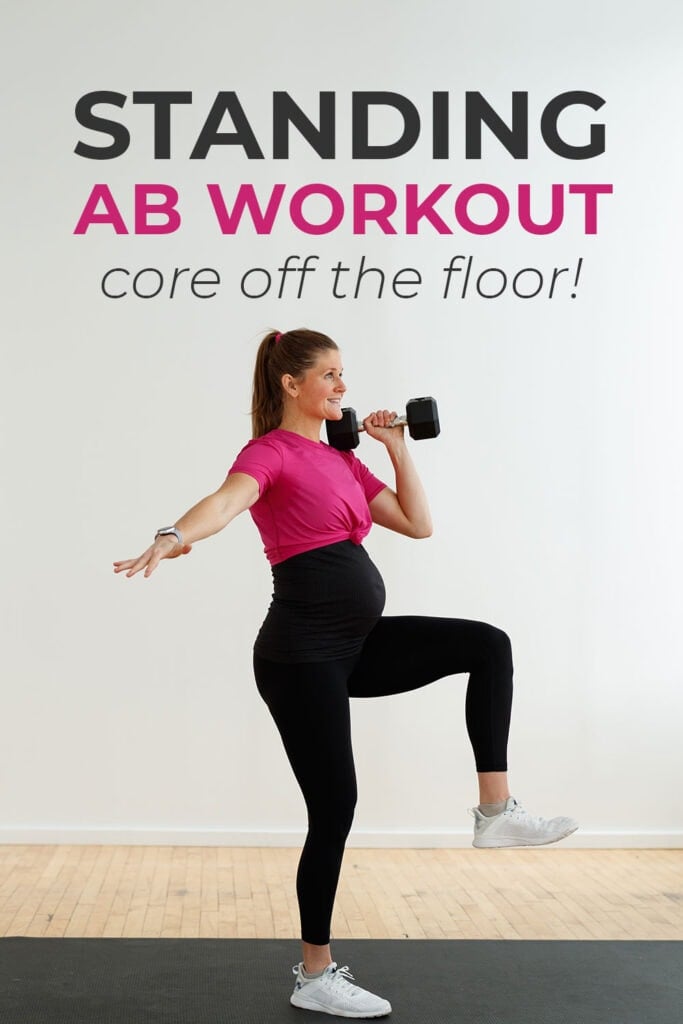
10-Minute Standing Ab Workout (Video)


Strengthen and define the entire core with this standing ab workout. These five standing ab exercises are designed to target every muscle in your core. Intensify this standing ab workout by adding weights, or knock it out with just your bodyweight.

Build a strong core with this quick and effective standing ab workout.

You loved our standing ab circuit workout which targeted the core from a standing position using just your bodyweight.

Today’s workout challenges the core using a set of dumbbells.

I have found that standing core exercises with weights are particularly effective because they challenge our core muscles to stabilize the trunk of the body in the same way they do in many of our daily movements. This leads to improved coordination and better balance.

I especially love this workout because there are no crunches and no planks. In my opinion, it doesn’t feel like a traditional ab workout (and I love that)! These standing ab exercises will keep your mind busy as they sculpt and strengthen your midsection.

two women performing a windmill ab exercise holding one dumbbell overhead in a standing ab workout

10-Minute Standing Ab Workout

Five weighted standing ab exercises to strengthen your core and add muscle definition to your midsection.

Add this standing abs workout to yourweekly workout routine1-2 times a week to build muscle and improve endurance.

Workout Equipment:

Beginner: No equipment, just your bodyweight.

Intermediate/Advanced: Add a single medium dumbbell or kettlebell to make this a weighted ab workout. We’re using 10-15 lb dumbbells.

Workout Instructions:

Follow along with the guided Standing Ab Workout Video on YouTube, led by certified personal trainer Lindsey Bomgren.

Your Workout Looks Like This:

  • 5 Standing Ab Exercises
  • Timed Intervals (40 seconds of work, 20 seconds of rest)
  • Repeat All 5 Standing Ab Exercises x2 Sets
standing ab workout (pivot dumbbell press)

Workout Outline

  1. Goblet Hold and March (or High Knee Lift)
  2. Uneven Front Squat and Pivot Press
  3. Single Leg Balance Weight Pass
  4. Windmills
  5. Lateral Squat and Front Raise

5 Best Standing Ab Exercises

Goblet Hold and March

Targets: Low abs, obliques, glutes, hip flexors, chest and shoulders.

Note: the farther you hold the dumbbell out, away from your body, the harder your core will have to work.

Two women performing a goblet hold and march or standing high knees

How To Do A Goblet Hold and March

  1. Start in a standing position, feet hip-width apart, holding a dumbbell vertically at your chest, elbows tucked in.
  2. Engage your core, then drive your right knee up in line with your right hip. Right knee bent at a 90-degree angle.
  3. Ground through your standing leg to remain stable, then return your right foot back to the ground.
  4. Switch sides, driving your left knee up in line with your left hip. Return to starting position and repeat these alternating high knee lifts. Think of it as performing standing bicycle crunches.

Uneven Front Squat and Pivot Press

Targets: Glutes, quadriceps, hamstrings, shoulders, transversus abdominis, abs, obliques and erector spinae.

two women performing a squat and press with one dumbbell

How To Do An Uneven Front Squat and Pivot Press

  1. Start in an athletic position, feet shoulder-width apart, holding a dumbbell in your right hand at shoulder height, palm facing in.
  2. Sit your hips back as you lower into a squat, aiming to get your thighs parallel to the ground (both knees bent at 90 degrees).
  3. Press through your heels to stand tall, rotating your hips to the left. Toes pointing to the left as your left heel pops off the mat. Use the power from your hips and glutes to drive the dumbbell in your right hand overhead.
  4. Return the dumbbell to shoulder height as you reverse the rotation, both toes pointing forward, returning to starting position.

Modification: Follow Lindsey (on the right) and omit the pivot press performing a standing squat and overhead press.

Single Leg Balance Weight Pass

Targets: Low abs, obliques, transversus abdominis, glutes, hip flexors, arms and core.

Again, the farther the dumbbell travels away from your body, the harder your abs will have to work to stabilize your trunk.

single leg balance weight pass; two women balancing on one leg as they pass a dumbbell from side to side - standing ab exercise

How To Do A Single Leg Balance Weight Pass

  1. Start standing feet shoulder-width apart, holding a dumbbell in your right hand at the side of your body.
  2. Brace your core as you lift your right leg off the ground, aiming to get your right thigh parallel to the mat (bend your knee at a 90-degree angle). Ground through your left foot for balance.
  3. Curl the dumbbell up and across your body, transferring it from your right hand at your side to your left hand at your left shoulder. Focus on keeping your torso and hips stable as you transfer weight to the opposite side of your body.
  4. Return the dumbbell across your body, transferring the weight back to your right hand and end at your side, in the starting position.

Windmills

Targets: Obliques, abs, upper back, outer glutes, inner thighs, hamstrings, upper body and shoulders.

The windmill is a full body exercise that strengthens the entire core; specifically the obliques (sides of the torso).

two women performing the windmill exercise with one dumbbell to strengthen the obliques

How To Do A Windmill

  1. Start in a wide stance, holding a dumbbell (or kettlebell) in your left hand, directly above your shoulder.
  2. Rotate your right foot out 90 degrees so your right toes are pointing towards the top of your mat, then pivot your left foot slightly inwards (about 45 degrees). Think right heel aligns with left arch.
  3. Focus on creating and maintaining length through your waist as you hinge at the hips, sliding your right arm down your right leg. Keep your left hand directly above your left shoulder.
  4. Then, squeeze through your obliques to pull your torso back to an upright position.

Lateral Squat and Front Raise

Targets: Gluteus medius (part of your butt used for side-to-side movements), quads, hips, inner thighs, shoulders, abs and core muscles.

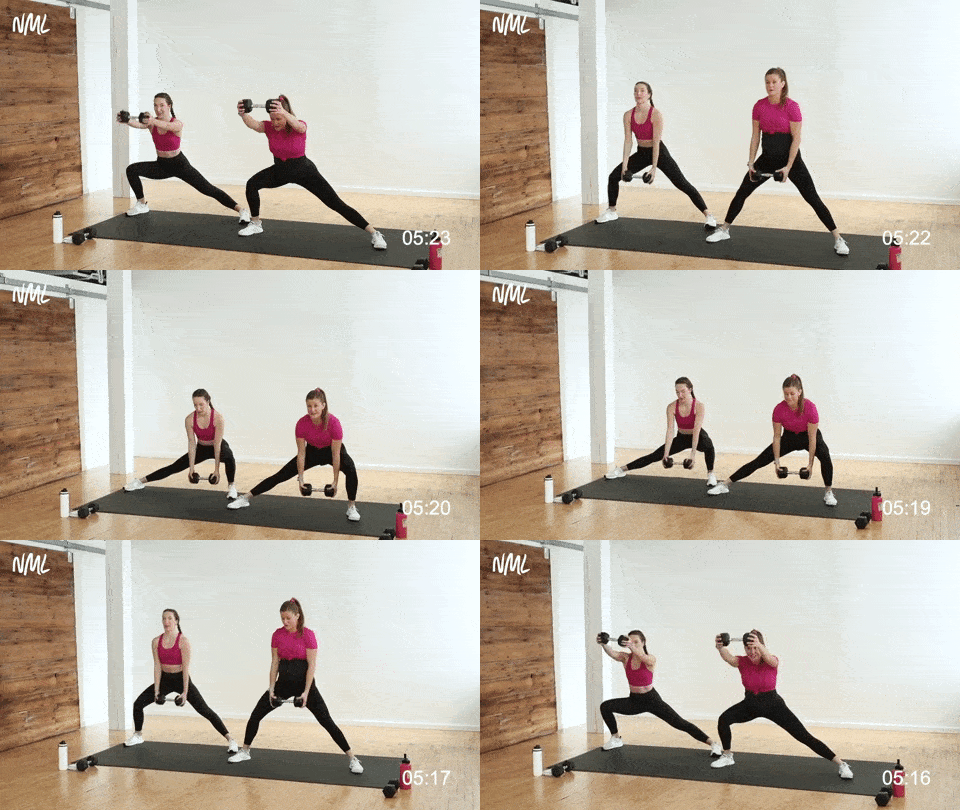
two women performing a lateral squat and dumbbell front raise

How To Do A Lateral Squat and Front Raise

  1. Start in a wide stance, holding a dumbbell horizontally between your hands, toes facing forward or slightly out.
  2. Sit your hips back, bending your right knee while leaving your left leg straight. Think of performing a single leg squat on your right side.
  3. At the bottom of your squat, brace your core and exhale as you lift the dumbbell up to shoulder height, arms straight in front of you. With control, lower the dumbbell back down to your thighs.
  4. Then, push off your right foot to reverse the movement, returning to center.
  5. Then, repeat the movement on your left: sitting your hips back and bending your left knee while leaving your right leg straight.
  6. Raise the dumbbell to shoulder height, then control it back down to the starting position.
  7. Push off your left leg to return to center.

Standing Ab Workout FAQs

Are Standing Ab Workouts Effective?

YES! I prefer standing ab circuits to “traditional” core exercises (like crunches) that have you lying on your back. Standing ab exercises more effectively mimic the way you move in everyday life. Functional core training requires your core muscles to work to stabilize your trunk as you move your limbs away from your body, twist and rotate.

What Are The Best Standing Exercises For Abs?

My favorite standing ab exercises involve a weight transfer – either with your bodyweight or with a dumbbell. This engages every muscle around your core. Examples include a cross body chop, standing high knee lifts, leaning obliques, and a standing side bend or side crunch.

Pin this Standing Ab Workout

5 BEST Standing Ab Exercises for Women Pin for Pinterest

This post includes affiliate links. I do earn a commission for products purchased using these links (at no additional cost to you). Thank you for supporting Nourish Move Love, making the content you see on this blog possible.

#10Minute #Standing #Workout #Video